
Puff Quilt Pattern Ideas: From Classic Biscuit Blocks to Modern Geometric
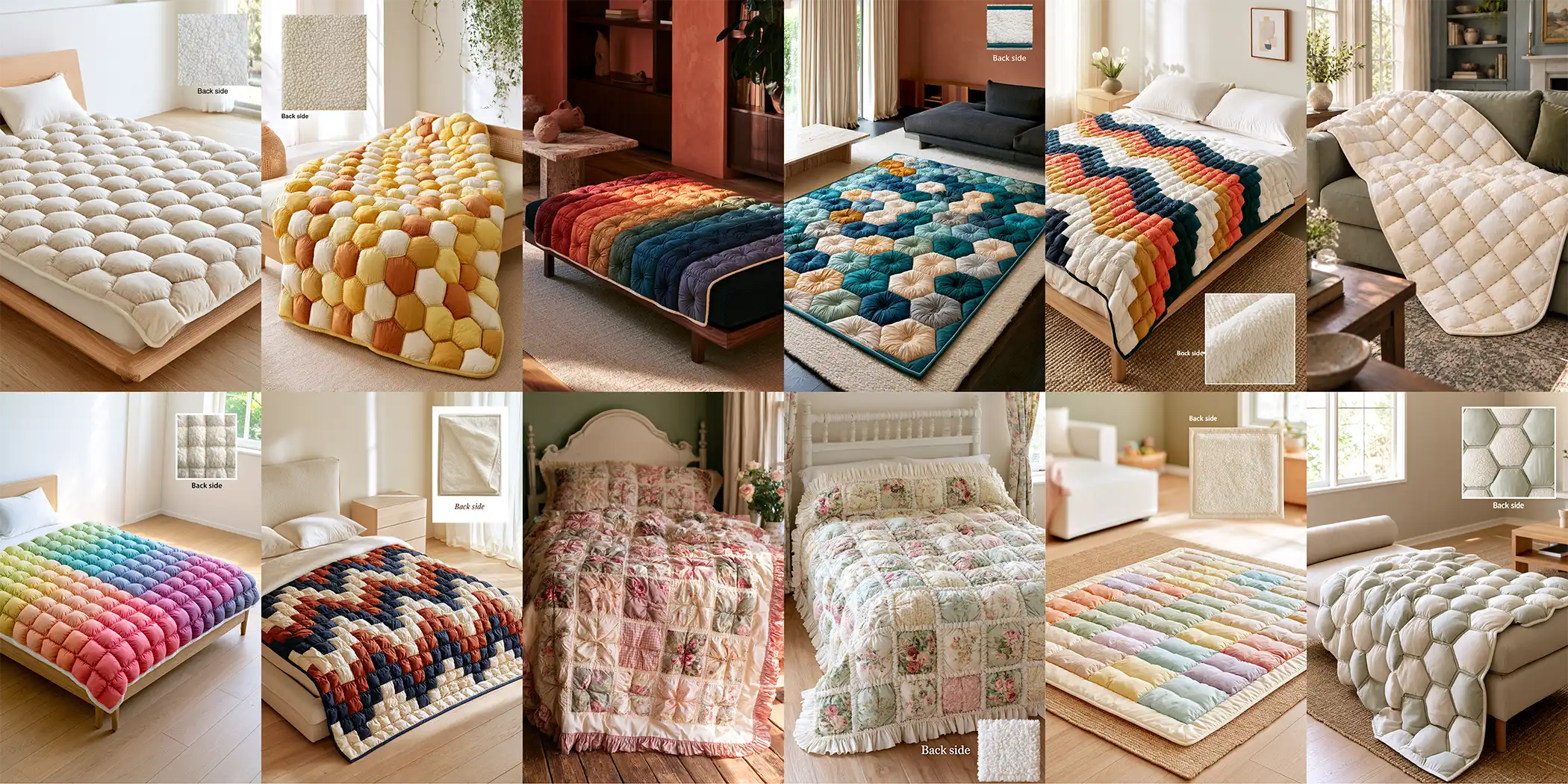
Puff quilt pattern ideas start with one of quilting’s most tactile concepts: instead of lying flat, each block rises. A puff quilt — sometimes called a biscuit quilt — is built from individually gathered fabric pockets, each one stuffed and stitched closed so the finished surface has a distinctly cushioned, three-dimensional character that no amount of batting can replicate in a conventional quilt.
The raised blocks catch light differently from every angle, the seams between them define the grid, and the combination of color, fabric, and filling level determines whether the finished piece reads as a plush baby mat, a sculptural throw, or something more graphic and contemporary. That flexibility is what makes the format so enduring — the construction logic is consistent, but the aesthetic outcomes are genuinely varied.
Puff Quilt Pattern Ideas
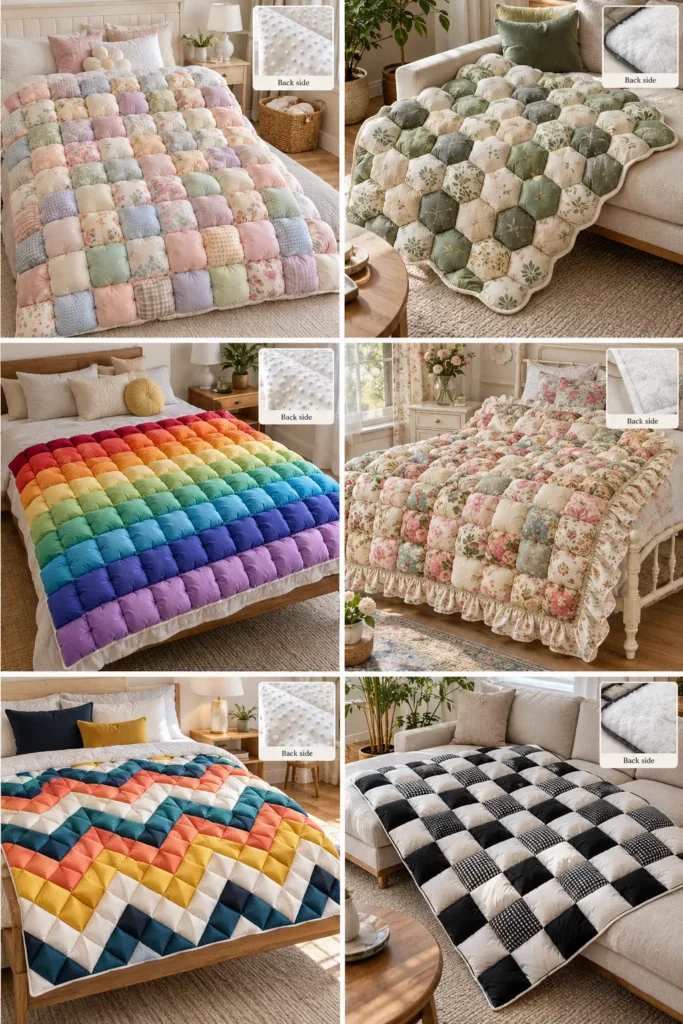
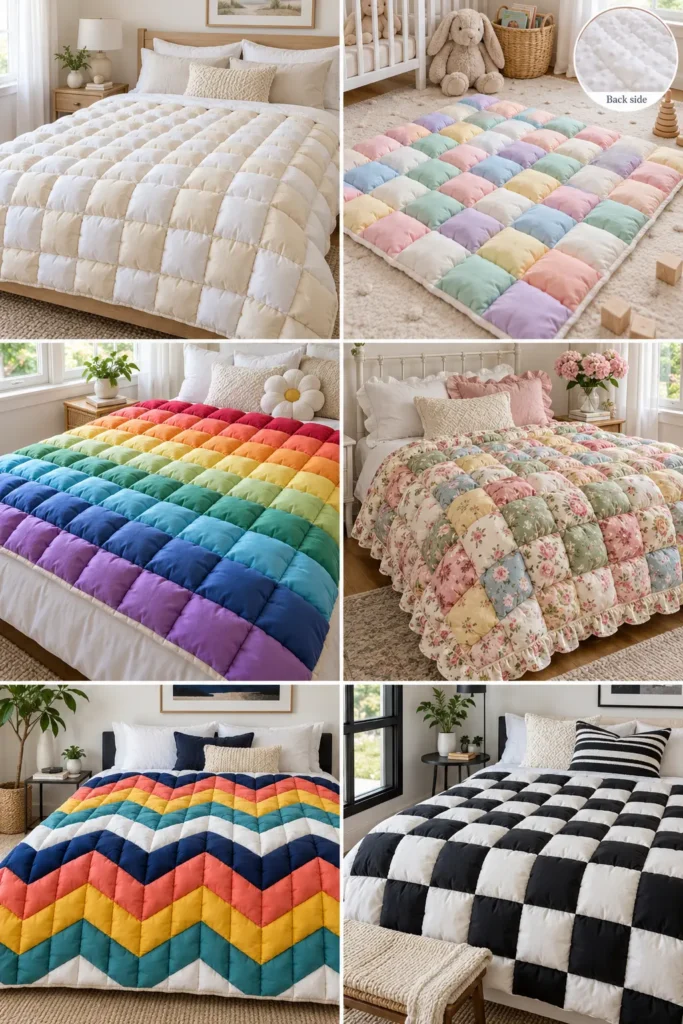
The twelve designs gathered here span the full range of what that construction logic can produce. Classic cream-and-white biscuit squares sit at the quiet end, letting the gathered texture do most of the visual work. From there, the collection moves through soft pastels on nursery mats with minky backing, rainbow ombre arrangements where color flows across rows of raised blocks, and vintage florals with ruffled scalloped edges.
The contemporary designs are equally varied: bold chevron color-blocking, high-contrast black-and-white checkerboards, a pixel-art quilt where animal motifs emerge from carefully arranged color-blocked squares, and oversized floor-lounging blocks generous enough to sink into. Scrappy reclaimed cotton shirts, jewel-toned velvet with satin binding, and individually stuffed hexagons add further range in both material and block geometry. Each design is a different answer to the same starting question: what happens when a quilt’s surface is made to rise?
See also: Jelly Roll Quilted Jackets and Vests – Farmhouse Quilt Jackets & Vests – Sashiko Quilt Jackets and Vests – Fall Quilted Jacket and Vest – Nakshi Kantha Jackets and Vests
Why Make a Puff Quilt?
A puff quilt is one of the more practical destinations for fabric that accumulates without a clear home. The blocks are relatively small, individually constructed, and forgiving of mix-and-match, so assorted remnants, outgrown shirts, and leftover quilting cotton from other projects can all contribute meaningfully rather than sitting in a scrap bin indefinitely. The construction also suits experimentation in a way that precise patchwork doesn’t: makers can adjust block scale, filling density, color placement, and arrangement without changing the method, giving them genuine control over the finished weight, texture, and appearance.
A tightly stuffed velvet quilt and a lightly filled cotton pastel mat use exactly the same technique and feel like completely different objects. For quilters who want to produce something visually interesting without complex piecing — no points to match, no bias edges to manage — puff construction offers a direct route from fabric to a richly textured result.
What Makes These Designs Different?
A puff quilt is structurally distinct from other three-dimensional or padded quilt techniques, and it’s worth understanding the difference. In trapunto, selected motifs within an otherwise flat quilt are padded from behind to create raised relief — the dimensional quality is localized and decorative. In a conventional quilted throw, the batting sits between the pieced top and backing, providing warmth and some loft but no individual raised blocks.
A puff quilt works differently: each block is its own enclosed pocket, gathered to let extra fabric rise when stuffed, then closed and joined at the seams. The entire surface consists of these individually filled units, which means the raised quality is structural rather than decorative. Block shape changes the character significantly — square biscuits produce a grid of neat cushioned forms, hexagons create a honeycomb surface, and gathered circles produce a looser, more organic bubble texture. Chevrons, checkerboards, gradients, and pixel motifs arrange those blocks rather than using different construction techniques, and their legibility depends on consistent block size and controlled color placement.
Tips for Choosing Fabrics
The most reliable base fabric for puff quilts is medium-weight woven quilting cotton: it gathers smoothly, presses well at the seams, comes in the prints and solids most of these designs need, and holds up to the handling involved in making and laundering a stuffed quilt. Reclaimed cotton shirts work well in scrappy designs, provided you inspect each piece carefully—fabric that has thinned along fold lines or wear points will not hold the stuffing reliably, and a weak seam in a finished block is hard to repair without disturbing the surrounding grid.
Prewash everything before cutting, and check that colors are stable, since a deep red shirt bleeding onto cream squares after the first wash is a problem that can’t be corrected. Velvet requires attention to pile direction — cutting all pieces with the pile running the same way is what gives jewel-toned designs their consistent sheen — and it is heavier than cotton, so the finished quilt will be noticeably denser. Plush and minky fabrics are excellent for backing material on baby mats, but their stretch and slippery surface make them harder to control in the machine; use plenty of pins or clips and reduce the speed. Satin binding on velvet quilts frays readily and needs careful cutting and handling.
Color and Fabric Planning
Color planning in a puff quilt operates at two levels simultaneously — the individual block and the overall surface — and the raised construction amplifies certain effects while undermining others. High-contrast arrangements, such as black-and-white checkerboards and bold chevron designs, work because block boundaries and color changes reinforce each other; lower contrast between adjacent blocks softens the grid into a more unified surface, which is what makes the ombre gradient effective. Soft pastels and warm nursery tones benefit from value consistency within each color family—too much contrast in the pale range can make a baby mat look busy rather than gentle.
Scrappy designs are more forgiving because variation is the point, but repeating a color or print at regular intervals across the layout connects disparate fabrics without over-coordinating them. For pixel-art motifs, the color-to-background contrast needs to be strong enough that the intended image reads from a normal viewing distance — a soft gradient within the motif colors will blur the silhouette. Velvet’s pile absorbs and reflects light differently than matte cotton, so adjacent blocks in similar colors can look noticeably different in natural light; leaning into that quality, rather than trying to minimize it, creates a more visually interesting surface.
Common Mistakes to Avoid When Sewing
The most consequential puff-quilt mistake is inconsistent stuffing, and it compounds as the grid grows: blocks filled to different densities sit at different heights, making the seams uneven and the finished surface irregular in a way that reads as an error rather than a design choice. Weigh or measure the stuffing for each block if the design depends on consistency. Another issue is cutting the top fabric squares too close in size to the backing squares—the whole point of puff construction is that the top fabric is larger than the backing, and that size difference determines how much the block can rise; underestimating it produces flat, unconvincing puffs.
Forgetting seam allowances in a color-blocked or geometric design makes the final grid a different size than planned, which matters more the larger the quilt is. For hexagonal and circular blocks, test the construction on a sample first — curved edges and multiple seam intersections at the join points are more demanding than square-block assembly, and discovering that on block one is far less costly than discovering it on block forty. Finally, build baby playmats from this technique with very securely closed blocks, since individually stuffed pockets can become a hazard if seams fail; reserve playmats for supervised awake time, and double-stitch every closed edge.
Branded and Trademarked Fabrics, Logos, and Graphics
The designs and fabric descriptions throughout this article use generic colors, prints, patterns, and shapes — florals, checks, solids, animal silhouettes, geometric arrangements — rather than pieces from any specific manufacturer, licensed character range, or branded fabric collection. Company logos, trademarked symbols, and designer marks aren’t intentionally featured, so all the ideas here can be adapted using fabrics readers already have or can source independently.
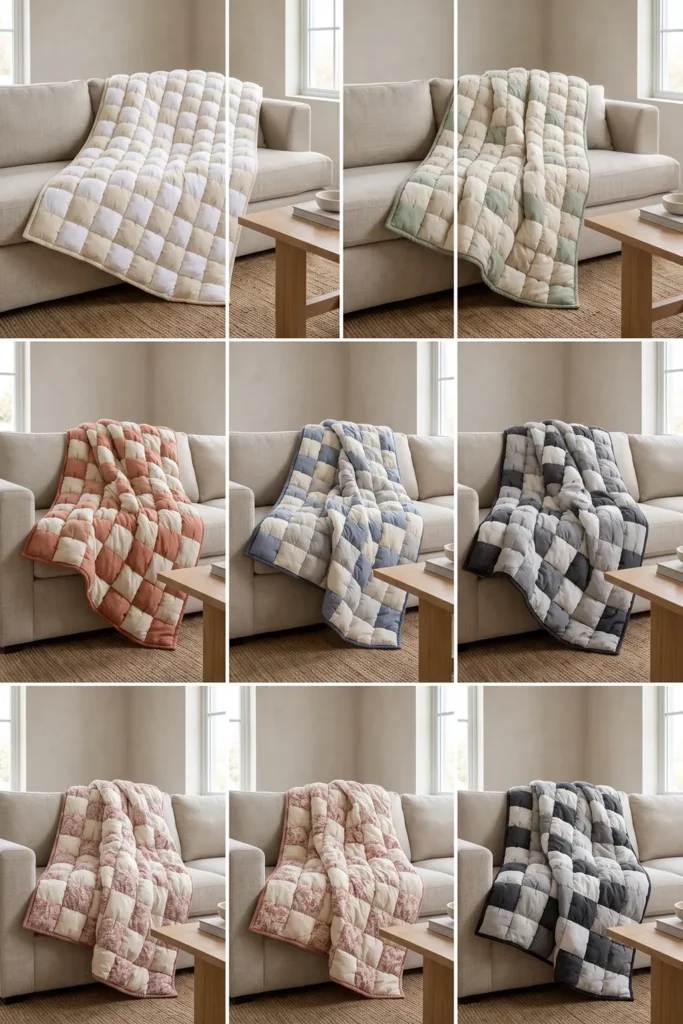
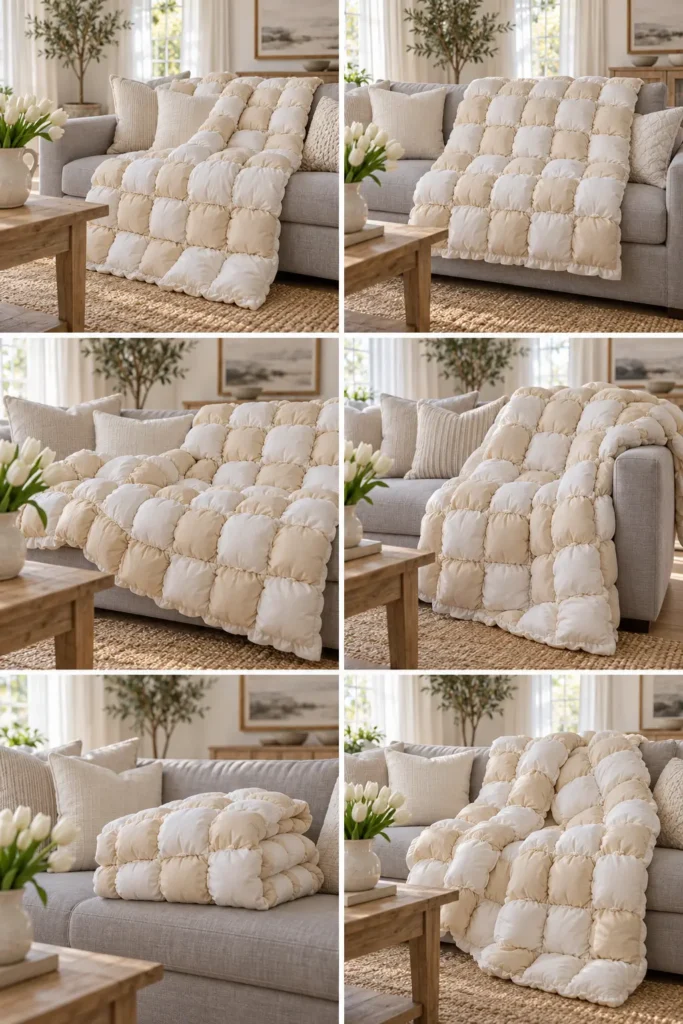
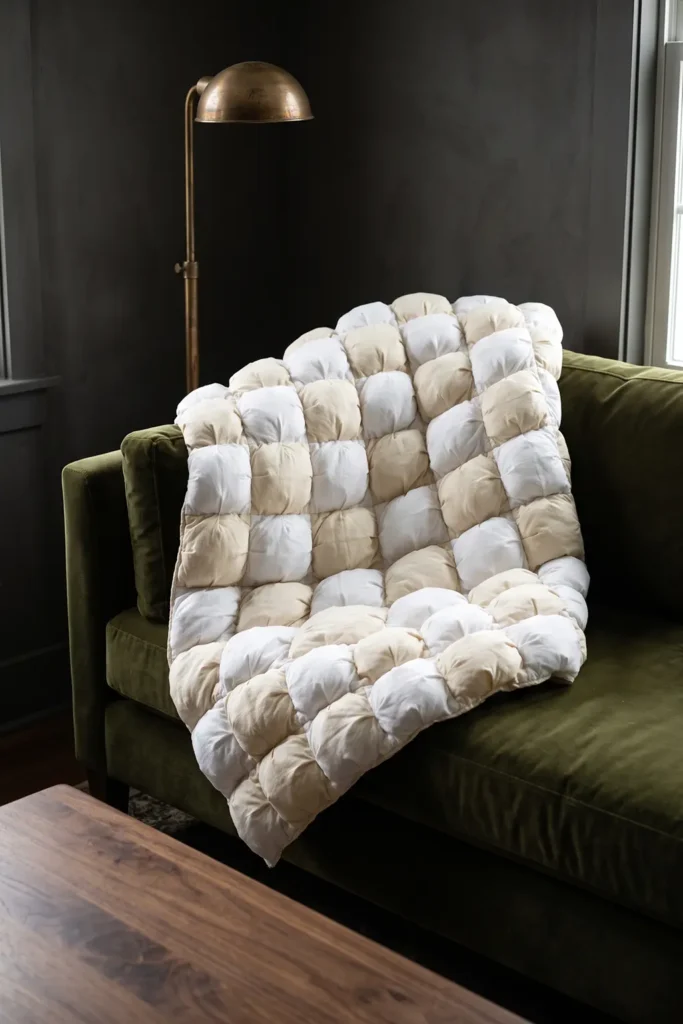
1. Classic Biscuit Puff Quilt with Evenly Gathered and Stuffed Squares in Cream and White
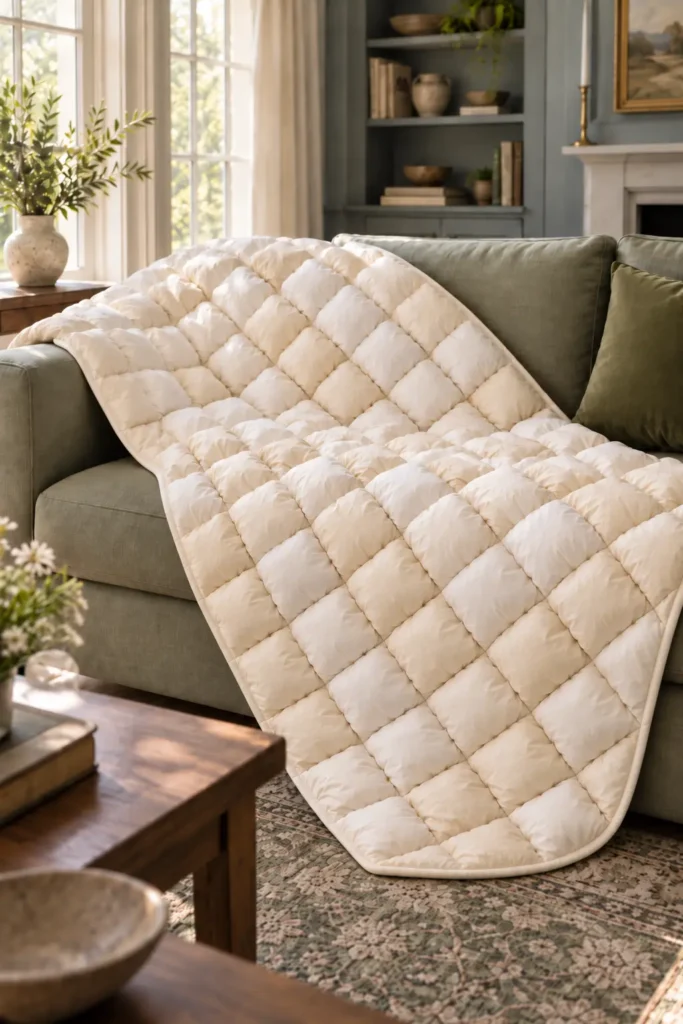
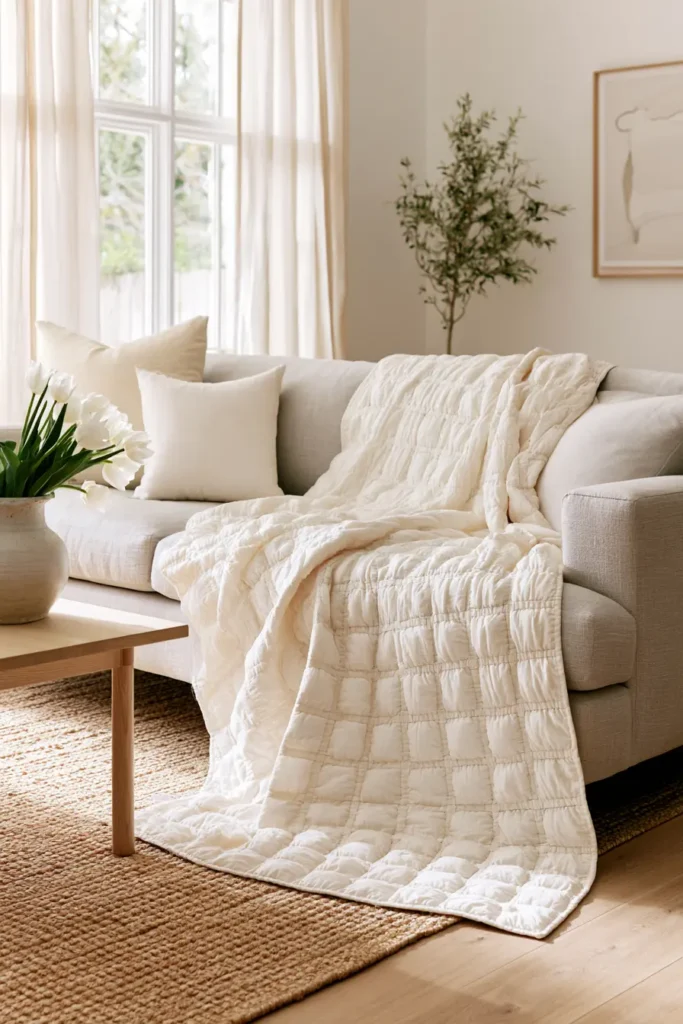
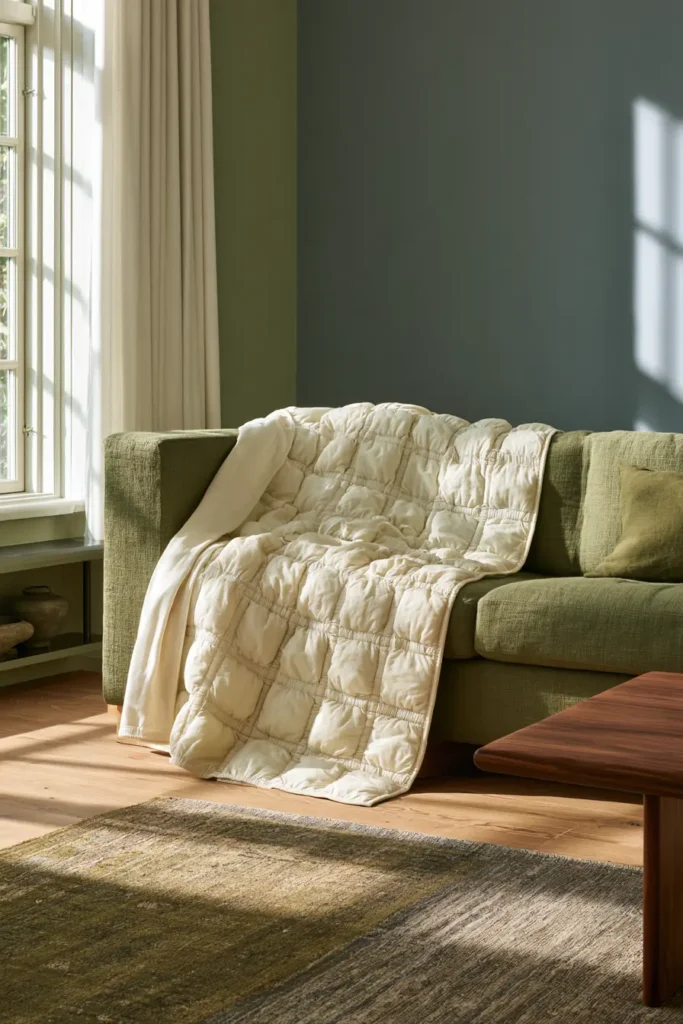
A classic biscuit puff quilt brings depth and softness to a simple patchwork grid. Instead of lying flat like conventional pieced quilting, its individual fabric squares rise into gently rounded pockets, creating a cushioned surface defined by neat seams and delicate gathering. Cream and white make this traditional construction particularly appealing because the texture becomes the main decorative feature. Subtle shadows between the raised blocks give the quilt visual depth without relying on bold prints or complicated patterns.
The most attractive versions balance consistent block proportions with the slight irregularities of gathered cotton. Alternating warm cream, ivory, and clean white squares creates understated variation while preserving the quilt’s calm, unified appearance. Unlike an oversized cloud puff quilt, which emphasizes giant billowy sections, this design depends on smaller, evenly arranged biscuit blocks and a more structured patchwork character. Its neutral palette suits traditional bedrooms, relaxed farmhouse interiors, and contemporary spaces with natural wood and linen furnishings.
Design Inspirations – Digitally Modified Images. Texture and color may vary from the actual product.
Choosing Cotton Fabrics and Cream-and-White Shades
Medium-weight woven quilting cotton is a practical choice because it gathers predictably, holds stitched seams securely, and offers enough flexibility for rounded pockets. Select fabrics with similar weights and prewash them where appropriate to reduce uneven shrinkage.
Rather than alternating stark white with dark beige, consider a restrained combination of soft white, warm ivory, vanilla, and pale cream. Small differences in tone allow the individual squares to remain visible without creating a pronounced checkerboard. Matte fabrics are especially effective because their gentle surface texture complements the quilt’s handmade character.
Creating Evenly Gathered Biscuit Blocks
Traditional biscuit construction generally uses a larger upper fabric square gathered or eased onto a smaller foundation square, forming a pocket that can be filled before the opening is secured. The gathered excess creates the rounded surface.
Consistent filling matters more than making every wrinkle identical. A moderate amount of polyester fiberfill can create soft, springy blocks while allowing the quilt to bend naturally. Overstuffing makes the squares excessively firm and increases pressure on the joining seams. Keeping the blocks reasonably uniform also helps the quilt maintain straight rows and an orderly appearance.
Finishing Details and Practical Considerations
A narrow woven-cotton binding in cream or ivory provides a clean finish without competing with the raised surface. Choose a backing compatible with the quilt’s weight and intended care requirements; additional batting is not automatically necessary when the individual blocks already contain filling.
Avoid stretching the gathered squares during assembly or allowing bulky seam intersections to distort the grid. An evenly filled sample block is useful for judging the intended loft before preparing an entire quilt.
For bedroom styling, spread the finished quilt across a neutral bed or drape it gently over the foot, where daylight can emphasize the repeating contours and softly recessed seams. The combination of restrained color and carefully controlled texture gives this familiar quilting style its enduring appeal.
Other Design Inspirations – Digitally Modified Images. Texture and color may vary from the actual product.
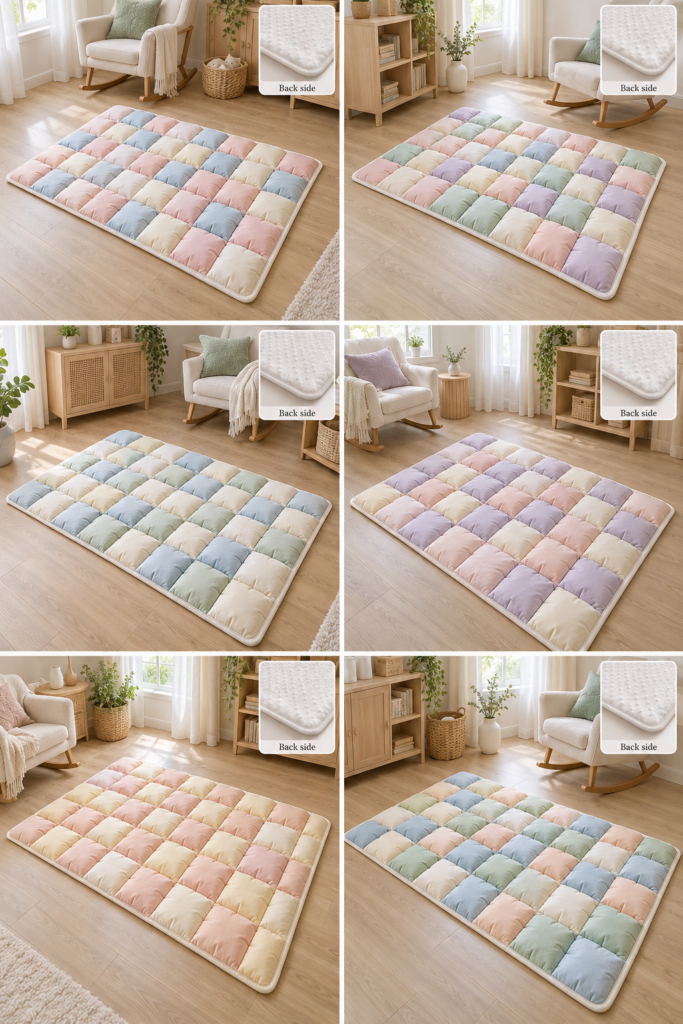
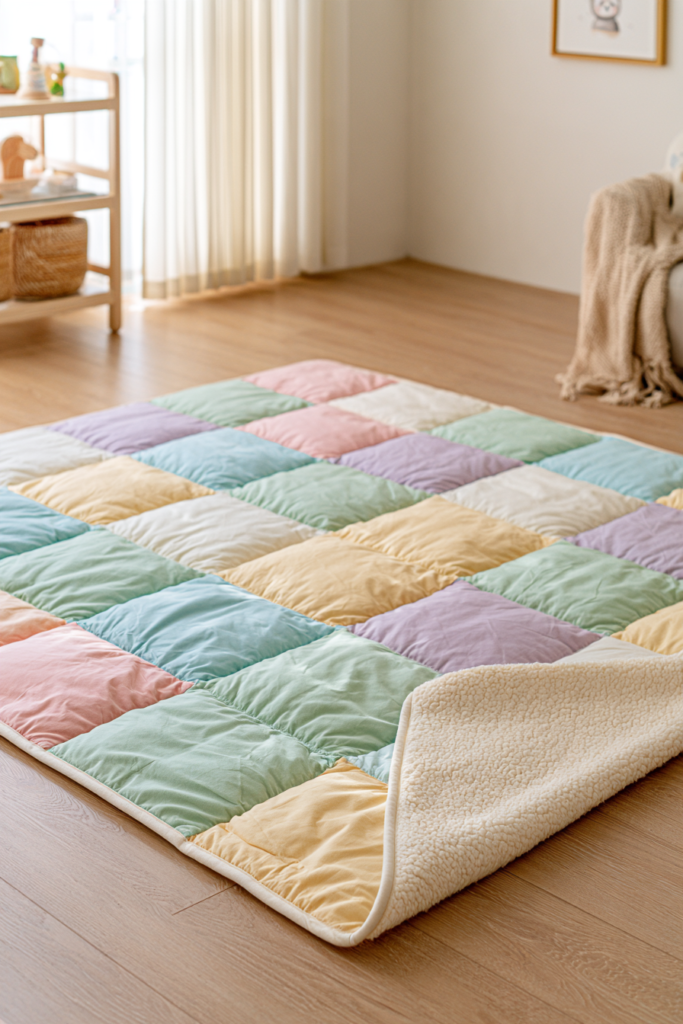
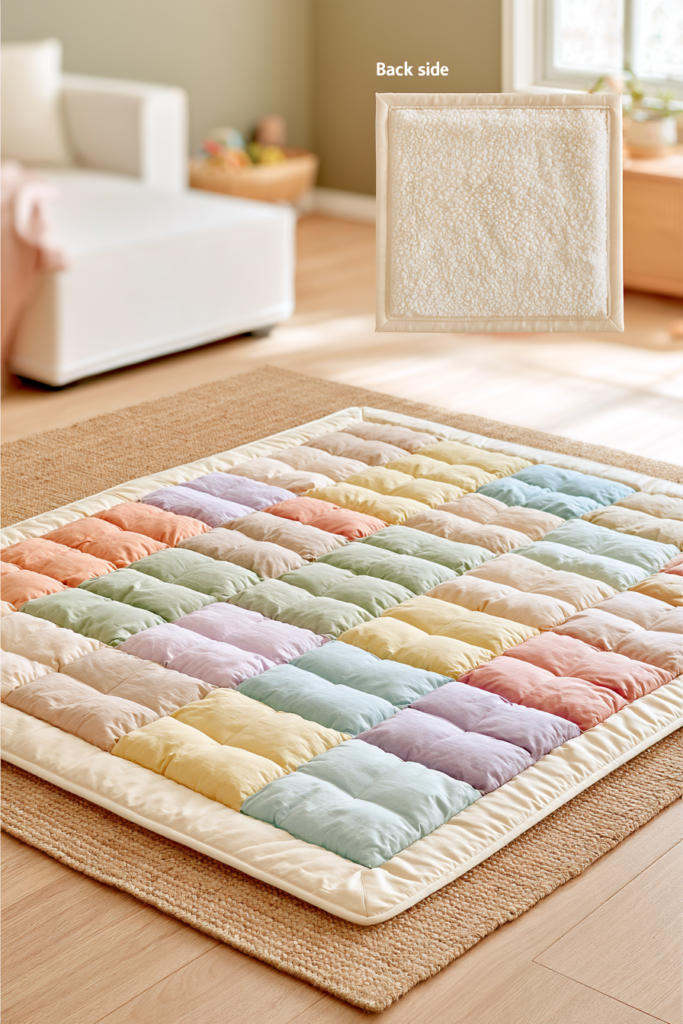
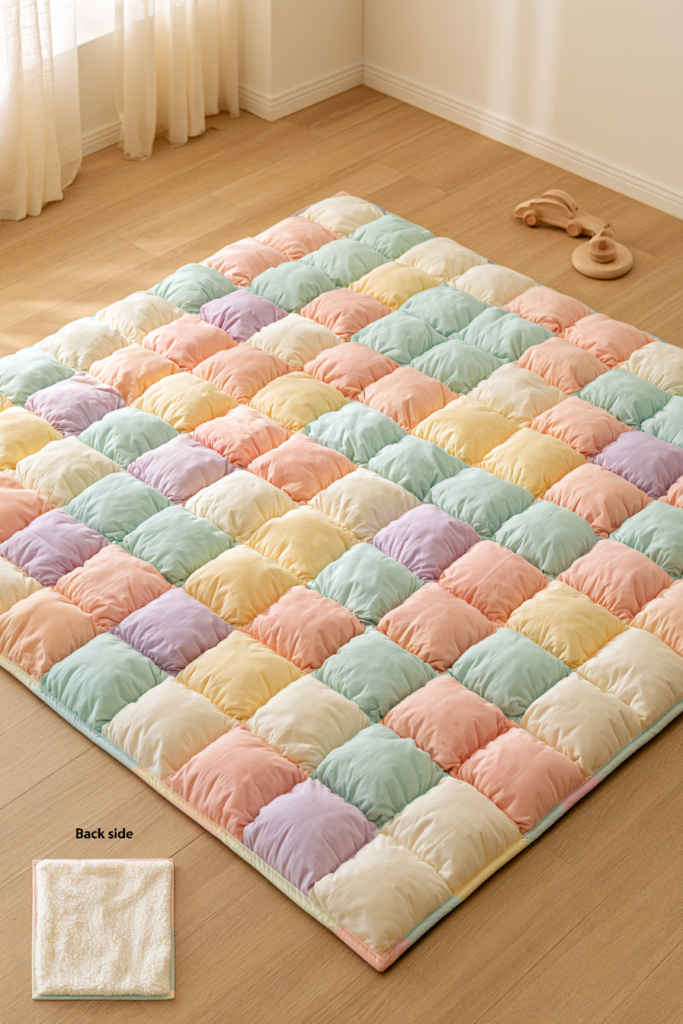
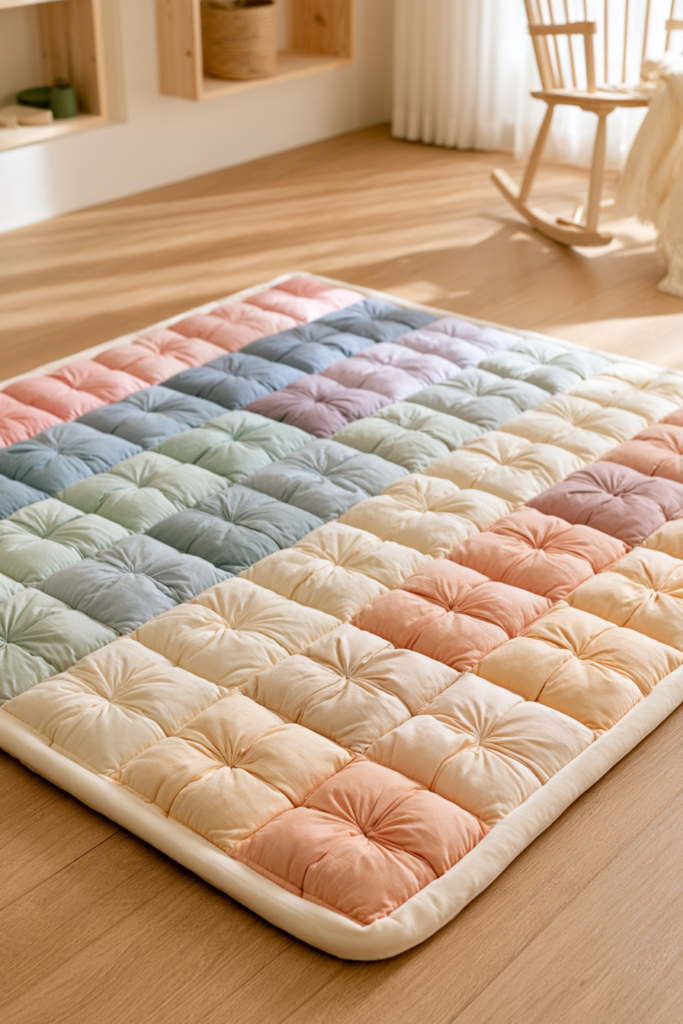
2. Soft Pastel Baby Puff Quilt Playmat with Cushioned Blocks and Minky Backing
A soft pastel baby puff quilt playmat combines the dimensional charm of traditional biscuit quilting with a gentle, nursery-friendly color palette. Individually stuffed cotton squares form a cushioned surface, with subtle gathers and neatly joined seams creating a pleasing rhythm across the quilt. Blush pink, powder blue, pale mint, lavender, and buttery cream give the design a light, welcoming appearance without relying on elaborate prints or decorative stitching.
Unlike a conventional flat playmat, this design emphasizes raised fabric pockets and a contrasting plush backing. The cotton front provides structure for the gathered blocks, while the Minky-style backing adds a soft, velvety texture to the reverse. The combination works especially well in bright nurseries with natural wood furniture, warm white walls, and understated pastel accents. Its carefully coordinated colors and compact proportions also distinguish it from the larger cream-and-white biscuit quilts commonly used as bed coverings.
Design Inspirations – Digitally Modified Images. Texture and color may vary from the actual product.
Choosing Pastel Cottons and Plush Backing
Lightweight to medium-weight woven quilting cotton is a practical choice for the puffed squares because it gathers smoothly and maintains relatively stable seams. Solid colors are particularly effective, allowing the raised texture to remain visible. For subtle variation, introduce a few tiny polka dots, delicate gingham prints, or small botanical motifs without overwhelming the pastel arrangement.
A short-pile Minky-style plush fabric creates a contrasting backing. Because plush fabrics can stretch and shift during sewing, choose a manageable weight and consider using suitable stabilization techniques. Prewash compatible cotton fabrics as recommended by their care instructions, and check that all materials have appropriate laundering requirements.
Planning the Cushioned Blocks and Color Arrangement
Consistent square dimensions give the playmat a tidy appearance, while moderate, evenly distributed filling creates comfortable-looking rounded pockets. Polyester fiberfill is one practical option, but excessive stuffing can make the blocks unusually firm and place unnecessary strain on their joining seams.
Arrange the colors in a balanced patchwork grid rather than a strict rainbow sequence. Repeating mint, blush, lavender, and cream across different areas prevents any one color from dominating. Narrow ivory binding can provide a clean finish that complements the pastel palette.
Practical Considerations for a Baby Playmat
Secure seams, durable fabrics, and manageable thickness are particularly important for a floor-play item. Avoid loose embellishments, buttons, beads, or decorative attachments that could detach. Check that the backing remains securely attached and that the finished piece can be cleaned and dried according to the materials used.
Helpful Note: A puff quilt playmat is intended for supervised floor play on a stable surface. It should not be used as an infant sleep surface, crib mattress topper, or loose crib bedding.
The finished design is best displayed fully unfolded on a clean nursery floor, where its cushioned squares and softly coordinated colors can be appreciated.
Other Design Inspirations – Digitally Modified Images. Texture and color may vary from the actual product.
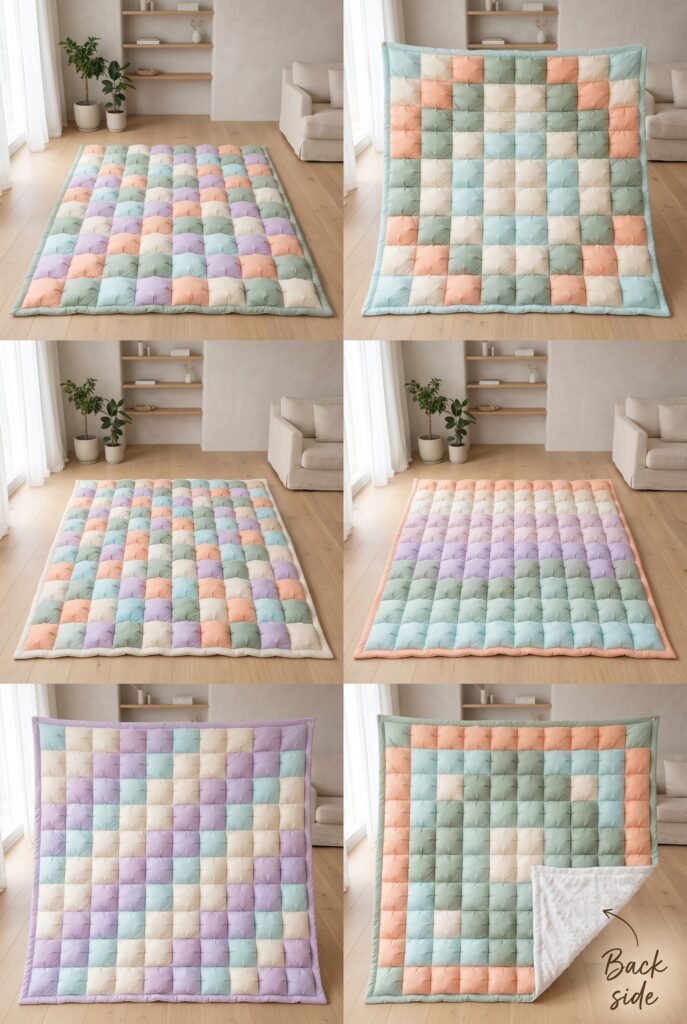
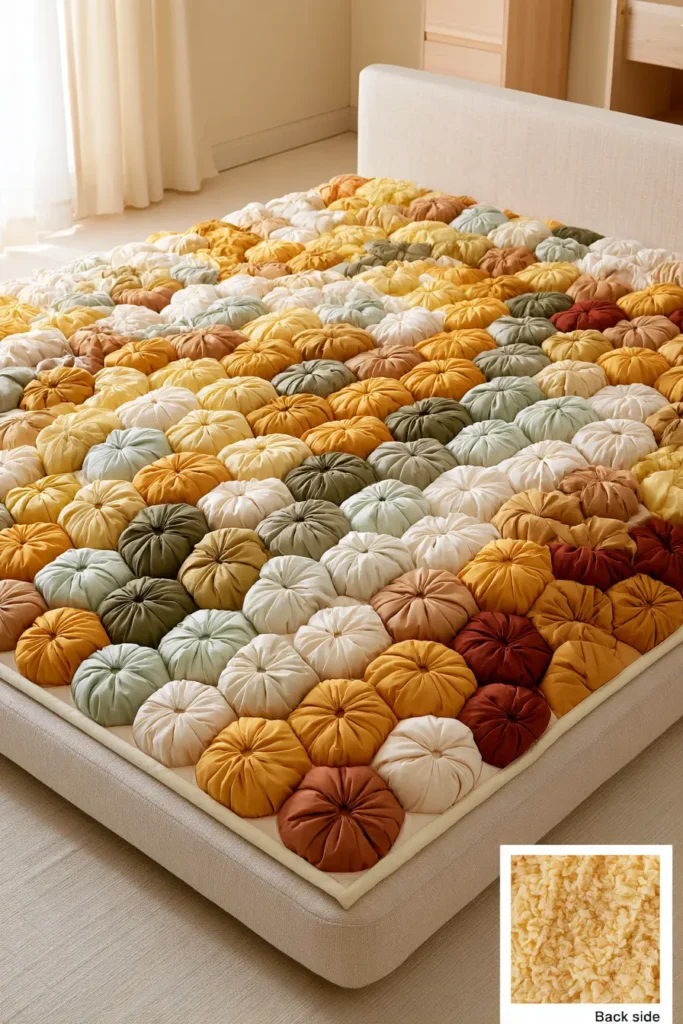
3. Rainbow Ombre Puff Quilt with Smooth Gradient Color Flow
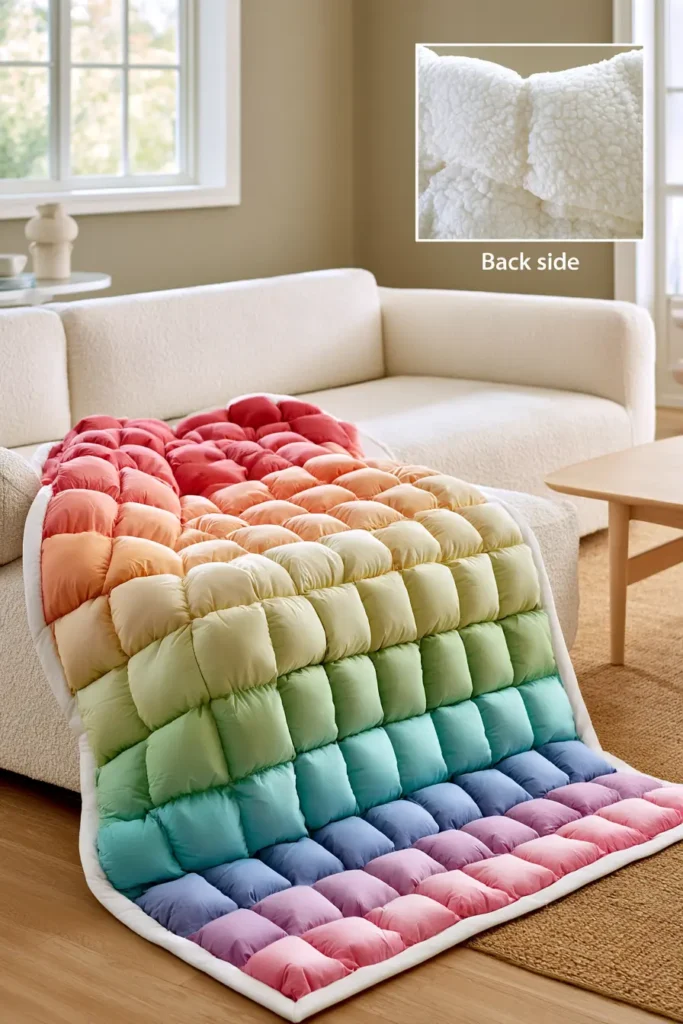
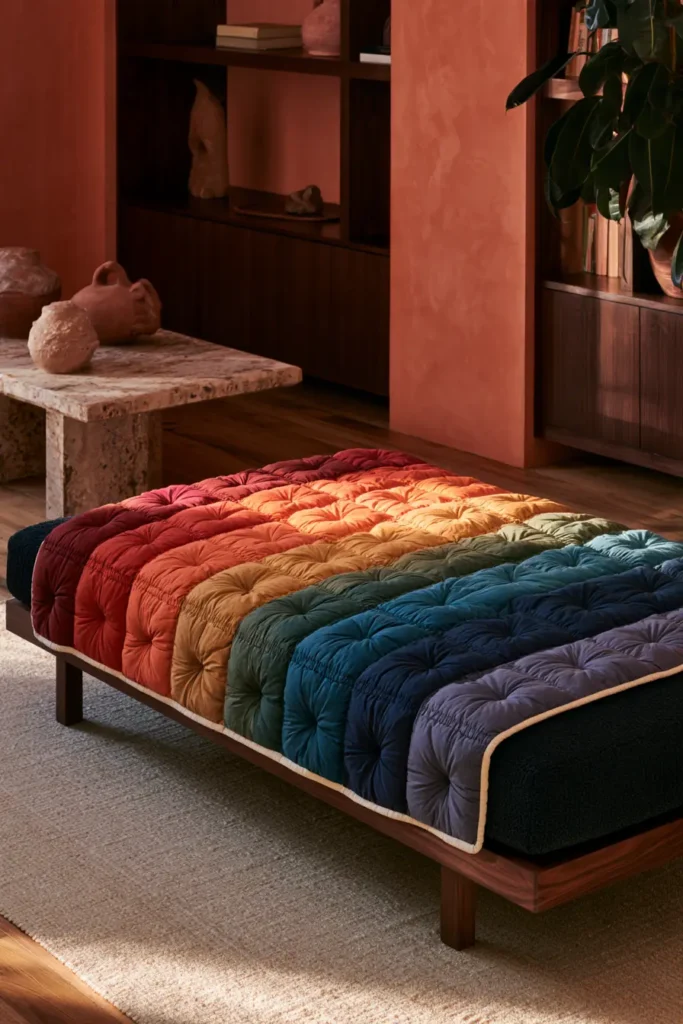
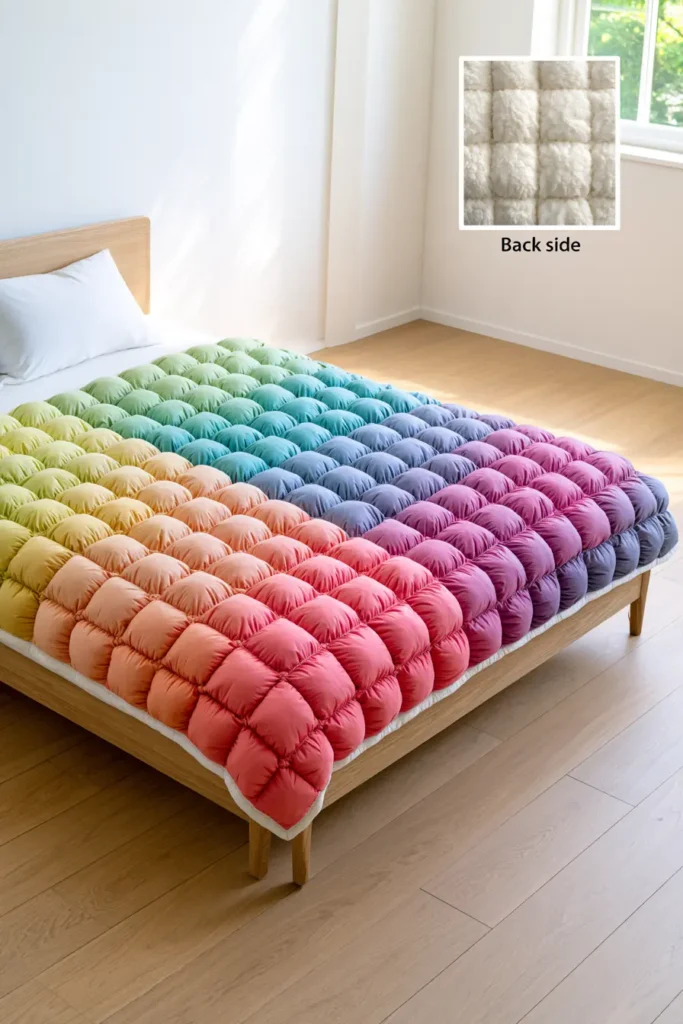
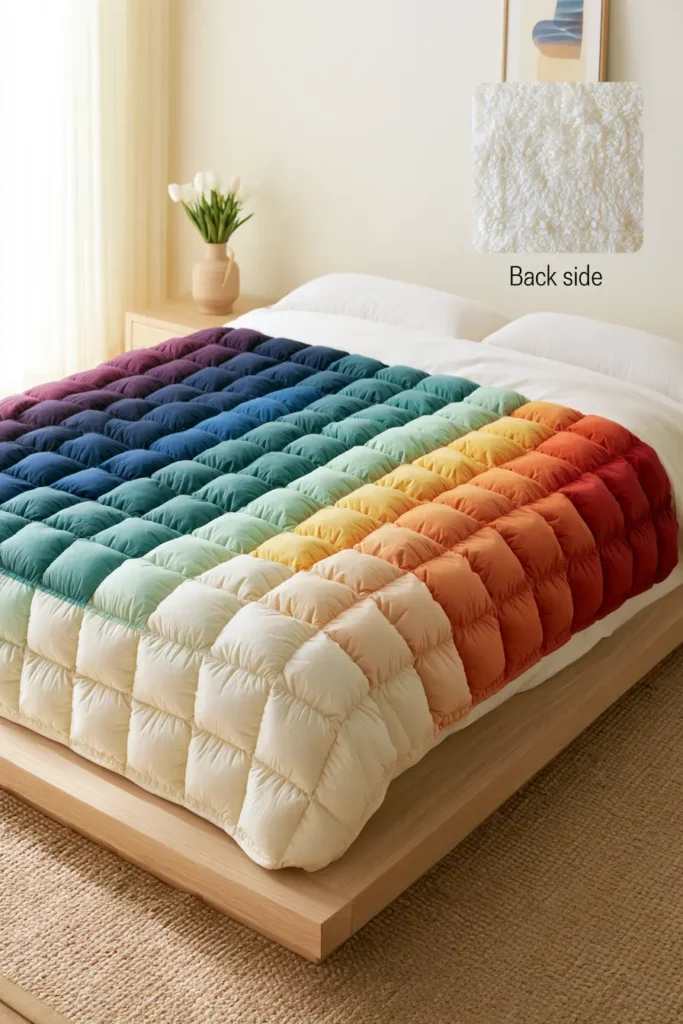
A Rainbow Ombre Puff Quilt transforms traditional biscuit quilting into a striking display of color, with individually stuffed fabric squares arranged in a continuous spectrum. The design moves gradually from warm reds, corals, and oranges through golden yellows and fresh greens, eventually reaching turquoise, deep blue, indigo, and violet. Each raised square contributes a small section of color, while the gathered fabric and recessed seams create a sculptural surface that catches natural light beautifully.
Unlike a scrappy rainbow quilt, where bright fabrics appear in a deliberately mixed arrangement, an ombre design depends on carefully controlled transitions. Neighboring squares should feel connected through similar hues, allowing the eye to travel smoothly across the quilt. The combination of orderly color placement and dimensional puff construction gives this design a contemporary character without losing the familiar charm of traditional biscuit blocks.
Design Inspirations – Digitally Modified Images. Texture and color may vary from the actual product.
Choosing Fabrics for a Smooth Rainbow Gradient
Solid-colored woven quilting cotton is particularly suitable because it provides consistent gathering and allows the color progression to remain clearly visible. Choose fabrics with similar weights and surface finishes so the quilt does not develop uneven texture.
For a convincing gradient, include intermediate shades such as coral, apricot, amber, chartreuse, jade, teal, and periwinkle rather than jumping directly between primary rainbow colors. Compare swatches in natural daylight, paying attention to both hue and lightness. Sudden shifts from very pale to extremely dark fabrics can interrupt an otherwise smooth transition.
Planning the Color Flow and Block Arrangement
Arrange the colors before sewing to establish a continuous visual progression. Horizontal bands can create a gradual transition from one end of the quilt to the other, while carefully planned diagonal arrangements offer a more dynamic effect.
Keep the puff squares consistent in size so the color sequence remains the dominant design feature. Avoid scattering unrelated accent colors throughout the arrangement, as this can weaken the ombre effect. Photographs of the planned layout can help reveal awkward transitions before the blocks are joined.
Maintaining Even Puff Texture and a Clean Finish
Traditional puff construction uses gathered fabric pockets filled individually to create rounded, cushioned squares. Consistent filling helps maintain a uniform surface without excessive firmness or distorted seams.
Overstuffed blocks can disrupt the alignment of neighboring squares, making the gradient appear less orderly. Moderate filling, secure joining seams, and compatible backing fabrics produce a more flexible quilt.
A narrow ivory or softly neutral cotton binding provides a quiet finishing detail without competing with the rainbow colors. Displayed across a bed or spacious daybed, the finished design works particularly well against simple furnishings that allow its flowing color arrangement to stand out.
Other Design Inspirations – Digitally Modified Images. Texture and color may vary from the actual product.
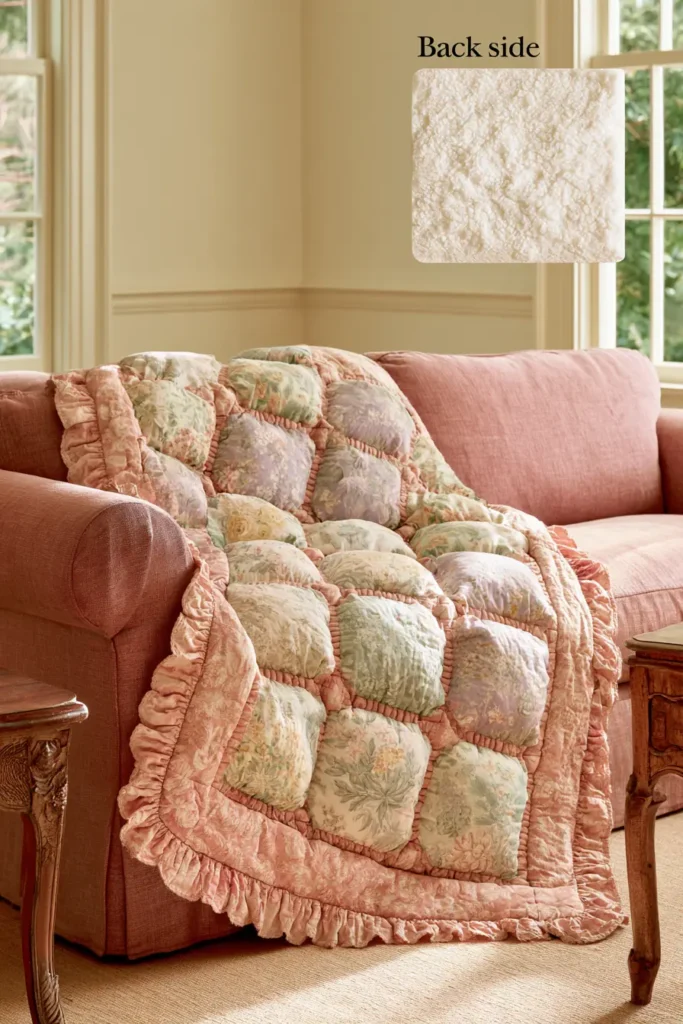
4. Vintage Floral Puff Quilt with Romantic Cottage Prints and Scalloped Ruffled Edges
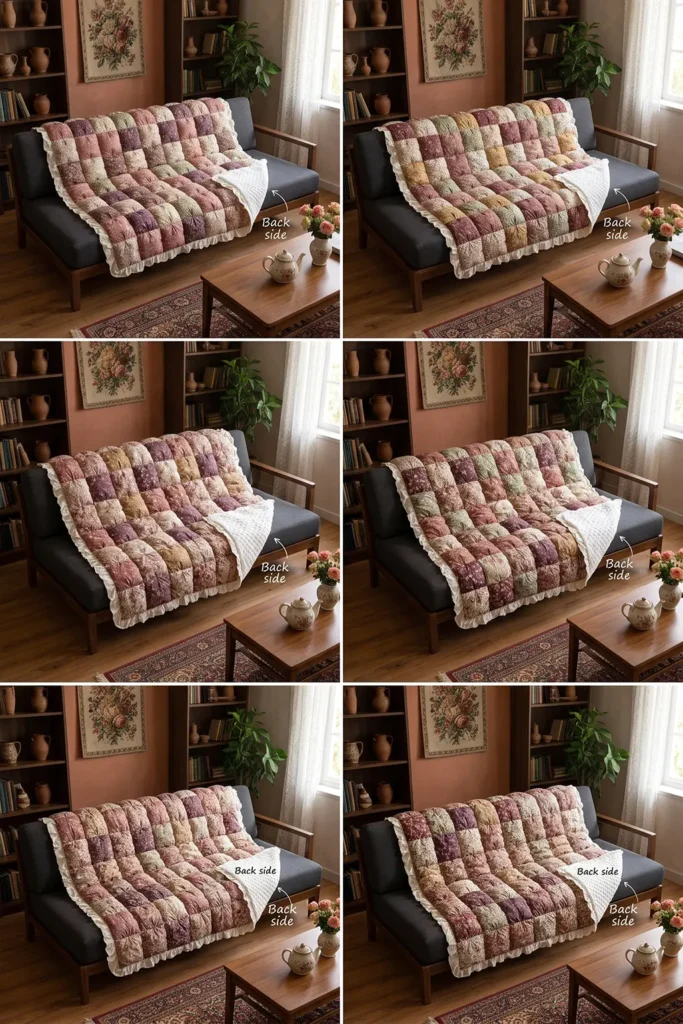
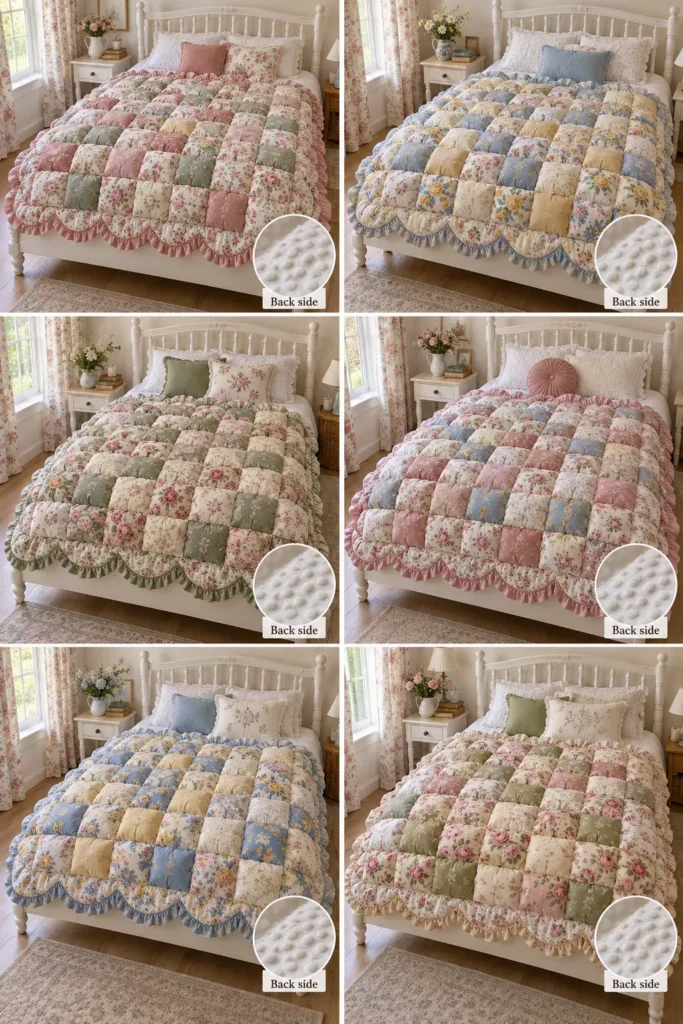
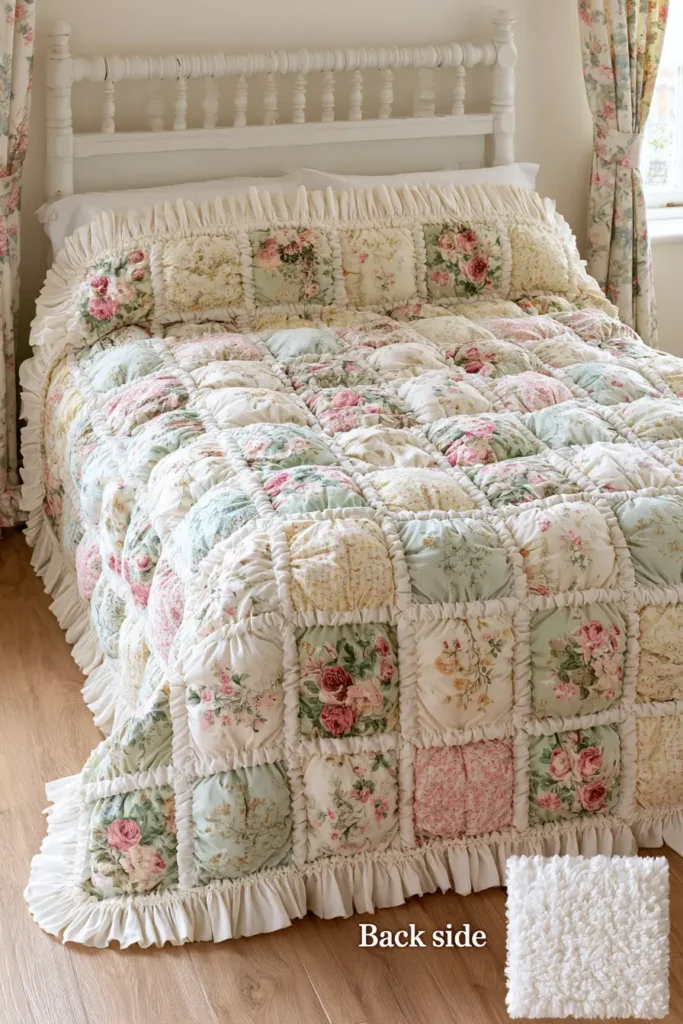
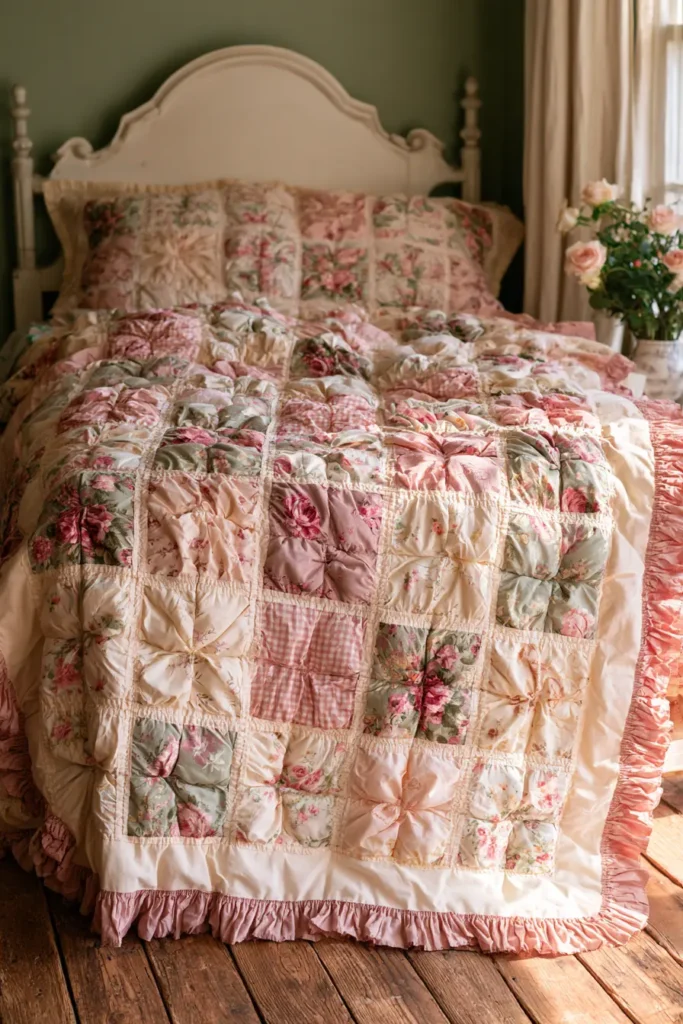
A vintage floral puff quilt combines the dimensional softness of traditional biscuit quilting with the delicate charm of romantic cottage-inspired fabrics. Instead of lying flat, the patchwork consists of individually gathered and stuffed cotton squares that rise into gently rounded pockets, creating a richly textured surface. Dusty pink roses, tiny lavender blossoms, sage-green foliage, and warm ivory backgrounds give the quilt an inviting, nostalgic character. The finishing detail is equally important: gently scalloped edges framed by gathered cotton ruffles soften the outline and make the quilt especially attractive as a decorative bedroom covering.
What distinguishes this design from an ordinary floral patchwork quilt is the relationship between its raised blocks, printed fabrics, and decorative border. The gathered squares create subtle shadows that change with the light, while small-scale florals introduce detail without overwhelming the texture. Unlike a plain cream-and-white biscuit quilt, which relies primarily on the shapes of its stuffed pockets, this version uses carefully coordinated prints to establish its personality. Its cottage-inspired styling works beautifully with painted wooden furniture, natural linen, antique-style ceramics, and softly colored interiors.
Design Inspirations – Digitally Modified Images. Texture and color may vary from the actual product.
Choosing Romantic Cottage Fabrics and Floral Prints
Medium-weight woven quilting cotton is a dependable choice for the individually stuffed squares. It gathers relatively smoothly, maintains stable seams, and comes in a wide variety of floral designs. Look for delicate rose sprays, miniature peonies, trailing botanical vines, tiny wildflowers, and lightly faded gingham. Traditional-style prints on ivory, parchment, or cream backgrounds are particularly effective because they allow the floral details to remain visible without making the patchwork appear overly busy.
A harmonious palette might combine antique rose, dusty mauve, soft lavender, sage green, warm ivory, and touches of muted cornflower blue. For a slightly richer interpretation, introduce faded plum or subdued burgundy among the softer florals.
Pay attention to print scale. Very large floral bouquets may lose their recognizable shapes when the fabric gathers around each puff, while tiny prints can become difficult to distinguish from a distance. A mixture of small and medium prints generally provides better visual balance.
Include occasional solid or nearly solid cotton squares to give the eye somewhere to rest. These quieter blocks also help the gathering and recessed seams remain noticeable.
If using genuinely vintage fabrics, inspect them carefully for thinning, discoloration, weakened fibers, and previous repairs. Vintage-inspired new cotton is often a more practical option when durability and regular laundering are important.
Arranging Floral Puff Blocks for a Balanced Vintage Look
The familiar biscuit-quilt grid provides a useful foundation for varied floral fabrics. Each compartment typically uses a larger upper fabric piece gathered or eased onto a smaller foundation piece, creating a pocket that can be filled before being securely closed and joined into the overall quilt.
For this design, consistent block dimensions are particularly helpful because the floral prints already introduce considerable visual variation. Uniform square pockets establish an orderly rhythm, allowing the romantic fabric combinations to take center stage.
Consider distributing the strongest rose and plum prints throughout the surface instead of concentrating them in one corner. Repeating sage foliage, ivory backgrounds, and delicate lavender motifs between these stronger fabrics helps connect the arrangement.
The filling also deserves attention. Moderate amounts of polyester fiberfill can create softly rounded pockets without making the quilt excessively firm. Too much filling produces exaggerated bulges, strains the seams, and can make the finished surface awkwardly rigid.
The most appealing texture comes from subtle variations in gathering rather than perfectly identical, balloon-like compartments. Allow the cotton to form small natural wrinkles while maintaining reasonably consistent puff heights.
For a calmer cottage aesthetic, avoid introducing too many unrelated bright colors or large modern graphic prints. The combination of floral variety and dimensional construction already provides plenty of visual interest.
Creating Scalloped Edges with Softly Gathered Ruffles
The scalloped ruffled border gives this puff quilt one of its most recognizable features. Rather than ending in an ordinary straight rectangular edge, the quilt is framed by a series of gently rounded curves, with a gathered ruffle following their outer perimeter.
These are two distinct construction details: scalloping establishes the curved outline, while gathering creates the fullness of the ruffle. Combining them successfully requires careful attention to how the border is shaped and finished.
A separate scalloped border surrounding the completed puff-block grid can be a practical design approach. It allows the curved edge to be planned without cutting into or distorting the already stuffed compartments.
Choose a lightweight, stable cotton for the ruffle so it gathers easily and does not introduce unnecessary bulk. A faded-rose solid, tiny ivory floral, or delicate lavender print can complement the main patchwork without competing with it.
Broad, shallow scallops generally create a more graceful outline than numerous very small, tightly curved shapes. They are also easier to coordinate with a gathered border. Pay particular attention to the corners, where the transition between curves can become awkward.
Avoid excessively dense gathering. A ruffle that is too full may obscure the scalloped outline, while insufficient gathering can make the finishing look stiff and uneven.
Helpful Note: Before committing to the decorative border, test a short scalloped section with the intended ruffle fabric. This helps assess the gathering fullness, curved seams, and finished edge thickness without risking the completed quilt.
Backing, Finishing, and Styling the Quilt
A plain woven-cotton backing in warm ivory, muted sage, or soft rose can complement the patterned front without introducing unnecessary visual complexity. Choose a backing fabric with compatible care requirements and enough strength to support the finished quilt.
Because the individual puff compartments already contain filling, additional batting may be unnecessary. Extra layers can make a quilt with a decorative border heavier and more difficult to handle, particularly when the scalloped edges and gathered ruffles are included.
Secure stitching and carefully finished seams are important around the border, where repeated handling can place additional stress on the gathered fabric. If the quilt will be laundered regularly, consider whether the chosen ruffle fabric, filling, and backing can withstand the same washing and drying conditions.
A vintage floral puff quilt is particularly attractive when displayed fully open across an upholstered bed, painted wooden bed frame, or spacious daybed. Soft daylight reveals the rounded compartments, fine floral prints, and gently undulating border.
Pairing the quilt with understated pillows and neutral furnishings allows the patchwork to remain the focal point. Natural oak, antique white, sage green, and muted terracotta can all complement its cottage-inspired character.
The finished design brings together traditional puff construction, carefully coordinated floral cottons, and decorative edge finishing. Its appeal lies not in complicated motifs but in the thoughtful balance between pattern, dimension, and the gentle movement of its scalloped ruffles.
Other Design Inspirations – Digitally Modified Images. Texture and color may vary from the actual product.
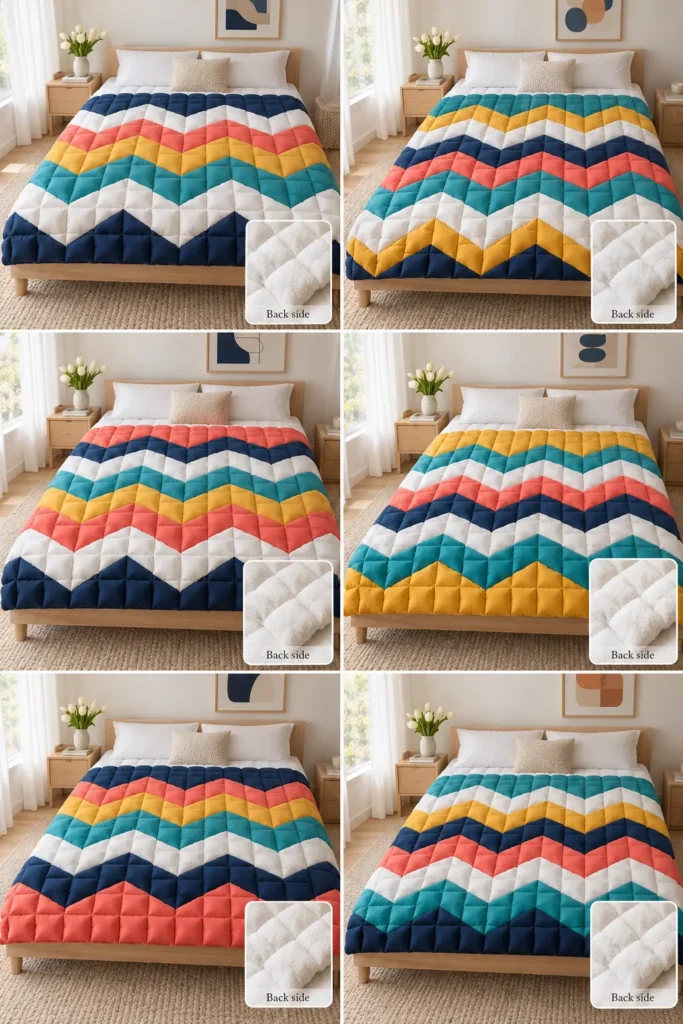
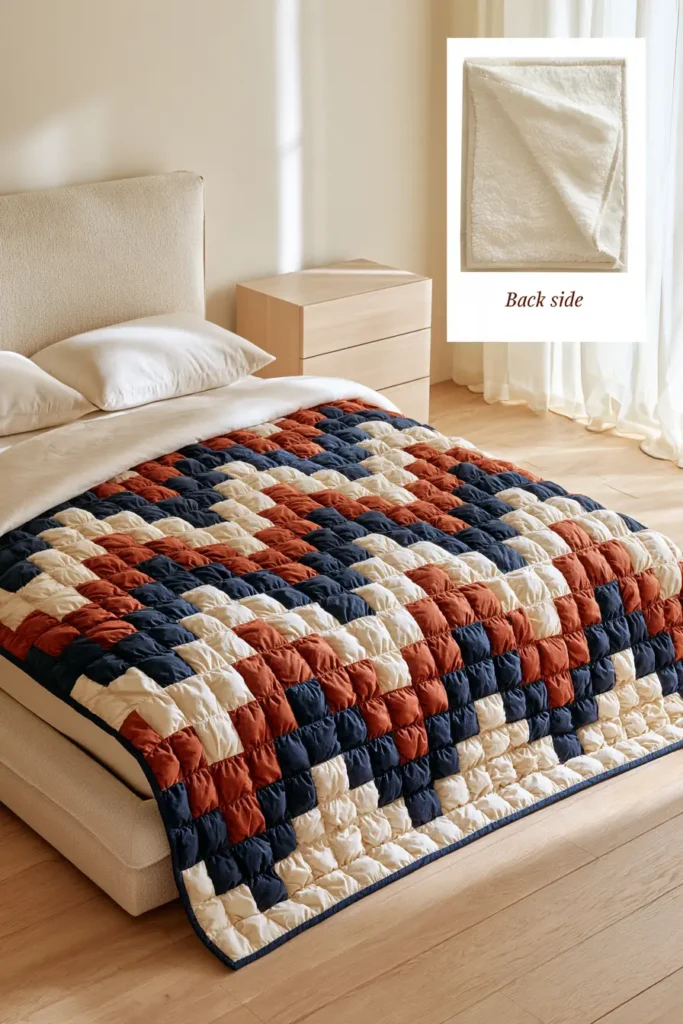
5. Modern Geometric Puff Quilt with Bold Color-Blocked Chevron Rows
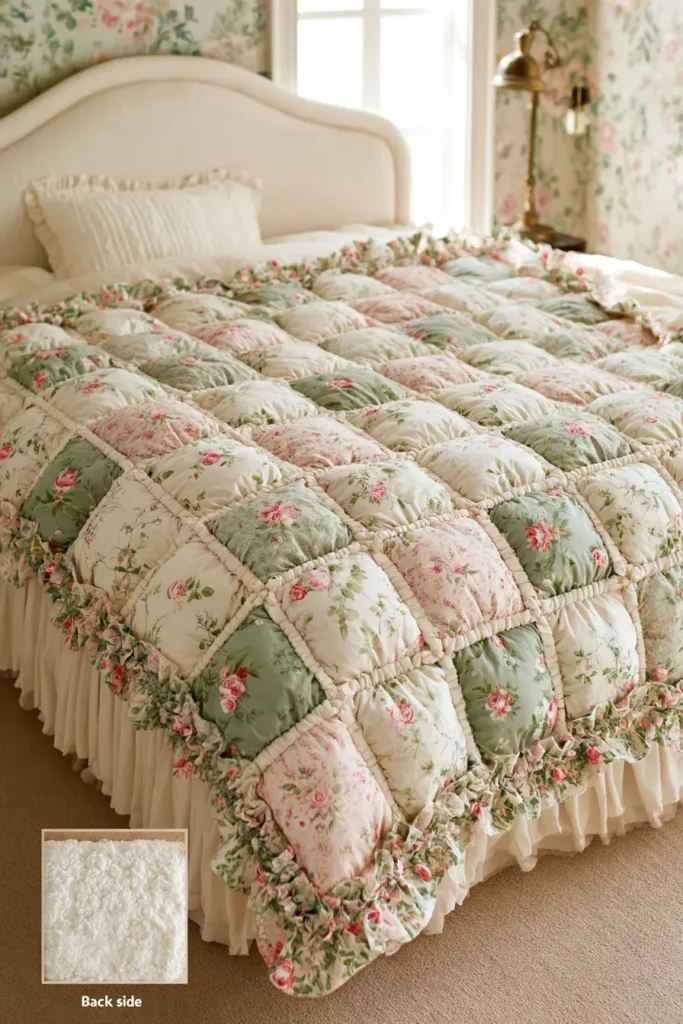
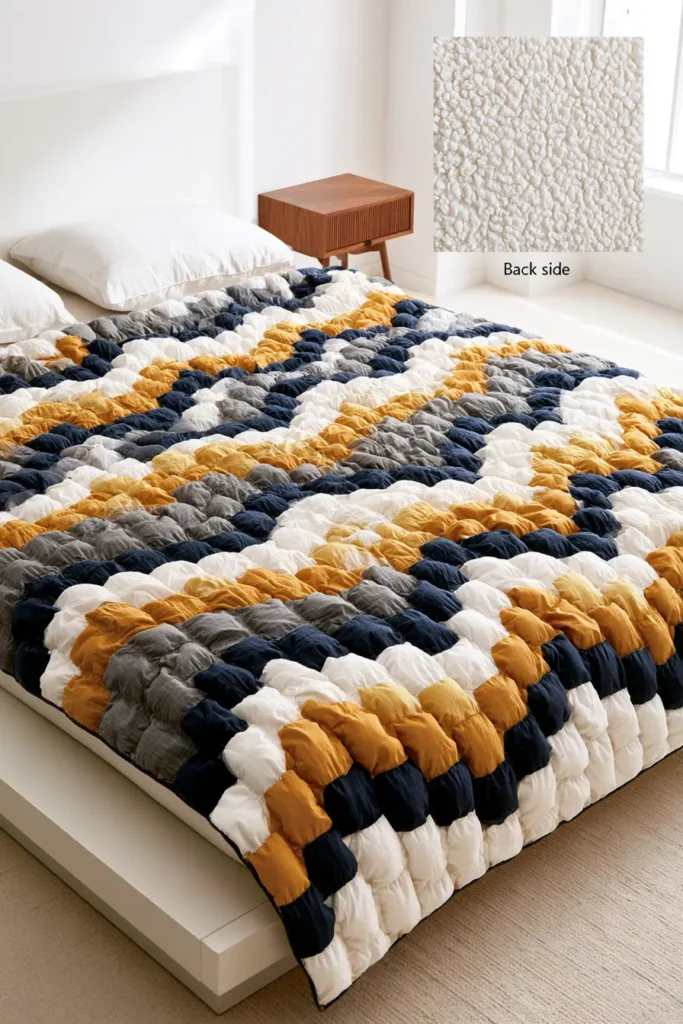
A modern geometric puff quilt brings a bold graphic character to the familiar cushioned texture of traditional biscuit quilting. Instead of arranging colors in a conventional checkerboard or scattered patchwork, this design uses carefully positioned stuffed squares to create continuous chevron rows. Deep midnight navy, rich burnt terracotta, and warm ivory form striking zigzag bands that move rhythmically across the quilt. The contrast between sharp geometric color placement and softly rounded fabric pockets makes the design particularly appealing in contemporary bedrooms and modern living spaces.
What makes this quilt distinctive is that its geometric effect comes from the arrangement of individual square puffs rather than triangular patchwork pieces or printed zigzag fabric. Each square is gathered, stuffed, and joined into a continuous textile, giving the finished surface a sculptural appearance. The chevrons emerge as stepped diagonal lines across the grid, with the raised compartments introducing subtle shadows and texture. Unlike a rainbow ombre quilt, where colors blend gradually, this design depends on deliberate contrast and clearly separated bands. Its orderly movement also distinguishes it from an ordinary black-and-white checkerboard.
Design Inspirations – Digitally Modified Images. Texture and color may vary from the actual product.
Choosing Bold Fabrics and a Modern Color Palette
Solid-colored woven quilting cotton is particularly well suited to this design. Its stable structure supports consistent gathering, while the matte surface allows the raised blocks and bold color placement to remain clearly visible.
A sophisticated three-color combination might use midnight navy for the darkest chevrons, burnt terracotta for warmth, and natural ivory for contrast. The navy establishes visual depth, terracotta introduces energy, and ivory separates the stronger colors without making the quilt feel overcrowded.
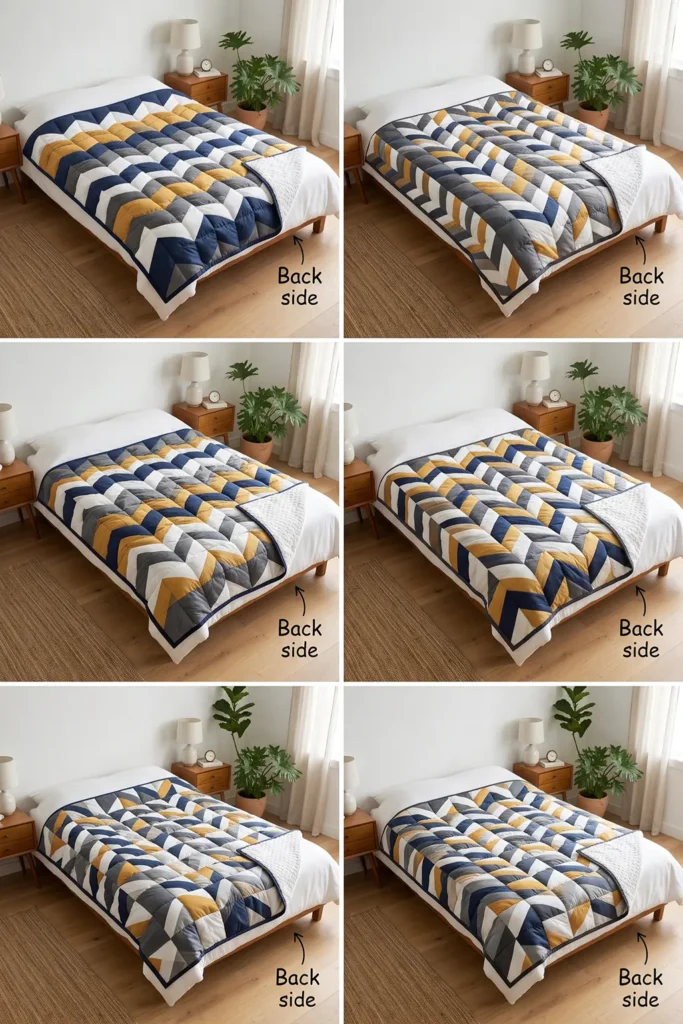
For a brighter interpretation, consider cobalt blue, mustard yellow, and crisp white. A more restrained contemporary palette could combine charcoal, muted sage, and oatmeal. The essential consideration is maintaining enough contrast for the zigzag arrangement to remain recognizable from a distance.
Choose fabrics with comparable weights and finishes. Mixing lightweight cotton with heavy upholstery fabric or stretchy knit material can produce uneven gathering and distorted seams.
Small prints are possible, but large florals, busy multicolored patterns, and unrelated decorative motifs can interrupt the geometric effect. Solid fabrics generally communicate the chevron design most clearly.
Planning Chevron Rows with Color-Blocked Puff Squares
The success of this design depends heavily on block placement. Since the quilt uses square compartments, the diagonal chevron edges are created through a stepped arrangement of contrasting colors.
These stepped diagonals should form repeated V-shaped bands across the quilt, maintaining consistent angles and spacing. An orderly grid allows the zigzag pattern to emerge clearly even though the individual blocks remain square.
Block scale influences the appearance. Larger stuffed squares create broader, more pixelated chevrons, while smaller squares allow the diagonal bands to appear more refined. However, reducing block size also increases the number of seams, stuffed compartments, and joining points.
A useful approach is to plan the color arrangement on graph paper or in a digital grid before preparing the fabric. This makes it easier to identify interrupted diagonals, uneven band widths, or misplaced squares.
Helpful Note: Review the planned layout from a distance before sewing. A chevron that looks obvious on a small grid may become difficult to recognize when viewed across a large quilt if the color bands are too narrow or the contrast is insufficient.
Maintaining Consistent Puff Texture and Secure Seams
Traditional biscuit-style construction uses gathered fabric pockets filled individually to create a raised, cushioned surface. For a geometric quilt, consistency in block size and filling is especially important because uneven compartments can visually disrupt the carefully planned pattern.
Moderate amounts of polyester fiberfill can create gently rounded squares without making them excessively firm. Overstuffed pockets may strain joining seams, distort the grid, and cause neighboring blocks to sit at different heights.
Accurate seam allowances help maintain the alignment of the rows. Because the chevron arrangement relies on repeated directional changes, even small inconsistencies can make the color bands appear irregular.
Keep the stitching secure and avoid unnecessary bulk where several seams meet. Unlike conventional straight-line quilting, the principal texture here comes from the individually stuffed compartments and their recessed joins rather than decorative stitching across the surface.
A narrow navy or ivory cotton binding provides a clean perimeter. Additional batting may be unnecessary because the blocks already contain filling; backing and batting choices should reflect the intended weight, durability, and laundering requirements.
Styling the Finished Geometric Puff Quilt
This design works particularly well when displayed fully open across a simple upholstered bed or broad daybed. Keeping the entire surface visible allows the repeating chevrons to establish a strong visual rhythm, while natural daylight emphasizes the gently raised fabric pockets.
Warm ivory walls, pale oak furniture, and understated linen accessories can balance the navy and terracotta palette. Alternatively, walnut furniture, sage-green walls, and contemporary ceramic décor provide a richer setting that complements the quilt’s graphic character.
Avoid overly patterned bedding or competing geometric accessories, which can weaken the visual impact of the chevron arrangement.
The result is a quilt that combines familiar handmade puff construction with confident contemporary design. Its appeal lies in the careful relationship between color, repetition, and dimensional texture, demonstrating how traditional square compartments can become an expressive geometric statement.
Other Design Inspirations – Digitally Modified Images. Texture and color may vary from the actual product.
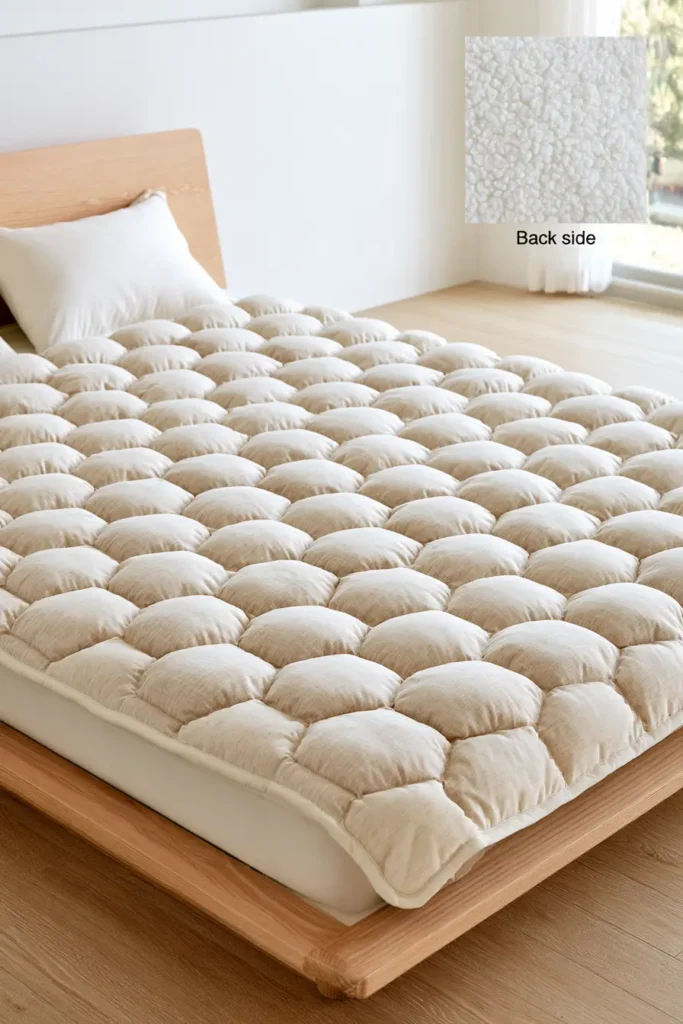
6. Honeycomb Puff Quilt with Individually Stuffed Hexagon Blocks
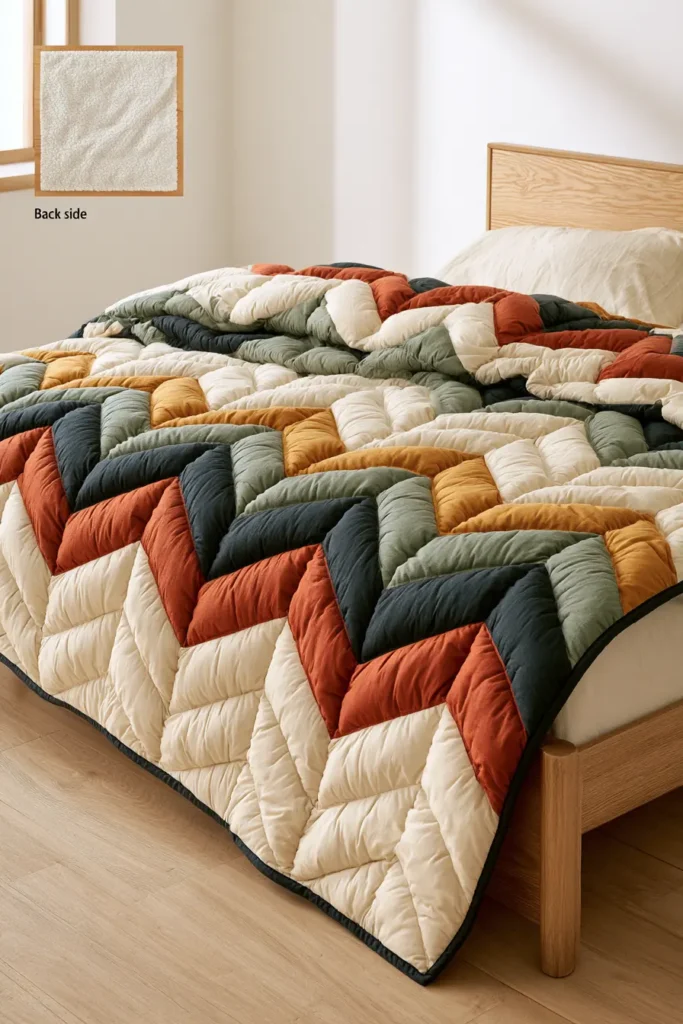
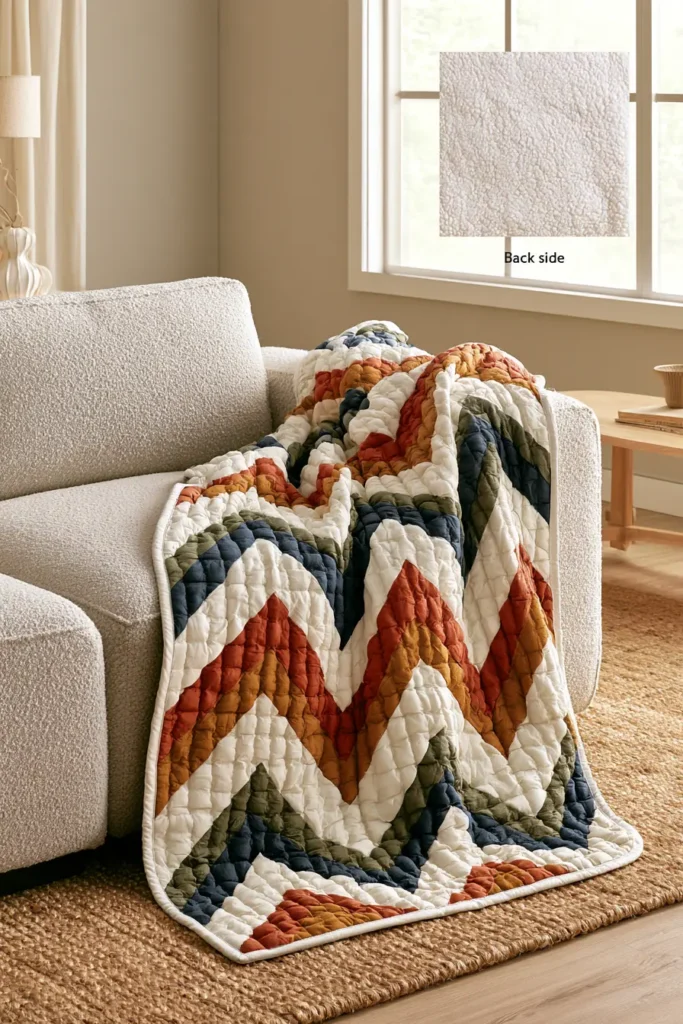
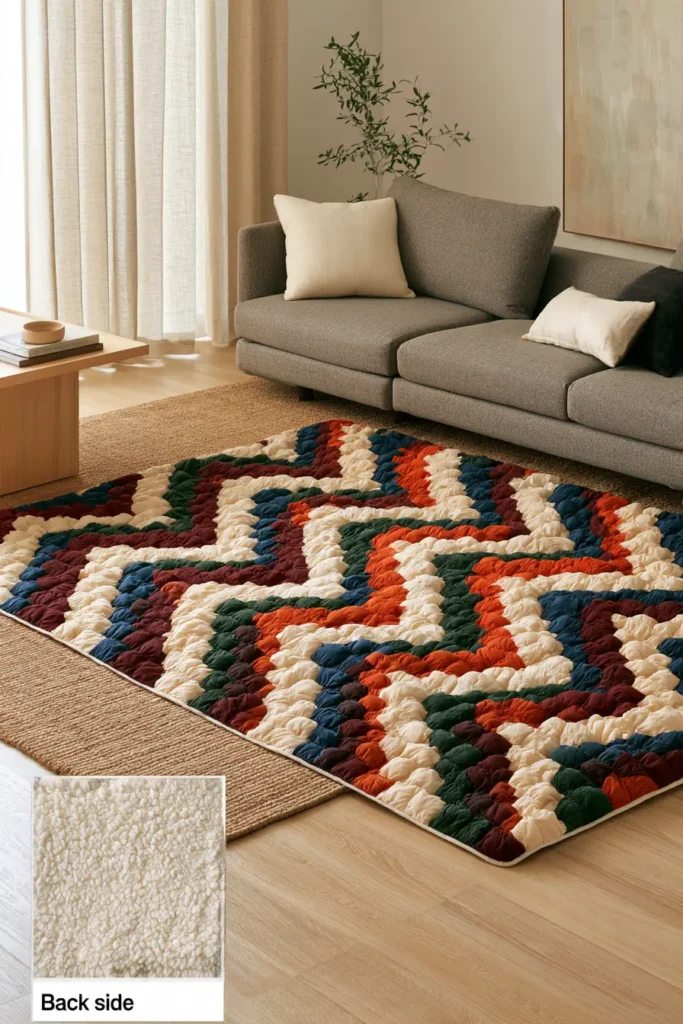
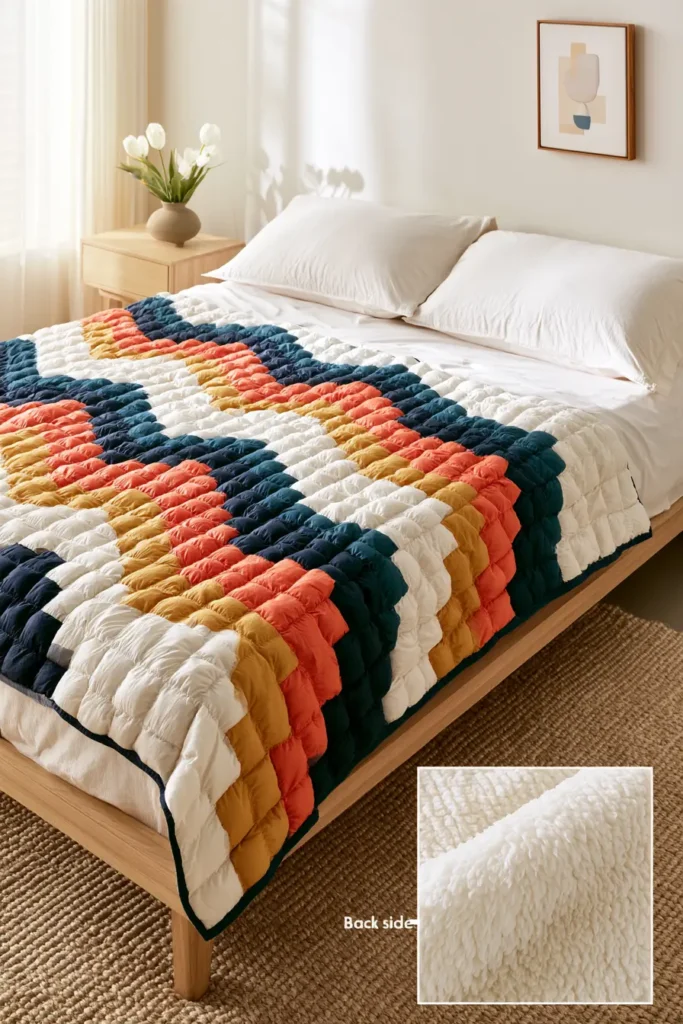
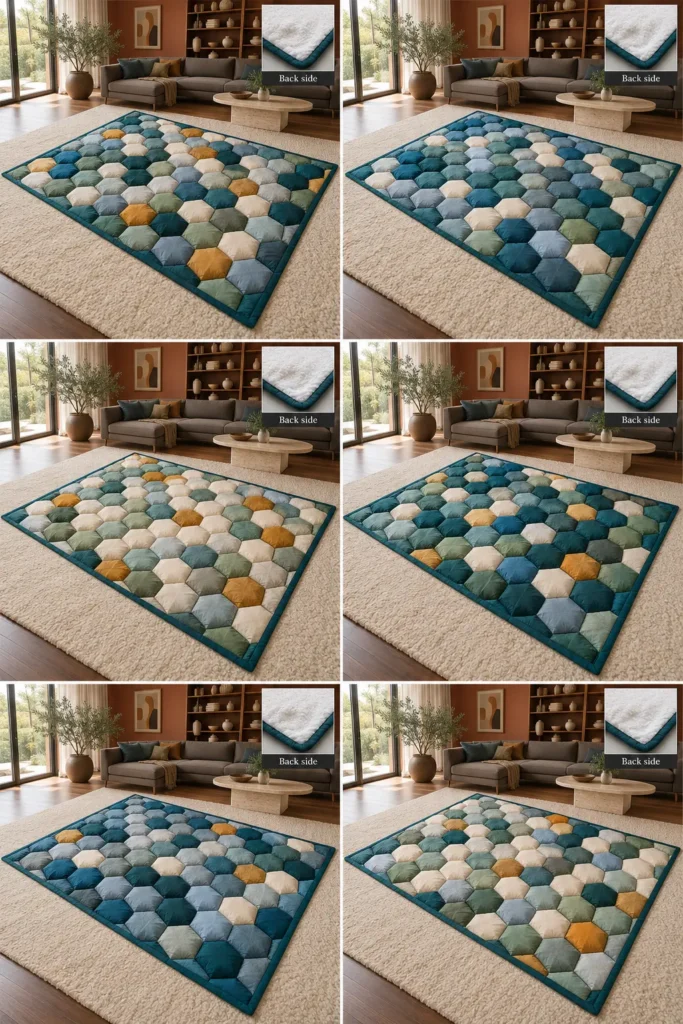
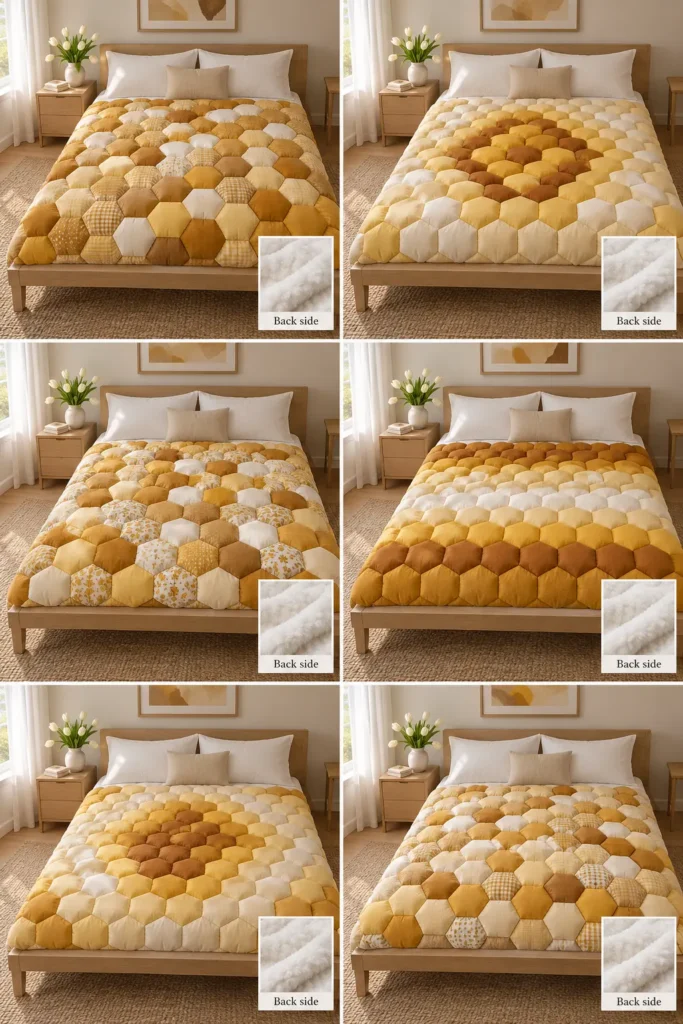
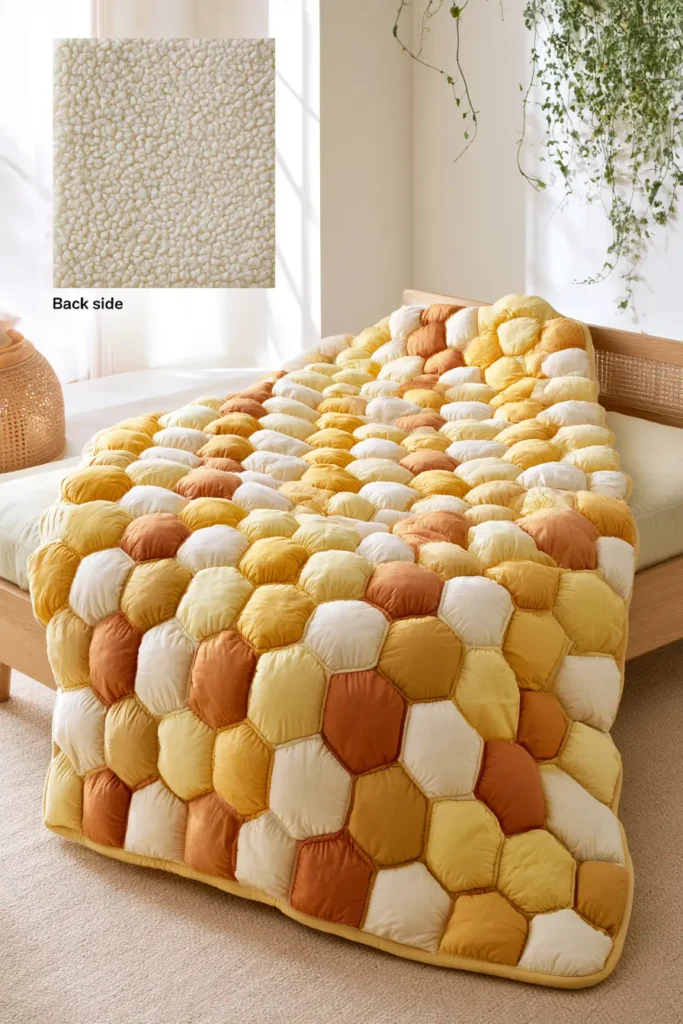
A honeycomb puff quilt offers a fascinating geometric variation on traditional biscuit quilting, replacing the familiar grid of square compartments with individually stuffed hexagonal blocks. These six-sided fabric pockets fit together in a repeating honeycomb arrangement, creating a beautifully structured surface with softly rounded centers and distinctive angular seams. The combination of precise geometry and gently raised fabric makes the design especially appealing for contemporary quilts, where the texture is just as important as the color arrangement.
Unlike conventional square puff quilts, honeycomb designs introduce angled edges and more intricate seam intersections. Each hexagon must retain its recognizable six-sided outline even after gathering and filling, allowing the repeated geometric pattern to remain visible across the quilt. A nature-inspired palette of honey yellow, muted mustard, sage green, warm ivory, and soft terracotta emphasizes the honeycomb character, while deeper teal, petrol blue, and eucalyptus green can create a more contemporary interpretation. The result is a striking combination of geometric order and tactile softness that differs noticeably from both traditional biscuit blocks and circular bubble quilts.
Design Inspirations – Digitally Modified Images. Texture and color may vary from the actual product.
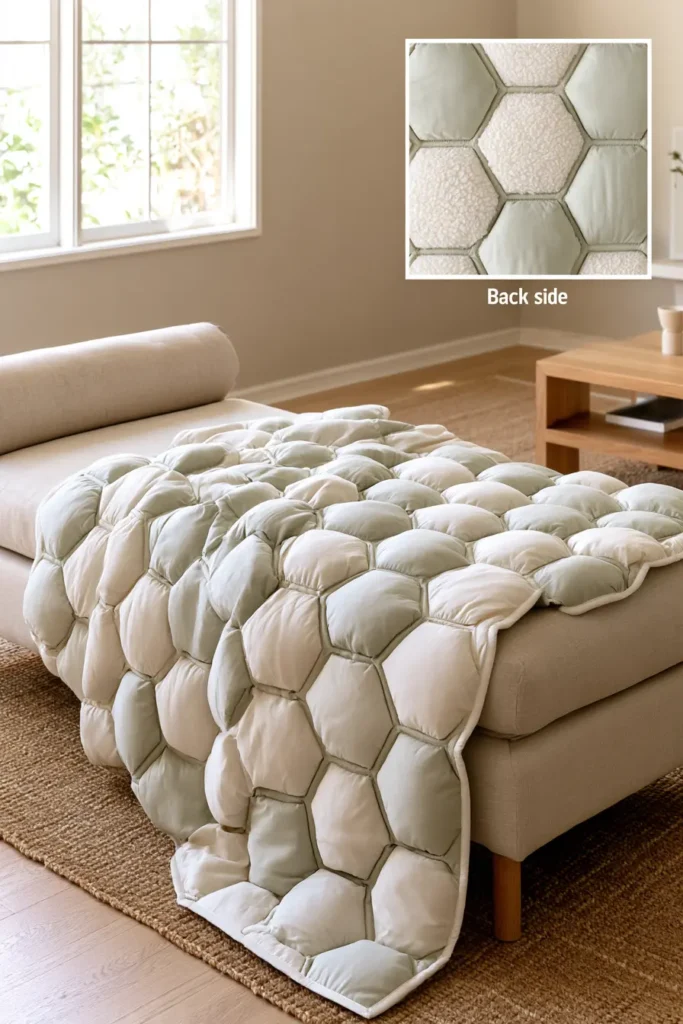
Understanding Hexagonal Puff Construction
The defining feature of this design is the use of individually stuffed hexagonal compartments rather than ordinary squares arranged to resemble a honeycomb.
In a regular hexagonal layout, each block has six sides, and three neighboring hexagons meet at each interior junction. This produces the familiar repeating honeycomb structure, with angled seams forming a continuous network across the quilt.
Traditional puff construction generally involves gathering or easing a larger fabric piece onto a smaller foundation, creating a pocket that can be filled and securely closed. A hexagonal version adapts this principle to six-sided shapes, requiring more attention to alignment and seam intersections.
The challenge is maintaining the hexagonal outlines after stuffing. Excessive filling can push the fabric outward, making the compartments appear almost circular and obscuring the carefully planned geometry.
Moderate filling allows each center to rise gently while the surrounding seams remain sufficiently defined to preserve the honeycomb pattern.
Hexagonal construction also introduces more demanding joining points than a conventional square grid. Accurate seam allowances, careful fabric handling, and controlled bulk around the corners help prevent distortion.
This approach should not be confused with traditional flat hexagon patchwork, including English paper piecing. Although both use recognizable six-sided shapes, a genuine honeycomb puff quilt has individually raised, filled compartments rather than a flat pieced surface.
Choosing Fabrics and Building a Balanced Honeycomb Palette
Medium-weight woven quilting cotton is particularly suitable for this design because it offers stability while allowing the fabric to gather around the hexagonal foundation.
Choose fabrics with similar weights and finishes to maintain a reasonably consistent surface. Lightweight cotton may gather too loosely, while heavier fabrics can create unnecessary thickness around the angled seam intersections.
A warm, nature-inspired combination might include golden honey, mustard, ochre, pale sage, olive green, warm ivory, and restrained touches of terracotta. These colors complement the honeycomb geometry without requiring literal bee or honeycomb illustrations.
For a more contemporary interpretation, combine deep teal, dusty turquoise, eucalyptus green, muted slate blue, and warm parchment. A few carefully distributed ochre accents can introduce warmth without overwhelming the cooler palette.
Solid-colored cotton is especially effective because it allows the hexagonal outlines and dimensional stitching to remain visible.
If incorporating prints, consider subtle botanical patterns, miniature florals, or small-scale geometric designs. Avoid large, high-contrast motifs that may become distorted when gathered around the raised compartments.
Color placement can also influence the finished appearance. Related shades arranged in loosely connected clusters create gentle visual movement, while alternating light and dark hexagons emphasize the repeating geometry.
The most successful arrangements balance variation with repetition, allowing the eye to recognize both the individual hexagons and the overall honeycomb pattern.
Managing Puff Filling, Seam Intersections, and Surface Texture
Consistent filling is particularly important in hexagonal puff quilts because uneven compartments can disturb the alignment of neighboring blocks.
Polyester fiberfill is a practical option for creating softly raised pockets, provided the amount is controlled. The goal is to create a rounded, comfortable surface without turning each hexagon into a rigid cushion.
Overstuffed compartments can strain the seams and make it difficult for the six-sided outlines to remain distinct. Underfilled compartments may appear flat or uneven, reducing the visual depth that makes puff quilting appealing.
The angled seam intersections require careful attention. Where three hexagons meet, excessive seam allowances or overlapping fabric layers can create thick, uncomfortable junctions.
Appropriate seam management helps keep these areas secure without introducing unnecessary stiffness.
The gathering should remain natural rather than mechanically uniform. Small wrinkles near the hexagonal corners and gentle variations in fabric tension contribute to a believable handmade appearance.
Helpful Note: Before planning a full quilt, consider making a small sample of several joined hexagonal puffs. This can reveal whether the chosen fabric gathers comfortably, whether the filling preserves the six-sided outlines, and how much bulk develops where the angled seams meet.
Unlike ordinary square biscuit quilts, hexagonal designs may require additional planning around the outer edges. Partial hexagons or a carefully designed surrounding border can help establish a neat rectangular finish without distorting the main honeycomb arrangement.
Finishing, Practical Use, and Home Styling
A narrow cotton border in ivory, parchment, or deep teal can provide a clean finishing detail while keeping the honeycomb compartments as the visual focus.
Choose a backing that supports the completed quilt without adding excessive weight. Plain woven cotton is a practical option, while a plush backing may introduce additional softness but requires consideration of stretch, thickness, and compatible care requirements.
Because the individual compartments already contain filling, additional batting may be unnecessary. The finished weight will depend on the number and size of the hexagons, the amount of stuffing, and the chosen backing.
A honeycomb puff quilt works beautifully as a decorative throw or bedroom covering. When displayed fully open across a wide bed or daybed, its repeated six-sided compartments create an engaging geometric pattern that becomes more pronounced under natural daylight.
Warm honey and sage tones complement pale oak furniture, ivory walls, and natural woven accessories. Cooler teal and blue-green combinations work particularly well with walnut furniture, terracotta walls, and understated contemporary décor.
The appeal of this design lies in its combination of precise geometry, thoughtful color placement, and individually raised fabric compartments. Although hexagonal construction requires more careful planning than a conventional square puff quilt, the distinctive honeycomb texture makes it an especially rewarding style to explore.
Other Design Inspirations – Digitally Modified Images. Texture and color may vary from the actual product.
More to come …
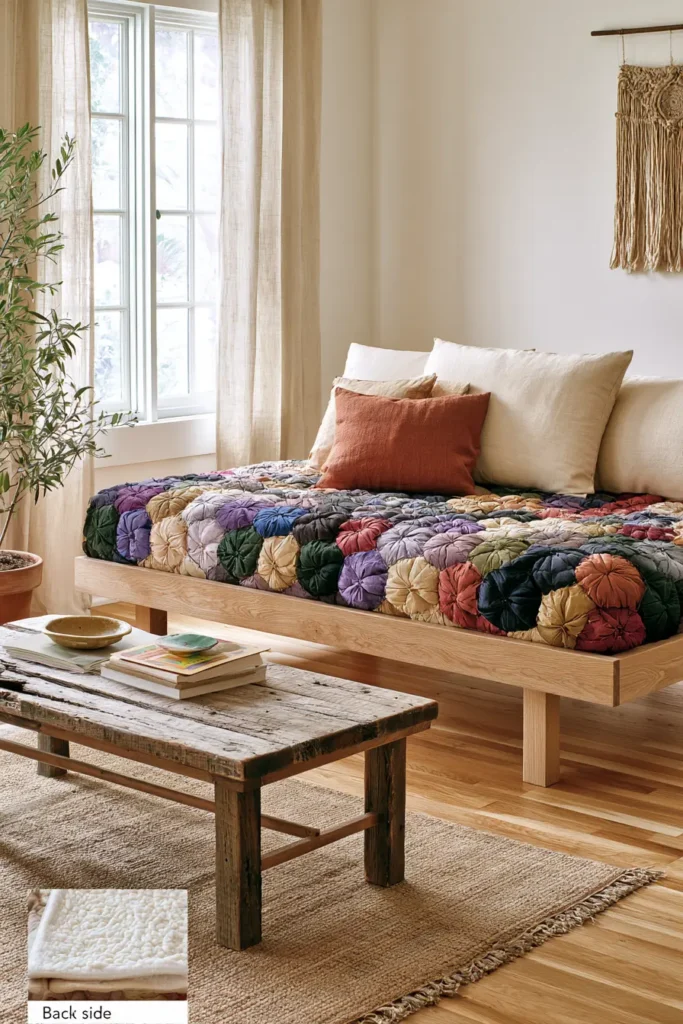
Scrappy Patchwork Puff Quilt with Mixed-Print Squares from Reclaimed Cotton Shirts
Jewel-Tone Velvet Puff Quilt with Plush Squares and Satin Binding
Round Bubble Puff Quilt with Gathered Circular Puffs
Black-and-White Checkerboard Puff Quilt with High-Contrast Graphic Squares
Pixel-Art Puff Quilt with Animal Motifs Built from Color-Blocked Squares
Oversized Cloud Puff Quilt with Giant Puffed Blocks for Floor Lounging
Conclusion
Across these twelve designs, puff quilting proves to be more varied than its simple construction logic suggests. The same technique of gathering, stuffing, and joining individual fabric pockets produces everything from the quiet sculptural surface of a cream biscuit quilt to the bold graphic clarity of a pixel-art throw, the plush luxury of jewel-toned velvet, and the relaxed generosity of oversized floor blocks. Puff Quilt Pattern Ideas are as much about material and color decisions as they are about construction — the technique stays constant while the visual outcome shifts entirely depending on what goes into each block and how those blocks are arranged.
Start from what you have: a set of coordinated prints calls for a neat grid arrangement; a drawer of reclaimed shirts calls for a scrappy layout; a specific palette in mind calls for working backward from the color plan to the fabric selection. Make a few sample blocks first to calibrate the stuffing level and the size relationship between top and backing fabric, and then scale up with confidence. The block-by-block construction means a puff quilt is easy to set down and return to, and easy to adjust as it grows—if a color isn’t working, you can take the blocks apart and remake them rather than unpicking the whole piece.

