
How to Choose Curtain Colors, Fabrics, and Styles That Match Your Home
Picture a bedroom where the curtains are exactly one shade too blue for the warm cream walls — technically close, but slightly off in a way that quietly bothers you every time you walk in. Or a living room where beautiful charcoal grey velvet drapes make the already small space feel like a storage unit. Curtains cover a large vertical slice of a room, and when they are wrong, the whole space suffers.
The good news is that curtains are also one of the fastest ways to improve a room. The right pair can make a space feel brighter, softer, warmer, calmer, cozier, more elegant, or more dramatic — without touching the walls or replacing the furniture.
But choosing curtains is not only about picking a pretty color. The best curtains should work with your wall color, furniture, rug, bedding, room size, natural light, and overall decorating style. White linen curtains can make a living room feel airy and relaxed. Navy velvet curtains can make a bedroom feel richer and more restful. Floral curtains can add charm to a plain guest room. Sage green curtains can bring a calm, natural feeling to a neutral space.
Once you know what your curtains need to do functionally, the next decision is how you want the room to feel. This guide focuses on curtain colors, fabrics, patterns, and design styles. If you are still deciding between blackout, sheer, thermal, light-filtering, or room-divider curtains, read our guide to How to Choose the Right Curtains for Light, Privacy, Sleep, and Insulation first.
Start With the Mood You Want the Room to Have
Before choosing a curtain color or fabric, think about the mood you want to create. This is often easier than starting with a specific color. Do you want the room to feel bright and open? Calm and natural? Cozy and restful? Elegant and polished? Rustic and warm? Once you know the feeling you want, choosing your curtains becomes much easier.
| Desired room mood | Good curtain choices | Read next |
| Bright and airy | White, sheer, light-filtering, linen | Best White Curtains, Best Sheer Curtains, Best Light Filtering Curtains, Best Linen Curtains |
| Calm and natural | Sage green, linen, soft neutrals | Best Sage Green Curtains, Best Linen Curtains |
| Cozy and restful | Velvet, blackout, navy, thermal | Best Velvet Curtains, Best Navy Blue Curtains, Best Blackout Curtains |
| Elegant and polished | Faux silk, velvet, pinch pleat-style panels | Best Faux Silk Curtains, Best Velvet Curtains |
| Rustic and warm | Farmhouse, linen-look, checks, stripes | Best Farmhouse Curtains, Best Linen Curtains |
| Relaxed and artistic | Boho, tassels, macrame, embroidery | Best Boho Curtains |
| Romantic or cottage-inspired | Floral, soft white, sage, linen | Best Floral Curtains, Best White Curtains, Best Sage Green Curtains |
For example, if you want a calm bedroom, sage green, linen, navy, or soft white curtains may work better than a busy pattern. If you want a formal dining room, faux silk or velvet curtains may feel more appropriate than casual cotton-look panels. If you want a relaxed living room, linen, sheer, or light-filtering curtains are often a safer choice than heavy, dark drapes.
The mood comes first. Color, fabric, and pattern should support that mood.
How to Choose the Right Curtain Color
Curtain color is one of the biggest design decisions because curtains cover a large vertical area. They can either blend into the room or become one of its main features. There are three core strategies for choosing curtain color, plus two factors most people overlook: undertones and the room’s direction.
Match the Wall for a Calm, Seamless Look
Matching the curtain color to the wall creates a soft, calm, and seamless look. This works especially well in small rooms, minimalist spaces, bedrooms, and neutral interiors. It can also make a room feel larger because the eye is not stopped by a strong contrast.
Examples include: white walls with white curtains; beige walls with oatmeal or linen curtains; cream walls with ivory curtains; gray walls with soft gray or white curtains; sage green walls with ivory or muted green curtains.
Go One or Two Shades Darker for Depth
If you want a little more depth without making the curtains too bold, choose a color that is one or two shades darker than the wall. This adds more dimension to the room while still feeling coordinated, and works especially well in neutral rooms that need a little more structure.
Examples include: cream walls with taupe curtains; light gray walls with charcoal curtains; pale blue walls with navy curtains; soft green walls with sage or olive curtains; beige walls with warm brown or deeper oatmeal curtains.
Choose Contrast for a Statement
Choose contrast when you want the curtains to become a design feature. This works best when the walls and furniture are simple enough to let the curtains stand out. Contrast can make a room feel more styled and intentional, and is especially useful when the space feels plain and needs a focal point.
Examples include: white walls with navy blue curtains; beige walls with sage green curtains; gray walls with velvet curtains; cream walls with floral curtains; neutral walls with boho- or farmhouse-patterned curtains.
Watch the Undertones — the Detail Most People Miss
One of the most common curtain color mistakes is choosing a color that technically matches the wall but has the wrong undertone. The result is a room that looks slightly off, and the homeowner can’t identify why.
Warm walls (walls with yellow, orange, or red undertones — cream, warm white, warm beige, terracotta) usually look better with warm whites, ivory, cream, oatmeal, taupe, soft terracotta, or warm sage curtains. Cool walls (walls with blue, green, or grey undertones — cool white, silver grey, slate, cool greige) usually work better with crisp white, cool grey, blue, navy, silver, charcoal, or cooler greens.
A practical example: crisp white curtains can look stark and slightly harsh against warm cream walls. In that case, ivory or warm white curtains often look far softer and more intentional. Conversely, warm beige curtains can look slightly muddy against a cool grey wall, while white, silver, charcoal, or navy may look significantly cleaner.
When shopping online, look for product descriptions that mention warm or cool tones, or read the customer reviews — buyers often note whether the color reads warmer or cooler than the product photos suggest.
Consider Which Direction Your Room Faces
The direction your windows face affects how colours look in the room throughout the day — a factor that matters especially for readers in the UK, Canada, and the northern US, where light quality varies significantly by orientation.
| Room direction | Light quality | Curtain colour and fabric tip |
| North-facing rooms | Cooler and darker all day | Use warm-toned curtains: cream, linen, oatmeal, soft sage, or blush. Avoid cool whites and greys, which can feel clinical in low light. |
| South-facing rooms | Bright and strong most of the day | Sheers, light-filtering curtains, or lined curtains work well. Darker colours absorb heat and can make the room feel warmer than needed. |
| East-facing rooms | Bright morning light, shaded afternoons | Blackout or lined linen for bedrooms; light-filtering or sheer for living rooms where morning brightness is welcome. |
| West-facing rooms | Strong afternoon and evening sun | Consider light-filtering, lined, or thermal curtains to reduce glare and heat gain. West light is warm and golden — it flatters warm curtain tones like cream, sage, and linen. |
A color that looks soft and inviting in a bright south-facing room may look dull or cold in a north-facing one. Always consider the room’s lighting, not just the color on the product page.
For color-focused ideas, see our guides to Best White Curtains, Best Navy Blue Curtains, Best Sage Green Curtains, Best Floral Curtains, Best Velvet Curtains, and Best Linen Curtains.
What Color Curtains Go With Your Wall Color?
One of the most common curtain questions is: what color curtains go with my walls? The answer depends on whether you want the curtains to blend in or stand out. Safe choices are timeless and easy to style. Stronger choices work better when you want the curtains to become a focal point.
| Wall color | Safe curtain choices | Stronger style choices | Read next |
| White walls | White, ivory, beige, linen | Navy, sage green, floral, velvet | White, Navy Blue, Sage Green, Floral, Velvet |
| Cream walls | Linen, ivory, beige, taupe | Navy, sage, floral, faux silk | Linen, Sage Green, Navy Blue, Floral, Faux Silk |
| Beige walls | White, oatmeal, taupe, linen | Navy, sage green, farmhouse patterns | White, Linen, Sage Green, Navy Blue, Farmhouse |
| Gray walls | White, charcoal, silver, soft blue | Navy, sage, velvet, floral | White, Navy Blue, Sage Green, Velvet, Floral |
| Greige walls | White, ivory, linen, taupe | Navy, sage, velvet, boho | Linen, Navy Blue, Sage Green, Velvet, Boho |
| Blue walls | White, ivory, gray, linen | Navy, floral, faux silk | White, Linen, Navy Blue, Floral, Faux Silk |
| Navy walls | White, ivory, beige, light gray | Gold-tone faux silk, floral, velvet | White, Faux Silk, Floral, Velvet |
| Green walls | White, ivory, beige, linen | Floral, navy, velvet | White, Linen, Navy Blue, Floral, Velvet |
| Sage green walls | White, oatmeal, ivory, linen | Navy, floral, soft pink, velvet | White, Linen, Navy Blue, Floral, Velvet |
| Brown or tan walls | Cream, linen, beige, white | Sage, navy, farmhouse, floral | Linen, White, Sage Green, Navy Blue, Farmhouse |
| Black or charcoal walls | White, ivory, light gray | Velvet, faux silk, floral, navy | White, Velvet, Faux Silk, Floral, Navy Blue |
If you are unsure, start with a safe curtain color. White, ivory, beige, linen, oatmeal, soft gray, and sage green are easier to style than bold colors. If the room already feels too plain, then consider navy, floral, velvet, faux silk, boho, or farmhouse curtains as a stronger statement.
Should Curtains Match the Wall, Sofa, Rug, or Bedding?
Curtains do not need to match everything exactly. In fact, a room can look flat if every color is too perfectly matched. A better approach is to coordinate the curtains with one or two major elements in the room.
Match the Wall for a Seamless Look
Matching the wall is best when you want the room to feel calm and uninterrupted. This works well in small rooms, minimalist spaces, and soft bedrooms. White curtains on white walls can make a room feel bright and open. Linen curtains on beige walls create a warm, neutral look. Soft gray curtains on gray walls feel quiet and modern.
Match the Sofa or Bedding for a Coordinated Look
In a living room, the sofa is often the biggest color anchor. In a bedroom, the bedding often plays that role. Curtains can repeat that color to make the room feel more intentional — navy curtains with navy bedding; sage curtains with sage accent pillows; ivory curtains with a cream sofa; floral curtains that pick up colors from the bedding. The color does not need to match exactly, only feel related.
Match the Rug or Accent Pillows for a Layered Designer Look
A more designer-style approach is to repeat a secondary color from the rug, pillows, artwork, or bedding. If your rug has touches of sage green, sage curtains can make that color feel intentional across the room. If your pillows include navy, navy curtains can tie the space together. This technique — repeating an accent color in the curtains — is one of the simplest ways to make a room look deliberately styled rather than assembled piece by piece.
Use Contrast When the Room Feels Too Plain
If your walls and furniture are neutral, curtains can add the contrast the room is missing. Navy blue curtains can sharpen a white room. Sage green curtains can warm up beige walls. Floral curtains can add charm to a plain bedroom. Velvet curtains can make a simple living room feel richer. Contrast works best when the surrounding elements are simple enough to let the curtains breathe.
For room-specific help, see Best Curtains for Living Room and Best Curtains for Bedroom.
How Curtain Color Changes the Feel of a Room
Curtain color affects how a room feels even before anyone notices the fabric or pattern. Light colors, dark colors, natural tones, and patterns all create different effects.
Light Curtains
Light curtains can make a room feel brighter, larger, cleaner, softer, and more open. Good examples include white, ivory, sheer, and linen curtains. They work especially well in small rooms, coastal spaces, modern homes, apartments, and living rooms where you want as much daylight as possible. Read more in Best White Curtains, Best Linen Curtains, and Best Sheer Curtains.
Dark Curtains
Dark curtains can make a room feel cozier, more dramatic, more grounded, more private, and more formal. Good examples include navy blue, charcoal, deep green velvet, and dark blackout curtains. Dark curtains are especially useful in bedrooms, media rooms, formal living rooms, and rooms with high ceilings where the visual weight does not feel oppressive. Read more in Best Navy Blue Curtains, Best Velvet Curtains, and Best Blackout Curtains.
Green and Natural Tones
Sage green, linen, oatmeal, beige, and other earthy colors can make a room feel calm and natural. These colors work well with wood furniture, white, cream, and greige walls, and soft neutral decor. Sage green is especially useful when you want color without making the room feel too bold. Linen and oatmeal tones are good when you want warmth without a strong contrast. In north-facing rooms that tend to run cool and be shadowed, warm, earthy tones like linen and oatmeal can help balance the space and make it feel more welcoming. Read more in Best Sage Green Curtains and Best Linen Curtains.
Patterns and Florals
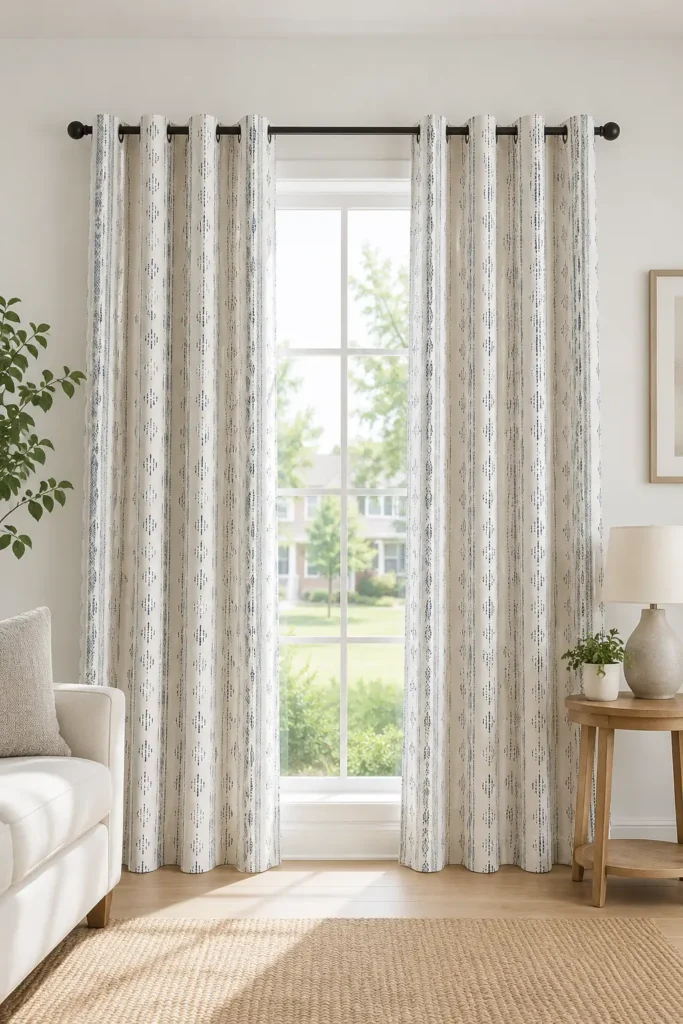
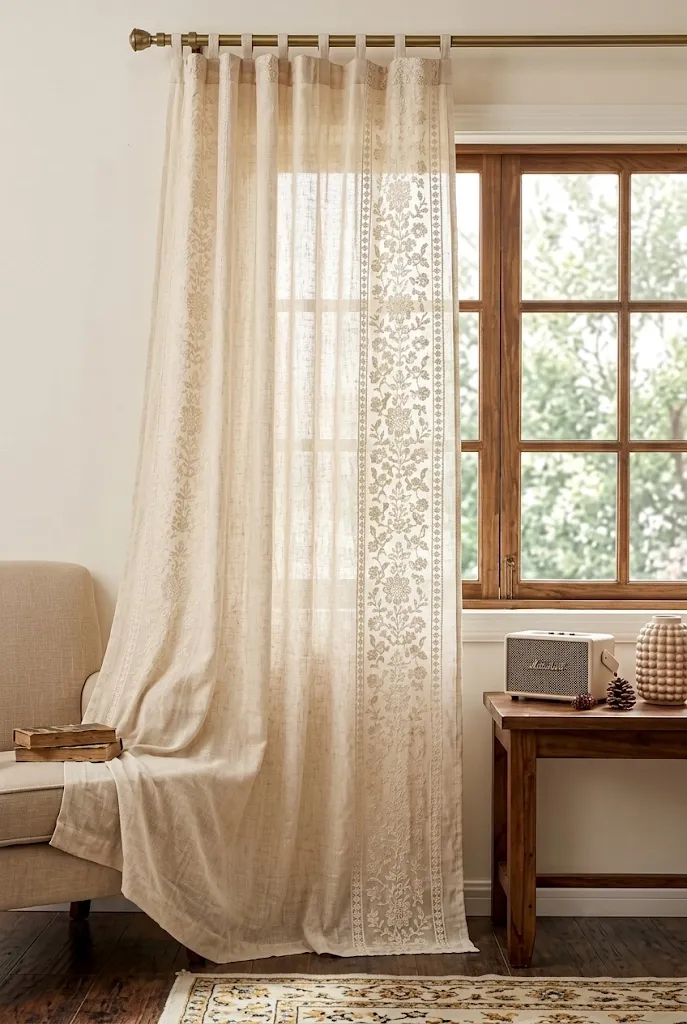
Patterned curtains can make a room feel warmer, more personal, and more decorative. Floral curtains create a cottage, vintage, or romantic mood. Boho curtains feel relaxed and artistic. Farmhouse curtains make a room feel cozy and homey. Patterns work best when the rest of the room is not already too busy — one dominant pattern is usually enough. Read more in Best Floral Curtains, Best Boho Curtains, and Best Farmhouse Curtains.
Solid Curtains vs. Patterned Curtains
One of the biggest style decisions is whether to choose solid curtains or patterned curtains. Both can work beautifully, but they solve different design problems.
Choose Solid Curtains If:
Solid curtains are best when you want the room to feel calm, timeless, or easy to style. Choose solid curtains if:
- The room already has patterned rugs, bedding, wallpaper, or furniture
- You want a clean and classic look
- The room is small or visually busy
- You are choosing a bold fabric like velvet or faux silk, where the texture itself is the design statement
- The curtain color is already strong, such as navy or sage green
- You want the curtains to blend in instead of dominate the room
Good, solid curtain choices include white, navy blue, sage green, linen, velvet, and faux silk curtains. Solid curtains are also easier to move from room to room because they are less tied to a specific pattern or theme.
Choose Patterned Curtains If:
Patterned curtains are best when the room feels too plain or when you want the window to become a focal point. Choose patterned curtains if:
- The walls are neutral, and the room needs personality
- You want a cottage, boho, floral, or farmhouse look
- You want to add color without repainting
- The furniture and rug are mostly solid
- You want the curtains to feel decorative, not just practical
Good patterned choices include floral curtains, boho curtains, farmhouse curtains, striped linen-look curtains, embroidered curtains, and textured cotton panels.
A simple rule: if the room already has several patterns, choose solid curtains. If the room feels plain, patterned curtains can bring it to life.
How to Choose Curtains by Fabric
Fabric is just as important as color. It affects texture, light behavior, visual weight, formality, drape, and care requirements. A white linen curtain and a white faux silk curtain can look completely different even though they are the same color. A navy velvet curtain feels richer and heavier than a navy polyester curtain. A sheer curtain creates softness, while blackout fabric creates privacy and weight.
| Fabric type | Look and feel | Best for | Read next |
| Linen / linen-look | Relaxed, natural, airy | Living rooms, bedrooms, neutral spaces | Best Linen Curtains |
| Velvet | Rich, cozy, dramatic, heavy | Bedrooms, formal living rooms, colder seasons | Best Velvet Curtains |
| Faux silk | Elegant, polished, subtle shine | Dining rooms, formal living rooms, traditional bedrooms | Best Faux Silk Curtains |
| Sheer / voile | Light, airy, romantic | Layering, bright rooms, soft daylight | Best Sheer Curtains |
| Polyester blackout | Practical, opaque, easy-care | Bedrooms, nurseries, media rooms | Best Blackout Curtains |
| Cotton-look / textured fabric | Casual, cozy, homey | Farmhouse, boho, cottage rooms | Best Farmhouse Curtains, Best Boho Curtains |
When choosing fabric, ask three questions: Do I want the curtains to feel casual or formal? Do I want the fabric to look light or heavy? Do I need the curtains to filter light, block light, or mainly add style? Once you answer those, choosing the right fabric becomes easier.
Linen Curtains — The Most Versatile Western Interior Fabric
Linen and linen-look curtains are among the most versatile choices for Western interiors. They work across farmhouse, coastal, Scandinavian, organic modern, boho, minimalist, and cottage-style rooms — a span of styles that very few other fabrics can cover with equal ease.
Choose linen curtains if you want natural texture, relaxed elegance, soft neutral decor, light-filtering quality, or a curtain that feels stylish but not too formal. Linen curtains are especially good in living rooms because they soften daylight without making the room feel heavy. They also work well in bedrooms when you want a calm, relaxed look rather than a dramatic blackout style.
| The Linen-Blend Reality: Many affordable ‘linen curtains’ are not pure linen. They may be linen-look polyester, polyester-linen blends, cotton-linen blends, or textured synthetic fabrics. That is not automatically a problem. Blended or linen-look curtains can cost less, wrinkle less, be easier to wash at home, and come in more sizes and color options. They can also look very similar to pure linen from across a room. However, they may not have the same natural slub texture, hand feel, or breathability as real linen. When comparing products, it is worth checking whether a curtain is made of true linen, a linen blend, or a linen-look fabric — the description or care label usually tells you. |
For more options, read Best Linen Curtains, Best Light Filtering Curtains, Best Curtains for Living Room, Best Curtains for Bedroom, and Best White Curtains.
Velvet Curtains — Color Depth, Visual Weight, and the Ceiling Height Rule
Velvet curtains are best when you want a room to feel rich, cozy, and dramatic. Their biggest design strength is color depth and dimensional quality. A navy velvet curtain does not look or feel the same as a flat navy polyester curtain. Velvet catches light and shadow, which makes the color appear deeper and more dimensional throughout the day.
Choose velvet curtains if you want a luxurious look, a cozy bedroom, deeper color saturation, a formal living room, more visual weight, or a soft plush texture. Velvet works especially well in bedrooms, living rooms, dining rooms, and media rooms. It pairs beautifully with jewel tones, warm metallics, dark wood, cream walls, white walls, and traditional furniture.
Good velvet curtain colors include navy blue, emerald green, ivory, blush, charcoal, burgundy, and gold.
| The Ceiling Height Rule for Velvet in Small Rooms. Velvet can feel heavy in a small room, but the issue is usually visual weight rather than the fabric’s actual weight, and ceiling height matters more than floor area. Dark velvet in a room with low ceilings tends to feel oppressive and closing in. The same dark velvet in a room with high ceilings can feel dramatic and genuinely luxurious. If your room has lower ceilings or is on the smaller side, consider lighter velvet colors: ivory, blush, pale sage, warm beige, or soft grey. These preserve the plush texture and visual richness without adding the darkness that can shrink a space. If the room is already visually crowded, a simpler velvet style — solid panel, clean heading, minimal embellishment — will usually look better than a more decorative choice. |
For more ideas, read Best Velvet Curtains, Best Navy Blue Curtains, Best Curtains for Bedroom, Best Curtains for Living Room, and Best Blackout Curtains.
Faux Silk Curtains — Elegance Without the Maintenance, But Line Them
Faux silk curtains are best for readers who want an elegant, polished, or formal look without the cost and care requirements of real silk. They usually have a subtle sheen that makes a room feel more dressed up, which is why they work especially well in dining rooms, formal living rooms, traditional bedrooms, and guest rooms.
Choose faux silk curtains if you want subtle shine, elegant drape, a formal or traditional room, a polished guest room, or a dining room look that reads as considered and intentional. Faux silk works well in ivory, champagne, gold, navy, silver, or soft grey.
| Why Faux Silk Almost Always Looks Better Lined Faux silk is one fabric where lining is not just optional — it is usually worth it. A liner improves how the curtain hangs, adds privacy, makes the curtain look fuller and more substantial, and reduces harsh light shining through the face fabric. More importantly, lining protects faux silk from direct sun exposure. Strong sunlight can fade, discolour, or degrade faux silk faster than most other curtain fabrics. In south- or west-facing windows especially, lined faux silk curtains will last significantly longer than unlined ones. If you are comparing faux silk products on Amazon, check whether the listing mentions lining — and if it does not, consider whether the window gets strong afternoon sun before buying. |
For more options, read Best Faux Silk Curtains, Best Curtains for Living Room, Best Curtains for Bedroom, Best White Curtains, and Best Navy Blue Curtains.
Sheer Curtains — Most Useful as a Layering Tool
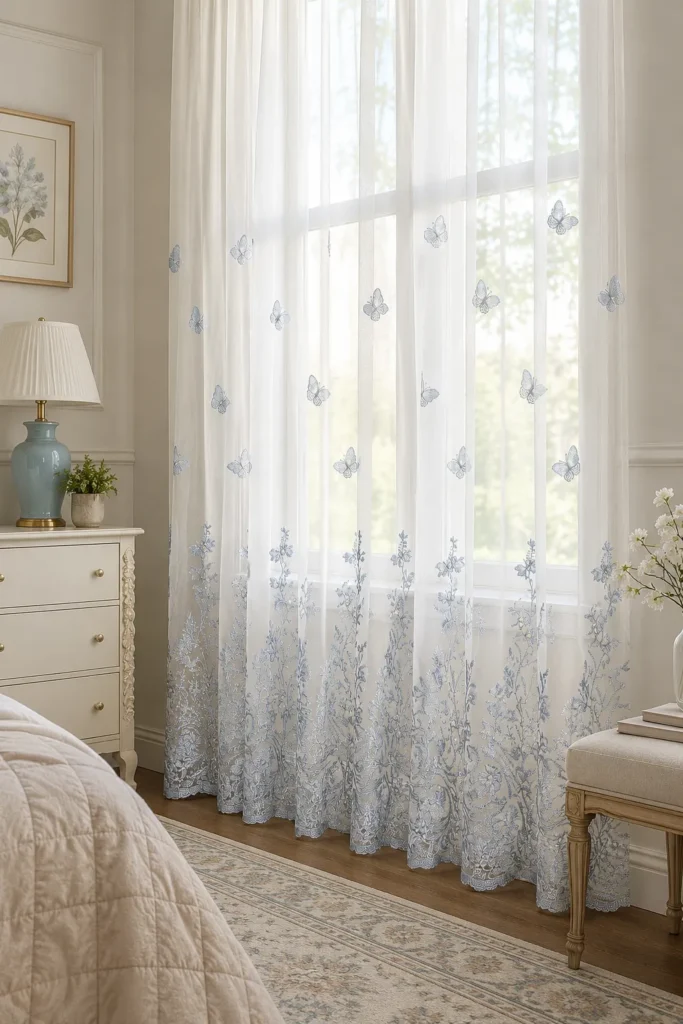
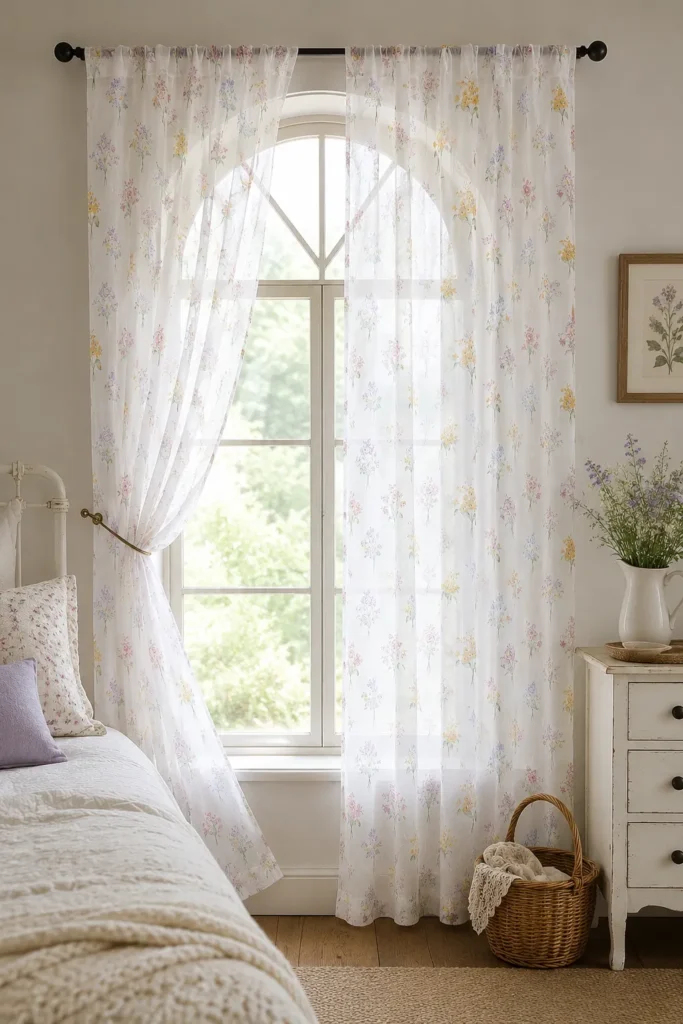
Sheer curtains are light, airy, and beautiful. They soften a room without adding much visual weight and can be used on their own, but they are often most useful as a layering tool rather than a standalone window treatment.
The core value of sheer: it keeps windows looking finished and soft during the day, while a heavier outer curtain provides privacy, blackout, or insulation at night. A room with sheers only can feel unfinished when the outer curtains are drawn back. A room with sheers as an inner layer looks polished at every point in the day.
Good layering combinations:
| Inner layer | Outer layer | Best effect |
| White sheer | Linen curtain | Soft, relaxed, airy |
| Sheer curtain | Blackout curtain | Daylight by day, darkness at night |
| Sheer curtain | Velvet curtain | Elegant, cozy, layered |
| Sheer curtain | Faux silk curtain | Formal and polished |
| Sheer curtain | Floral curtain | Romantic, cottage-style |
Sheers are not ideal if nighttime privacy is your main goal. In that case, use them as an inner layer and pair with blackout, velvet, linen, or lined curtains. Layering usually requires a double curtain rod or layered hardware so both layers can move independently. For more ideas, read Best Sheer Curtains, Best Light Filtering Curtains, Best White Curtains, Best Curtains for Living Room, and Best Curtains for Bedroom.
How to Choose Curtains by Interior Style
Curtains should reinforce the room’s overall style. A curtain can be the right color but still feel wrong if the fabric, pattern, or header style does not match the room. A shiny faux silk curtain may feel too formal in a casual farmhouse room. A tassel-trimmed boho curtain may feel out of place in a polished traditional dining room. A velvet curtain may add drama to a formal living room but feel too heavy in a breezy coastal space.
| Interior style | Curtain choices that work well | Read next |
| Modern | White, linen, solid colours, pinch pleat panels | Best White Curtains, Best Linen Curtains |
| Minimalist | White, ivory, beige, light grey, linen | Best White Curtains, Best Linen Curtains |
| Farmhouse | Linen-look, white, buffalo check, stripes, ruffles | Best Farmhouse Curtains, Best Linen Curtains, Best White Curtains |
| Boho | Tassels, fringe, macrame, embroidery, textured cotton | Best Boho Curtains, Best Linen Curtains |
| Cottage | Floral, lace, soft white, sage green | Best Floral Curtains, Best White Curtains, Best Sage Green Curtains |
| Coastal | White, linen, sheer, pale blue | Best White Curtains, Best Linen Curtains, Best Sheer Curtains |
| Traditional | Faux silk, velvet, floral, pinch pleat curtains | Best Faux Silk Curtains, Best Velvet Curtains, Best Floral Curtains |
| Glam | Velvet, faux silk, jewel tones | Best Velvet Curtains, Best Faux Silk Curtains, Best Navy Blue Curtains |
| Scandinavian | White, linen, sheer, soft neutrals | Best White Curtains, Best Linen Curtains, Best Sheer Curtains |
A good curtain should feel like it belongs with the furniture, wall color, rug, lighting, and overall mood of the room, not like it arrived from a different interior entirely.
Boho Curtains vs. Farmhouse Curtains
Boho and farmhouse curtains can look similar at first glance because both often use neutral colors, textured fabrics, and relaxed styling. But they create meaningfully different moods, and mixing them unintentionally can make a room feel unclear in its direction.
| Style | Mood | Common details | Best rooms |
| Boho | Relaxed, artistic, eclectic | Tassels, fringe, macrame, embroidery, geometric patterns | Bedroom, living room, apartment, creative space |
| Farmhouse | Cozy, rustic, country-inspired | Linen-look, checks, ticking stripes, ruffles, white or cream panels | Kitchen, bedroom, living room, dining room |
Boho curtains feel more eclectic and personal. They often include tassels, fringe, macramé, embroidery, or globally inspired patterns. They work well in relaxed bedrooms, apartments, creative spaces, and casual living rooms where the decor is layered and individualistic.
Farmhouse curtains feel warmer, simpler, and more structured. They often include linen-look textures, buffalo check, ticking stripes, ruffles, white panels, cream panels, or rustic details. They work well in kitchens, bedrooms, dining rooms, and cozy living rooms where the goal is comfort over curation.
Choose boho curtains if you want a relaxed, artistic, collected look. Choose farmhouse curtains for a cozy, rustic, country-inspired look.
For more ideas, read Best Boho Curtains, Best Farmhouse Curtains, Best Linen Curtains, and Best White Curtains.
When Should You Choose Floral Curtains?
Floral curtains are best when you want the window to become decorative. They can add softness, color, charm, and personality to a room without repainting the walls or replacing furniture.
Choose floral curtains if: the room feels too simple; the walls are neutral; you want a cottage, vintage, or romantic look; a bedroom needs softness; a living room needs a focal point; you want color without a permanent design change.
Floral curtains work especially well in bedrooms, guest rooms, living rooms, nurseries, and cottage-style spaces. They can also be beautiful in traditional rooms when the floral pattern is refined rather than overly busy.
The key rule is balance. If the rug, wallpaper, bedding, or sofa is already patterned, solid curtains are usually the safer choice. Floral curtains work best when the surrounding elements are calmer and give the pattern room to breathe.
For more ideas, read Best Floral Curtains, Best White Curtains, Best Sage Green Curtains, Best Curtains for Bedroom, and Best Curtains for Living Room.
Best Curtain Colors for Living Rooms
Living room curtains should balance daylight, style, wall colour, furniture, and overall room mood. Since living rooms are typically used during the day, most readers prefer curtains that soften light rather than block it completely.
White curtains are best for bright, clean, flexible living rooms — they work with almost any wall colour and make the room feel open. Linen curtains suit relaxed, natural, neutral living rooms and add texture without formality. Sage green curtains work well in soft, earthy, calming spaces, especially with cream or greige walls and natural wood tones. Navy blue curtains add contrast, drama, and a sense of a finished room without repainting. Faux silk curtains suit formal or traditional living rooms where a degree of polish is wanted. Boho and farmhouse curtains work for relaxed, styled spaces — choose boho for a more artistic look and farmhouse for a cozy rustic one.
For a broader room guide, read Best Curtains for Living Room.
Best Curtain Colors for Bedrooms
Bedroom curtains should support rest, privacy, and comfort. The best colour depends on whether you want the bedroom to feel bright, calm, dark, cozy, romantic, or dramatic.
White curtains keep the bedroom feeling clean and open, and work especially well when lined or blackout-backed, so they provide privacy without sacrificing the light look. Navy blue curtains are excellent for dark, restful, classic bedrooms — they add depth without the starkness of black. Sage green curtains suit calm, natural bedrooms and pair particularly well with white bedding, wood furniture, and soft neutral walls. Velvet curtains are the best choice for cozy, dramatic bedrooms where richness and a sense of retreat are the goal. Linen curtains work beautifully in relaxed, soft bedrooms where texture is wanted without heaviness. Floral curtains are well-suited to cottage, vintage, romantic, or guest bedrooms, adding personality to otherwise simple spaces.
For a broader room guide, read Best Curtains for Bedroom.
Should You Layer Curtains?
Layering curtains means using two window treatments together — usually a sheer inner layer with a heavier outer layer. This is one of the simplest ways to make curtains look more considered and give a room more flexibility throughout the day.
Layering works because it gives you soft daylight during the day, more privacy at night, more visual depth, a designer-style look, and more control over light and mood without buying two completely separate window treatments.
Good layering combinations:
| Inner layer | Outer layer | Best effect |
| White sheer | Linen curtain | Soft, relaxed, airy |
| Sheer curtain | Blackout curtain | Daylight by day, darkness at night |
| Sheer curtain | Velvet curtain | Elegant, cozy, layered |
| Sheer curtain | Faux silk curtain | Formal and polished |
| Sheer curtain | Floral curtain | Romantic, cottage-style |
Layering usually works best with a double curtain rod or layered curtain hardware, which allows the sheer and outer curtain to move independently. If you want the room to feel soft during the day but private at night, layering sheers with heavier outer curtains is one of the most practical solutions available without blackout curtains.
For more ideas, read Best Sheer Curtains, Best Linen Curtains, Best Velvet Curtains, Best Faux Silk Curtains, Best Blackout Curtains, and Best Floral Curtains.
Curtain Length, Fullness, and Header Style as Design Choices
Curtain color and fabric matter enormously, but how curtains hang affects the overall style just as much. Two curtains in the same fabric and color can look completely different depending on their length, fullness, and header style.
Curtain Length
Floor-length curtains look the most polished in bedrooms and living rooms, and they are the safest default for most spaces. Curtains that just touch the floor feel clean and practical. A slight puddle of a few extra inches can look romantic or luxurious, especially in linen, velvet, or faux silk. Short curtains feel more casual and are usually better for kitchens, bathrooms, or small windows where floor-length panels would look disproportionate.
Curtain Fullness
Fuller curtains look softer and more expensive. Flat panels that barely cover the window can look skimpy and unfinished, even in a beautiful fabric. As a general design rule, curtains look better when the total fabric width is about 1.5 to 2 times the width of the window or curtain rod. Sheer curtains may need even more fullness — because the fabric is so light, extra width is needed for the curtain to look properly dressed.
Header Style
| Header style | Aesthetic feel | Best room context |
| Grommet | Modern, casual, relaxed | Everyday bedrooms and living rooms |
| Rod pocket | Soft, gathered, traditional | Decorative panels; rooms where curtains stay mostly open |
| Back tab | Clean, tailored, unfussy | Living rooms, modern bedrooms |
| Pinch pleat | Formal, designer-style, structured | Dining rooms, formal living rooms, traditional bedrooms |
| Tab top | Relaxed, handmade feel | Farmhouse and boho rooms |
| Clip rings | Casual, flexible, adjustable | Lightweight to medium curtains in casual rooms |
Grommet curtains feel modern and easygoing. Rod pocket curtains feel softer and more traditional but slide less smoothly — better for panels that stay mostly open. Back tab curtains look cleaner and more tailored. Pinch pleat curtains feel the most formal and work especially well with heavier fabrics. Tab top suits relaxed farmhouse or boho rooms. Clip rings are the most flexible option for lightweight curtains.
For functional differences between header styles, see How to Choose the Right Curtains for Light, Privacy, Sleep, and Insulation. For style examples, read Best Linen Curtains, Best Velvet Curtains, Best Faux Silk Curtains, Best Farmhouse Curtains, Best Boho Curtains, Best Curtains for Living Room, and Best Curtains for Bedroom.
Common Curtain Style Mistakes to Avoid
Curtains can quickly improve a room, but the wrong choice can make the space feel unfinished, mismatched, or smaller than it is. Here are the six most common mistakes, along with simple ways to avoid each.
1. Choosing Color Before Confirming Function
A curtain can look beautiful and still fail completely if it does not provide the light control, privacy, or coverage the room needs. Before choosing color and fabric, confirm whether you need blackout, light-filtering, sheer, thermal, or room-divider curtains. Read How to Choose the Right Curtains for Light, Privacy, Sleep, and Insulation if you are unsure.
2. Curtains That Are Too Narrow
Narrow panels are among the most common curtain mistakes and the easiest to avoid. Curtains that barely cover the window look flat, skimpy, and unfinished. Fuller panels — typically 1.5 to 2 times the window width in total fabric — look softer, more expensive, and stack far more neatly when open. This is also where checking panel count on Amazon listings matters: an image may show two panels while the listing sells one.
3. Ignoring Wall Undertones
Warm walls need warm-toned curtains. Cool walls need cool-toned curtains. If the undertones clash — warm cream walls with a crisp blue-white curtain, or cool grey walls with a warm oatmeal curtain — the curtains can look slightly off even when the colors seem close on the product page. Always consider undertone alongside the main color.
4. Too Many Competing Patterns
If the rug, bedding, wallpaper, or sofa already has a strong pattern, solid curtains are almost always the safer choice. Patterned curtains work best when they have room to stand out. A room with a patterned rug, patterned bedding, and patterned curtains tends to feel chaotic rather than styled.
5. Using the Same Curtain in Every Room
Different rooms need different curtains. A bedroom may need blackout or velvet curtains. A living room may need light-filtering linen. A dining room may suit faux silk. A kitchen may need shorter, more practical farmhouse panels. Treating all rooms the same tends to produce results that feel right nowhere and off everywhere.
6. Forgetting How the Curtains Look When Open
Curtains spend most of their life stacked to the side, not drawn closed. Heavy or very dark fabric can create a large visual mass when open, especially on small windows or in rooms with lower ceilings. Before buying, imagine how the curtain will look pulled to the side — and whether that stacked fabric will feel intentional or bulky in the context of the room.
For room-specific help, see Best Curtains for Living Room, Best Curtains for Bedroom, Best White Curtains, Best Linen Curtains, and Best Floral Curtains.
Quick Curtain Style Checklist
Before choosing curtains, ask yourself:
- What mood do I want: bright, calm, cozy, elegant, rustic, or artistic?
- Should the curtains blend in or stand out?
- What color are my walls — and are the undertones warm or cool?
- Which direction does the room face, and how does that affect the light?
- Should I choose solid or patterned curtains?
- Which fabric fits: linen, velvet, faux silk, sheer, or cotton-look?
- Does the curtain style match my room: modern, farmhouse, boho, cottage, traditional?
- Does the color coordinate with my sofa, rug, bedding, or accent pillows?
- Have I confirmed the functional curtain type I need?
If you are still unsure about the function, read “How to Choose the Right Curtains for Light, Privacy, Sleep, and Insulation” before choosing color and style.
For review articles, see Best White Curtains, Best Navy Blue Curtains, Best Sage Green Curtains, Best Linen Curtains, Best Velvet Curtains, Best Faux Silk Curtains, Best Boho Curtains, Best Farmhouse Curtains, and Best Floral Curtains.
Frequently Asked Questions
What color curtains go with white walls?
White walls work with almost anything, which makes them the most forgiving starting point for curtain color. For a soft, airy look, choose white, ivory, beige, linen, or sheer curtains. For contrast and more style, choose navy blue, sage green, floral, velvet, or patterned curtains. The main decision is whether you want the curtains to blend in or stand out. Read more in Best White Curtains, Best Navy Blue Curtains, Best Sage Green Curtains, and Best Floral Curtains.
Should curtains be lighter or darker than the walls?
Either can work well, and the choice depends on what the room needs. Lighter curtains feel soft, bright, and airy — they are good for small rooms, casual spaces, and living rooms where you want as much light as possible. Darker curtains add contrast, depth, and drama — they are good for bedrooms, media rooms, and formal spaces where a stronger sense of enclosure is welcome. For a calm look, stay close to the wall color. For a statement, choose a stronger contrast. Read more in Best White Curtains, Best Navy Blue Curtains, and Best Velvet Curtains.
What curtain color makes a room look bigger?
White, ivory, light beige, pale grey, sheer, and linen curtains can all make a room feel brighter and more open. Matching the curtain color closely to the wall color can also reduce visual interruption and make the room feel more expansive. Hanging curtains high and wide — beyond the window frame on both sides — enhances this effect, regardless of the curtain color. Read more in Best White Curtains, Best Sheer Curtains, and Best Linen Curtains.
Are patterned curtains a good idea?
Patterned curtains are a good idea when the room feels plain or neutral. They add personality, warmth, and can turn the window into a genuine focal point. However, if the room already has patterned rugs, bedding, wallpaper, or furniture, solid curtains are usually the safer choice — adding another pattern to a room that already has several tends to create visual noise rather than character. Read more in Best Floral Curtains, Best Boho Curtains, and Best Farmhouse Curtains.
Are linen curtains good for living rooms?
Yes — linen and linen-look curtains are among the best choices for living rooms precisely because they are so versatile. They feel relaxed, natural, and stylish without being too formal, and they work across a wide range of styles, including neutral, coastal, farmhouse, Scandinavian, and organic modern rooms. They also soften daylight well without making the room too dark, which is exactly what most living rooms need. Read more in Best Linen Curtains and Best Curtains for Living Room.
Are velvet curtains too heavy for small rooms?
Not necessarily — it depends more on ceiling height and color choice than on room footprint. The real issue with velvet in small rooms is visual weight, not physical weight. Dark velvet in a room with low ceilings tends to feel heavy and closing in. The same dark velvet in a room with higher ceilings can feel dramatic and intentional. If your room is smaller or has lower ceilings, choose lighter velvet colors — ivory, blush, pale sage, warm beige, soft grey — which preserve the plush texture without the darkness that makes a room feel smaller. Read more in Best Velvet Curtains and Best Navy Blue Curtains.
What curtains work best for farmhouse style?
Farmhouse rooms work best with curtains that feel cozy, warm, and unpretentious. Good choices include white, cream, linen-look, striped, buffalo check, ruffled, or softly textured panels. The goal is relaxed and comfortable rather than formal or polished. Avoid anything shiny (like faux silk) or structured (like pinch pleats) in a farmhouse room — they clash with the aesthetic. Read more in Best Farmhouse Curtains, Best Linen Curtains, and Best White Curtains.
What curtains work best for boho style?
Boho rooms work well with curtains that feel handmade, textural, and personal. Good choices include textured cotton, tassels, fringe, macrame trim, embroidery, geometric patterns, and relaxed linen-look panels. Boho curtains should feel casual, artistic, and collected rather than matched or formal. Avoid anything too slick or structured. Read more in Best Boho Curtains, Best Linen Curtains, and Best White Curtains.
What curtains work best for a calm bedroom?
The right calm bedroom curtain depends on what kind of calm you want. Sage green curtains create a natural, organic calm. White or linen curtains create a bright, soft, calm. Navy blue or velvet curtains create a deeper, more restful darkness. For rooms that get too much morning sun, blackout or lined curtains in any of these colors will support better sleep while still maintaining the calm mood. Read more in Best Curtains for Bedroom, Best Sage Green Curtains, Best Navy Blue Curtains, Best Linen Curtains, and Best Velvet Curtains.
Choose the Look After You Know the Room’s Purpose
The best curtain style should match both the room and the mood you want to create. Color affects brightness, contrast, calmness, and visual weight. Fabric affects texture, formality, drape, and care. Patterns add personality, but they need to be balanced with the rest of the room. The way a curtain hangs — its length, fullness, and header style — shapes how the window looks, whether the curtain is open or closed.
Start with the feeling you want: bright, calm, cozy, elegant, rustic, artistic, or romantic. Then choose a color that works with your walls, their undertones, the room’s natural light direction, and your furniture. After that, choose a fabric and style that fits the room’s overall aesthetic.
If you are still deciding whether you need blackout, thermal, sheer, light-filtering, or room-divider curtains, start with How to Choose the Right Curtains for Light, Privacy, Sleep, and Insulation.
Next, read our reviews:
- Best White Curtains
- Best Navy Blue Curtains
- Best Sage Green Curtains
- Best Linen Curtains
- Best Velvet Curtains
- Best Faux Silk Curtains
- Best Boho Curtains
- Best Farmhouse Curtains
- Best Floral Curtains
- Best Curtains for Living Room
- Best Curtains for Bedroom