
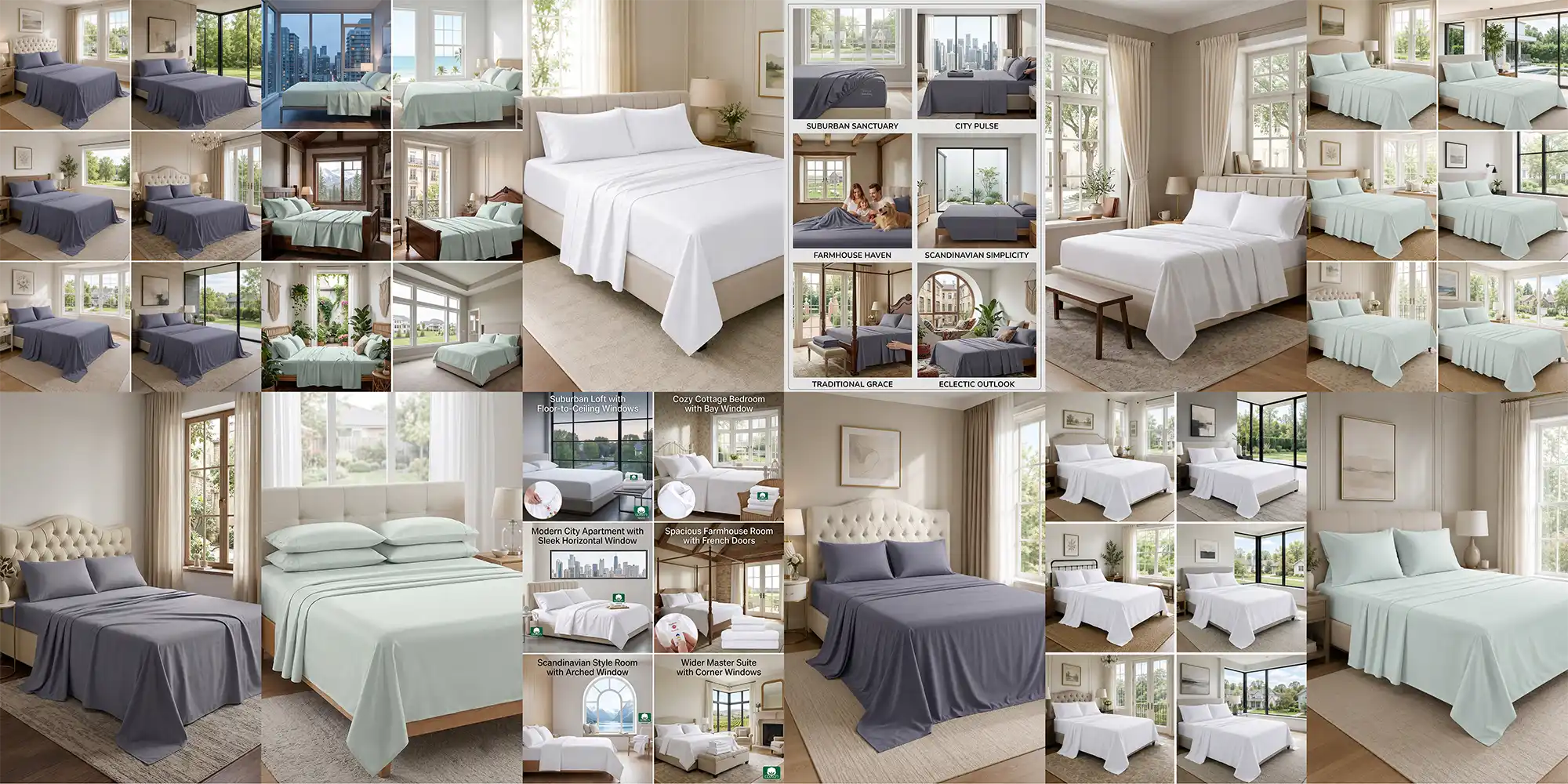
Best Bed Sheets for Comfortable Sleep: How to Choose by Material, Weave, and Feel
A bed sheet is the one you actually wear. You spend a third of your life pressed against it, with nothing in between, which means a sheet that looks lovely in a product photo can still keep you awake at two in the morning.
That is the frustrating part of shopping for sheets online. A white set, a “luxury hotel” set, and a budget set can all photograph the same way and promise the same thing. Then you sleep on them. One feels cool and crisp, like a freshly pressed shirt. Another feels smooth and drapey, with a faint sheen. A third feels soft straight out of the bag but turns warm once the room heats up.
So “comfortable” isn’t a single fixed thing. For one sleeper, it means cool, breathable, and crisp. For another, it means warm, silky, and cozy. The cleanest way to think about it is a small equation:
Comfort = Material + Weave + Feel.
Before you get lost in product specs, it helps to know which part of that equation does the heavy lifting. The short answer: material sets your baseline temperature, and weave fine-tunes how the fabric feels against your skin. Get those two right for your own body, and the rest is detail.
For this guide, I picked three sets that each represent a different feel: a silky everyday cotton sateen, a crisp cotton percale, and a soft budget microfiber. Between them, they cover the way most people actually want a bed to feel.
Our Top Picks at a Glance
Best Overall
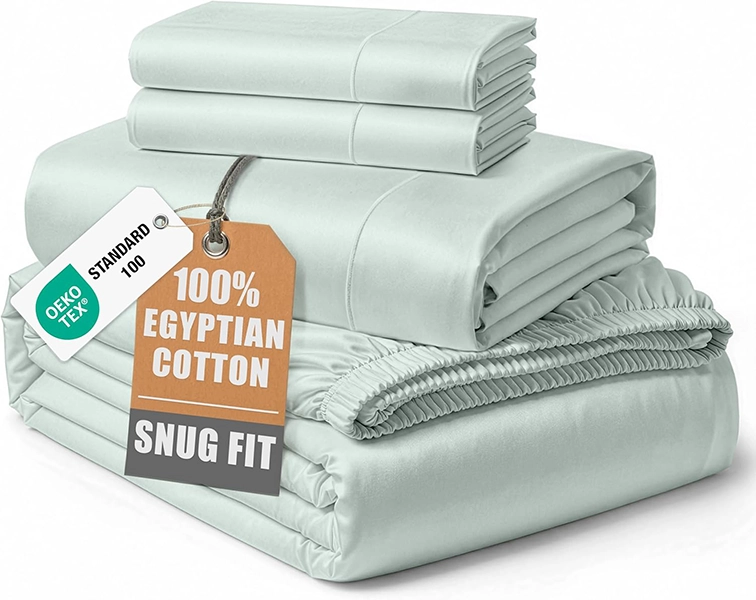
LANE LINEN 100% Egyptian Cotton Sateen Sheet Set
The best all-around pick: real Egyptian cotton with a silky sateen feel, strong breathability, and a fair price for everyday use.
Read more below
Best Crisp & Cool
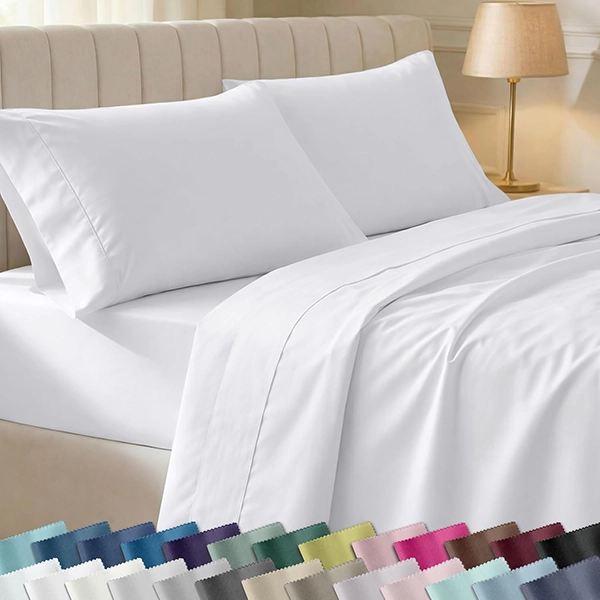
California Design Den 100% Organic Cotton Percale Sheet Set
Buy From Amazon
The best pick for warm nights: a crisp, matte, breathable percale in GOTS-certified organic cotton, backed by the Good Housekeeping Seal.
Read more below
Best Budget Soft
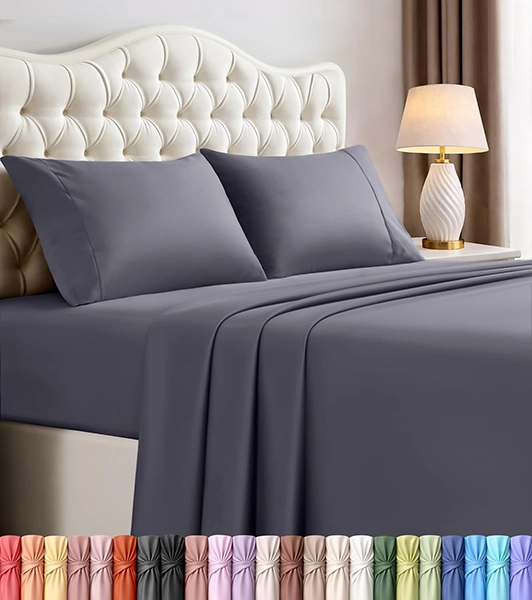
Utopia Bedding Microfiber Sheet Set
Buy From Amazon
The best low-cost pick: brushed-microfiber softness that washes easily and costs very little, ideal for guest rooms and refreshes.
Read more below
Why You Should Trust This Guide
These sheets were not tested in a sleep lab, and there is no honest way to fake months of real use in a single review. What this guide offers instead is a careful read of the things that actually decide comfort: fiber content, weave, weight and drape, surface feel, breathability, fit, care behavior, review patterns, and price-to-value.
It also comes from a real relationship with cloth. As an interior designer, I spend my days thinking about how a fabric falls, how it catches light, and how it changes the mood of a room. My Comfy Dwell co-founder, Faruque, grew up around the textile handicraft trade in Dhaka, where Nakshi Kantha and Jamdani work taught early, hands-on lessons about staple length, weave tension, and the difference between the crisp hand of a tight plain weave and the quiet sheen mercerization gives a fiber. That is the lens here: a “luxury hotel” label means very little until you ask what the fiber is, how it is woven, and how it will behave after twenty washes.
There is no single best sheet for everyone. A hot sleeper in a humid coastal flat should not buy the same set as someone who runs cold in an air-conditioned bedroom. So each pick below is judged by whom it serves best, not by a single universal idea of “best.”
The Anatomy of Comfort: Material vs. Weave
Shoppers tend to blur two different things together. Material and weave work as a pair, but they are not the same, and separating them makes every other decision easier.
Material is the engine
The raw fiber decides how a sheet behaves through the night: temperature, breathability, moisture, and how long it lasts.
Cotton is the all-rounder. It breathes well, feels familiar, and usually softens with washing. Long-staple and Egyptian cottons feel smoother and last longer because the fibers are longer and less prone to breaking and pilling. Microfiber, which is woven polyester, can feel impressively soft out of the package and tends to be cheap and wrinkle-resistant, but it does not breathe like a natural fiber, so it holds heat. Linen runs the coolest of all, with the most airflow and a relaxed, textured hand that suits humid nights. Bamboo viscose and Tencel lyocell feel silky and cool to the touch and handle moisture well, though their labels deserve a careful read.
In short, material decides the big things: whether you stay cool, how the sheet handles sweat, and how many years it survives.
Weave is the surface
The weave decides how that material presents itself to your skin. The same cotton can feel completely different depending on how it is woven, which is exactly why two of the picks below are cotton yet feel like opposites.
Sateen has a smooth, lustrous surface. It feels silky, drapes a little heavier, and sleeps slightly warmer, which is why it reads as polished and hotel-like. Percale is the opposite: a tight, one-over-one-under plain weave that feels crisp, matte, and cool, closer to a clean button-down shirt than a silky blouse, and usually the better pick for hot sleepers. Brushed microfiber has a soft, peach-fuzz finish that feels cozy immediately, with breathability as the trade-off.
So material is the engine, and weave is the hand-feel your skin notices first.
The verdict
Material decides whether you sweat. Weave decides how the fabric feels when you pull it up over your shoulder. The best sheet is not the one with the biggest number on the box; it is the one where material, weave, and your own sleep style line up.
What Else Changes How Sheets Feel
Material and weave matter most, but a handful of construction details quietly shape the final experience.
Staple length is the clearest quality clue in cotton. Longer fibers spin into smoother yarn, which means fewer loose ends, less pilling, and a sheet that stays soft for years instead of turning scratchy. Egyptian and long-staple cotton are prized for exactly this, though the label alone is not proof; look for supporting detail and consistent buyer feedback. Mercerization is a cotton finishing process that adds luster and strength and helps create that smooth sateen surface. Single-ply versus multi-ply yarn also matters: a single-ply 300-count percale can feel and last better than a multi-ply sheet that claims a far higher count.
Weight, or GSM, changes things too. Lighter sheets breathe and dry faster; heavier sheets feel plush and drapey but can sleep warm. Fit and pocket depth matter more than most people expect, because a fitted sheet that pops off the corner or fights a mattress topper ruins even the finest fabric. And care behavior is part of comfort, since sheets are washed constantly; some cotton wrinkles, some microfiber pills under high heat, and some sets soften beautifully over time.
The last variable is you. Your climate, whether you sleep hot or cold, and your skin all decide which sheet feels right. Keep your own profile in mind as you read the picks below.
LANE LINEN 100% Egyptian Cotton Sateen Sheet Set – Best Overall
The LANE LINEN 100% Egyptian Cotton Sateen Sheet Set is the best all-around pick because it lands in the comfort sweet spot: real cotton, a silky sateen surface, honest breathability, and a price most people can justify for a full bedding refresh. It is the set I would point most readers to first.
The appeal is balanced. The Egyptian long-staple cotton and mercerized sateen weave give it a smooth, lightly lustrous hand, while the cotton base keeps it more breathable than any microfiber. It also runs slightly thick, so it feels substantial and hotel-like on the bed rather than thin or papery. For anyone moving up from basic polyester or worn-out budget sheets, this is the pick most likely to feel like a genuine upgrade.
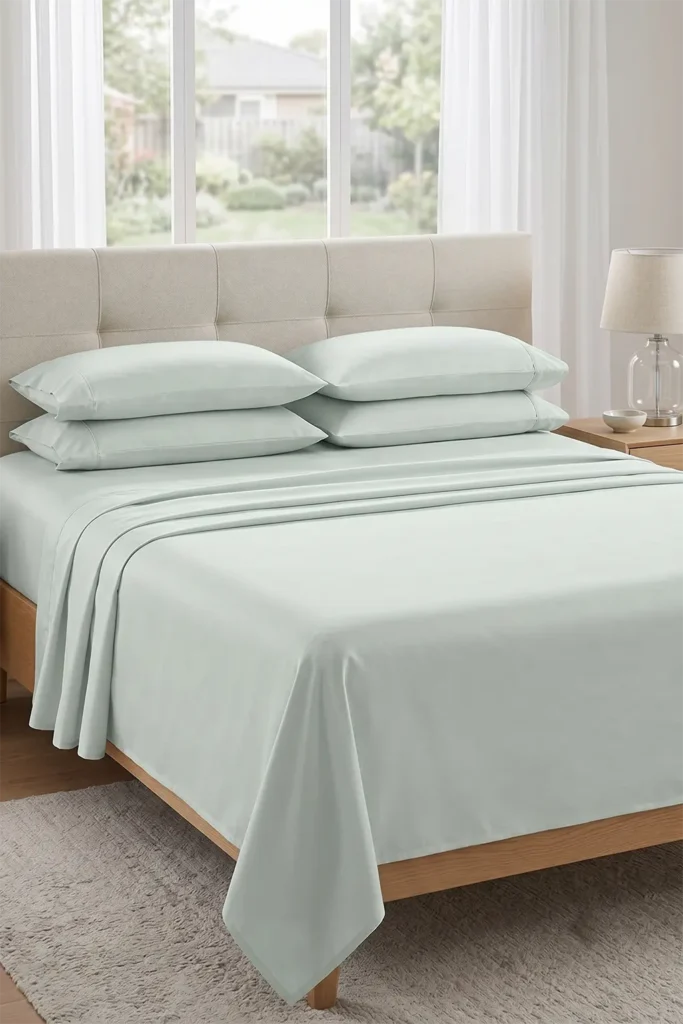
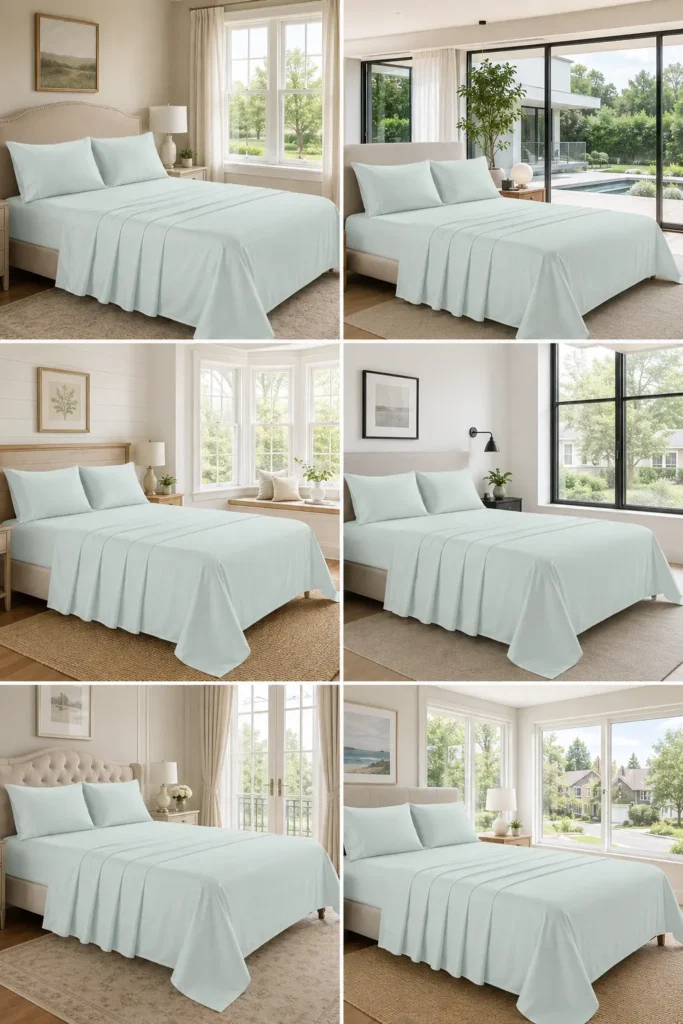
Digitally Modified Images. Texture and color may vary from the actual product.
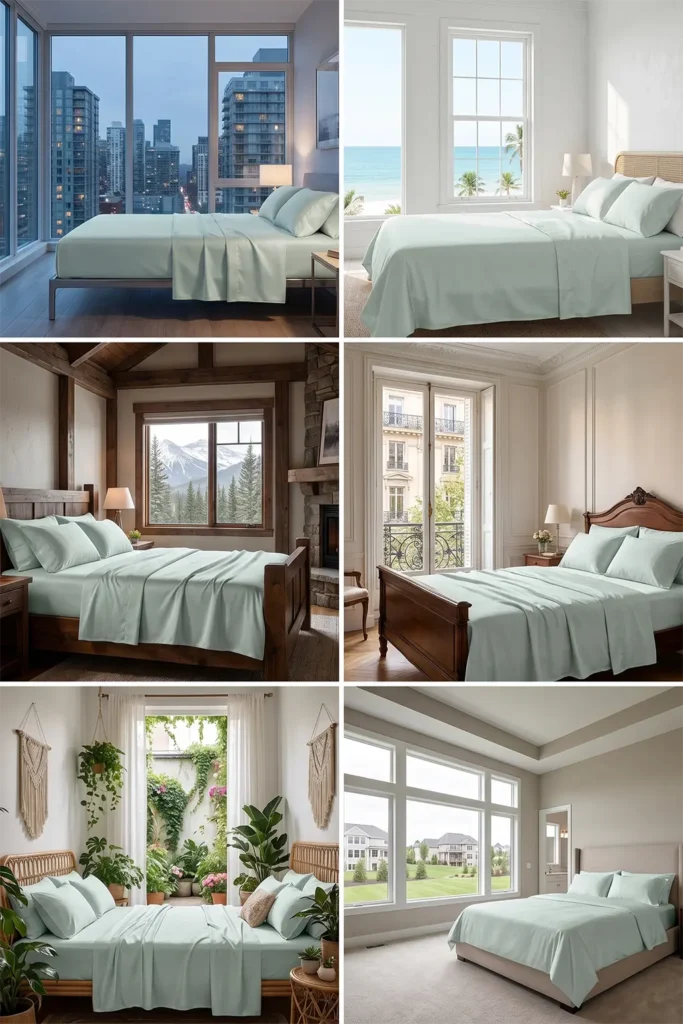
Best for
Every day, bedrooms and sleepers who want real cotton, a silky-smooth feel, and year-round value without paying boutique prices. A sensible choice for primary bedrooms, guest rooms, and warmer or more humid climates.
Why it was selected
It carries the broadest set of strengths in the guide: 100% Egyptian cotton, a sateen weave with two-ply yarn, OEKO-TEX certification, deep-pocket construction, and a deep, consistent record of positive feedback. It is the most versatile pick, and the one I would reach for if you are unsure where to start.
What makes it different
Many low-cost sheets feel soft because they are brushed polyester, a softness that arrives instantly but sleeps warm. LANE LINEN earns its softness the other way, through fiber, weave, and finish, so the comfort comes with airflow rather than heat. It is the silky counterpart to the crisp percale below, the same family of natural cotton comfort, just a smoother, warmer weave.
- Thick yet soft straight out of the package, without the scratchiness some dense cotton has
- Genuine, elegant sateen sheen
- Breathable enough to keep warmer-climate sleepers comfortable
- Deep 16-inch pockets with corner straps grip thick and adjustable mattresses
- Softens further with every wash, with no pilling reported
- Hotel-style double-hemstitch detailing
- Strong value next to boutique cotton sateen sets
- May arrive with a faint factory odor that washes out before first use
- Wrinkles more than microfiber if left in the dryer
- Runs thick; verify your mattress is not deeper than 16 inches with a topper
- Sateen sleeps warmer than a percale, so committed hot sleepers may prefer the crisp pick below
Bottom line
Choose the LANE LINEN set for the best balance of breathable cotton, silky sateen comfort, and everyday value. It is the most sensible first pick for most readers, real cotton comfort without the jump to luxury pricing.
California Design Den 100% Organic Cotton Percale Sheet Set – Best Crisp & Cool
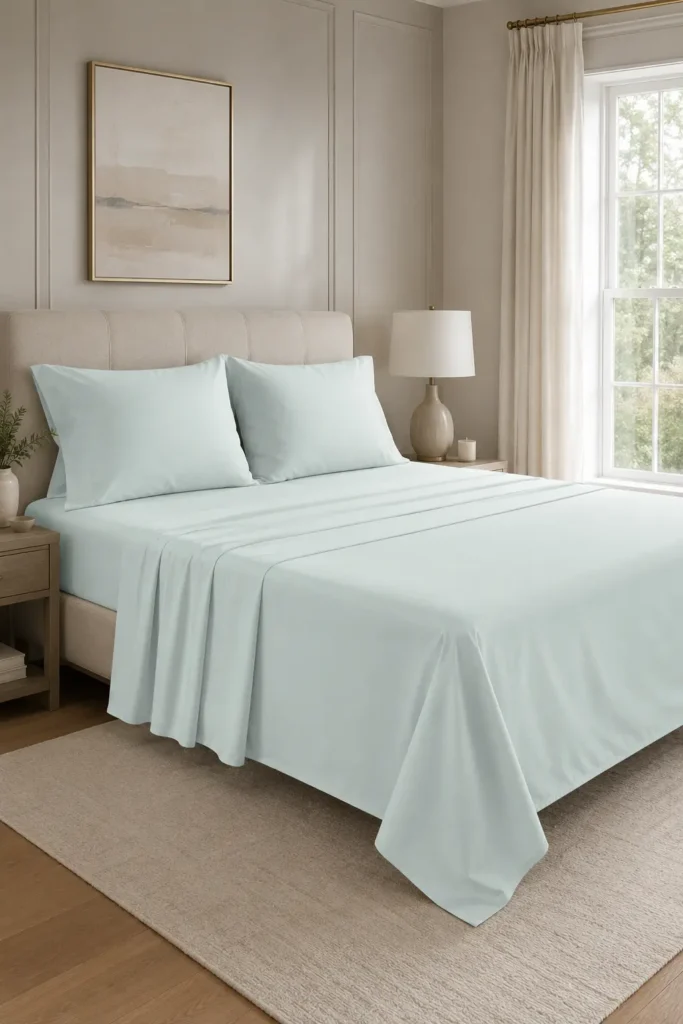
The California Design Den 100% Organic Cotton Percale Sheet Set is the pick for anyone who sleeps hot or simply loves a crisp, cool bed. Where the LANE LINEN sateen is silky and drapey, this percale is its opposite: a tight, matte plain weave that feels like a freshly pressed dress shirt and breathes far more freely.
This is the same raw material as a sateen sheet, 100% cotton, but the weave changes everything. Percale lets more air move through, so it sleeps cooler and never feels slick or warm against the skin. It is GOTS-certified organic cotton, carries the Good Housekeeping Seal, and uses an honest 300-thread count made from single-ply yarn, the kind of number that signals quality rather than marketing inflation. It feels crisp at first and relaxes into a softer, lived-in hand with every wash, the way a good pair of jeans does.
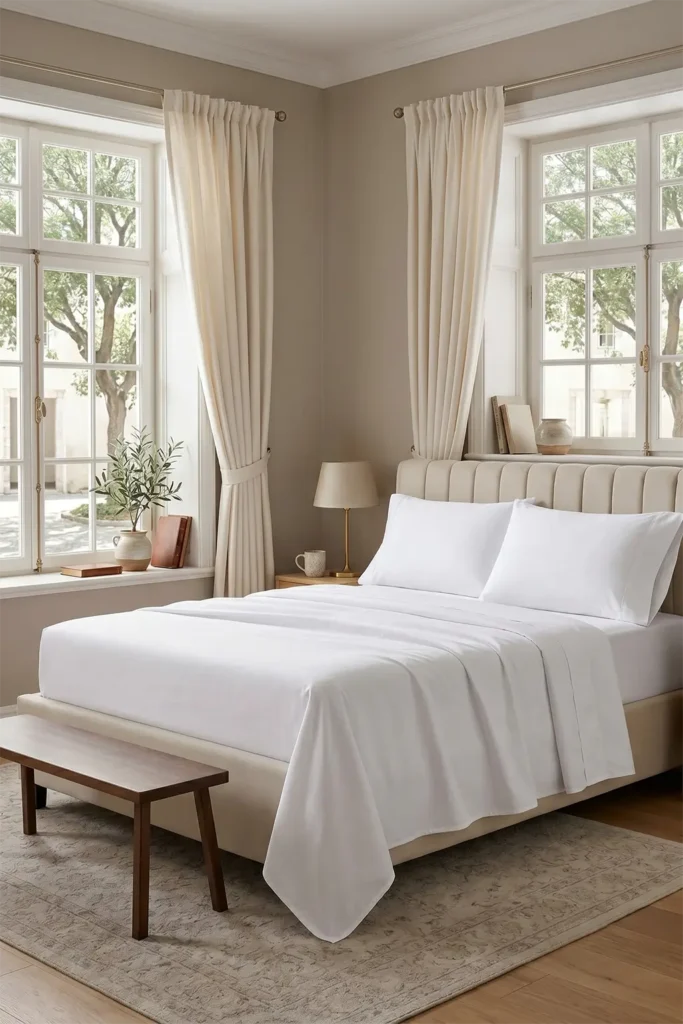
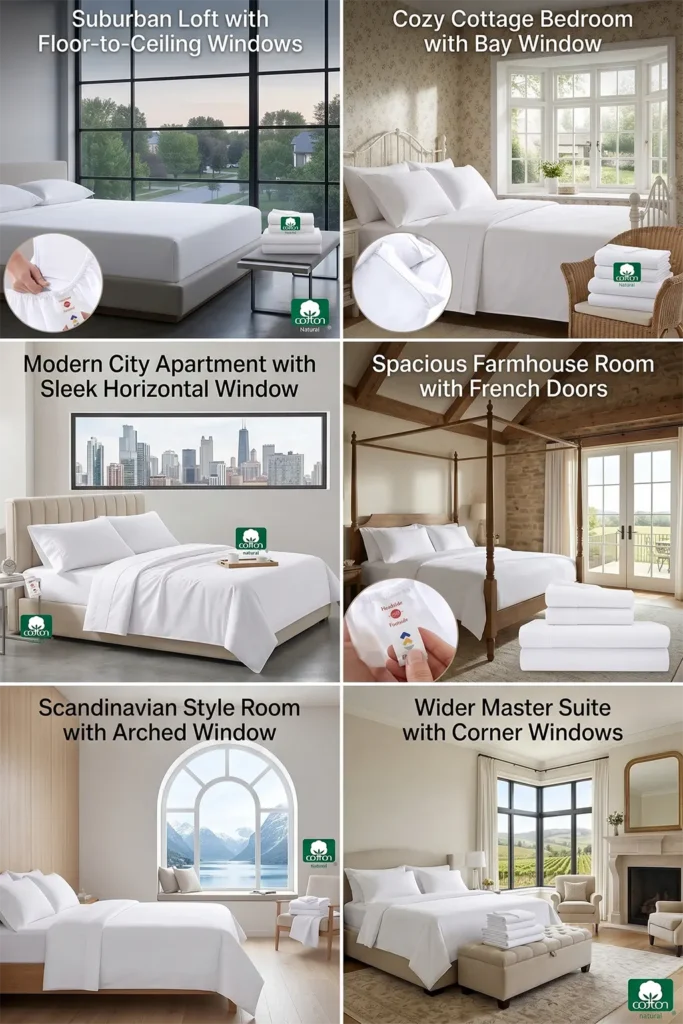
Digitally Modified Images. Texture and color may vary from the actual product.
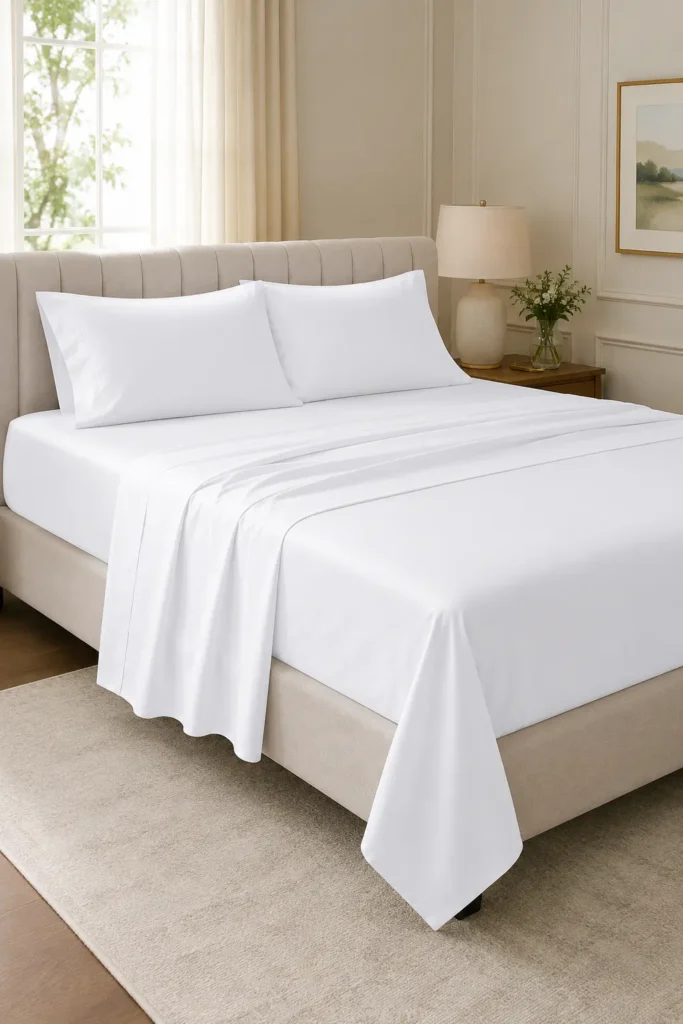
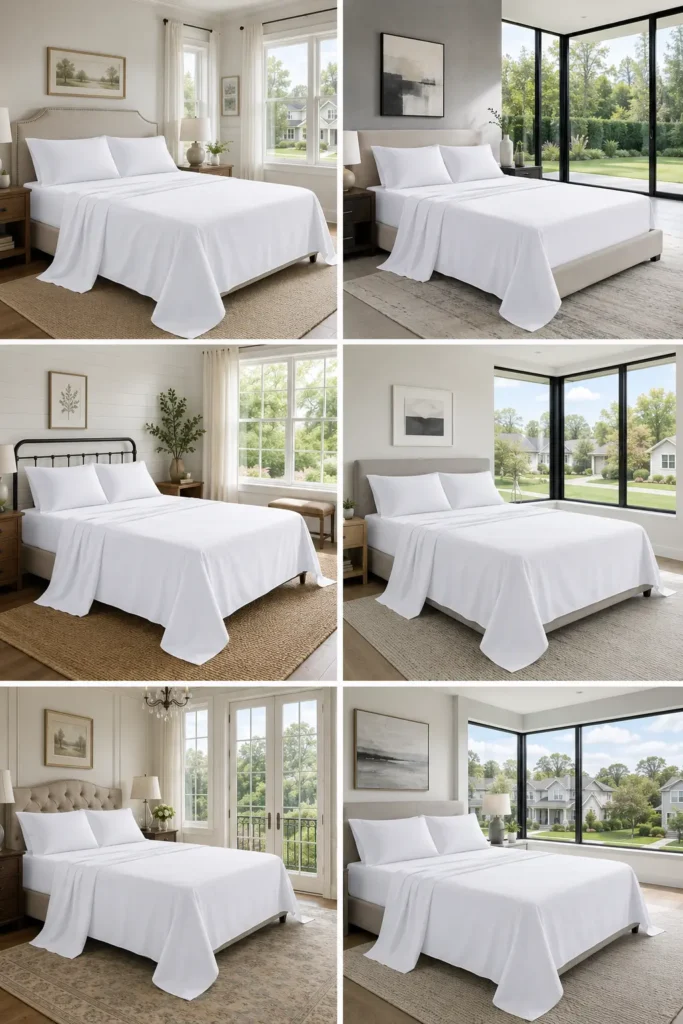
Best for
Hot sleepers, warm or humid climates, and anyone who wants that clean, airy, hotel-fresh feel rather than a silky one. A strong year-round choice for people who overheat under heavier weaves.
Why it was selected
It fills the role no microfiber or sateen can: genuine crisp-cool comfort. The organic cotton is breathable and gentle on skin, the certifications (GOTS, OEKO-TEX, and the Good Housekeeping Seal) back up the quality claims, and the brand’s independently verified thread count and durability testing make it easy to trust. For the hot-sleeper reader, this is the most important pick in the guide.
What makes it different
Set it next to the LANE LINEN sateen, and you can feel the entire weave lesson in two sheets: same fiber, opposite hand. The percale is matte where the sateen is lustrous, cool where it is warm, structured where it is drapey. The honest 300 thread count is also a feature, not a shortcoming, because percale is meant to be light and breathable rather than dense.
- Crisp, cool, breathable feel that is ideal for hot sleepers and warm climates
- 100% GOTS-certified organic cotton, gentle on sensitive skin
- Backed by the Good Housekeeping Seal and OEKO-TEX certification
- Honest 300 thread count single-ply yarn, breathability over inflated numbers
- Softens with every wash while keeping its signature crispness
- Deep-pocket fitted sheet with all-around gripper elastic and head/foot tags
- Clean, matte, classic look that suits most bedrooms
- The crisp, structured hand is not for everyone; silky-sheet fans may not love it
- Wrinkles and shows a natural matte rumple from the dryer; iron for a pressed look
- Takes a few washes to reach its softest state
- The lower thread count can look less premium to shoppers who chase big numbers
Bottom line
Choose the California Design Den percale if you sleep hot or love a crisp, cool, hotel-fresh bed. It is the breathable, organic cotton answer to warm nights, and the cleanest contrast to a silky sateen.
Utopia Bedding Microfiber Sheet Set – Best Budget Soft
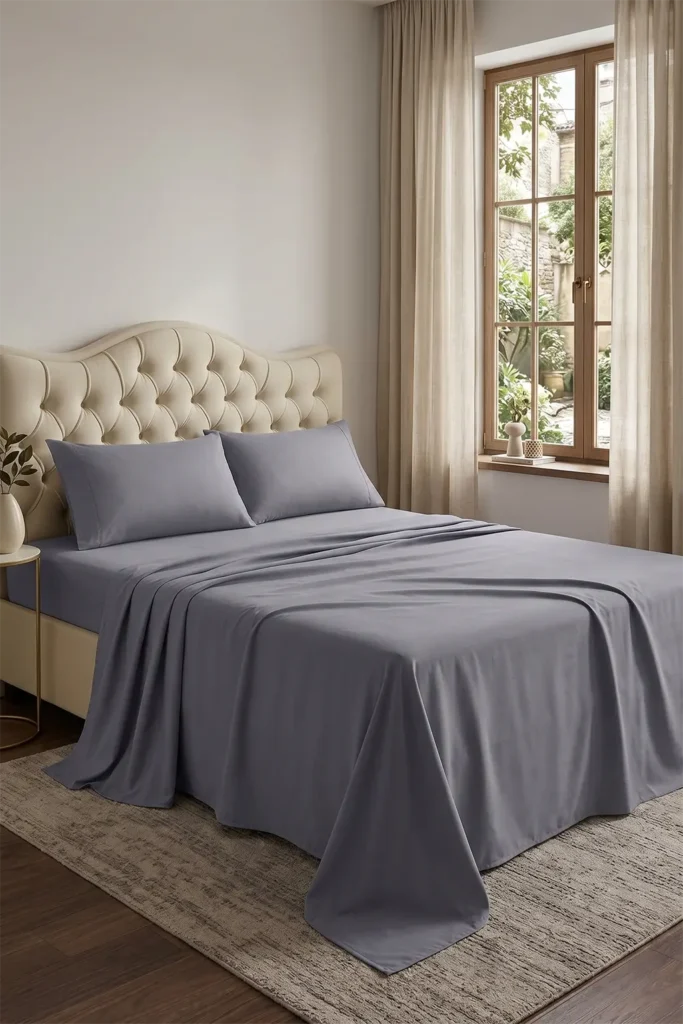
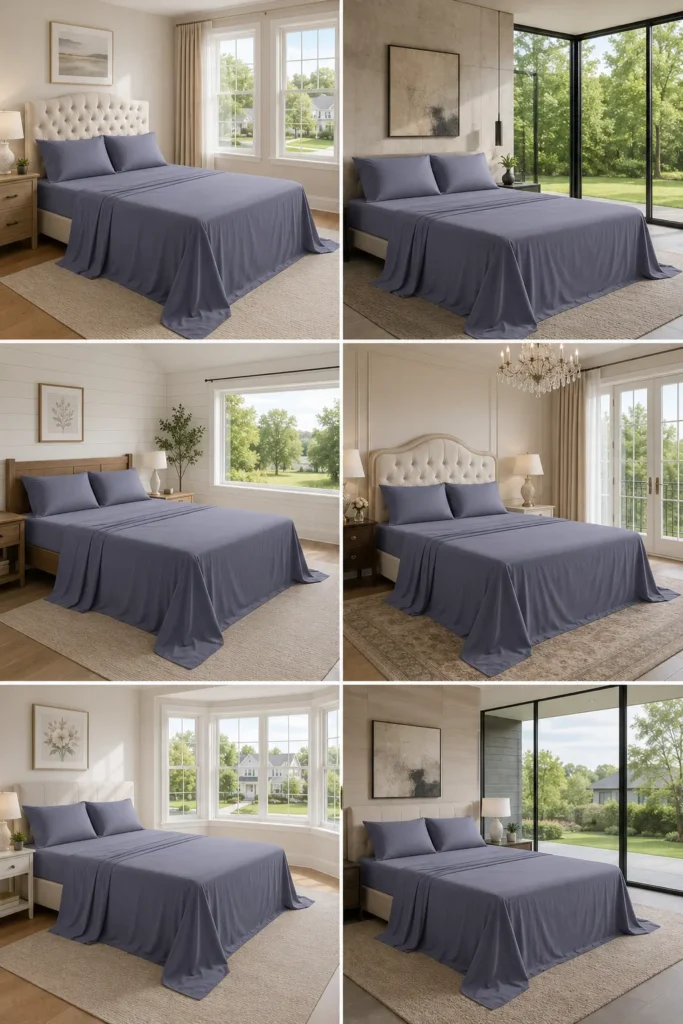
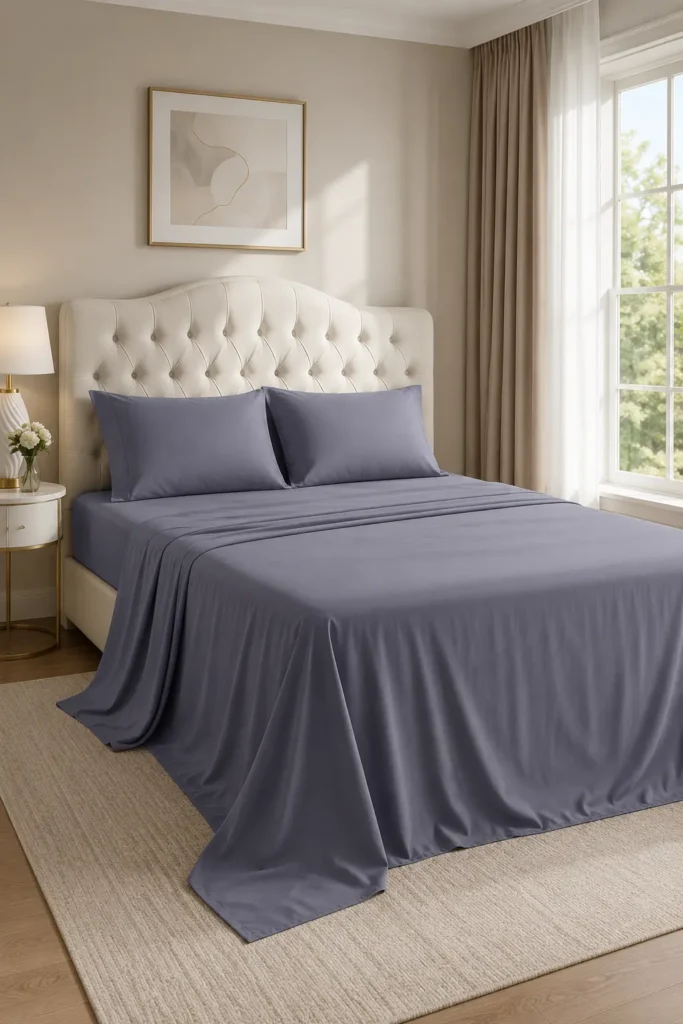
The Utopia Bedding Microfiber Sheet Set solves a different problem from the two cotton picks. Not everyone is shopping for a forever sheet. Sometimes you need an affordable set that feels soft, washes without fuss, and does not demand much thought, and that is exactly where brushed microfiber works.
The softness here comes from brushed polyester rather than fiber quality or weave, so it feels cozy and smooth the moment you take it out of the bag. It is wrinkle-resistant, quick-drying, and easy to live with, which makes it a smart way to upgrade a guest bed, dorm, rental, or kids’ room without a large outlay. The trade-off is breathability: polyester retains more heat than cotton, so this is not the set for a hot sleeper who uses it every night.
Digitally Modified Images. Texture and color may vary from the actual product.
Best for
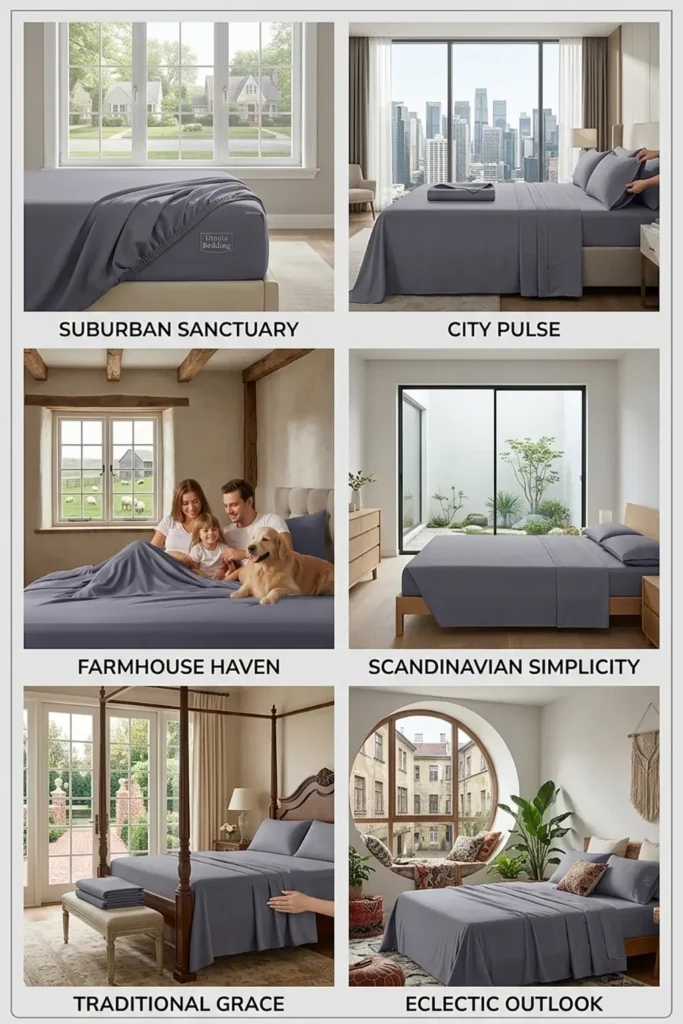
Budget refreshes, guest rooms, dorms, rentals, RVs, kids’ rooms, and anyone who wants soft, easy-care sheets at the lowest reasonable price.
Why it was selected
It establishes a realistic floor for how comfortable an inexpensive sheet can be. It is soft, low-maintenance, and resistant to wrinkles, fading, and shrinking, which is precisely what most budget shoppers are after. It earns its place as the value-softness pick, not the natural-fiber pick.
What makes it different
This is the answer to a specific question: what should I buy if I just need something soft and cheap that works? Cotton, linen, bamboo, and lyocell all breathe better, but none of them matches Utopia on out-of-the-box softness per dollar. For a cool sleeper or a spare bed, that may be the perfect trade.
- The lowest cost in the guide by a wide margin
- Cloud-soft and cozy straight out of the package
- Easy to wash and dry, with strong wrinkle resistance
- Holds color well over repeated washes
- Deep pockets and a simple, low-maintenance design
- Ideal for guest rooms, dorms, rentals, and backup bedding
- Polyester microfiber is the least breathable material here
- Sleeps warmer, a poor match for hot sleepers or humid climates
- Can pill if washed or dried on high heat
- Lacks the long-term durability and natural feel of cotton
Bottom line
Choose Utopia when a low price and effortless, cozy softness matter more than natural airflow. It is a smart budget option, but it should not be the default for hot sleepers.
Why These Three Sheets
The aim was three clear decisions, not three versions of the same one. Plenty of popular sheet sets crowd into the budget-microfiber space, offering near-identical soft, easy-care synthetic comfort. Reviewing several of them would only repeat the same answer, so this guide keeps a single microfiber set to represent that category and gives the other two spots to cotton in its two defining weaves.
That spread does the real work. The two cotton picks share a fiber but feel like opposites, which is the whole point of an article about material and weave:
- LANE LINEN is the silky sateen, smooth and slightly warm.
- California Design Den is crisp percale, matte, and cool.
- Utopia is the cozy microfiber, soft and cheap.
Among silky cotton, crisp cotton, and soft synthetic, most sleepers will recognize the feel they are actually after, whether they run hot, run cold, or just want a comfortable bed without overthinking it.
Side-by-Side Comparison
| Pick | Material | Weave / Finish | Feel | Temperature | Best For | Price Tier | Main Caution |
|---|---|---|---|---|---|---|---|
| LANE LINEN Egyptian Cotton Sateen | 100% Egyptian cotton | Sateen | Silky, smooth, substantial | Mid-warm | Best overall | $$ | Wrinkles; verify pocket depth on thick mattresses |
| California Design Den Organic Percale | 100% organic cotton | Percale | Crisp, matte, breathable | Cool | Hot sleepers | $$ | Crisp at first; wrinkles from the dryer |
| Utopia Bedding Microfiber | Polyester | Brushed microfiber | Soft, cozy, easy-care | Warmer | Budget softness | $ | Less breathable than cotton |
Our Top Picks: Awards at a Glance
Best Overall — LANE LINEN 100% Egyptian Cotton Sateen. The strongest balance of breathable cotton, silky comfort, and everyday value.
Best Crisp & Cool (Best for Hot Sleepers) — California Design Den Organic Cotton Percale. The breathable, organic cotton choice for warm nights and crisp-sheet lovers.
Best Budget Soft — Utopia Bedding Microfiber. The best low-cost, easy-care softness for guest rooms and refreshes.
How to Choose Between the Three
Choose LANE LINEN for the safest overall recommendation. It gives you breathable cotton, a smooth sateen hand, and a fair price, and it is the one I would suggest first for most everyday bedrooms.
Choose California Design Den if you sleep hot, live somewhere warm, or simply prefer a crisp, cool, hotel-fresh bed over a silky one. It is the most breathable pick here and the better long-term choice for anyone who overheats at night.
Choose Utopia if you want the cheapest, most comfortable option for a guest room, dorm, rental, RV, or backup set. It is soft and easy to care for, but it is not the breathable choice.
A simple way to decide: pick the percale if you run hot, the sateen if you want silky and warm, and the microfiber if price is the priority. The decision is less about which sheet is “best” and more about which feels like it matches your body.
When to Look Elsewhere
These three cover a wide range of feelings, but they are not the right answer for every situation.
Heavy night sweats call for bamboo viscose or Tencel lyocell. These regenerated fibers feel silky and cool to the touch and handle moisture especially well, though “bamboo” and “eucalyptus” are often marketing terms for processed viscose, so read the label.
Humid climates are where French flax linen shines, with excellent airflow and a relaxed, naturally rumpled look that beats any dense weave for breathability.
Cold sleepers who want extra coziness are best served by brushed flannel, which is warm and ideal for winter, mountain homes, and drafty bedrooms.
The most premium feel comes from high-thread-count Egyptian cotton sateen or mulberry silk, though both move well beyond the everyday price range of the picks above.
Buying Guide: What to Look For
When you shop on your own, a few practical checks matter more than any marketing line.
Fiber first, then weave. Decide on the material for temperature and durability, then choose the weave for feel: sateen for silky, percale for crisp, and brushed microfiber for cozy and cheap.
Thread count in context. For cotton, the 300 to 500 range is usually plenty, and a single-ply percale at 300 can outperform a multi-ply sheet claiming far more. Higher numbers are not automatically better and often come from counting plies to inflate the figure.
Pocket depth. Measure your mattress with any topper on, and make sure the sheet’s pocket exceeds that measurement by at least an inch. Look for full elastic and corner support on thick or adjustable beds.
Care and durability. Scan reviews for shrinkage, pilling, fading, and wrinkle behavior. The best sheet is one you can realistically maintain.
Certifications. OEKO-TEX signals testing for harmful substances, and GOTS confirms organic textiles. They are not the only quality markers, but they help narrow a crowded field.
Care and Maintenance
Good sheets last longer when they are washed well.
Wash cotton in cold or warm water with a mild detergent. Cold helps protect fiber length and reduce shrinking and fading, and harsh bleach is best avoided unless the care label allows it. For microfiber, skip high heat, as hot dryers can cause pilling over time; use low heat and remove the sheets promptly.
Go light on fabric softener. Too many coats of fibers reduce breathability and dull the natural hand of cotton; wool dryer balls cut drying time and wrinkles without leaving residue. Tumble dry low and pull sheets out while slightly warm, which matters most for cotton sateen. Percale will always carry a soft, matte rumple from the dryer, so a quick warm iron is the trick if you want that pressed, hotel look.
Finally, rotate two or three sets. Resting each one between washes spreads out the wear and keeps laundry manageable. When you find a set you love, a second one in the same size is usually smarter than waiting for the first to wear out.
Frequently Asked Questions
Is cotton better than microfiber for bed sheets?
For breathability, moisture handling, and longevity, yes, and that makes cotton the better long-term choice for most everyday sleepers. Microfiber wins on price, instant softness, wrinkle resistance, and easy care, but it sleeps warmer because polyester holds heat.
What is the difference between percale and sateen?
They are two weaves of the same cotton. Percale is a tight, one-over-one-under plain weave that feels crisp, matte, and cool. Sateen floats more threads on the surface for a smooth, lustrous, slightly warmer feel. Percale suits hot sleepers; sateen suits those who want a silky, polished look.
Is sateen good for hot sleepers?
Sateen works for many people, especially in breathable cotton, but it is not the coolest weave because the surface is denser and smoother. If you sleep hot, a cotton percale like the California Design Den pick, or linen, bamboo viscose, or lyocell, will usually feel better.
Does a higher thread count mean better sheets?
No. A quality 300-count single-ply percale will feel and last better than a cheap 1,000-count set spun from short, multi-ply fibers. Staple length, weave, and finishing matter more than the headline number.
What sheets feel the softest?
For a silky, smooth glide, choose cotton sateen, bamboo viscose, lyocell, or premium long-staple cotton. For a fuzzy, cozy softness, brushed microfiber or flannel feels softest out of the package. Percale starts crisp and softens into a relaxed hand over repeated washes.
Which sheets are best for hot sleepers or those who experience night sweats?
Start with breathable materials and cooler weaves: cotton percale, linen, bamboo viscose, Tencel lyocell, or lightweight long-staple cotton. Avoid defaulting to microfiber if you wake up damp, since it is the least breathable of the common options.
Is organic cotton worth it?
If skin sensitivity or chemical exposure matters to you, yes. GOTS-certified organic cotton is grown and processed without the harsh chemical finishes used on some conventional sheets, and it feels just as good. For everyone else, it is a nice bonus rather than a necessity.
How often should I wash my sheets?
About once a week for most beds, to clear body oils and dead skin that wear down fibers over time. Wash more often if you sweat heavily, sleep with pets, have allergies, or live in a humid climate.
Final Recommendation
Comfortable sheets are not about the biggest thread count or the softest word on the package. They come down to matching the right material and weave to your own body.
If you are not sure where to begin, start with the LANE LINEN Egyptian Cotton Sateen for the best balance of price, breathability, and silky feel. If you sleep hot or love a crisp, cool bed, go with the California Design Den Organic Cotton Percale, the most breathable pick here. And if budget comes first, the Utopia Bedding Microfiber delivers soft, easy-care comfort for very little. The best sheet is simply the one that still feels right at two in the morning, after the room has warmed and your body has decided whether the fabric belongs in your bed.

