
The Complete Guide to Choosing Comfortable Bed Sheets: Materials, Weaves, Cooling, Softness & Care
Most people spend weeks comparing mattresses, then choose bed sheets almost as an afterthought. But your sheets are the fabric your skin touches all night. They shape how cool you feel, how soft the bed feels, how much you sweat, how fresh everything feels after a wash, and whether your bedroom is genuinely comfortable or just nicely decorated.
The trouble is that bedsheet shopping is full of vague promises. Thread counts are inflated. “Hotel luxury” can mean almost anything. “Cooling” might describe a fiber, a weave, a finish, or just a marketing line. Even the material names get confusing once you realize cotton, bamboo, linen, silk, microfiber, and Tencel all feel completely different in real use.
At Comfy Dwell, I look at bedding through two lenses at once: comfort and textile. I grew up around the fabric culture of Dhaka, where cloth is judged by touch, drape, weave, weight, and how it behaves after washing — not by the number on the label. That background taught me something simple: a good sheet is never just “cotton” or “bamboo.” It’s the right fiber, in the right weave, for the way you sleep.
That’s the promise of this guide — no inflated numbers, no jargon, and no one-size-fits-all answer. I’m not here to push the most expensive set; I’m here to help you match a sheet to your sleep. The best one for you depends on your sleep temperature, skin sensitivity, preferred texture, climate, mattress depth, and how much care you’re willing to give it.
The easiest way to start is to stop thinking about products and start thinking about feel. Below, you’ll find a quick-reference answer, a comfort-profile system to identify what you actually need, honest breakdowns of every material and weave, and care tips that keep good sheets comfortable for years. Skip to whatever section fits your question.
Quick Answer: How to Choose Comfortable Bed Sheets
Choose by comfort profile first, then material, then weave, then care needs.
A hot sleeper shouldn’t shop the same way as someone chasing cozy softness. A guest-room sheet doesn’t need to perform like a luxury hotel sheet. Someone with sensitive skin may care far more about smoothness and certifications than thread count. Once you know the comfort problem you’re solving, picking the right material gets much easier.
| Sleep Need | Best Materials | Best Weaves | Best For |
|---|---|---|---|
| Hot sleeping | Cotton percale, bamboo, linen, Tencel | Percale, relaxed linen weave, lightweight plain weave | Night sweats, summer, humid rooms |
| Soft everyday comfort | Bamboo, cotton sateen, Tencel, microfiber, jersey | Sateen, jersey knit, brushed microfiber | Cozy bedrooms, smooth feel, everyday softness |
| Low maintenance | Microfiber, cotton blends, wrinkle-resistant cotton | Twill, brushed microfiber, easy-care sateen | Guest rooms, busy homes, kids, pets |
| Sensitive skin | Organic cotton, bamboo, Tencel, silk | Smooth sateen, fine percale, silk | Gentle-feeling bedding, smoother fabric preference |
| Hotel-style luxury | Long-staple cotton, Supima, true Egyptian cotton, premium linen | Percale, sateen | Crisp hotel beds, premium bedding, long-term comfort |
| Winter warmth | Flannel, jersey cotton, microfiber, cotton sateen | Brushed, knit, twill | Cold sleepers, drafty rooms, cozy winter bedding |
Find Your Comfort Profile
This is the decision system I recommend before buying any sheet set. Instead of starting with thread count or a trendy material, start with the way you sleep. Most people fit one of these five profiles — and once you know yours, the rest of this guide tells you exactly what to look for.
The Hot Sleeper
You may be this sleeper if you wake up damp, kick off the covers, dislike heavy sheets, or feel trapped by clingy bedding. Hot sleepers need airflow, moisture comfort, and lighter fabric more than plushness.
The best materials are cotton percale, bamboo, linen, and Tencel (a eucalyptus-derived lyocell). Cotton percale feels crisp and breathable; linen feels airy and relaxed; bamboo and Tencel feel smooth, cool to the touch, and drapey. The best weaves are percale, lightweight plain weave, and relaxed linen weave, which allow more airflow than dense sateen or brushed fabrics.
There’s a useful distinction here that confuses a lot of shoppers: cooling is about temperature feel, while breathability is about airflow and moisture. The best hot-sleeper sheets do both. Avoid heavy microfiber, thick flannel, dense high-thread-count cotton, and heavy sateen if you regularly sleep warm.
Read next → Best Cooling Bed Sheets for Hot Sleepers
The Softness Seeker
You may be this sleeper if your first question is always “How soft does it feel?” You care about smoothness, drape, coziness, and that comfortable moment of sliding into bed.
The best materials are bamboo viscose, cotton sateen, Tencel, high-quality microfiber, jersey cotton, and silk — all smoother or more drapey than crisp percale or textured linen. The best weaves are sateen, jersey knit, brushed microfiber, and silk weave. Sateen provides a smoother surface, jersey offers T-shirt softness, and brushed microfiber feels soft at a lower price.
Avoid stiff linen unless it’s prewashed, very crisp percale if you dislike a structured feel, and low-quality cotton that turns rough after washing.
Read next → Best Soft Bed Sheets for Everyday Comfort
The Low-Maintenance Household
You may be this sleeper if you want sheets that wash easily, dry quickly, resist wrinkles, and look presentable without ironing. This profile fits guest rooms, kids’ rooms, dorms, rentals, busy households, and pet-friendly bedrooms.
The best materials are microfiber, cotton-poly blends, wrinkle-resistant cotton, brushed microfiber, and some bamboo blends — generally easier to care for than linen or silk. The best weaves are twill, brushed microfiber, easy-care sateen, and jersey knit, which tend to look smoother out of the dryer.
Avoid linen if wrinkles bother you, silk if you want truly easy care, and stiff cotton percale if you don’t want to fold and smooth sheets carefully.
Read next → Best Wrinkle-Resistant Bed Sheets
The Sensitive-Skin Sleeper
You may be this sleeper if rough fabric bothers you, you prefer smoother bedding, you avoid strong dyes or finishes, or you’re shopping for someone who needs gentler-feeling sheets.
The best materials to consider are organic cotton, bamboo, Tencel, silk, and OEKO-TEX or GOTS-certified fabrics where available. The best weaves are smooth sateen, fine percale, silk, and soft bamboo weaves — the goal is to reduce roughness and avoid scratchy, stiff, or heavily finished fabrics. Avoid low-quality cotton, unknown heavy finishes, rough synthetic blends, and strong dyes if sensitivity is a concern.
One careful note: sheets don’t treat skin conditions. If you have eczema, allergies, or medical skin concerns, fabric choice may improve comfort, but it isn’t a substitute for medical guidance. Look for smoother materials, clear certifications, and gentle laundering.
Read next → Best Sheets for Sensitive Skin
The Luxury / Hotel Seeker
You may be this sleeper if you want the bed to feel elevated, crisp, substantial, and beautifully made — the feeling of a fresh hotel bed, or sheets that read as a long-term investment.
The best materials are long-staple cotton, Supima, authentic Egyptian cotton, premium cotton percale, cotton sateen, silk, and high-quality linen. The right weave depends on the luxury you want: percale for crisp hotel freshness, sateen for a smoother and silkier hand, washed linen for relaxed luxury, and silk for fluid smoothness.
Avoid vague “luxury” claims that don’t explain material, weave, fiber quality, or construction. Price alone guarantees nothing.
Read next → Best Hotel-Style Bed Sheets
The Thread Count Trap
Thread count is one of the most misunderstood numbers in bedding.
In plain terms, it measures how many threads are woven into one square inch of fabric, counting both the vertical and horizontal threads. That sounds useful, but it’s only one small part of sheet quality.
The problem is that thread count became a marketing shortcut. Some brands use multi-ply yarns — several shorter fibers twisted together — then count each ply as a separate thread. That inflates the number without making the fabric smoother, stronger, or more breathable.
Higher isn’t always better. Very dense sheets can trap heat, reduce airflow, feel heavy, and pill faster if the yarn quality is poor. For a hot sleeper, an extremely high thread count can actually be a drawback.
What matters more than the number? Fiber quality, staple length, single-ply yarn construction, weave type, fabric weight, finishing, how the sheets feel after washing, and whether the fabric matches your sleep temperature.
For cotton sheets, a 300–500 single-ply thread count is often a strong comfort range. Percale can feel excellent at lower counts because the weave is crisp and breathable; sateen may feel slightly smoother at slightly higher counts, but only with good fiber. The honest rule: thread count can support quality, but it doesn’t create quality.
Read next → The Truth About Thread Count: How to Choose Bed Sheets That Actually Feel Better
Material Deep Dive
Material is where comfort begins, but it doesn’t tell the whole story. The same fiber can feel cool, crisp, silky, heavy, or cozy depending on the weave and finish. Here’s how each one actually behaves — and if you’re stuck choosing between the three most popular natural fibers, the Cotton vs Bamboo vs Linen head-to-head breaks them down side by side.
Cotton
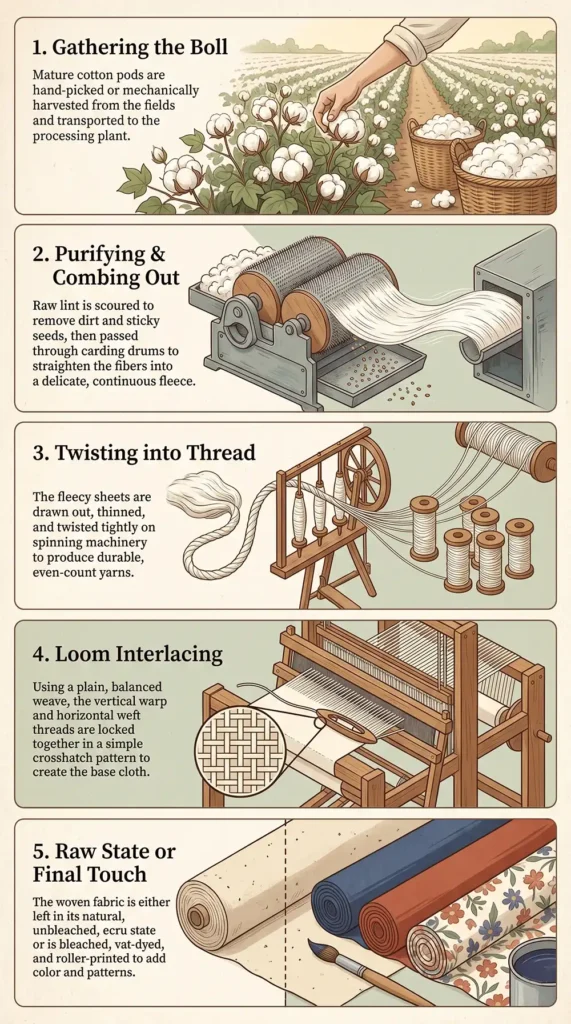
Cotton is the reliable workhorse of bedding. It can feel crisp, smooth, breathable, soft, structured, or cozy depending on the weave and fiber quality.
It’s best for everyday comfort, breathability, durability, hotel-style bedding, and year-round use. Cotton percale suits people who want a crisp, cool feel; cotton sateen suits those who prefer smoothness and drape. Key types include Upland, Pima, Supima, Egyptian, and organic cotton, and the biggest quality difference usually comes down to staple length.
The honest trade-off: cotton wrinkles, especially percale, and cheap cotton can feel rough or pilled. It’s a great material, but not every cotton sheet is automatically premium.
Textile Note: Staple length matters because longer cotton fibers spin into smoother, stronger yarns with fewer exposed ends. Fewer exposed ends usually means a softer feel and less pilling.
Read next → Best Cotton Bed Sheets
Bamboo
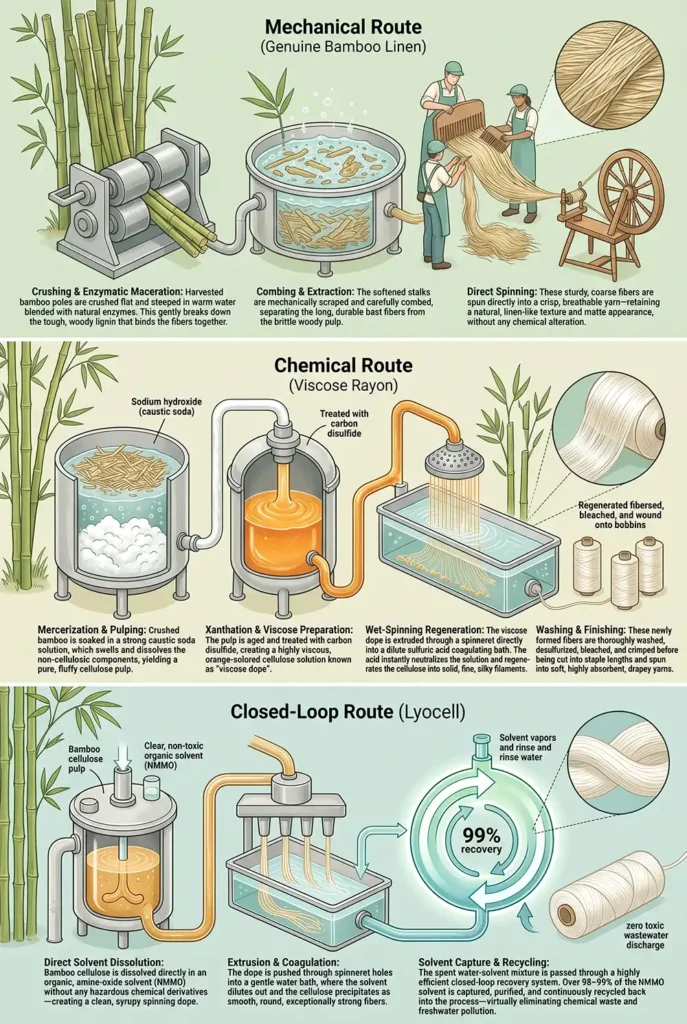
Bamboo-derived sheets are popular because they often feel silky, smooth, drapey, and cool against the skin — a natural fit for hot sleepers and softness seekers.
The main types are bamboo viscose, rayon, lyocell, and modal. The finished comfort depends on how the fiber is processed, the weave, and the overall quality. Bamboo tends to have a heavier, more luxurious drape than crisp cotton percale.
The honest trade-off: bamboo sheets often need gentler care, and some may pill or weaken over time depending on construction and washing habits.
Textile Note: Bamboo sheets are made by turning bamboo cellulose into a regenerated fiber, which is why the processing method matters so much. The comfort isn’t just about the plant — it’s about how the fiber is made and woven.
Read next → Best Bamboo Bed Sheets
Linen
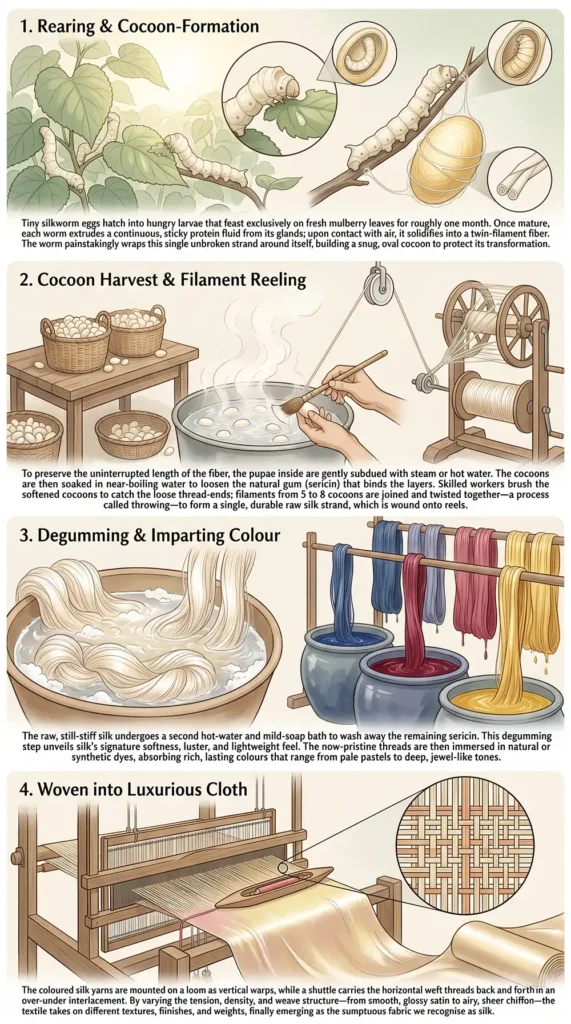
Linen is the character builder of bedding. It feels airy, textured, relaxed, and lived-in. It may not feel silky-soft at first, but good linen softens beautifully with washing and use.
It’s best for hot sleepers, humid climates, summer bedrooms, relaxed luxury, and anyone who loves natural texture. It comes from flax, a fiber known for strength and breathability.
The honest trade-off: linen wrinkles, and that’s part of its look. It can also feel crisp or rough at first if it isn’t prewashed or stonewashed, and it usually costs more than cotton or microfiber.
Textile Note: Linen’s flax fibers are naturally strong and slightly irregular, which gives the fabric its textured hand and relaxed drape. That texture is why linen feels different from cotton, even in a simple weave.
Read next → Best Linen Bed Sheets
Silk
Silk is the investment material. It feels smooth, fluid, cool to the touch, and luxurious, and it’s popular for reducing friction against hair and skin.
It’s best for luxury bedding, smooth feel, hair and skin comfort, and special splurge purchases. Silk is measured by momme weight rather than thread count; quality bedding commonly falls around 19–25 momme.
The honest trade-off: silk is expensive and delicate. Depending on the product, it may need handwashing, a delicate cycle, special detergent, or air-drying.
Textile Note: Silk’s smooth filament structure is what creates that low-friction feel — and that same delicacy is why it needs more careful laundering than everyday cotton or microfiber.
Read next → Best Silk Bed Sheets
Microfiber
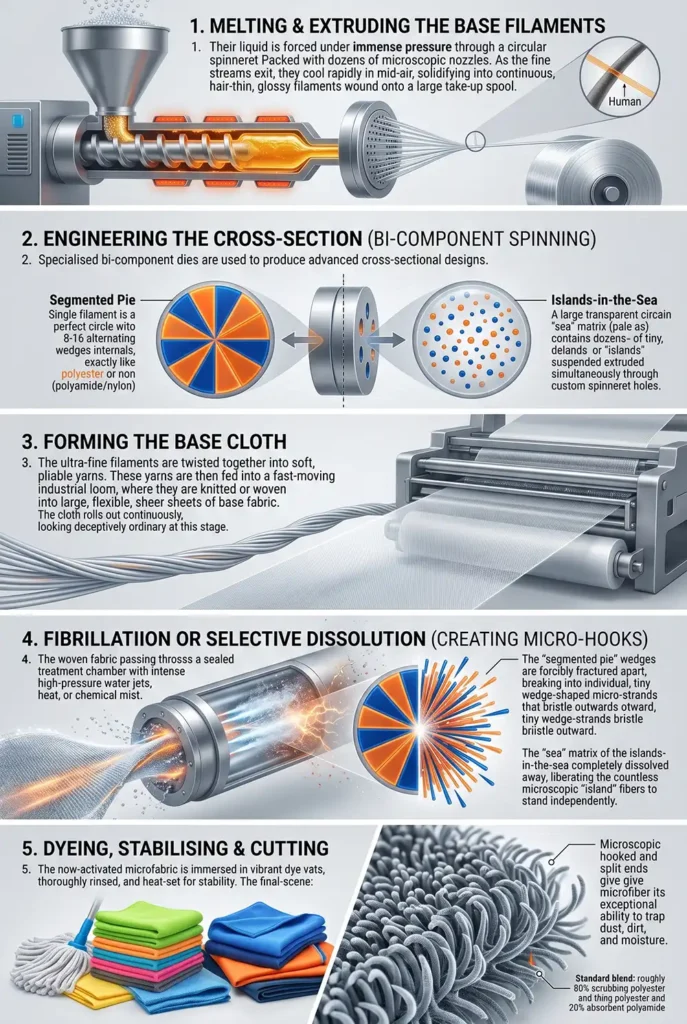
Microfiber is the practical choice — usually soft, smooth, affordable, and wrinkle-resistant, made from very fine synthetic fibers (commonly polyester).
It’s best for budget shoppers, guest rooms, dorms, rentals, cold sleepers, and anyone who wants easy care. It often feels soft straight out of the package and comes out of the dryer looking smoother than cotton or linen.
The honest trade-off: breathability. Microfiber usually isn’t the best pick for hot sleepers, since it holds warmth more than cotton percale, linen, or Tencel.
Textile Note: Microfiber is discussed by fabric weight (GSM), not thread count. A heavier microfiber feels more substantial; a lighter one feels thinner but dries faster.
Read next → Best Microfiber Bed Sheets
Tencel / Lyocell
Tencel and lyocell sheets feel smooth, breathable, and fluid — popular with people who want softness without the heaviness of some sateen or microfiber. Tencel is a strong fit for hot sleepers, smooth-sheet lovers, and sensitive-skin shoppers, with a different hand than bamboo or silk.
The honest trade-off: price and care. Tencel costs more than basic cotton or microfiber and benefits from gentle washing and low heat.
Textile Note: Lyocell is a regenerated cellulose fiber. Its smooth surface and fluid drape are why it often feels comfortable against skin — though construction still decides how good and how long-lasting the sheet really is.
Tencel appears in several profiles, so you’ll find specific picks in the cooling and sensitive-skin guides.
Weaves: The Hidden Architecture of Comfort
The same material can sleep completely differently depending on the weave. This is why two cotton sheets can feel nothing alike — percale crisp and cool, sateen silky and warmer. Same fiber, different structure. If those are the two you’re deciding between, the Percale vs Sateen breakdown compares them directly.
Percale
Percale is a simple one-over, one-under weave. It feels crisp, matte, breathable, and fresh — people often compare it to a freshly pressed shirt. It’s one of the best choices for hot sleepers and anyone who wants a clean, hotel-style feel.
The trade-off is wrinkles: percale creases more than sateen or microfiber and can feel a little stiff until it softens with washing.
Sateen
Sateen uses a weave where more yarn floats on the surface, creating a smoother, silkier, more luminous feel. It’s softer and more drapey than percale, and slightly warmer because the weave is denser. Best for softness seekers, cozy bedrooms, and cooler seasons.
The trade-off is breathability and durability: sateen sleeps warmer than percale and can be more prone to snagging or pilling depending on fiber quality.
Jersey
Jersey is a knit, not a woven fabric. It feels stretchy, casual, and T-shirt-soft — best for casual bedrooms, kids’ rooms, and dorms. The trade-off is structure: jersey can stretch, lose shape, or pill, and it lacks the polished look of woven sheets.
Flannel
Flannel is brushed for a fuzzy, cozy surface — warm and comforting in cold weather, ideal for winter bedding, cold sleepers, and drafty rooms. The trade-off is heat: it’s a poor fit for hot sleepers or warm climates, and lower-quality flannel can pill.
Twill
Twill has a diagonal weave that feels sturdy, durable, and a little heavier than percale. It’s good for durability, easy care, and cooler weather, and it shows up in many flannel and wrinkle-resistant fabrics. The trade-off is airiness: twill isn’t as crisp or breathable as percale.
| Weave | Feel | Temperature | Best For | Main Trade-Off |
|---|---|---|---|---|
| Percale | Crisp, matte, fresh | Cool | Hot sleepers, summer, hotel crispness | Wrinkles more |
| Sateen | Smooth, silky, drapey | Slightly warmer | Softness, cozy luxury | Less breathable than percale |
| Jersey | Stretchy, T-shirt soft | Warm | Casual comfort, kids, dorms | Can stretch or pill |
| Flannel | Brushed, fuzzy, cozy | Very warm | Winter, cold sleepers | Too hot for summer |
| Twill | Durable, sturdy, softens with use | Moderate to warm | Easy care, durability | Less airy |
Match Sheets to Your Climate & Season
Your climate can matter as much as your comfort profile, and it’s the simplest way to choose seasonal bedding.
In warm or humid climates, choose sheets that breathe and shed moisture: cotton percale, linen, bamboo, Tencel, and lightweight organic cotton. Avoid heavy microfiber, flannel, dense sateen, and very high-thread-count sheets if you already sleep hot. These pair naturally with a lightweight summer quilt or breathable coverlet.
In cold climates, choose warmth and coziness over crispness: flannel, jersey cotton, microfiber, cotton sateen, or heavier cotton. A brushed or knit sheet usually feels more comforting than percale in winter.
For year-round use, choose balanced materials and avoid extremes — cotton percale, mid-weight cotton sateen, bamboo, cotton-linen blends, and Tencel all adapt well depending on whether you lean warm or cool.
Choosing Sheets by Room
Different rooms ask different things of a sheet. Once you’ve matched your own bed to a comfort profile, these are the adjustments worth making elsewhere in the home.
For the primary bedroom, lead with your personal comfort profile — cooling, soft, low-maintenance, or luxury. For a guest room, prioritize easy-care, broadly comfortable, not-too-delicate sheets that look presentable quickly; cotton, cotton blends, microfiber, and soft sateen all work well. For a kids’ room, prioritize durability, easy washing, everyday softness, and fitted sheets with strong elastic. For a dorm or first apartment, budget, wrinkle resistance, easy washing, and mattress depth matter most, though breathable cotton beats microfiber in a warm dorm.
For seasonal beds, the climate guidance above is your shortcut: percale, linen, bamboo, or Tencel for summer; flannel, jersey, sateen, or heavier cotton for winter.
Sheet Fit & Pocket Depth
A fitted sheet can be made from beautiful fabric and still be frustrating if it doesn’t fit your mattress. The most common problem is pocket depth: too shallow, and it pops off the corners; weak elastic, and it shifts overnight. If your mattress has a topper or pillow-top, measure the full height, not just the label.
Measure your mattress height, topper height, pillow-top height, and any pad or protector you use — then choose pocket depth accordingly.
| Mattress Height | Recommended Pocket Depth |
|---|---|
| 8–10 inches | Standard pocket |
| 11–14 inches | Deep pocket |
| 15–18 inches | Extra deep pocket |
| 18+ inches | Extra deep pocket with strong elastic |
Care & Longevity
Good sheets last longer when you care for them properly, and care affects softness, breathability, elastic strength, and fabric life — not just cleanliness.
Wash gently in cold or warm water; hot water can shrink fabric, weaken fibers, fade colors, and damage elastic over time. Use a mild detergent and don’t overdo the amount, since buildup makes sheets feel stiff. Skip fabric softener — it coats fibers and, over time, reduces breathability and absorbency, especially with cotton, bamboo, linen, and Tencel. Dry on low heat or line-dry; pull the cotton percale out slightly damp if you want to smooth wrinkles more easily. Own two or three sets and rotate them so each rests between washes. Store everything fully dry in a clean, breathable space, away from damp closets and plastic bags.
Replace sheets when you notice pilling, thinning fabric, roughness that won’t wash out, stretched-out elastic, tears, or weak seams, or a clear loss of smoothness and breathability. Most sheets last around two to five years, depending on material, quality, care, and use.
Decoding Bedsheet Marketing Claims
Bedding labels lean on a handful of phrases that sound meaningful but often aren’t. Here’s what they really tell you.
“Hotel quality” can mean crisp percale, smooth sateen, white cotton, or nothing at all — look for the actual material, weave, and fiber. “Cooling” can mean breathable, moisture-wicking, lightweight, or cool to the touch; check the fiber and weave before trusting it. “Egyptian cotton” can be excellent, but the label alone isn’t enough — look for long-staple quality, authenticity, and real feedback on feel and durability.
“Wrinkle-free” usually means synthetics, blends, or special finishes, which make care easier but can cost you breathability. “Luxury” should mean better fiber, construction, feel, and durability — not just a high price or a shiny label. “Organic” refers to how the fiber was grown; look for certifications like GOTS for stronger trust. “Hypoallergenic” is used loosely in bedding, so judge the fabric, finish, certifications, and washability rather than the word itself.
Frequently Asked Questions
What is the best material for hot sleepers? Cotton percale, linen, bamboo, and Tencel are usually the strongest choices. Percale feels crisp and breathable, linen feels airy, bamboo feels smooth and cool to the touch, and Tencel feels soft and moisture-comfortable.
Does higher thread count mean better sheets? Not always. Fiber quality, staple length, yarn construction, weave, and finishing matter more. Very high counts can even make sheets warmer or less breathable.
What is a good thread count for cotton sheets? For many cotton sheets, 300–500 single-ply is a good comfort range. Percale can feel excellent, lower; sateen may feel slightly smoother when the fiber is strong.
Are bamboo sheets better than cotton sheets? Neither is automatically better. Bamboo feels silkier, cooler, and more drapey; cotton feels crisper, more structured, and very breathable. It depends on whether you want silky softness or crisp freshness.
Are linen sheets worth it? Yes, if you like breathable, textured, relaxed bedding and don’t mind wrinkles. Linen softens beautifully with use but feels less smooth than bamboo or sateen cotton at first.
What sheets feel most like hotel sheets? Long-staple cotton percale is closest to the classic crisp hotel feel. Cotton sateen feels luxurious too, but smoother and drapier rather than crisp.
What sheets are best for sensitive skin? Organic cotton, bamboo, Tencel, and silk may feel gentler for people who prefer smoother bedding. Look for soft weaves and certifications like OEKO-TEX or GOTS, and avoid rough fabrics and harsh finishes.
What sheets wrinkle the least? Microfiber, cotton-poly blends, wrinkle-resistant cotton, and some sateen sheets wrinkle less than linen or crisp percale. Linen wrinkles the most, though many people love that relaxed look.
How often should I wash bed sheets? About once a week for most households — more often if you sweat heavily, sleep with pets, use heavy skincare, or have allergy concerns.
How long should bed sheets last? Around two to five years, depending on material, construction, care, and how many sets you rotate. Pilling, thinning, roughness, and stretched elastic are signs it’s time to replace them.
Conclusion: Your Sheet, Your Sleep
There’s no single best bedsheet for everyone — only the one that matches the way you sleep. A hot sleeper may love crisp percale, airy linen, bamboo, or Tencel. A softness seeker may prefer bamboo, sateen, or jersey. A busy household may need wrinkle-resistant microfiber. A sensitive-skin sleeper may want smoother, certified fabrics, and a luxury seeker may reach for long-staple cotton, silk, or premium linen.
So before you buy, ask yourself a few honest questions: Do I sleep hot or cold? Crisp or silky? Softness or breathability? Do I need easy care? Is my skin sensitive? Luxury or budget? How deep is my mattress? Once you’ve answered, the right material, weave, and care routine fall into place.
Sleep is a huge part of everyday life, and the fabric you wrap yourself in deserves more thought than a marketing label. Match your sheets to your comfort profile, and your bed will feel better every single night.