
How to Choose the Right Curtains for Light, Privacy, Sleep, and Insulation
Picture this: you finally hang your new curtains, pull the rod across, and the morning sun still floods your bedroom at 6 a.m., or you choose thick blackout panels for the living room and the space feels like a cave every afternoon. Getting curtains wrong is easy — because most people start with color and style before asking the more important question.
Curtains do more than finish a room. The right curtains can make a bedroom darker, soften harsh sunlight in a living room, improve privacy, help a drafty room feel more comfortable, and even divide an open space. That is why choosing curtains should not start with color alone.
Before you decide between white, navy, sage green, linen, velvet, floral, or farmhouse-style curtains, first ask a more practical question: What do I need these curtains to do?
Some curtains are made to block light. Some are designed to filter daylight. Some are mainly decorative. Others are heavier and better suited for privacy, insulation, or room separation. Once you understand the difference between blackout, thermal, light-filtering, sheer, and room divider curtains, it becomes much easier to choose the right option for each room.
If you already know the function you need and want help with color, fabric, and style, you can also read our guide on How to Choose Curtain Colors, Fabrics, and Styles for Your Home.
What Do You Need Your Curtains to Do?
The easiest way to choose curtains is to begin with the problem you are trying to solve. A bedroom that gets morning sun needs a different curtain than a bright living room. A studio apartment may need privacy and separation, while a dining room may only need softness and style.
Use this quick guide as a starting point:
| If you need… | Choose… | Read next |
| A darker bedroom for sleep | Blackout curtains | Best Blackout Curtains |
| Darkness plus help with heat or cold | Thermal insulated curtains | Best Thermal Insulated Curtains |
| Soft daylight with some privacy | Light filtering curtains | Best Light Filtering Curtains |
| Airy decorative layering | Sheer curtains | Best Sheer Curtains |
| Better sleep and bedroom privacy | Bedroom curtains | Best Curtains for Bedroom |
| A brighter, softer living room | Living room curtains | Best Curtains for Living Room |
| Privacy or separation in an open space | Room divider curtains | Best Room Divider Curtains |
In general, bedrooms usually need more light control and privacy. Living rooms usually need a balance of natural light, softness, and style. Apartments, dorms, studios, and shared spaces may need curtains that provide separation as much as they do window coverage.
Blackout, Room-Darkening, Light-Filtering, and Sheer Curtains Explained
One of the most confusing parts of buying curtains is understanding light control. Many product listings use terms like sheer, light-filtering, room-darkening, and blackout, but these curtains do not all perform the same way.
Think of them as a light-control spectrum:
Sheer → Light Filtering → Room Darkening → Blackout
| Curtain type | Light control | Privacy | Best for |
| Sheer curtains | Low | Low | Soft light, layering, decoration |
| Light filtering curtains | Medium | Medium | Living rooms, apartments, daytime privacy |
| Room-darkening curtains | Medium-high | High | Bedrooms, TV rooms, nurseries |
| Blackout curtains | High | High | Sleep, night-shift workers, media rooms |
One important note on terminology: many products sold as “blackout” on Amazon are technically room-darkening curtains. True blackout means 100% light elimination, but most curtains block between 85 and 99% of light. Results vary by fabric thickness, color, and installation method. A blackout curtain that leaks light around the edges or top of the rod will not perform as well as one that is properly sized and mounted. Keep this in mind when reading product descriptions.
Sheer Curtains
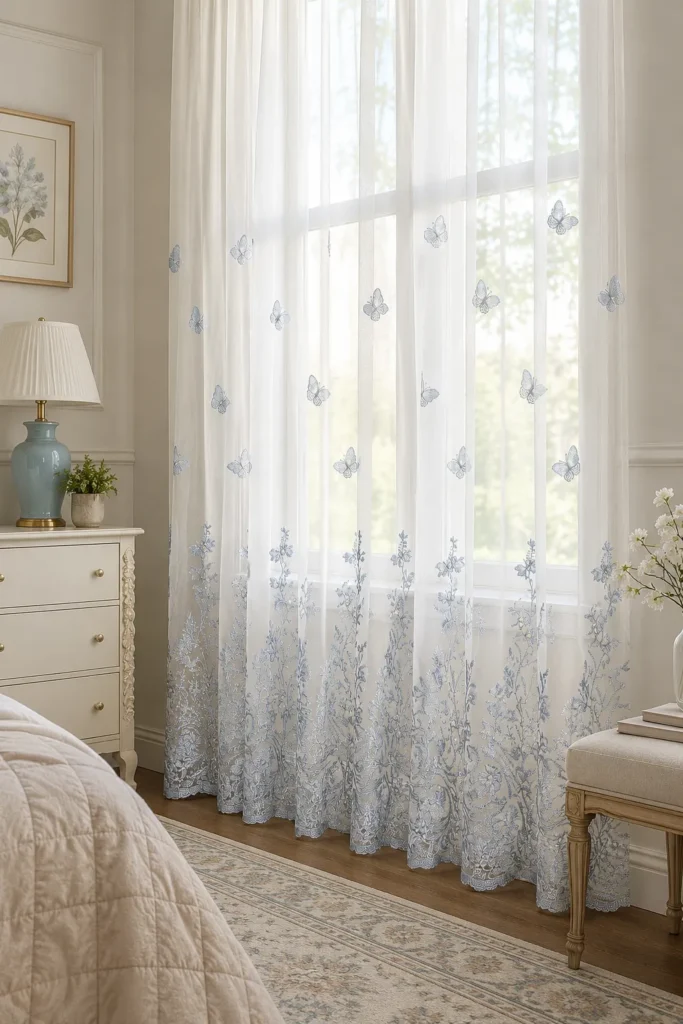
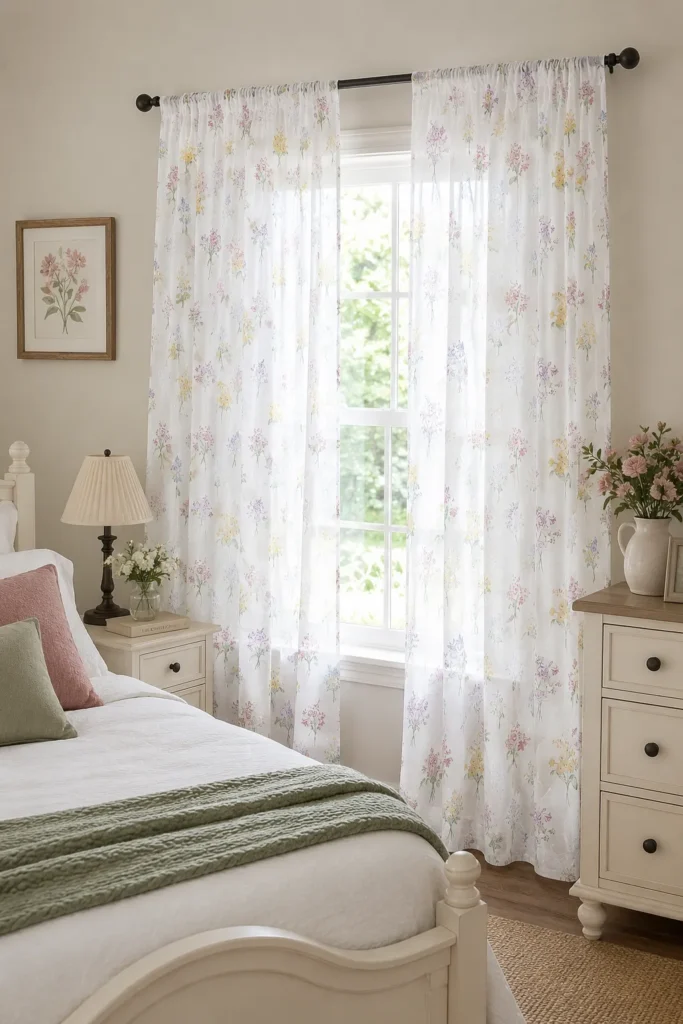
Sheer curtains are lightweight, airy, and decorative. They let in the most natural light and are often used to soften a window rather than cover it completely. They work beautifully in living rooms, dining rooms, bedrooms, and layered window treatments.
Choose sheer curtains if you want:
- A soft, bright room
- A light and airy window look
- Decorative layering under heavier curtains
- A romantic, breezy, or elegant style
- Daytime softness without heavy fabric
However, sheer curtains are not the best choice if privacy is your main concern. During the day, they may blur the view from outside. At night, when the lights are on inside, sheer curtains usually provide very little privacy on their own. For more product ideas, see our guide to Best Sheer Curtains or Best Curtains for Living Room.
Light Filtering Curtains
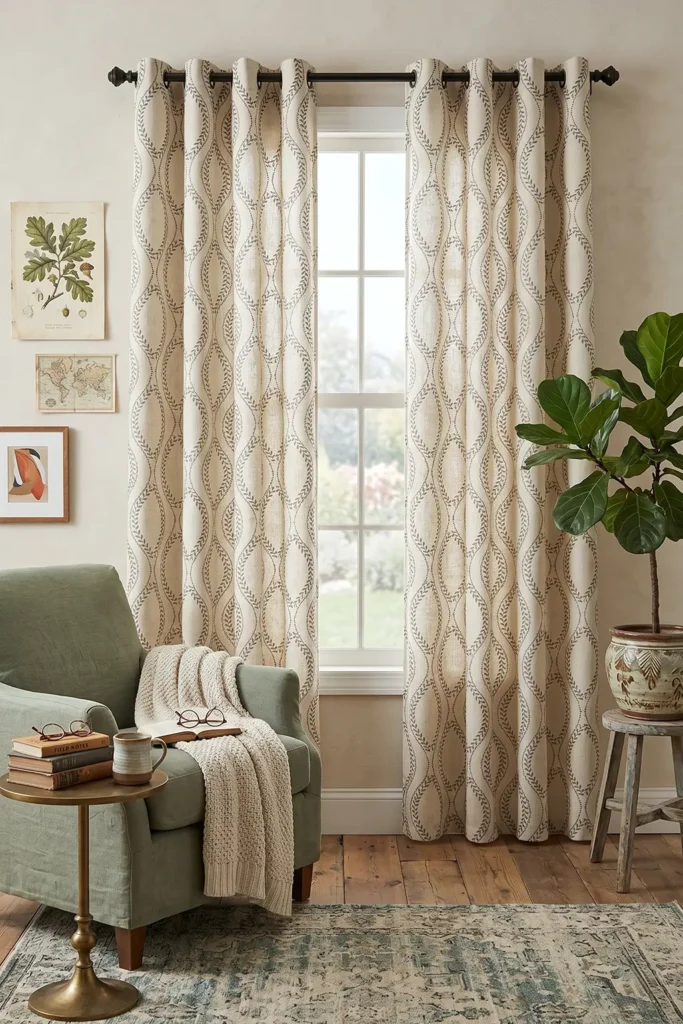
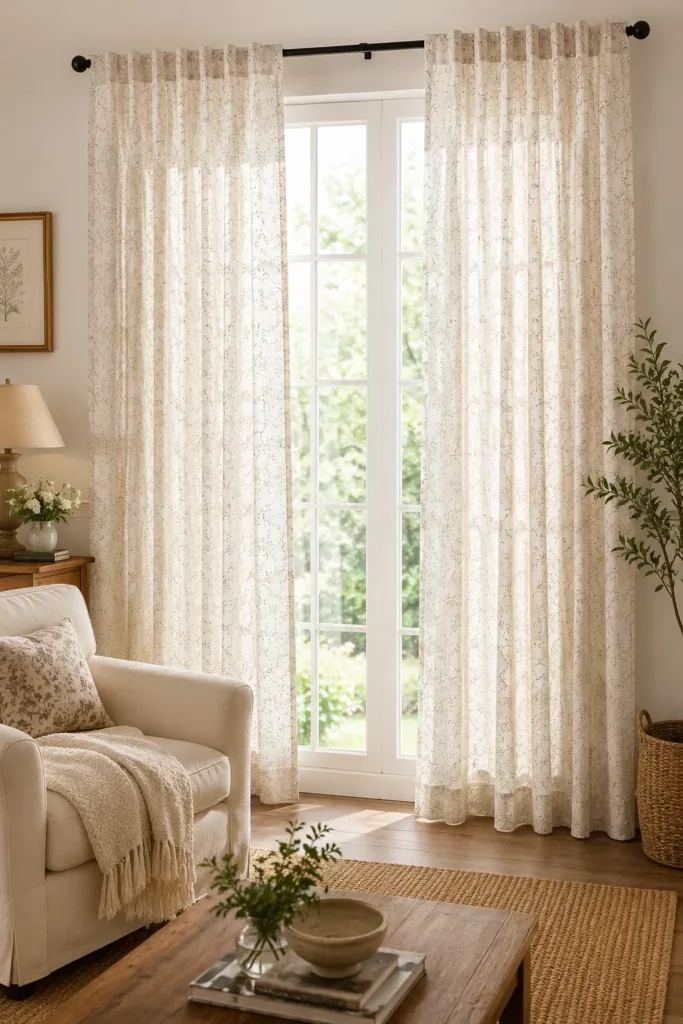
Light filtering curtains are more substantial than sheers but still allow natural light to enter the room. They soften sunlight, reduce glare, and provide more privacy than sheer curtains. They are especially popular in linen and linen-look fabrics because they give a relaxed, natural look while still softening the window.
Choose light-filtering curtains if you want:
- Natural daylight without harsh glare
- Better privacy than sheers during the day
- A softer living room feel
- A more casual alternative to blackout curtains
- A fabric that feels light but not transparent
For more options, see our guides to Best Light Filtering Curtains, Best Linen Curtains, and Best Curtains for the Living Room.
Room-Darkening Curtains
Room-darkening curtains sit between light filtering and full blackout on the spectrum. They reduce a noticeable amount of light but may not make the room completely dark. This is also where a common labeling issue arises: many curtains sold as “blackout” on Amazon are in practice room-darkening, blocking around 85 to 95 percent of light rather than achieving true total darkness.
Choose room-darkening curtains if you want:
- More darkness than light filtering through the curtains
- Better privacy without the heavier feel of true blackout
- Reduced afternoon glare for screens or home offices
- A middle-ground option for bedrooms that do not need full darkness
If your main goal is deep sleep or blocking strong early-morning light, full-blackout curtains are usually the safer choice. For darker bedroom options, see our guides to Best Curtains for Bedroom and Best Blackout Curtains.
Blackout Curtains
Blackout curtains are designed to block as much light as possible. They are often made with dense fabric, special backing, or a blackout lining that helps stop sunlight, streetlights, and headlights from entering the room.
Choose blackout curtains if you want:
- A darker bedroom for better sleep
- Strong nighttime privacy
- Less glare in a media or TV room
- Better nap conditions for babies or children
- A restful space for night-shift workers
For product recommendations, see our guides to Best Blackout Curtains and Best Curtains for Bedroom.
| Tip: How to Reduce Light Gaps Around Blackout Curtains Even a good blackout curtain can let light in around the edges if it is not installed correctly. Here are three things that make a real difference: 1. Mount the rod 4–6 inches beyond the window frame on each side so the panel fully overlaps the wall. 2. Hang the rod 4–6 inches above the window frame to block light leaking from the top. 3. Use a wrap-around or ceiling-mounted rod, or add a pelmet box above, to eliminate the gap between the rod and wall. Wider and higher installation is the single most effective way to improve blackout curtain performance. |
When Should You Choose Blackout Curtains?
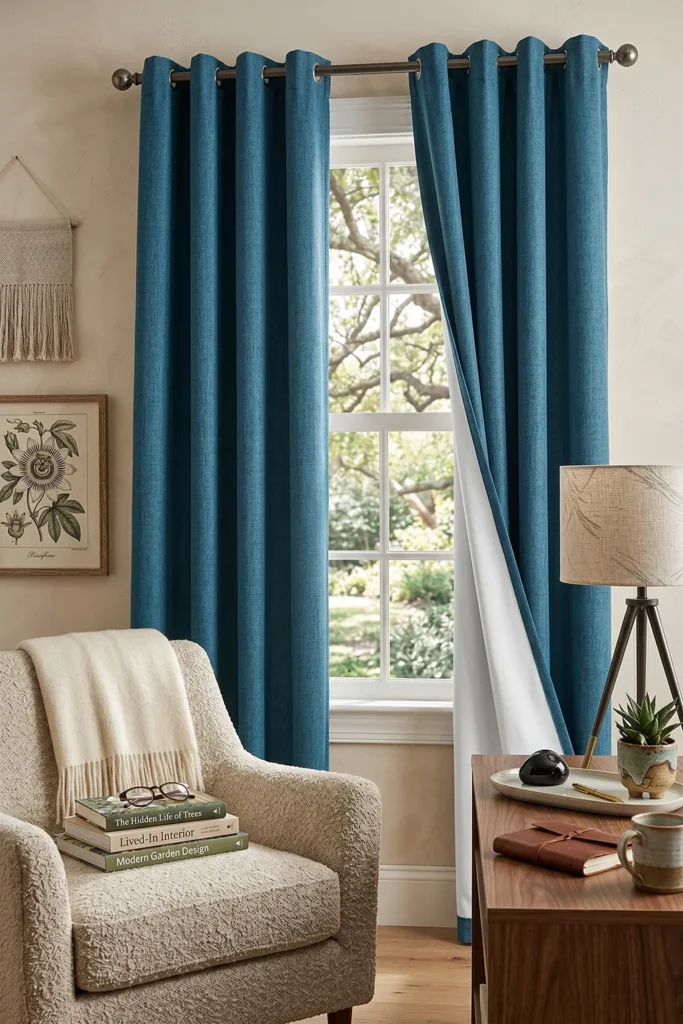
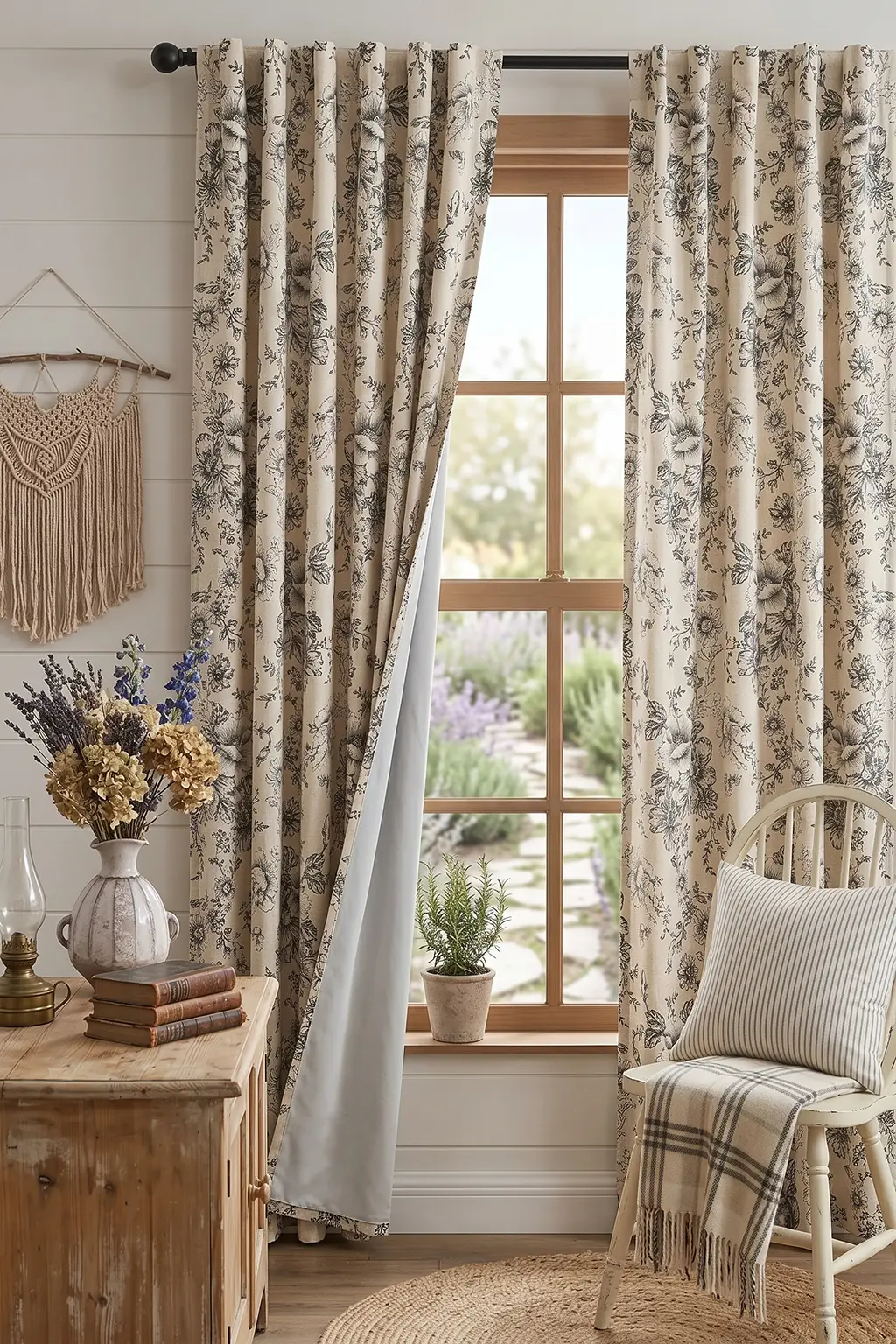
Blackout curtains are best when your main problem is light. They are especially useful in bedrooms because darkness can make the room feel more restful and support better sleep.
You may want blackout curtains if:
- Your bedroom gets bright early morning sun
- Streetlights or car headlights shine through your window at night
- You work night shifts and sleep during the day
- Your baby or child needs daytime naps
- Your media room has screen glare from the windows
- You want stronger nighttime privacy
However, not every room needs blackout curtains. In a living room, they may make the space feel too dark during the day unless you open them fully. For bright, everyday spaces, light filtering, sheer, or linen curtains usually feel softer and more livable.
If you want bedroom-focused ideas, read our guides to Best Blackout Curtains, Best Curtains for Bedroom, Best Navy Blue Curtains, Best White Curtains, and Best Velvet Curtains.
Blackout vs. Thermal Insulated Curtains: What Is the Difference?
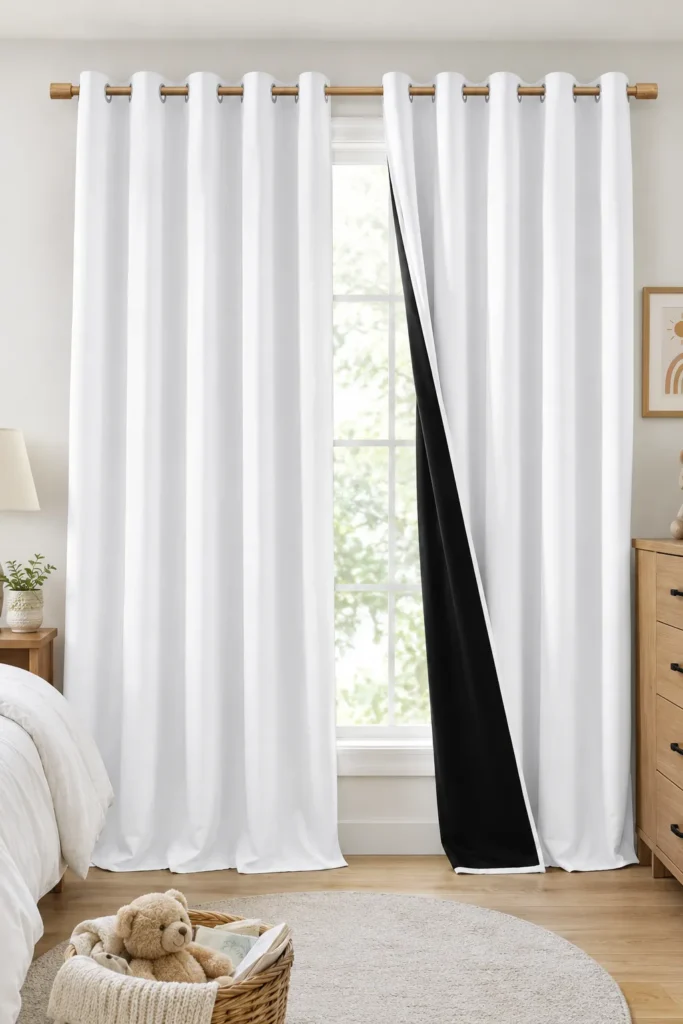
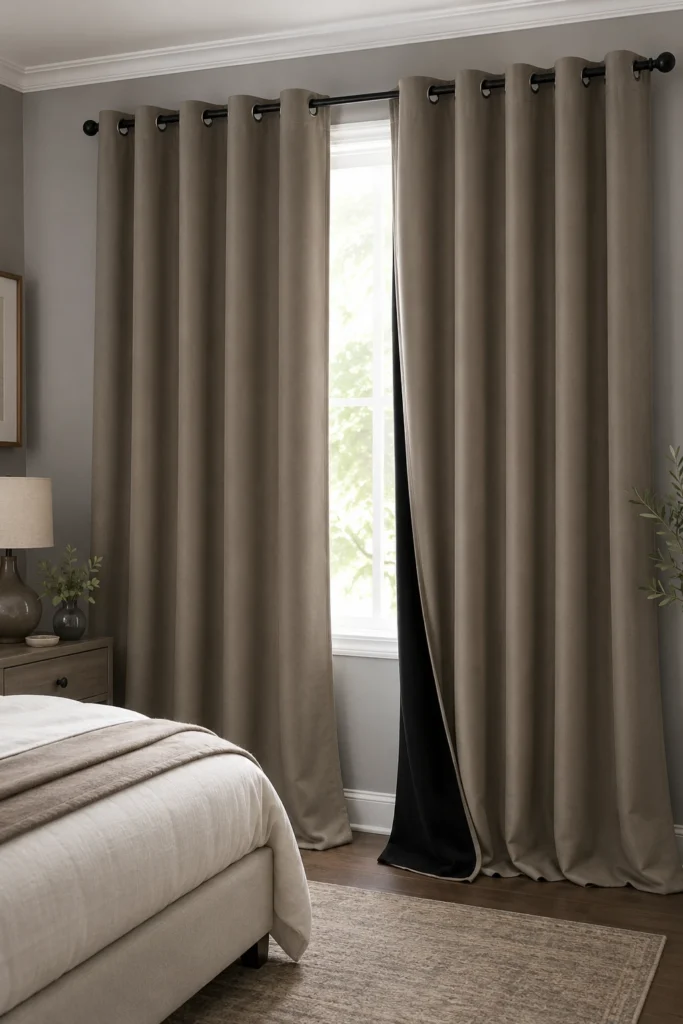
Blackout curtains are mainly for blocking light. Thermally insulated curtains are primarily used to reduce heat or cold transfer. Many curtains combine both features, but not always. A curtain can block light effectively without being highly insulating, and a curtain can help with drafts and temperature comfort without being fully blackout.
| Feature | Blackout curtains | Thermal insulated | Blackout + thermal |
| Blocks light | Usually high | Sometimes | Usually high |
| Helps with heat/cold | Sometimes | Yes | Yes |
| Best for sleep | Yes | Sometimes | Yes |
| Best for drafty windows | Not always | Yes | Yes |
| Best room | Bedroom, nursery, media room | Bedroom, living room, older homes | Bedroom, apartment, drafty room |
Choose blackout curtains if the main issue is brightness. Choose thermal insulated curtains if the main issue is temperature comfort. Choose blackout + thermal if the room is both too bright and uncomfortable in temperature — for example, a bedroom that gets strong morning sun in summer and feels cold in winter.
For more help, see our guides to Best Blackout Curtains, Best Thermal Insulated Curtains, Best Curtains for Bedroom, and Best Curtains for Living Room.
When Should You Choose Thermal Insulated Curtains?
Thermally insulated curtains are designed to reduce heat transfer at the window surface, where most heat loss and gain occur in an uninsulated or single-pane window. For anyone in a colder climate — Canada, the UK, northern US states, or older homes — or in a room that bakes in afternoon sun, thermal curtains can make a genuine, noticeable difference to comfort.
You may want thermal insulated curtains if:
- A room gets too hot in summer from the strong sun
- A bedroom feels cold in winter or near a drafty window
- You live in an older home or apartment with single-pane windows
- Your room faces the strong afternoon or western sun
- You want a heavier curtain with better coverage and drape
- You want to reduce reliance on heating or air conditioning near windows
A note on energy savings: many curtain listings claim specific percentage reductions in energy costs. These are manufacturer figures, and real-world results vary widely depending on window type, climate, curtain size, and how well the curtain seals around the window. Thermal curtains can meaningfully reduce cold drafts and heat gain at the glass surface, but they should be seen as a comfort improvement rather than a guaranteed energy-saving product.
Thermal curtains also work best when sized correctly. A panel that barely covers the window will not insulate as well as one that extends beyond the frame on all sides. For specific options, read our guides to Best Thermal Insulated Curtains, Best Curtains for Bedroom, Best Curtains for Living Room, and Best Velvet Curtains.
Light Filtering vs. Sheer Curtains: Which One Is Better?
Light filtering and sheer curtains are both used when you want natural light, but they are not the same thing.
| Feature | Sheer curtains | Light filtering curtains |
| Daylight | Very high | Medium-high |
| Privacy | Low | Medium |
| Fabric weight | Very light | Light to medium |
| Best use | Layering and decoration | Living rooms and daytime privacy |
| Night privacy | Weak alone | Better, but varies by fabric |
Choose sheer curtains if you want maximum daylight, a soft airy look, mostly decorative window treatment, or plan to layer them under heavier panels. Choose light filtering curtains if you want daylight with more privacy, your room gets harsh sun, or you want something more substantial than sheers for a living room or apartment window.
For more ideas, see Best Sheer Curtains, Best Light Filtering Curtains, Best Curtains for Living Room, Best Linen Curtains, and Best White Curtains.
Bedroom Curtains vs. Living Room Curtains: What Is Different?
Bedroom and living room curtains can overlap, but the priorities are usually different. A bedroom curtain often needs to help with sleep, privacy, and comfort. A living room curtain usually needs to balance daylight, style, and softness.
Bedroom Curtains
Bedroom curtains usually need to work harder than decorative living room curtains. They often need to block light, protect privacy, soften the room, and create a restful feeling.
Bedroom curtain priorities include:
- Darkness and sleep support
- Nighttime privacy
- Cozy texture and warmth
- Temperature comfort
- Some noise softening
Good curtain types for bedrooms include blackout curtains, thermal insulated curtains, velvet curtains, lined linen curtains, navy blue curtains, sage green curtains, and white blackout curtains. Blackout curtains are useful when the room gets too much light. Thermal curtains are useful when the room feels hot, cold, or drafty. Velvet curtains can add a cozy, luxurious feel. Navy blue and sage green create a calm bedroom mood, while white blackout curtains keep the space feeling bright when opened.
For bedroom-specific options, read Best Curtains for Bedroom, Best Blackout Curtains, Best Thermal Insulated Curtains, Best Velvet Curtains, Best Navy Blue Curtains, Best Sage Green Curtains, and Best White Curtains.
Living Room Curtains
Living room curtains usually need to support the mood of the room without making it feel too dark. They frame the window, soften daylight, and help the room feel complete.
Living room curtain priorities include:
- Natural light and softness
- Daytime privacy
- Style and coordination with furniture
- Window framing and visual proportion
Good curtain types for living rooms include light filtering curtains, sheer curtains, linen curtains, white curtains, faux silk curtains, boho curtains, and farmhouse curtains. Light filtering and linen curtains are excellent for everyday living rooms because they soften light without blocking it completely. Faux silk can work well in more formal living rooms. Boho and farmhouse curtains are useful when you want a specific decor style to anchor the room.
For more living room ideas, read Best Curtains for Living Room, Best Light Filtering Curtains, Best Sheer Curtains, Best Linen Curtains, Best White Curtains, Best Faux Silk Curtains, Best Boho Curtains, and Best Farmhouse Curtains.
How Much Privacy Do You Need?
Privacy is one of the most important curtain decisions, especially for street-facing windows, ground-floor apartments, and shared spaces.
| Privacy need | Best curtain choice |
| Low privacy, lots of daylight | Sheer curtains |
| Daytime privacy | Light filtering curtains |
| Nighttime privacy | Blackout or room-darkening curtains |
| Shared spaces or room separation | Room divider curtains |
| Street-facing bedrooms | Blackout or lined curtains |
| Apartment living rooms | Light filtering or lined linen curtains |
One thing many people do not realize about sheer curtains: they can look private during the day because it is brighter outside than inside, but at night, when indoor lights are on, the situation reverses. People outside may be able to see clearly through sheer curtains. If nighttime privacy matters — especially in a bedroom or ground-floor apartment — choose blackout, room-darkening, lined linen, or heavier curtains instead.
For more options, see Best Light Filtering Curtains, Best Blackout Curtains, Best Sheer Curtains, Best Room Divider Curtains, Best Curtains for Bedroom, and Best Curtains for Living Room.
Room Divider Curtains: When Do They Make Sense?
Room divider curtains are different from regular window curtains. They are mainly used to divide space, add privacy, or conceal an area rather than dress a window.
They are useful for:
- Studio apartments need a defined sleeping area
- Shared bedrooms requiring individual privacy
- Dorm rooms and basement spaces
- Home offices separated from living areas
- Open-plan rooms and temporary guest areas
- Closet cover or storage concealment
When choosing room divider curtains, look for heavier fabric for better privacy, ceiling-to-floor length wherever possible, extra-wide panels, an easy-sliding track or rod, and blackout or thermal fabric if sound softening and privacy both matter. If the curtain will be visible from both sides, choose a color or pattern that works in both directions.
For product ideas, read Best Room Divider Curtains, Best Blackout Curtains, and Best Thermal Insulated Curtains.
How to Choose Curtain Size, Width, and Length
Even the right curtain type can perform poorly if it is the wrong size. Width, length, and mounting position all affect light control, privacy, insulation, and appearance.
Curtain Width
Curtains should usually be wider than the window. Extra width creates fullness, helps the fabric hang better, and improves coverage when the curtains are closed. For blackout curtains, width is especially important because panels that barely cover the window allow light to leak in around the sides. For a fuller look, many people choose panels that together measure about 1.5 to 2 times the rod’s width. For sheer curtains, even more fullness may look better because the fabric is thin.
Curtain Length
Common curtain lengths include sill length, apron length, floor length, slight break, and puddle length. For function, the most important point is coverage. Floor-length curtains usually provide better coverage and look more finished in bedrooms and living rooms. Thermal curtains also work better when they fully cover the window area. Room divider curtains usually need to reach close to the floor to create real separation.
Mounting Height and Width
Mounting curtains higher makes windows look taller. Mounting the rod wider than the window lets more glass show when the curtains are open and gives better coverage when closed. For blackout curtains, hanging the rod at least 4 to 6 inches above and beyond the window frame on each side can significantly reduce light leaks and improve overall performance.
For more practical examples, see Best Blackout Curtains, Best Thermal Insulated Curtains, Best Room Divider Curtains, Best Curtains for Bedroom, and Best Curtains for Living Room.
One Panel or Two Panels?
This is one of the easiest details to miss when shopping online, and it catches many buyers off guard. Some curtains are sold as one panel. Others are sold as a pair of two panels. The product image may show two panels even if the package includes only one.
Before buying, always check:
- Is the listing for one panel or two?
- What is the width of each panel?
- Will the total width provide enough fullness for the window?
- Does the image show more panels than are actually included?
For most standard windows, two panels look more balanced and frame the window properly. For sliding glass doors, closets, or room dividers, one extra-wide panel may work better. This tip is especially important when comparing Best Blackout Curtains, Best Linen Curtains, Best Velvet Curtains, and Best Room Divider Curtains.
Curtain Header Styles and How They Work
Curtain header style affects how the curtain hangs, slides, and feels in daily use. Some styles are easy to open and close. Others are more decorative but less practical for curtains that move frequently.
| Header style | Functional benefit | Best for |
| Grommet | Easiest to slide on a rod | Bedrooms, living rooms |
| Rod pocket | Simple and affordable, but slides less smoothly | Decorative panels that stay mostly open |
| Back tab | Neat and tailored look, decent sliding | Living rooms, bedrooms |
| Pinch pleat | Smooth movement with rings or hooks | Formal spaces, heavier curtains |
| Tab top | Casual, relaxed hanging | Farmhouse or boho decor |
| Clip rings | Adjustable height, easy to hang | Lightweight to medium curtains |
One practical note on rod pocket curtains: because the fabric slides directly onto the rod through a sewn pocket, they tend to bunch and do not slide as smoothly as grommet or ring-style curtains. They work best for panels that stay open most of the time rather than curtains you open and close daily. For frequently used bedroom or living room curtains, grommets or back tabs are usually more convenient.
For functional comparisons, see Best Curtains for Bedroom, Best Curtains for Living Room, Best Linen Curtains, Best Velvet Curtains, Best Faux Silk Curtains, Best Farmhouse Curtains, and Best Boho Curtains.
Do You Need Curtain Liners?
Curtain liners can change how a curtain performs. Some curtains are unlined and mostly decorative. Others include a built-in blackout, thermal, or privacy lining.
Common liner types include:
- Blackout lining — blocks light, adds weight, and drapes
- Thermal lining — helps with heat and cold transfer
- Privacy lining — makes the curtain more opaque without a full blackout
- Decorative lining — improves the look from outside the window
- No lining — lighter, more airy, better for sheers and decorative panels
You may want lined curtains if you need stronger privacy, the fabric is thin or sheer, the window gets strong sun, you want better light blocking, or you want the curtain to hang with more weight and fullness.
A note on built-in blackout vs. sewn-in lining: Some blackout curtains use a triple-weave construction where the blackout layer is woven directly into the fabric. These tend to feel heavier and more uniform. Other curtains pair a decorative outer fabric with a separate sewn-in blackout lining. The lined version often looks nicer and gives more design flexibility, but the lining can separate from the outer fabric over time with repeated washing. Both are legitimate approaches — knowing the difference helps when comparing products at similar price points.
White curtains, faux silk curtains, and lightweight linen curtains especially benefit from lining if privacy is a concern. For more options, see Best Blackout Curtains, Best Thermal Insulated Curtains, Best Faux Silk Curtains, Best White Curtains, and Best Curtains for Bedroom.
Best Curtain Types by Room
| Room | Best curtain types |
| Bedroom | Blackout, thermal, velvet, lined linen |
| Living room | Light filtering, linen, sheer, faux silk |
| Nursery / kids’ room | Blackout, thermal |
| Media room | Blackout, room-darkening, velvet |
| Apartment | Light filtering, blackout, room divider |
| Home office | Light filtering, room-darkening |
| Dining room | Faux silk, linen, velvet |
| Studio apartment | Room divider, blackout, thermal |
For bedroom picks, see Best Curtains for Bedroom, Best Blackout Curtains, and Best Thermal Insulated Curtains. For living room picks, see Best Curtains for Living Room, Best Light Filtering Curtains, and Best Linen Curtains. For studio apartments, see Best Room Divider Curtains. For dining rooms, see Best Faux Silk Curtains and Best Velvet Curtains.
Best Curtain Types by Problem
If you are still unsure, start with the exact problem you want to solve.
| Problem | Best curtain choice |
| My bedroom is too bright in the morning | Blackout curtains |
| My room gets too hot in summer | Thermal insulated curtains |
| My room feels cold or drafty in winter | Thermal insulated curtains |
| I want privacy but still want daylight | Light filtering curtains |
| I want a soft, airy window look | Sheer curtains |
| I need to divide a room or create privacy in a studio | Room divider curtains |
| I want a darker TV or media room | Blackout or room-darkening curtains |
| I want a cozy, warm bedroom feel | Velvet, blackout, or thermal curtains |
| I want a bright, inviting living room | Sheer, white, or light filtering curtains |
For a too-bright bedroom, start with Best Blackout Curtains. For temperature comfort, start with Best Thermal Insulated Curtains. For daylight and privacy, start with Best Light Filtering Curtains. For decorative layering, start with Best Sheer Curtains. For studio apartments or shared spaces, start with Best Room Divider Curtains.
Curtain Care and Maintenance
Curtain care matters because some fabrics are easier to live with than others. Before buying, always check the care label.
Easy-Care Curtains
Polyester, polyester-linen blends, and many standard blackout curtains are often machine washable. Always verify the label, and wash on a cold, gentle cycle to preserve the blackout lining.
Linen and Linen-Look Curtains
Linen and linen-look curtains may wrinkle more easily, but that relaxed texture is part of their appeal. A useful trick: hang them back on the rod while still slightly damp after washing. Gravity pulls the wrinkles out as they dry, often eliminating the need for ironing altogether. Some linen curtains may also be steamed lightly for a crisper look.
Velvet Curtains
Velvet curtains can look rich and cozy, but they require careful handling. Many velvet curtains should be dry cleaned or steamed rather than machine-washed, depending on the fabric composition. When steaming velvet, always work in the direction of the nap — moving downward — and never press with a flat iron directly on the velvet surface. Ironing velvet crushes the pile permanently and cannot be reversed.
Faux Silk Curtains
Faux silk curtains can add elegance, but they show wrinkles and watermarks more easily than other fabrics. Many need gentle spot cleaning or dry cleaning. Lining faux silk curtains can help them hang better and protect the fabric from sun exposure, which can cause faux silk to degrade or discolor over time.
Sheer Curtains
Sheer curtains are lightweight and often washable, but they can snag, stretch, or wrinkle easily. Handle them gently, especially if they have embroidery or a delicate texture. Like linen curtains, hanging them slightly damp can help reduce creasing.
For more specific care considerations, see Best Velvet Curtains, Best Faux Silk Curtains, Best Sheer Curtains, Best Blackout Curtains, and Best Linen Curtains.
Quick Buying Checklist
Before you buy curtains, ask these questions:
- What problem am I solving: light, privacy, sleep, insulation, or space division?
- Do I need blackout, thermal, light-filtering, sheer, or room-divider curtains?
- Is the product listing for one panel or two panels?
- What width and length do I need for my window?
- Do I need a liner, or does the curtain include one?
- Which header style works with my existing rod or track?
- Can I wash or maintain this fabric easily at home?
- Does the curtain color and style work with my room?
If you already know the functional type you need but are unsure about color, fabric, or design, read How to Choose Curtain Colors, Fabrics, and Styles for Your Home.
Frequently Asked Questions
What is the best type of curtain for bedrooms?
The best bedroom curtains are usually blackout, thermal, velvet, or lined curtains. Blackout curtains are best if your room is too bright. Thermal curtains are helpful if the room feels hot, cold, or drafty. Velvet curtains add warmth and coziness. Lined linen curtains give a softer, more relaxed look to the bedroom. Read more in Best Curtains for Bedroom, Best Blackout Curtains, and Best Thermal Insulated Curtains.
Are blackout curtains better than light-filtering curtains?
Blackout curtains are better for darkness, sleep, and nighttime privacy. Light filtering curtains are better when you want natural daylight, softness, and some daytime privacy without making the room feel heavy. For bedrooms, blackout curtains are often the better functional choice. For living rooms, light-filtering curtains usually feel more comfortable and inviting during the day. Read more in Best Blackout Curtains and Best Light Filtering Curtains.
Are sheer curtains good for privacy?
Sheer curtains offer limited privacy. They can soften the view during the day because it is brighter outside than inside. But at night, when lights are on inside the room, sheer curtains provide little privacy, and people outside may be able to see through them clearly. If privacy is important, consider light filtering, lined, room-darkening, or blackout curtains instead. Read more in Best Sheer Curtains and Best Light Filtering Curtains.
Do thermal curtains really keep heat out?
Thermal curtains can meaningfully reduce heat gain and cold drafts at the window surface, which is where a significant amount of heat transfer occurs in older or single-pane windows. Results depend on how the curtains are sized, installed, and how close they sit to the window. They are not a substitute for proper window insulation, and manufacturers’ energy-saving claims should be treated as estimates rather than guarantees. Read more in Best Thermal Insulated Curtains.
Can curtains help with noise?
Heavy curtains may soften some ambient noise and reduce echo inside a room, but they should not be treated as proper soundproofing. Thicker fabrics like velvet, thermal curtains, and room divider curtains may help a room feel quieter, but they will not block sound as effectively as acoustic panels or proper insulation. Read more in Best Velvet Curtains, Best Thermal Insulated Curtains, and Best Room Divider Curtains.
Should living room curtains be blackout?
Living room curtains do not need to be blackout unless you have a specific need for strong glare control, complete privacy, or heavy sun blocking. In most living rooms, light-filtering sheer or linen curtains work best because they keep the room bright while softening the window. Read more in Best Curtains for Living Room, Best Light Filtering Curtains, Best Sheer Curtains, and Best Linen Curtains.
What is the difference between one-panel and two-panel curtains?
One-panel curtains include one curtain panel. Two-panel sets include a pair. Always check the package quantity before buying because product images often show two panels even when the listing is for one. For most standard windows, two panels look more balanced. For sliding doors, closets, or room dividers, one wide panel may be more practical.
What curtain type is best for apartments?
For apartments, the best curtain depends on the specific problem. Light-filtering curtains are good for daytime privacy in living rooms. Blackout curtains are useful in bedrooms that get too much light. Room divider curtains are very practical in studios or shared spaces. Thermal curtains may help if the apartment has drafty or very sunny windows. Read more in Best Light Filtering Curtains, Best Blackout Curtains, and Best Room Divider Curtains.
Start with the function, then choose the style
The best curtain choice always starts with function. Before choosing a color or pattern, decide what you need the curtain to do.
Choose blackout curtains if you need darkness for sleep. Choose thermal insulated curtains if the room feels too hot, cold, or drafty. Choose light-filtering curtains if you want daylight with some privacy. Choose sheer curtains if you want softness and decorative layering. Choose room divider curtains if you need privacy or separation in an open space.
Once you know the right curtain type, you can choose the best color, fabric, and style for your room.
Next, read our reviews:
- Best Blackout Curtains
- Best Thermal Insulated Curtains
- Best Light-Filtering Curtains
- Best Sheer Curtains
- Best Curtains for Bedroom
- Best Curtains for Living Room
- Best Room Divider Curtains
And if you need help choosing colors, fabrics, patterns, and design styles, read How to Choose Curtain Colors, Fabrics, and Styles for Your Home.