
Faruque Alam
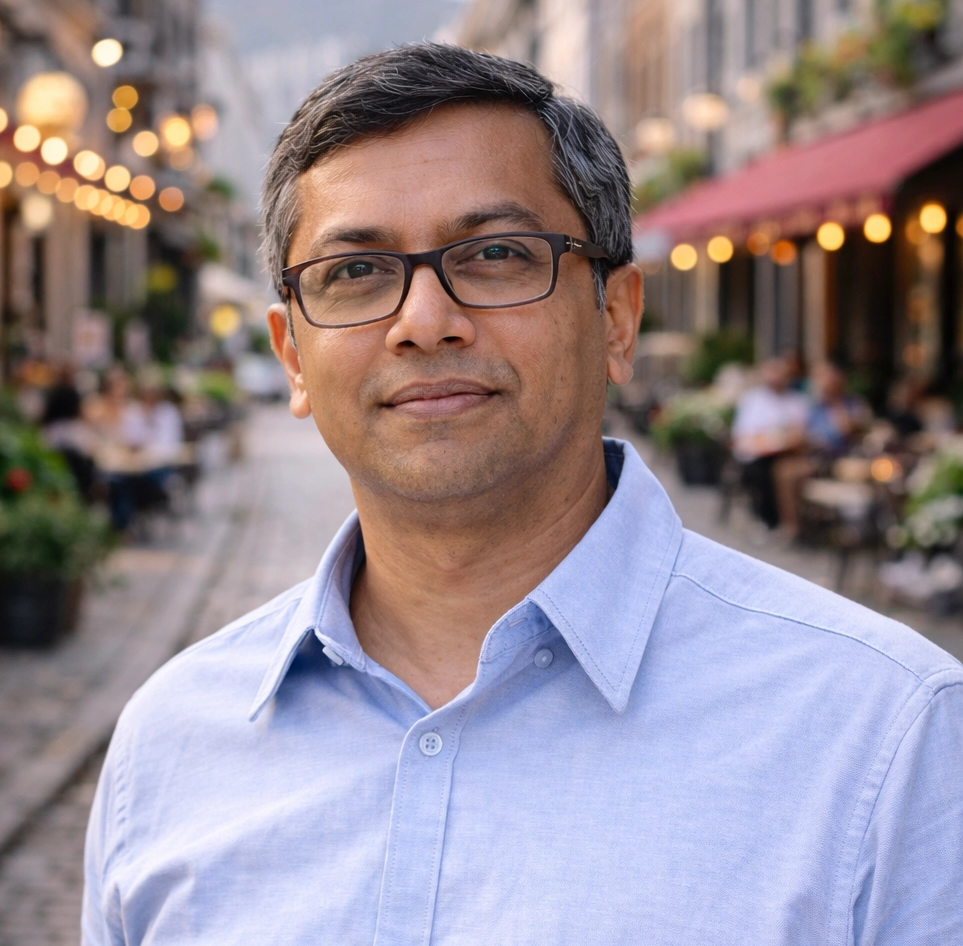
Hi, I’m Faruque. I grew up in Dhaka watching people make things by hand — and I’ve never quite got over it.
Where it started
Long before I knew anything about interior design, I knew what it felt like to watch something beautiful being made from almost nothing. Growing up in Dhaka, Bangladesh, my family was involved in the textile handicraft trade. As a child, I would sit and watch the craftswomen at work — the careful, deliberate stitching of Nakshi Kantha, the intricate weave of Jamdani cloth emerging from a loom. These were not factory products. They were objects that took days or weeks to make, and every inch of them showed it.
I didn’t have the vocabulary for it then, but what I was watching was design thinking at its most fundamental: how pattern, repetition, color, and texture combine to create something that is both useful and moving. That early exposure never left me. Today, my family’s business has expanded into other types of quilts — and my interest has expanded along with it, from admiring the craft to understanding how it fits into the larger story of a well-designed home.
The professional path
I moved from Dhaka to the United States for university, where I completed my Bachelor of Science in Computer Science at Mississippi State University. From there, my career took me to Toronto, Canada, where I now work as a Business and Data Analyst for an automaker. My days involve translating complex data into decisions — finding the signal in the noise, spotting patterns, and communicating what they mean to people who need to act on them.
It sounds like a world away from quilts and interior design. But honestly, the skill set overlaps more than you’d think. Both disciplines are about pattern recognition. Both ask you to hold many variables in mind at once and find the arrangement that works. And both reward patience.
Why interior design, quilts, and home textiles?
Interior design became a serious hobby partly because of those childhood memories and partly because I’ve always believed that a home should do more than function — it should feel like somewhere you want to be. Textiles are the fastest, most affordable, and most personal way to change how a room feels. A quilt on a bed, a throw over a chair, a hand-stitched wall hanging — these objects carry history and human effort in a way that a paint color or a furniture piece rarely does.
Nakshi Kantha holds a special place in my heart. It is one of the oldest textile traditions in Bengal — women stitching together layers of old saris with a running stitch to create something entirely new, decorated with scenes from daily life, mythology, and nature. Knowing that history, and then seeing how contemporary quilting draws on those same principles of piecing and storytelling, is what keeps this hobby endlessly interesting to me. The craft evolves, but the underlying impulse — to make a home warmer and more meaningful — never changes.
Building for the web
Alongside my analytical career, I design and develop websites focused on home improvement. It is a natural meeting point of my technical background and my passion for interiors — building platforms that help people make better decisions about their living spaces. Comfy Dwell is the project I’m most proud of, built together with my friend and co-founder, Marwan Sule. But it is part of a small portfolio of sites I’ve built and continue to develop:
Quilts, textiles & cozy home design
Home painting guides & color advice
Pools, hot tubs & outdoor living
What I bring to Comfy Dwell
Marwan brings the formal design training and the interior designer’s eye. I bring the data mindset, the web craft, and something neither of us manufactured: a childhood spent watching master craftswomen work. When I write about Nakshi Kantha or traditional textile patterns on this site, it is not research I did last week. It is a memory I’ve carried for decades. That, I think, is worth something.
— Faruque