
Chic Rag Quilt Jacket, Coat, and Vest Ideas in Denim, Flannel, and Modern Patchwork Prints
A Chic Rag Quilt Jacket, Coat, and Vest is outerwear built the way a rag quilt is built — squares of fabric sewn in stacked layers through all thicknesses at once, then clipped and washed so the seam allowances bloom into the soft, frayed texture that gives rag quilts their distinctive character. On a garment, that texture does something a flat quilted jacket can’t: the frayed seams sit on the outside, creating a dense, napped surface that traps warmth, softens with every wash, and looks increasingly good over time.
The twelve designs gathered here span a wide range of aesthetics and fabrics — upcycled denim, oversized flannel plaid, bohemian floral dusters, graphic monochrome patchwork, and bold color-blocked geometrics — but all share that same construction logic: deliberate rawness used as a design feature rather than a finish to be hidden.
Chic Rag Quilt Jacket, Coat and Vest
Across these designs, readers will find a collection of wearable rag quilt projects that take the technique in genuinely different directions. Some are built from reclaimed materials — old denim in mixed washes, workwear canvas, worn shirting — and lean into those fabrics’ utilitarian character with chore-coat silhouettes and utility pockets. Others use new fabric chosen specifically for color and print, treating the rag construction as a way to achieve texture rather than to upcycle.
Slouchy shackets and tailored bombers, longline duster coats and cropped vests, reversible pieces, and kimono-style layers with wide sleeves. The common thread is that the construction itself is part of the aesthetic — the frayed seam lines are as much a design element as the fabrics they join.
See also: Jelly Roll Quilted Jackets and Vests – Farmhouse Quilt Jackets & Vests – Sashiko Quilt Jackets and Vests – Fall Quilted Jacket and Vest – Nakshi Kantha Jackets and Vests
Why Make This Type of Garment
The rag quilt method is one of the faster routes to a quilted garment precisely because it skips several steps that conventional quilted jacket construction requires. You don’t have separate backing and batting layers to manage independently, quilting lines to plan, or seam finishing on the inside—the layers are stitched together all at once, and the washing machine does the finishing. For quilters who want to make wearable outerwear but find the conventional quilt-then-cut approach daunting, rag construction offers a more direct path.
It’s also an honest use of fabric scraps and worn clothing: denim too damaged for further wear, flannel shirts past mending, canvas that’s seen better days—these materials fray well, hold their structure through repeated washing, and develop better surface texture over time than pristine new fabric does. A rag quilt garment made from reclaimed materials will look more interesting after ten washes than it did when new.
What Makes These Designs Different
Rag quilt construction differs from conventional quilted garment construction in one fundamental way: the seam allowances are deliberately left unfinished on the outside of the garment, where clipping and washing cause them to fray and bloom into a soft, textured fringe along every seam line. In a conventional quilted jacket, those same allowances are enclosed or pressed flat and hidden. The visual result is completely different — a rag quilt jacket has a dense, napped, almost felted quality at the seams, while a conventional quilted jacket has a smooth, flat surface with visible quilting lines.
It’s also different from a standard patchwork jacket where patchwork yardage is made first and then cut — in rag construction, the patchwork and quilting happen simultaneously as the squares are sewn together in stacked layers. The fraying is structural as well as decorative: the multiple layers of fabric at each seam add warmth and durability where they take the most wear.
Tips for Choosing Fabrics
Weight consistency is the most important factor. Rag quilts depend on all the layers feeding through the machine together and fraying at roughly the same rate after washing. Mixing heavy denim with lightweight lawn in the same garment creates uneven seam bulk and inconsistent fraying — the lighter fabric will fray away while the heavier one barely moves. As a general rule, keep all fabrics within one weight category for each piece: medium-weight quilting cotton, light denim, chambray, and flannel work well together; heavy denim, canvas, and thick wool work together; but mixing heavy and light fabrics creates problems.
Woven fabrics fray better than knits, which tend to roll and curl at the edges rather than producing clean fringe, so avoid jersey and other stretch materials. Fabrics with a looser weave — flannel, cotton gauze, some linens — fray more dramatically and quickly than tightly woven fabrics, which is worth considering when planning how much fringe you want. Pre-wash everything, including any new fabric used alongside reclaimed pieces, so all shrinkage happens before construction rather than after.
Color and Fabric Planning
The color range across these designs is genuinely wide, and the planning approach is different depending on the aesthetic. The denim and workwear pieces work best when the color variation comes from fabric aging and wash history rather than from deliberate color selection — mixed indigo washes, faded patches against deeper ground cloth, worn canvas beside newer denim. Deliberately choosing fabrics that look used at different rates creates a more convincing reclaimed composition than uniformly faded pieces do. The contemporary color-blocked and geometric pieces take the opposite approach: here the color is planned, the contrast is deliberate, and the frayed texture softens bold hues rather than signaling wear.
The pastel bomber and checkerboard vest sit somewhere between the two — color-aware but not rigidly graphic, relying on the texture of the frayed seams to keep the palette from looking too clean. For the floral and bohemian duster versions, mixing print scales—a large floral with a small check and a plain ground—creates more visual interest than prints of similar scale placed together, and helps the frayed seams read against the surface rather than disappear into a busy pattern.
Common Mistakes to Avoid When Sewing
The most specific mistake in rag quilt garment construction is not clipping the seam allowances thoroughly enough before washing. The fraying depends on the clips reaching close to — but not through — the stitching line, and sparsely clipped seams will felt and mat instead of blooming. Clip every half inch or less, and clip into curves more frequently than along straight seams. A related problem is using seam allowances that are too narrow — a standard quarter-inch quilting seam allowance leaves almost nothing to fray. Rag construction typically uses half-inch to one-inch seam allowances specifically to give the fringe enough material to develop.
On the garment construction side, the most common difficulty is placing thick patchwork seam intersections at stress points — shoulders, underarms, and front openings accumulate bulk where seams cross, and in rag construction where each seam is already several layers thick, those intersections can become stiff and uncomfortable. Shift pattern pieces slightly when cutting so that seam intersections fall away from the most handled areas. Finally, not washing the finished garment vigorously enough to fully develop the fringe is a common disappointment—a single gentle cycle won’t do it. A full hot wash and a long tumble dry are what bloom the seams properly, and some fabrics need two or three wash cycles before the texture fully develops.
Branded and Trademarked Fabrics, Logos, and Graphics
The garment designs in this article use generic fabric types, plain weaves, prints, and patterns rather than pieces from specific brands, designers, or manufacturers. Where reclaimed clothing is referenced as source material — old denim, worn flannel shirts, workwear canvas — these are general clothing categories rather than references to any specific label or company. Readers using their own reclaimed garments should be aware that pieces carrying prominent branded logos or licensed imagery may not be suitable for garments intended for sale or publication, but are generally fine for personal projects where the branding is incidental rather than the focus.
1. Upcycled Denim Rag Quilt Jacket with Mixed Washes and Bold Frayed Seams
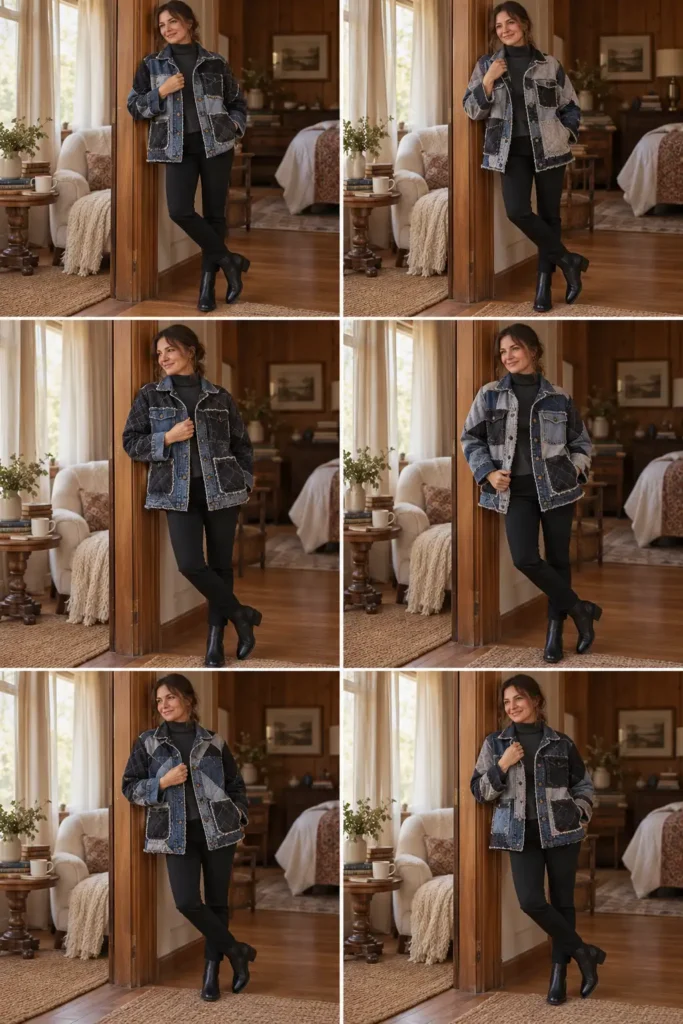
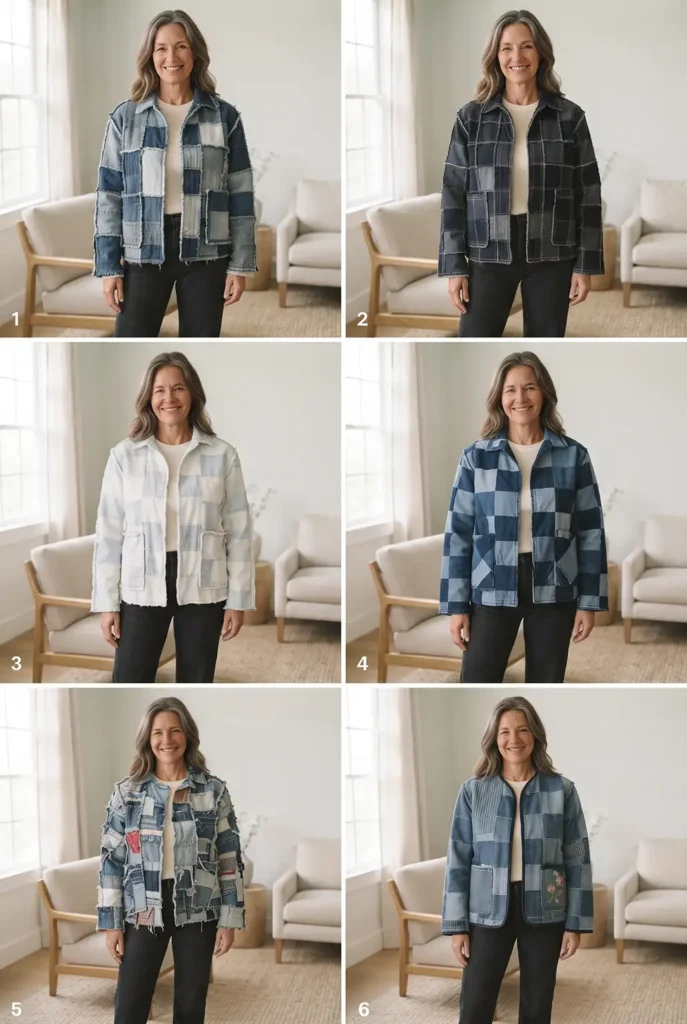
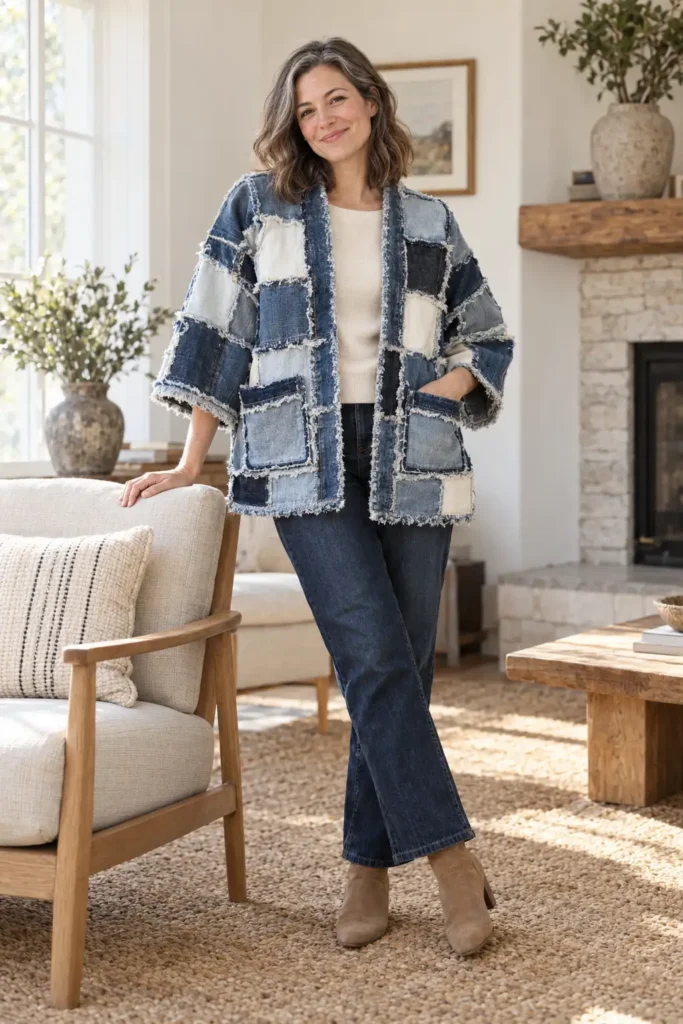
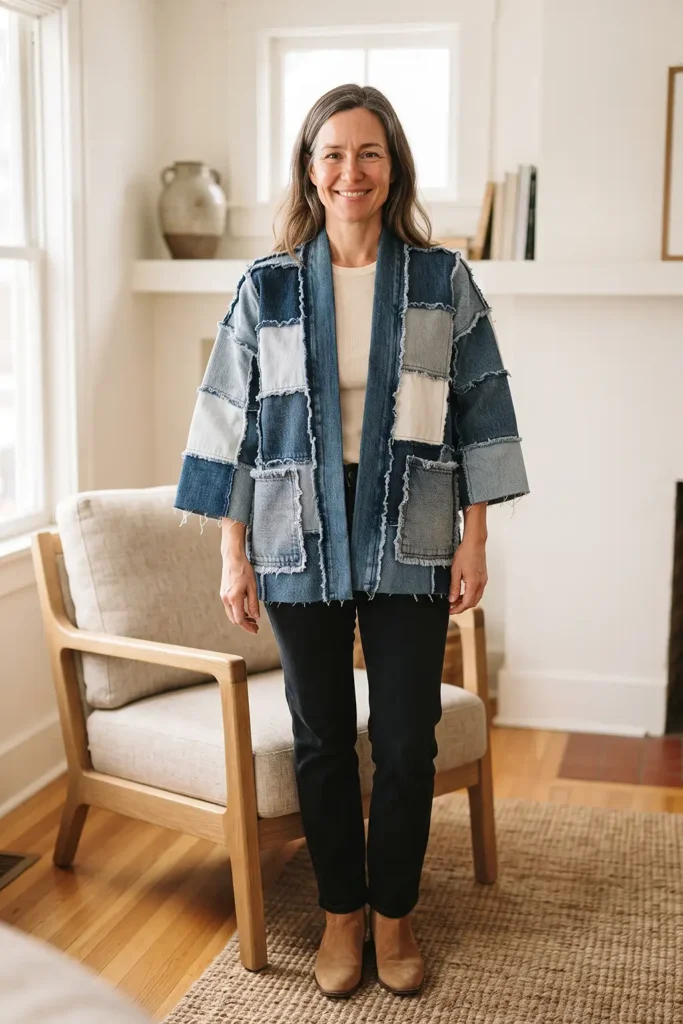
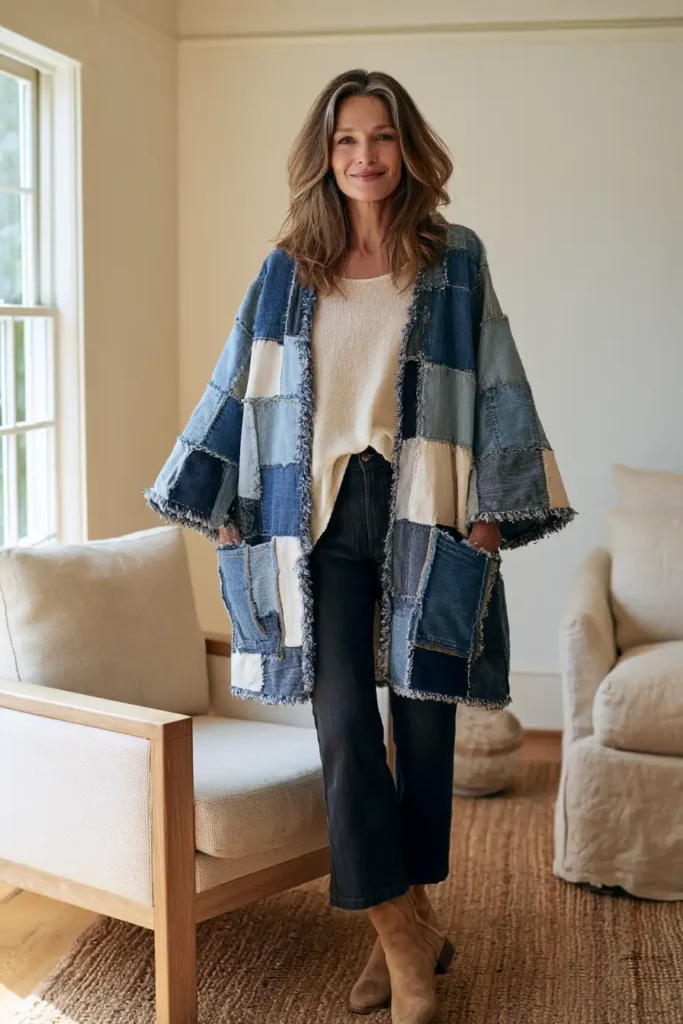
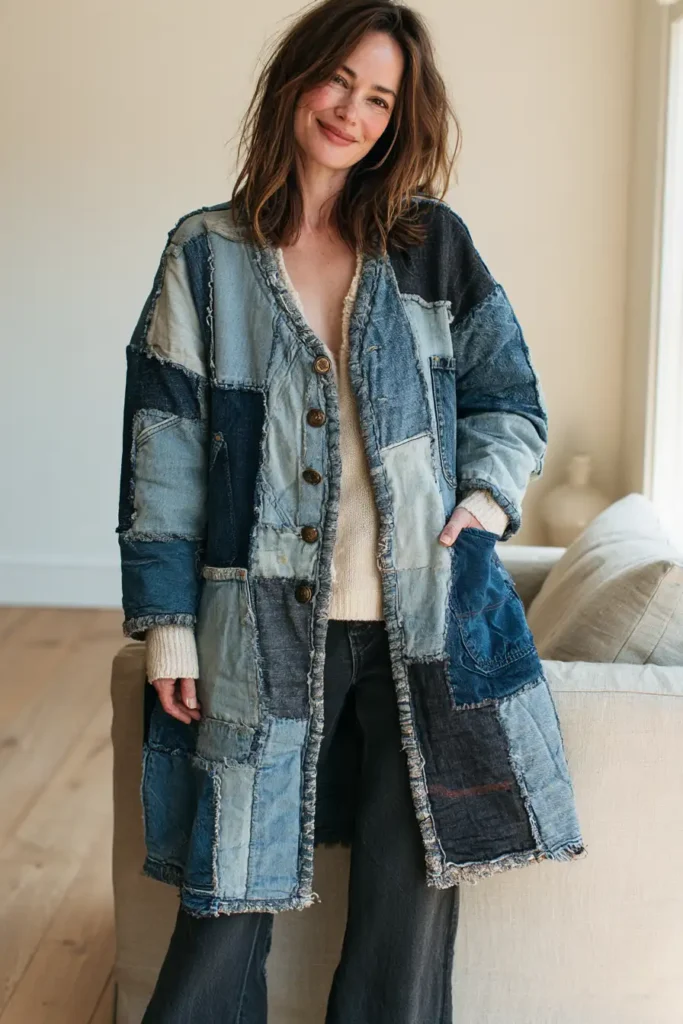
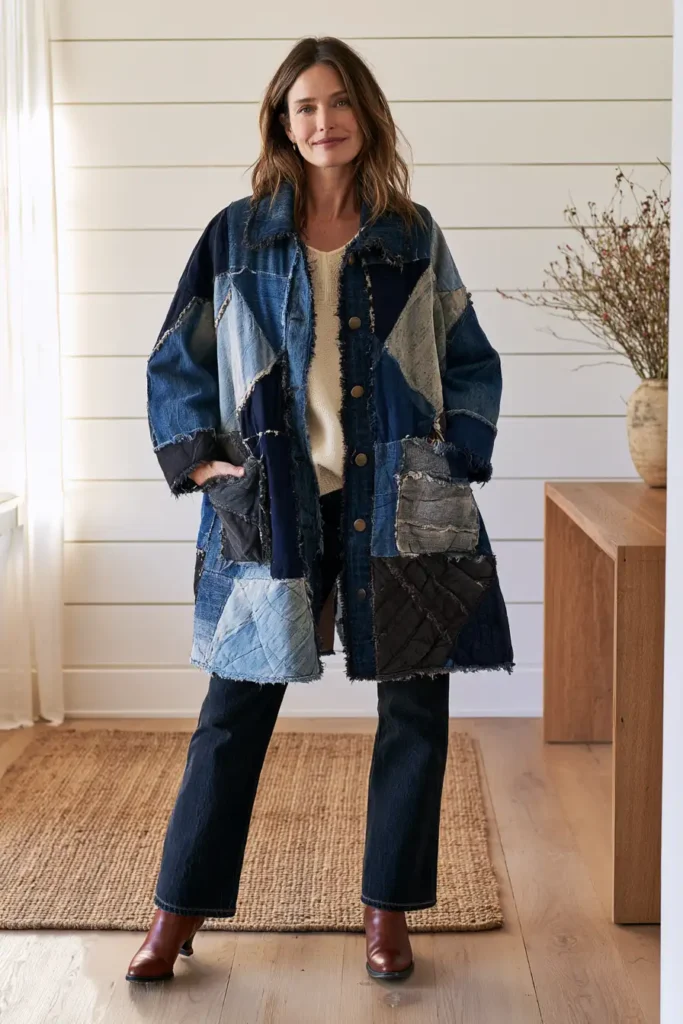
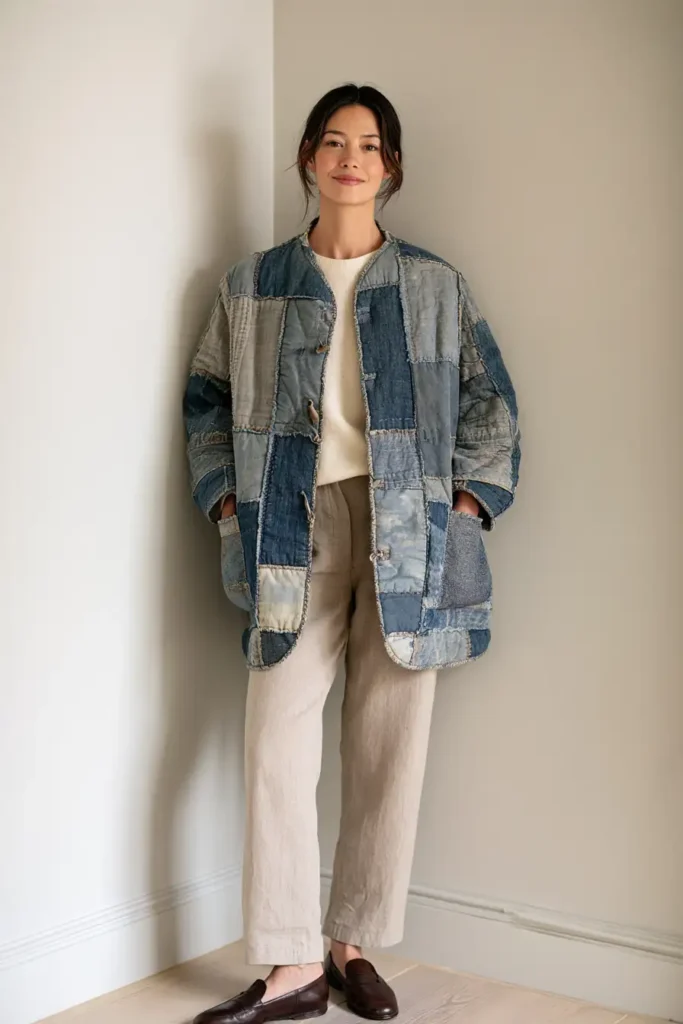
An upcycled denim rag quilt jacket turns the familiar texture of worn jeans into deliberately rugged patchwork outerwear. The strongest versions combine light-wash denim, medium blue, deep indigo, faded grey, and small touches of charcoal so the patchwork stays clearly visible, even while staying within a mostly blue palette. Exposed seam allowances and clipped, softened frayed edges form raised lines between the denim sections, giving the jacket its unmistakable rag-quilt character rather than the flatter appearance of a conventional quilted denim jacket.
Reclaimed jeans work particularly well because natural fading around the knees, thighs, pockets, and seams creates variations that new yardage cannot easily imitate. The aim, however, is controlled texture rather than distressed clothing. The jacket should still feel structurally sound and wearable, with deliberately frayed patchwork seams, flexible layering, and enough movement through the shoulders and elbows for comfortable everyday use.
Building Depth with Mixed Denim Washes
Use light, medium, and dark denim strategically rather than arranging the colors randomly. Medium blue can form much of the visual foundation, while pale washed denim brightens selected areas and deep indigo or charcoal creates definition around the torso, shoulders, pockets, or lower panels.
Varying the patch sizes can make the jacket more contemporary. Rectangular sections, slightly oversized blocks, and mixed-width panels often look more distinctive than a garment made entirely from identical squares. Avoid concentrating all of the dark denim on one side; repeat each major value across the front, back, and sleeves to keep the jacket visually balanced.
Design Inspirations – Digitally Modified Images. Texture and color may vary from the actual product.
Creating Bold but Controlled Frayed Seams
The exposed seams define this design. Selected seam allowances face outward, are clipped at regular intervals, and soften into a fluffy fringe through washing and wear. The texture should follow the patchwork construction clearly, almost outlining each denim section.
Fraying works best when it is substantial enough to be noticeable but short and controlled enough for clothing. Extremely long threads or heavily shredded edges can make the garment look damaged rather than intentionally rag-quilted.
Choosing Reclaimed Denim Without Excessive Bulk
Not every part of an old pair of jeans is equally useful. Flat leg sections provide versatile patch material, while thick hems, waistbands, belt loops, bulky pocket corners, and multiple factory seams can add too much bulk when several layers meet.
Medium-weight denim and softened reclaimed jeans generally provide better drape than very rigid heavyweight denim. A thin flannel or lightweight cotton middle layer can add softness and a little warmth where needed without giving the jacket the bulk of a bed quilt.
Common Mistakes with Denim Rag Quilt Jackets
One of the biggest problems is stacking several heavy seam allowances at the same intersection. This can make areas around the shoulders, underarms, cuffs, or side seams stiff and difficult to sew. Spreading bulky joins across different locations helps preserve movement.
Another mistake is using only one denim wash. Without enough value variation, the patchwork and frayed seams can visually disappear. Equally, using every shade in equal amounts can make the garment busy. Choose one dominant denim value and support it with lighter and darker washes.
Helpful Note: Before cutting reclaimed jeans, hold each section up to strong light and gently pull along heavily faded areas. Attractive wear is worth preserving, but fabric that has become thin enough to separate under tension should not be used in structural parts of the jacket.
Other Design Inspirations – Digitally Modified Images. Texture and color may vary from the actual product.
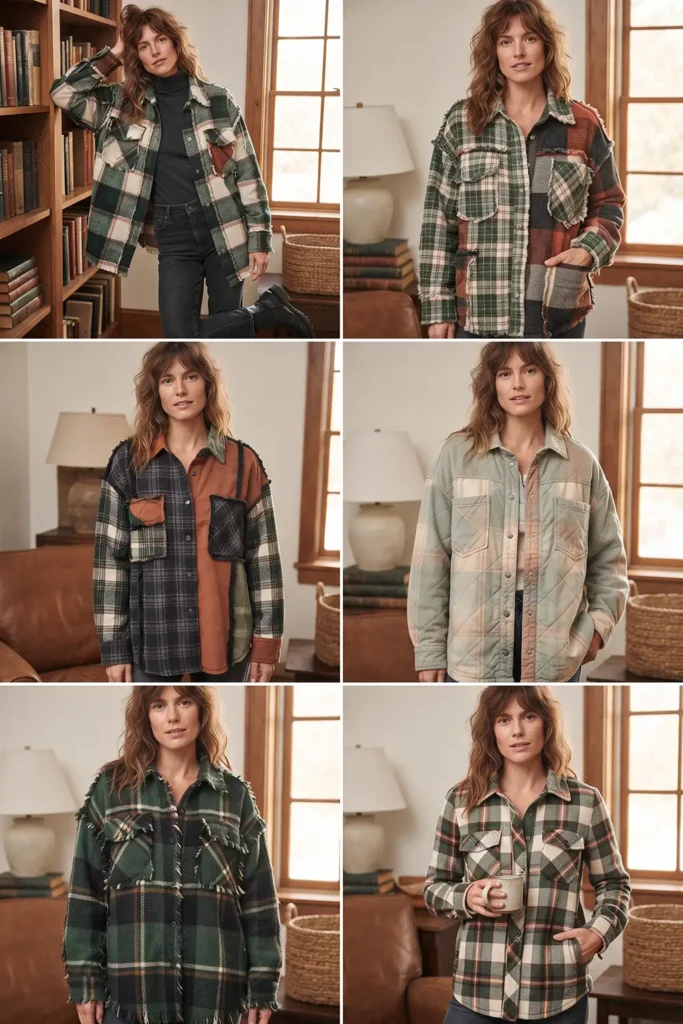
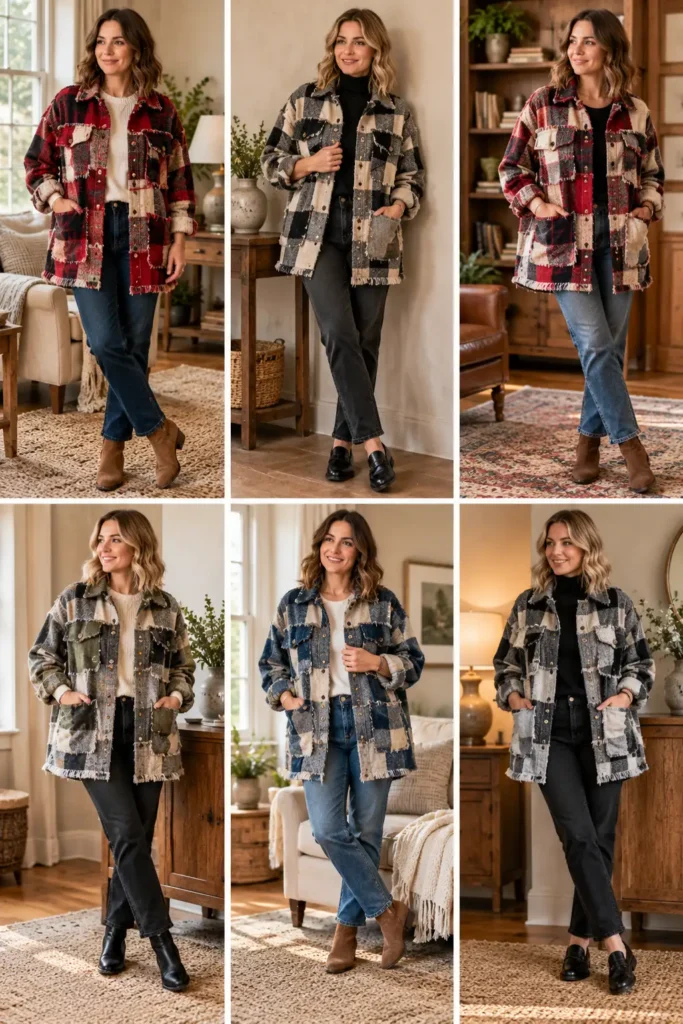
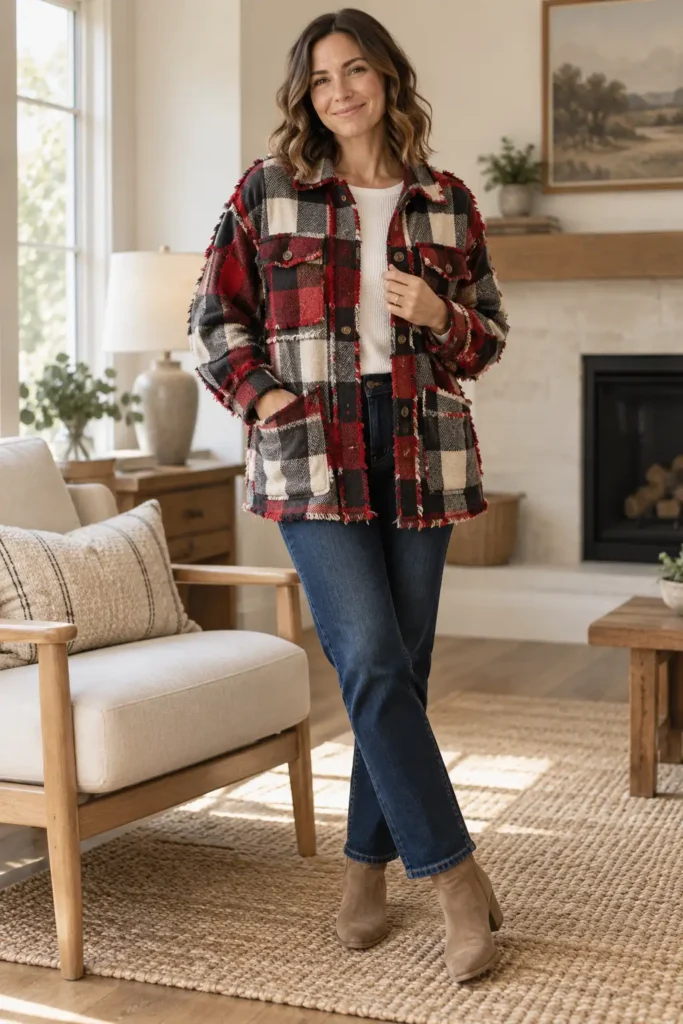
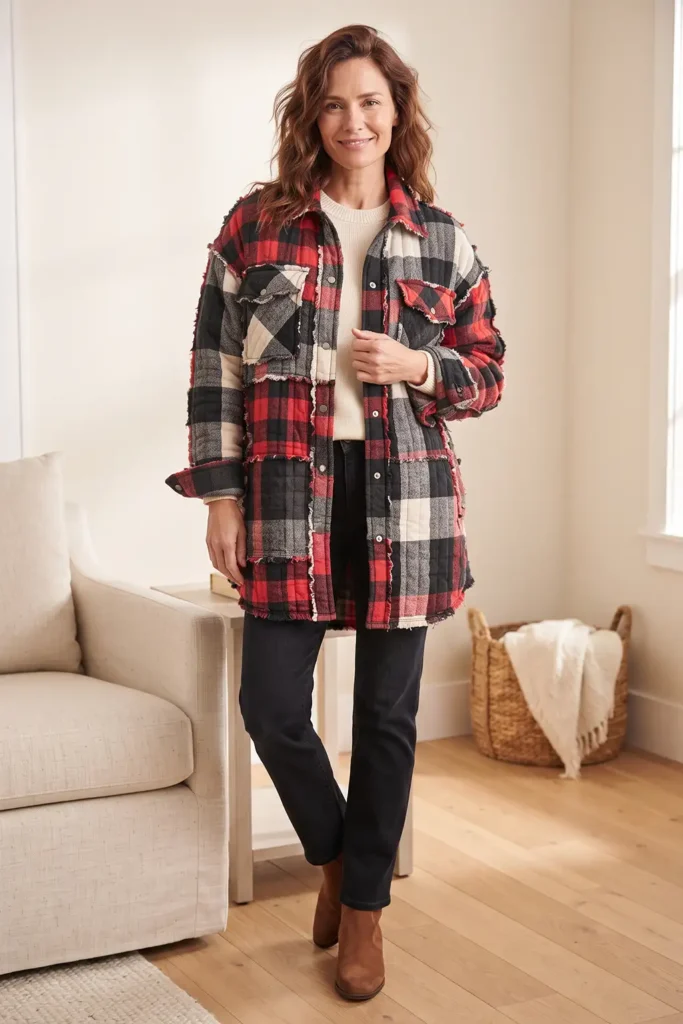
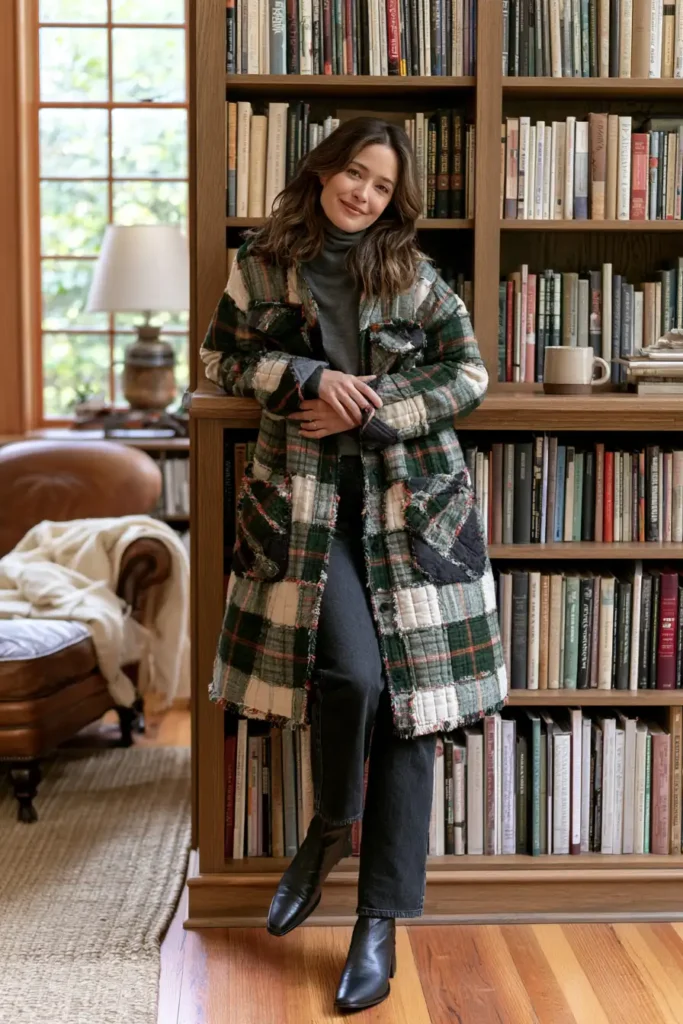
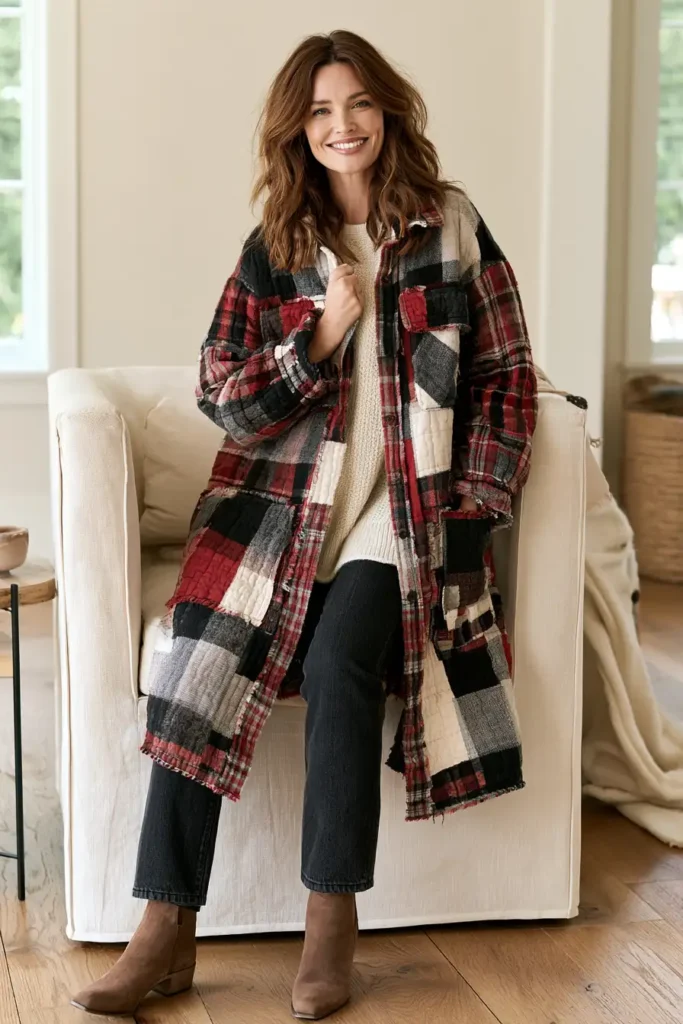
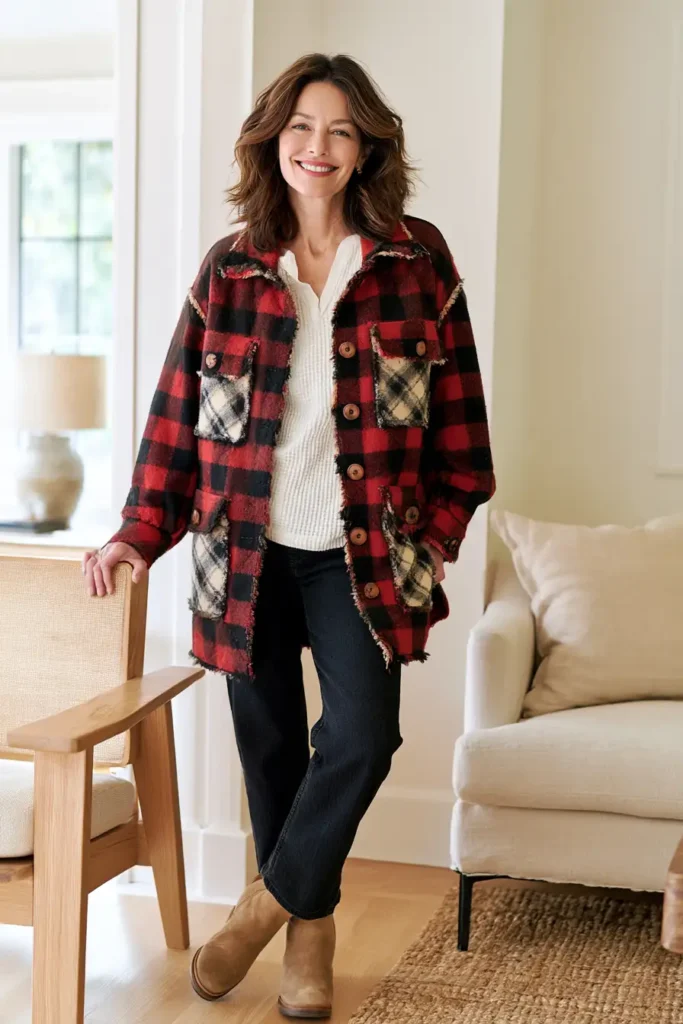
2. Oversized Buffalo Plaid Flannel Rag Quilt Shacket for Cozy Layering
An oversized buffalo plaid flannel rag quilt shacket combines the relaxed proportions of a shirt-jacket with the soft, tactile texture of exposed rag-quilt seams. The strongest version uses brushed cotton flannel in large-scale buffalo plaid, balanced with solid charcoal, warm ivory, deep red, black, or muted cream panels so the garment does not become visually overwhelming. The oversized silhouette should feel roomy through the shoulders and body, with enough ease for layering over sweaters without turning into a bulky coat.
Unlike a conventional quilted flannel jacket, the rag-quilt identity comes from exposed seam allowances, clipped edges, and softened fringe that clearly outline the patchwork construction. Plaid already has strong visual structure, so the patchwork doesn’t need to rely on a rigid grid. Oversized rectangles, broad panels, and selectively placed contrasting sections can make the shacket look modern while preserving its handmade, intentionally ragged character.
Balancing Buffalo Plaid with Solid Fabrics
Large buffalo plaid can dominate quickly, especially in red-and-black or cream-and-charcoal combinations. Use solid or nearly solid flannel strategically at the yoke, pockets, cuffs, side panels, or selected patchwork sections to break up the pattern.
A limited palette generally works best. Classic red and black feels bold and rustic, while charcoal and warm ivory produce a softer modern look. You can also introduce olive, tan, or faded burgundy sparingly if the overall palette stays cohesive.
Design Inspirations – Digitally Modified Images. Texture and color may vary from the actual product.
Keeping the Shacket Soft and Wearable
Flannel suits rag-quilt garments because it frays attractively and softens with washing, but too much layering can make an oversized garment heavy. A thin flannel middle layer or lightweight cotton layer usually provides enough body without creating the stiffness of a bed quilt.
The shoulders, underarms, and sleeve seams need particular attention because these areas require movement. Avoid stacking too many bulky patch intersections where several seam allowances meet.
Creating Soft, Controlled Frayed Seams
Clip the exposed seams and encourage them to fluff through laundering, creating a soft fringe around the patchwork panels. The texture should look deliberate and evenly distributed rather than shredded.
Wider patchwork sections can be especially effective because they let the bold plaid remain readable while the frayed seams create strong graphic lines across the garment. This keeps the shacket recognizable as rag quilting rather than ordinary plaid outerwear.
Common Mistakes with Plaid Rag Quilt Shackets
One common mistake is aligning every plaid perfectly. While major directional mismatches can look accidental, slight variation between sections helps the garment retain a handmade quality. Another problem is using too many equally bold plaids, which can obscure the patchwork structure.
Also avoid making the silhouette too fitted. The shacket should remain distinctly relaxed and layer-friendly, with enough room through the body and sleeves to preserve both comfort and drape.
Helpful Note: Before sewing, step back and view the plaid layout from a distance. If the pattern overwhelms the frayed seam lines, introduce one or two quieter solid flannel panels to restore visual balance.
Other Design Inspirations – Digitally Modified Images. Texture and color may vary from the actual product.
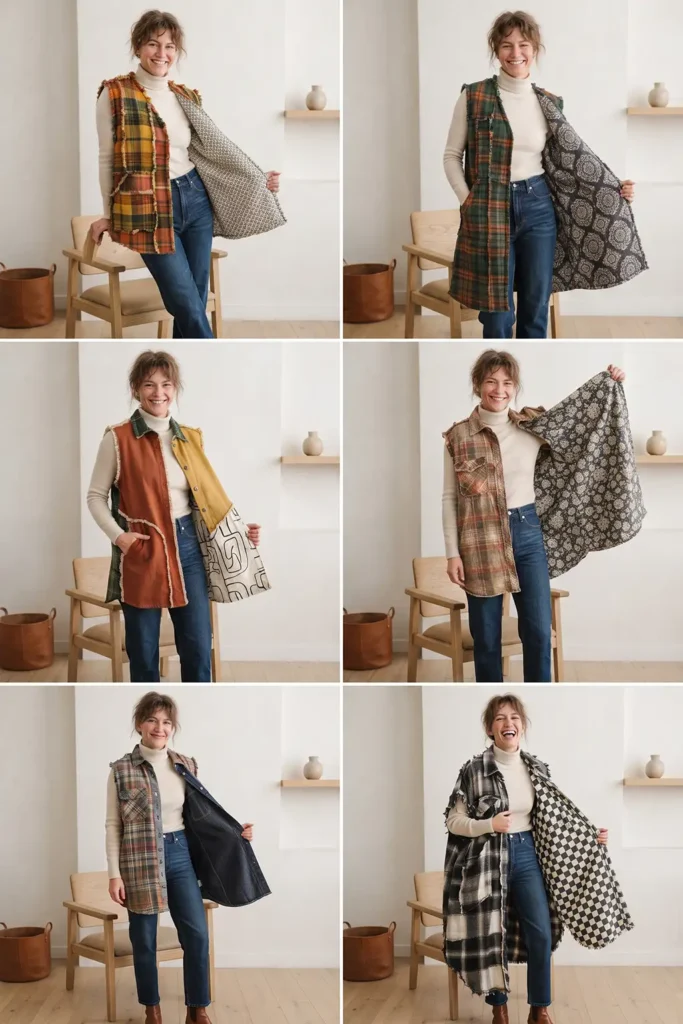
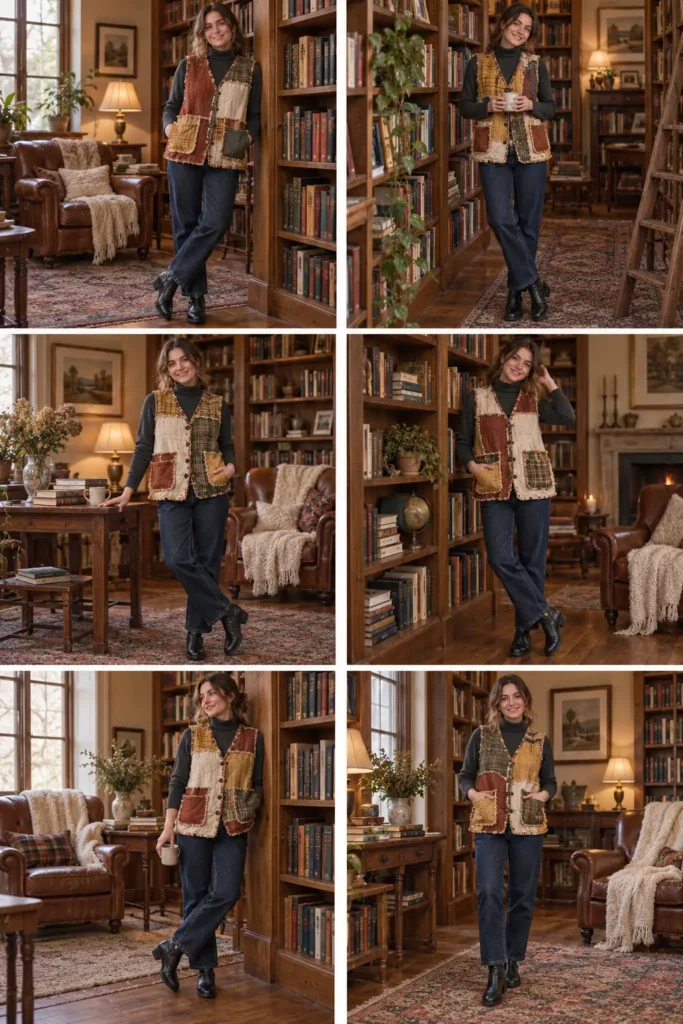
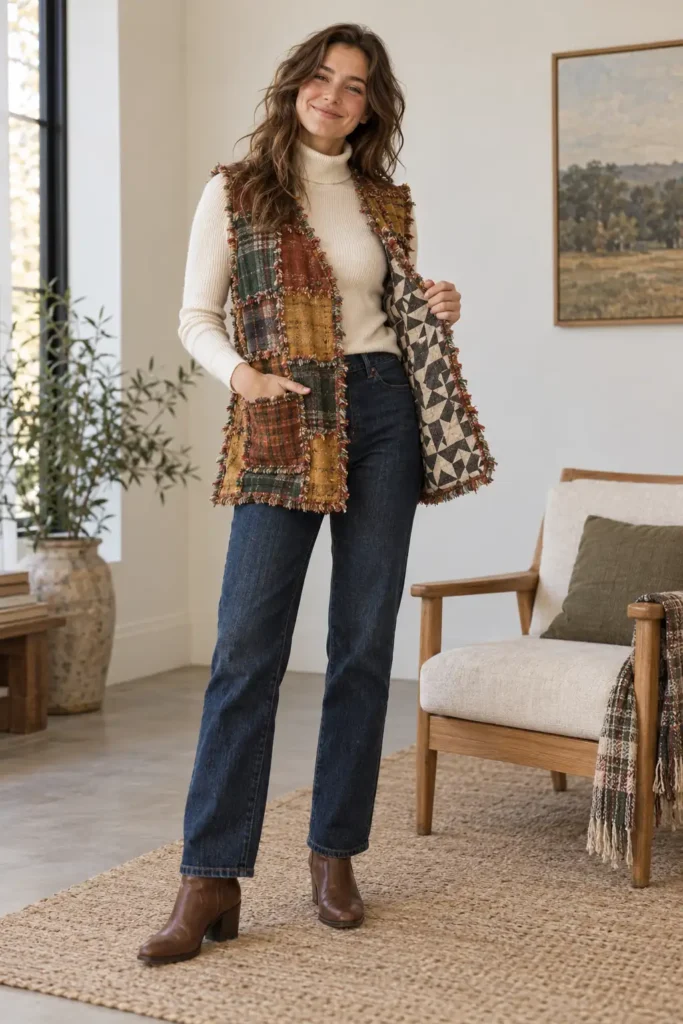
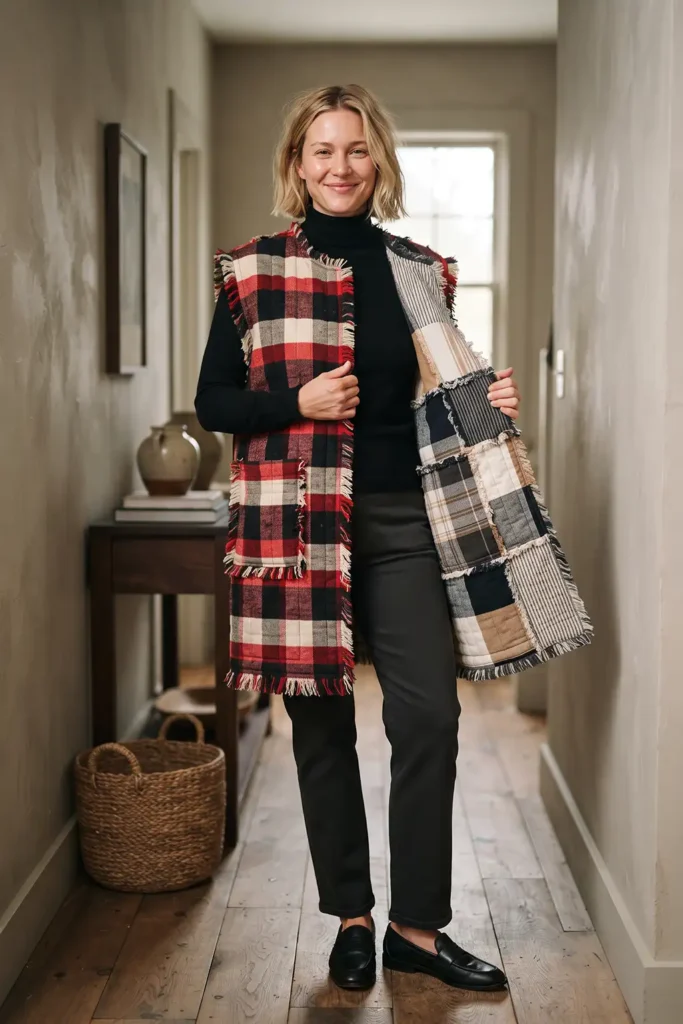
3. Reversible Rag Quilt Vest with Contrasting Patchwork on Both Sides
A reversible rag quilt vest works best when each side feels like a complete design, not the same garment repeated in slightly different colors. One side might use denim blue, charcoal, cream, and faded grey in broad geometric blocks, while the reverse shifts toward rust, olive, warm tan, muted plaid, and brushed cotton. The sleeveless silhouette keeps the garment lighter than a rag quilt jacket and makes the reversible construction especially practical for layering over shirts, turtlenecks, or lightweight sweaters.
The rag-quilt identity should remain obvious on both sides. Exposed seam allowances, clipped and softened frayed edges, visible patchwork divisions, and slightly dimensional layered fabrics distinguish the vest from ordinary reversible quilted clothing. Because there are two finished faces, fabric choice and seam placement matter more than usual: both sides need to look intentional, comfortable, and structurally clean enough to function as the exterior.
Making the Two Sides Genuinely Different
Contrast more than the colors. Vary the patchwork scale, fabric mixture, and mood as well. One face could use larger rectangular denim and chambray panels with a restrained blue-grey palette, while the reverse uses smaller plaid, rust, olive, cream, and brushed-cotton sections for a warmer, more rustic look.
Repeating one or two subtle colors across both sides helps the garment feel related without making the designs identical. For example, cream can appear as a quiet accent on each face even if the dominant palettes and patch structures differ substantially.
Design Inspirations – Digitally Modified Images. Texture and color may vary from the actual product.
Keeping a Reversible Vest Flexible
A vest needs enough structure to hold its shape but considerably less bulk than a bed quilt. Medium-weight cotton, flannel, chambray, lightweight denim, quilting cotton, or cotton twill are practical choices when their weights are reasonably compatible.
If you use an inner layer, thin flannel or low-loft cotton is usually more wearable than thick batting. Excess bulk around the armholes, side seams, neckline, and front opening can make a reversible vest stiff and uncomfortable, so avoid stacking several heavy fabrics at the same intersections.
Planning Frayed Seams on Two Finished Faces
Reversible construction requires more thought than simply turning a conventional rag-quilt garment inside out. The exposed seams and clipped fringe should contribute deliberately to whichever face is intended to show them, while the opposite side still needs a finished-looking patchwork surface.
Soft, controlled fraying works best. Clipped edges can fluff through laundering, but they should stay short enough to avoid long, loose threads around the armholes or front edges. Any closures should also make sense from both sides; simple reversible-compatible fastenings are visually cleaner than hardware designed for only one exterior.
Common Mistakes with Reversible Rag Quilt Vests
The most obvious mistake is making the reverse side nearly identical to the front. Changing only blue to brown does not create meaningful reversibility. Alter the dominant palette, patch scale, print balance, or overall visual rhythm so each side offers a distinct styling option.
Another problem is excessive thickness. Two finished fabric faces already add weight, so heavy denim on both sides plus thick batting can make a garment rigid. Balance sturdier fabrics with chambray, flannel, or medium-weight cotton so the vest bends naturally at the shoulders and drapes comfortably through the torso.
Helpful Note: Lay out both sides at the same time before committing to the patch placement. Mark the armholes, neckline, front opening, and side seams so bulky intersections on one face do not accidentally align with equally bulky intersections on the reverse.
Other Design Inspirations – Digitally Modified Images. Texture and color may vary from the actual product.
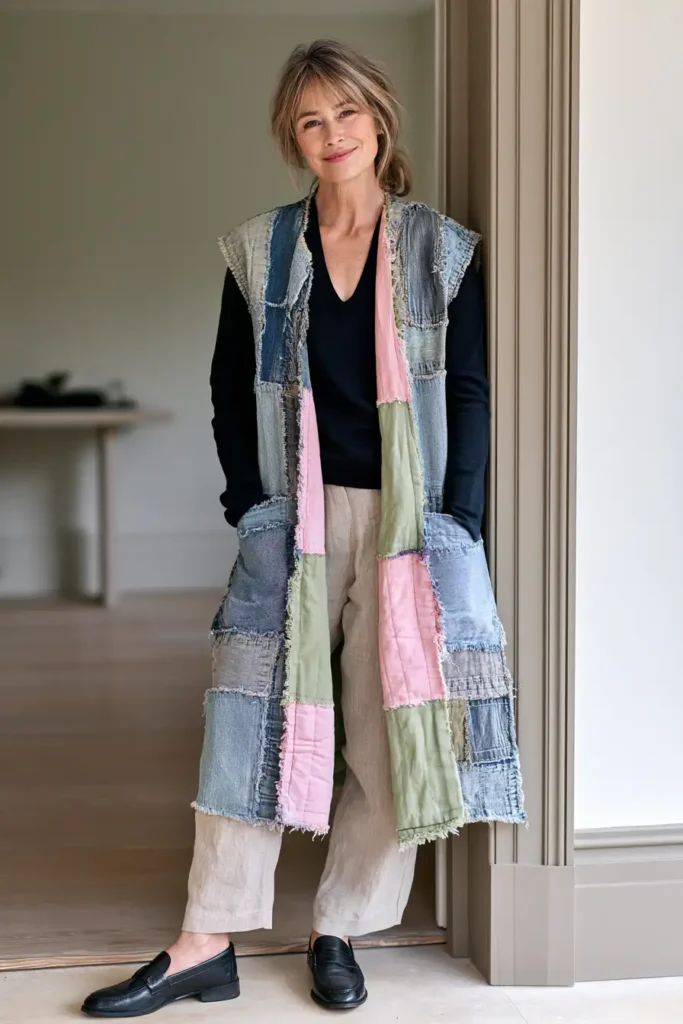
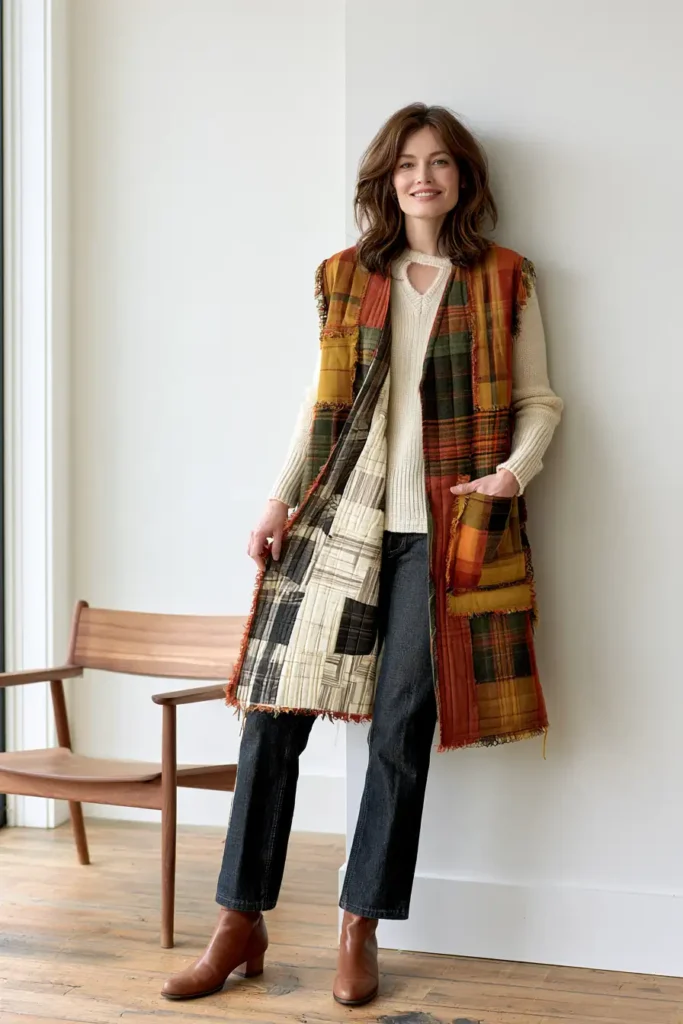
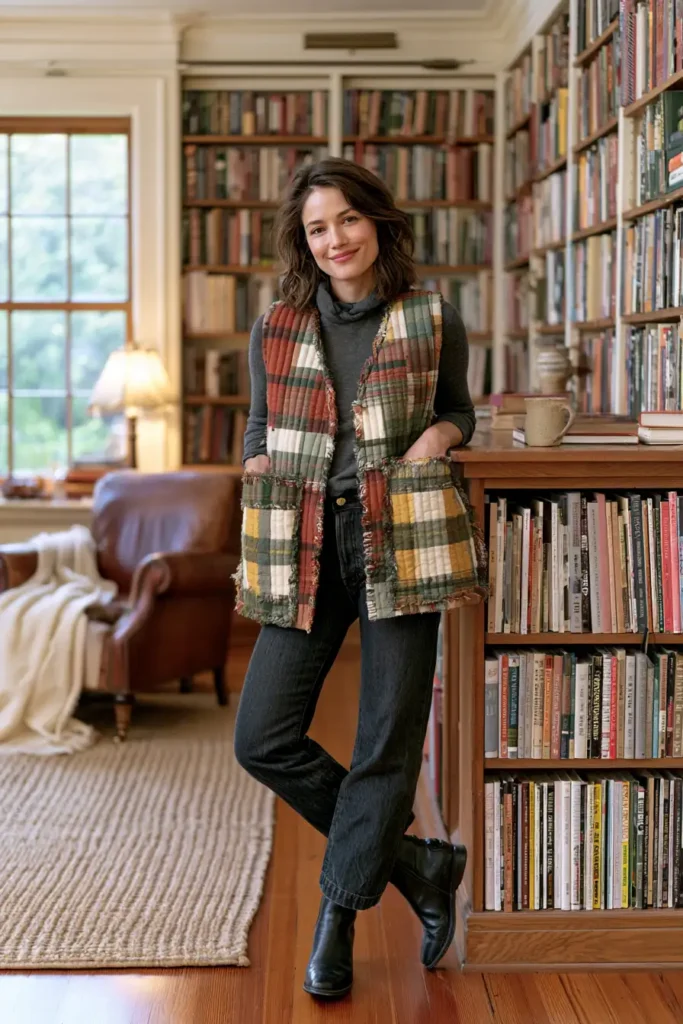
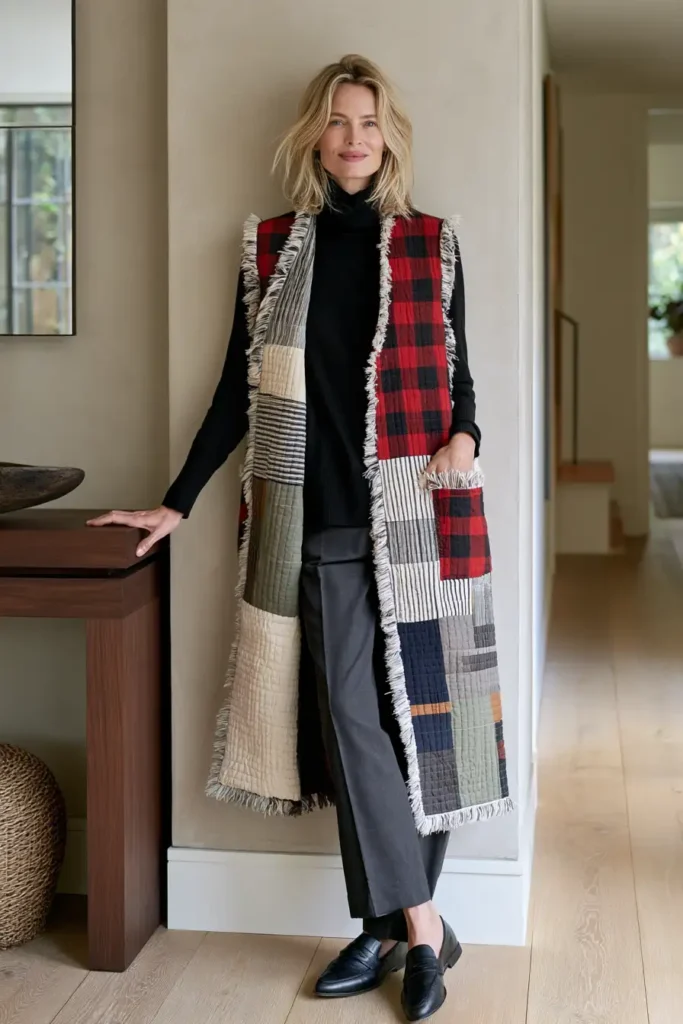
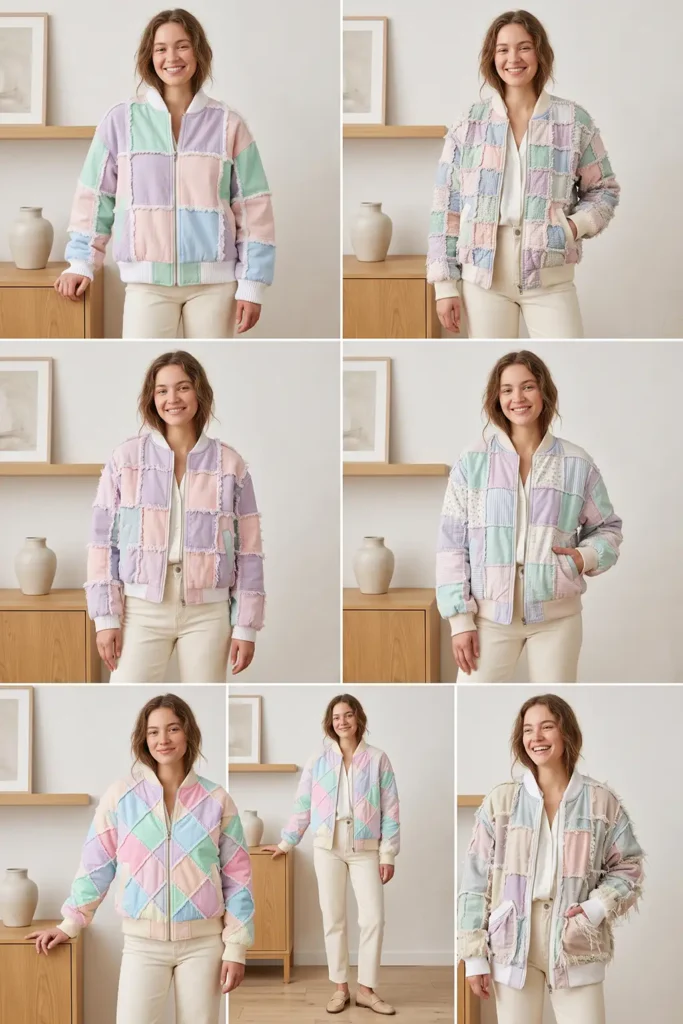
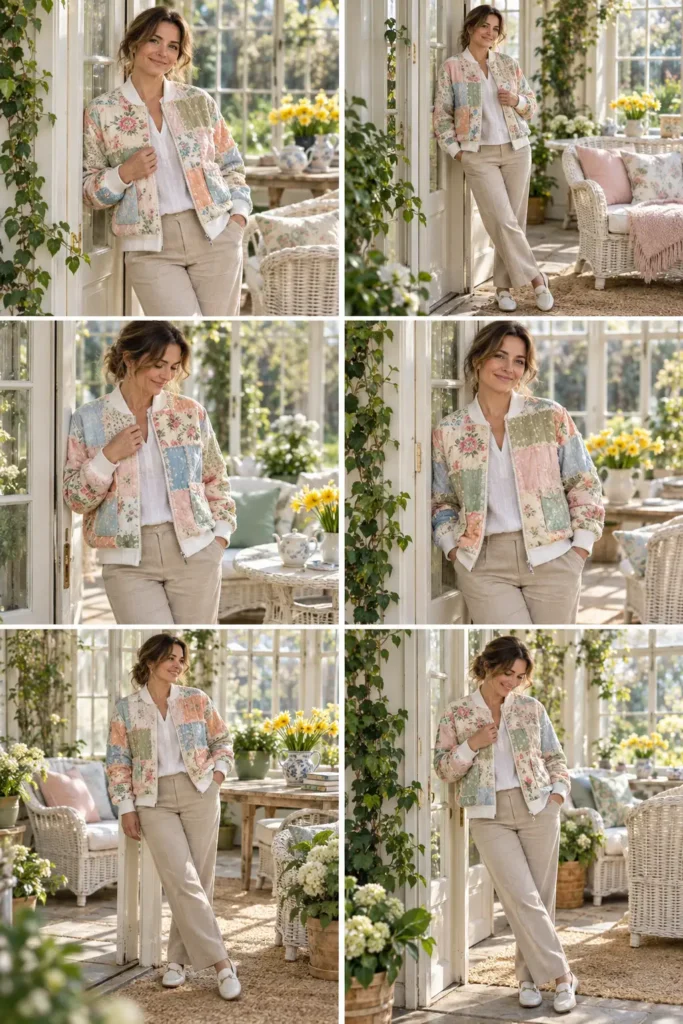
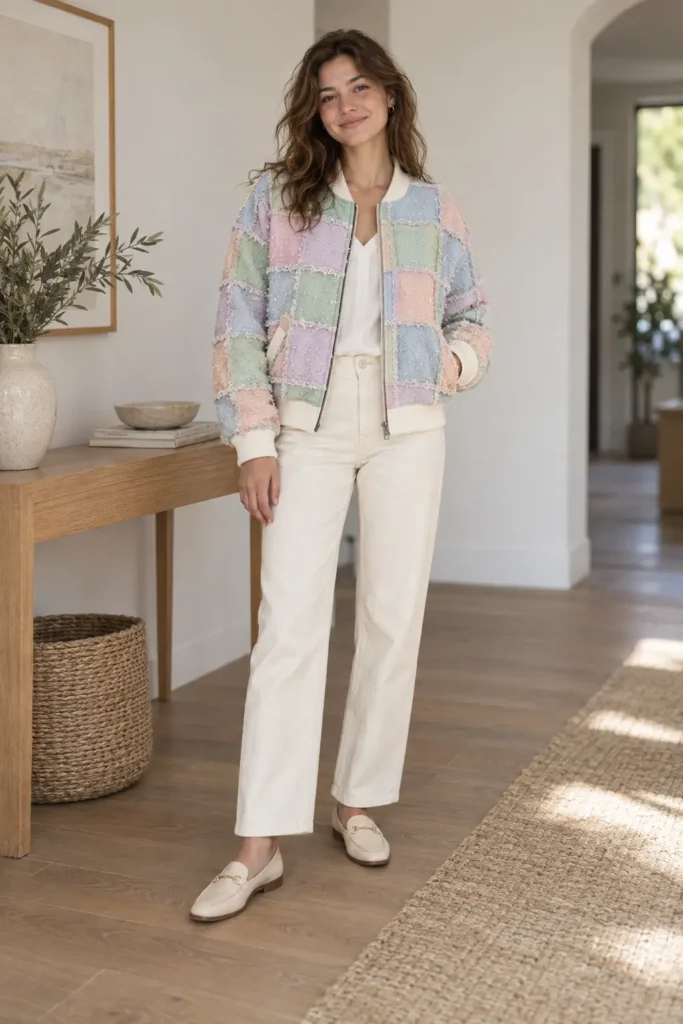
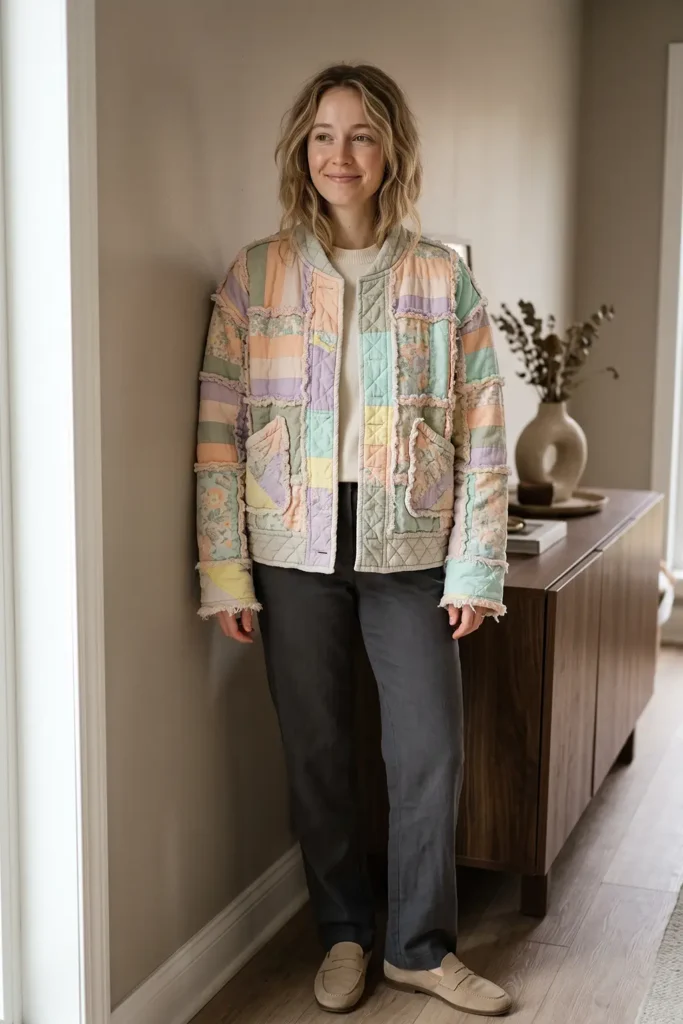
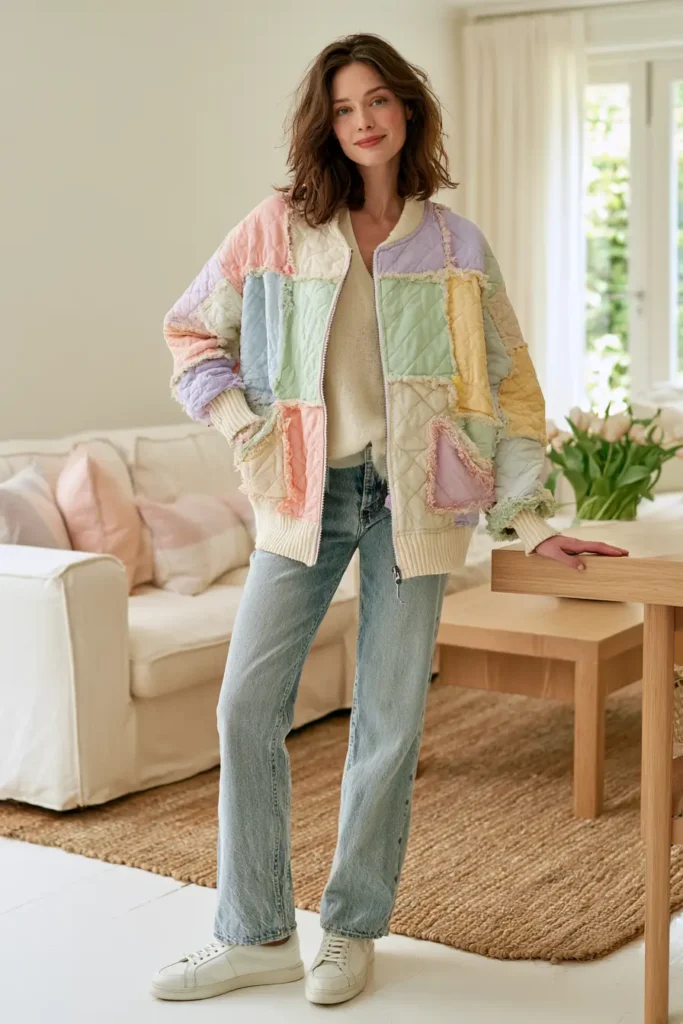
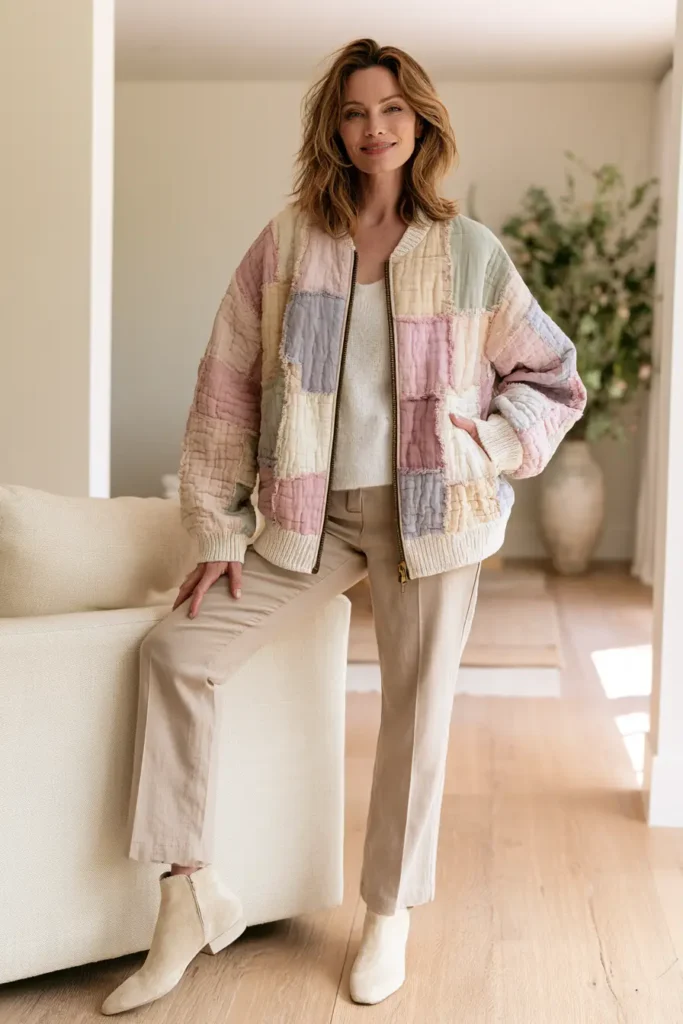
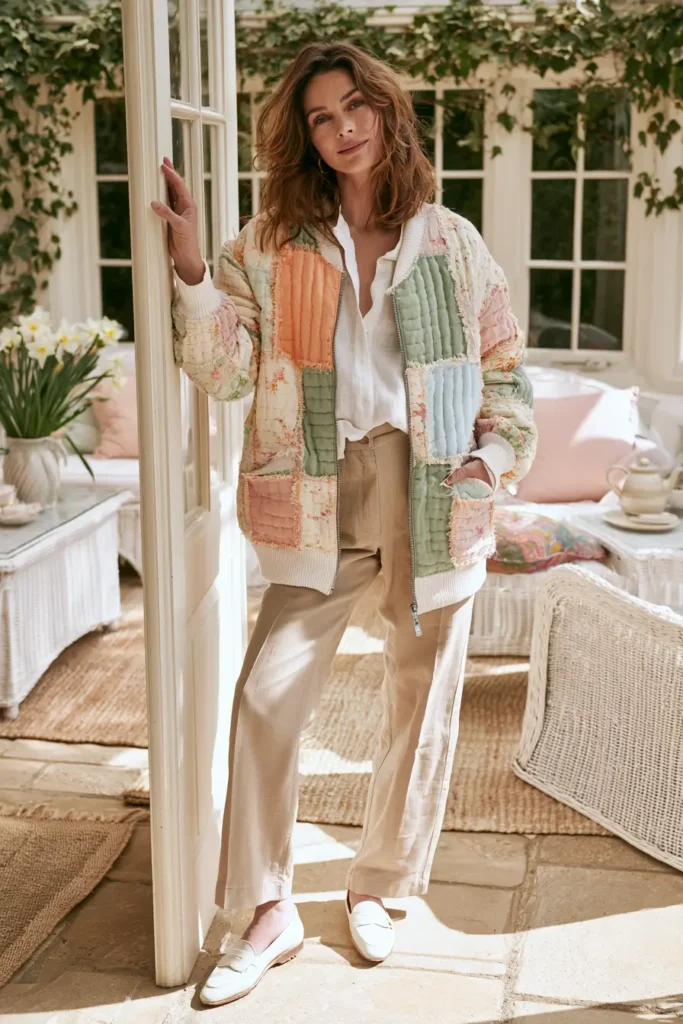
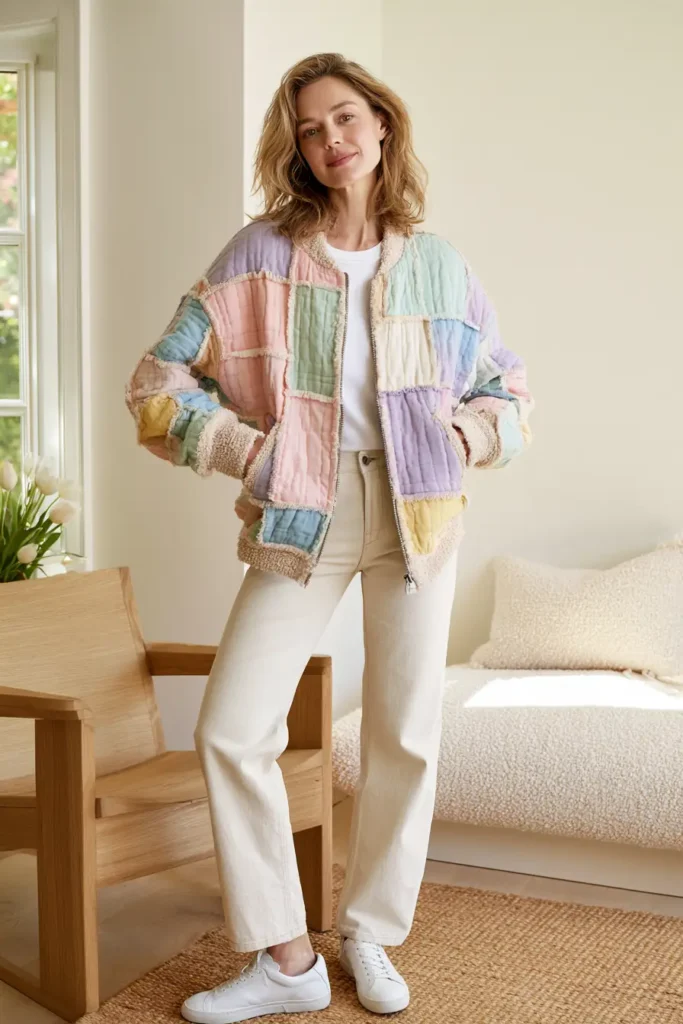
4. Pastel Patchwork Rag Quilt Bomber Jackets for Spring Layering
A pastel patchwork rag quilt bomber jacket gives the frayed, tactile construction of rag quilting a lighter seasonal mood. Instead of rugged denim or heavy buffalo plaid, this design works best with soft cotton flannel, quilting cotton, chambray, brushed cotton, and lightweight twill in a palette of powder blue, blush pink, soft sage, lavender, butter yellow, warm cream, and muted peach. The bomber silhouette should stay visibly shorter than a standard quilt jacket, with a compact body and a defined lower edge so the garment reads immediately as a bomber, not a cropped shacket.
The rag-quilt identity comes from exposed seam allowances, clipped and softened frayed edges, visible patchwork divisions, and slightly dimensional layered sections. Pastel colors can easily make the garment look overly sweet or flat, so the design benefits from deliberate value contrast: balance pale cream and blush with dusty blue, deeper sage, muted mauve, or soft grey. The aim is relaxed spring outerwear with enough texture and structure to feel contemporary, not costume-like.
Choosing Pastels with Enough Contrast
Use light, medium, and slightly deeper pastel values rather than an all-pale palette. Powder blue beside cream may disappear visually, but adding dusty denim-blue chambray, sage, muted mauve, or soft grey helps define the individual patchwork sections.
Small-scale prints can add interest without overwhelming the jacket. Simplified florals, subtle checks, irregular stripes, tiny dots, or restrained abstract prints work well when mixed with solids. Keep the overall print selection limited so the frayed seam structure remains visible.
Design Inspirations – Digitally Modified Images. Texture and color may vary from the actual product.
Making the Bomber Silhouette Distinct
The jacket should feel compact through the body, with a clearly defined waist or hem rather than hanging straight like a conventional quilt jacket. Slight fullness through the upper body and sleeves can preserve the relaxed bomber shape, while shorter proportions make it practical over spring dresses, jeans, or lightweight knitwear.
Patchwork scale can help reinforce the silhouette. Medium rectangular panels or geometric color-blocking usually feel more modern than repeating identical square blocks across the entire garment.
Keeping the Layers Light for Spring
Wearable rag quilting needs less loft than a bed quilt, and this is especially important for a spring bomber. Lightweight flannel or thin cotton can provide enough middle-layer softness without making the garment hot or stiff.
Avoid combining heavyweight denim, thick batting, and bulky seam intersections. The jacket should move easily at the shoulders and elbows and stay comfortable in mild weather.
Common Mistakes with Pastel Rag Quilt Bombers
The most common visual problem is insufficient contrast. If every fabric is pale and similar in value, the patchwork and frayed seams can disappear. Another mistake is adding too many floral or novelty prints, which can make the jacket look more like children’s patchwork than modern spring outerwear.
Also keep the fraying controlled. Soft, fluffy seam texture supports the rag-quilt look, while excessively long threads or shredded edges can undermine the clean bomber silhouette.
Helpful Note: Before cutting, arrange the fabrics in three value groups—light, medium, and deeper pastel. Distributing all three across the body and sleeves will make the bomber’s patchwork much more readable from a distance.
Other Design Inspirations – Digitally Modified Images. Texture and color may vary from the actual product.
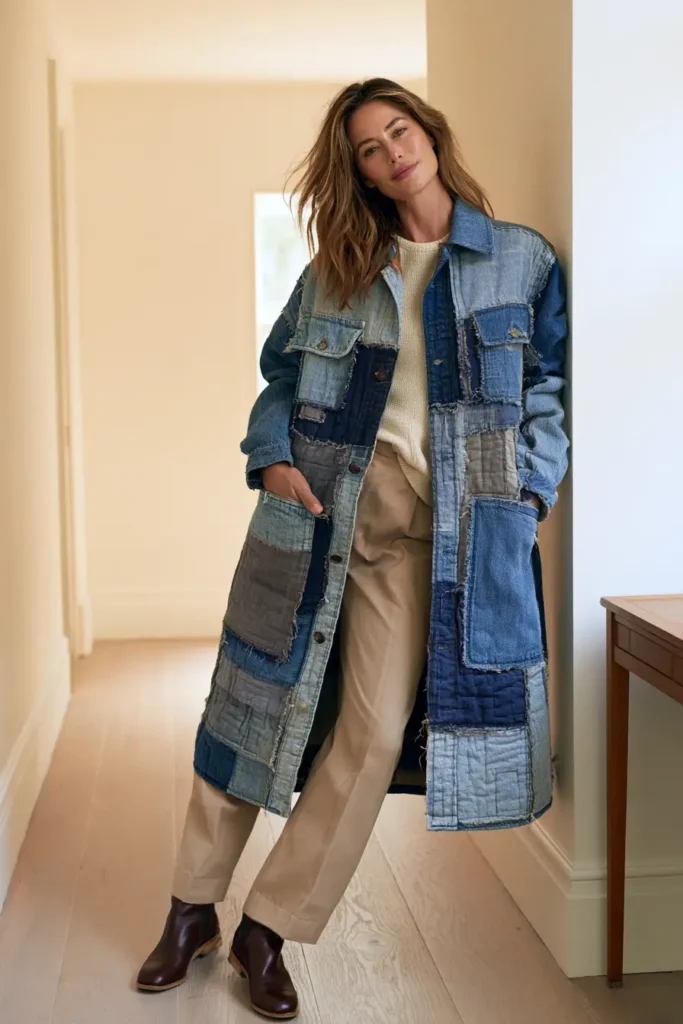
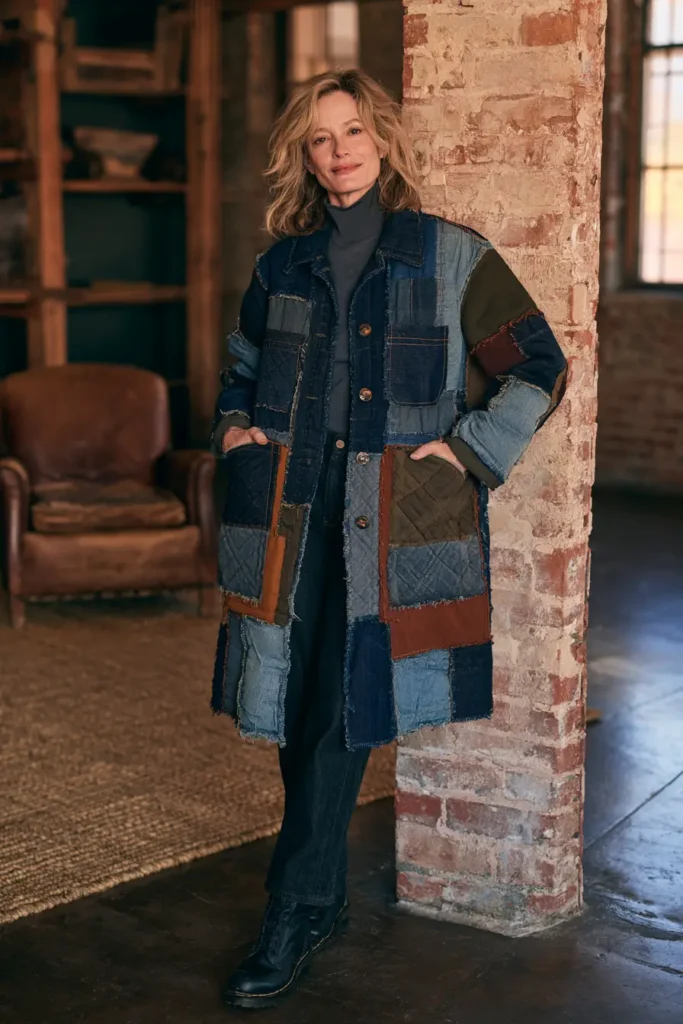
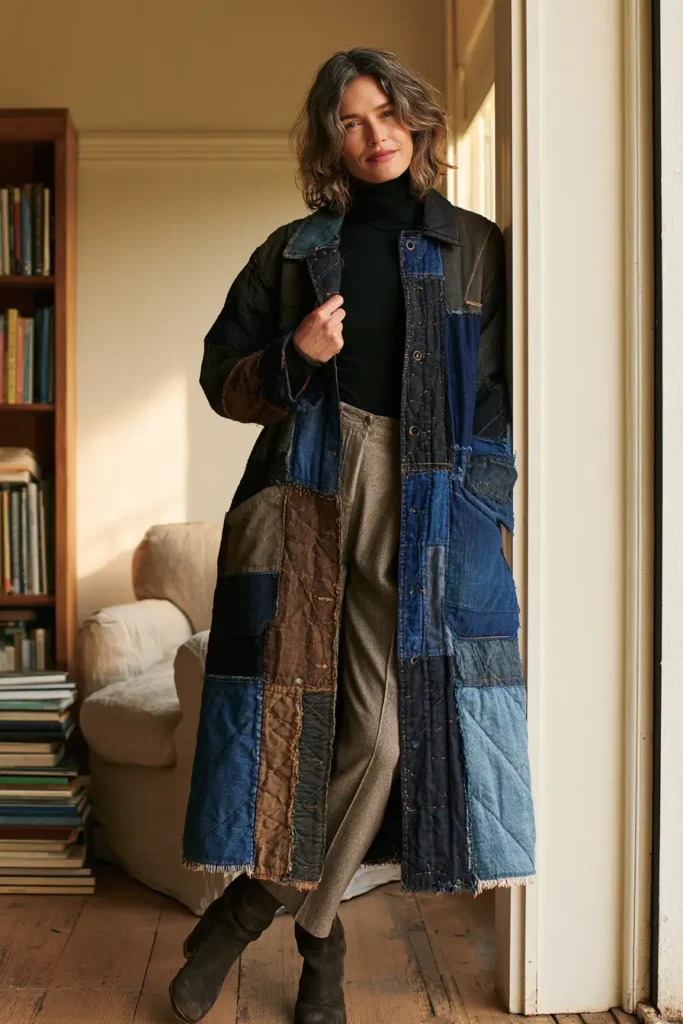
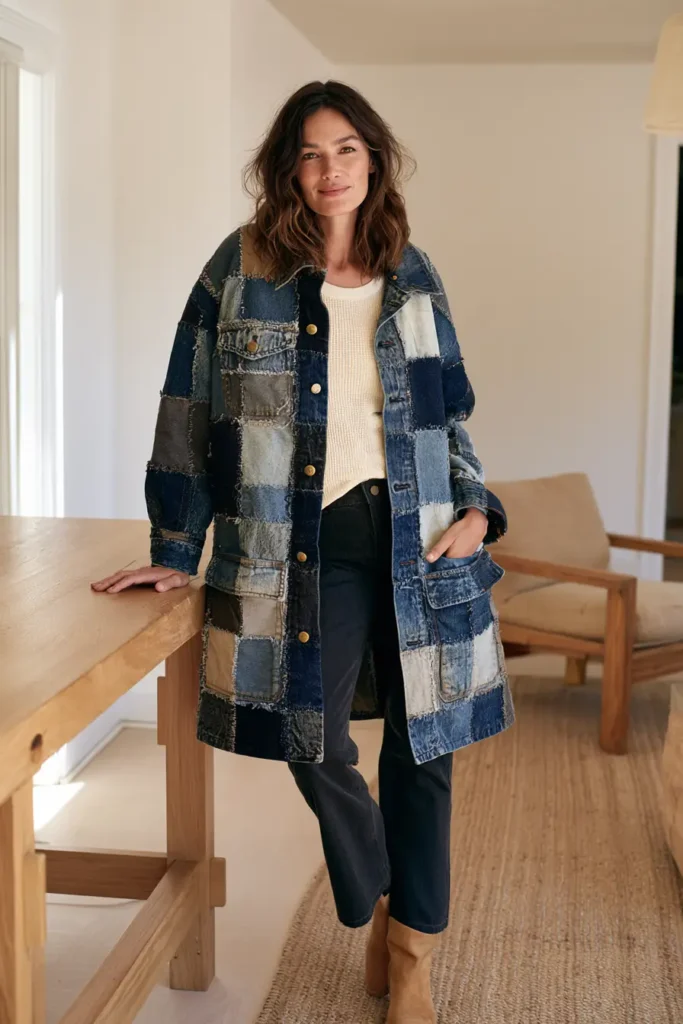
5. Denim Rag Quilt Chore Coat with Utility Pockets and Workwear Patchwork
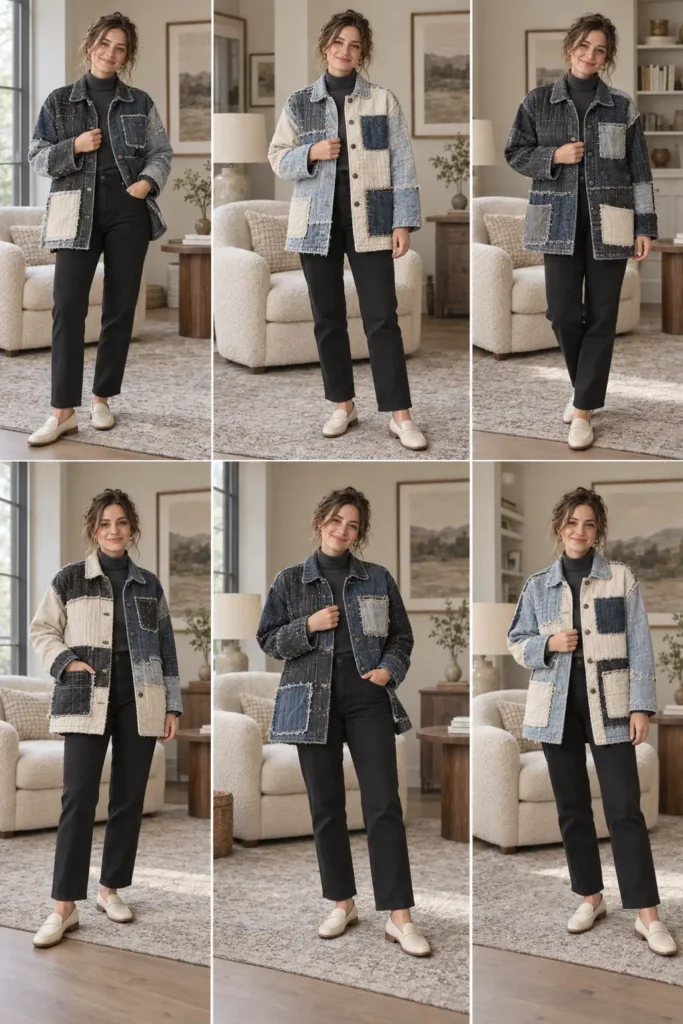
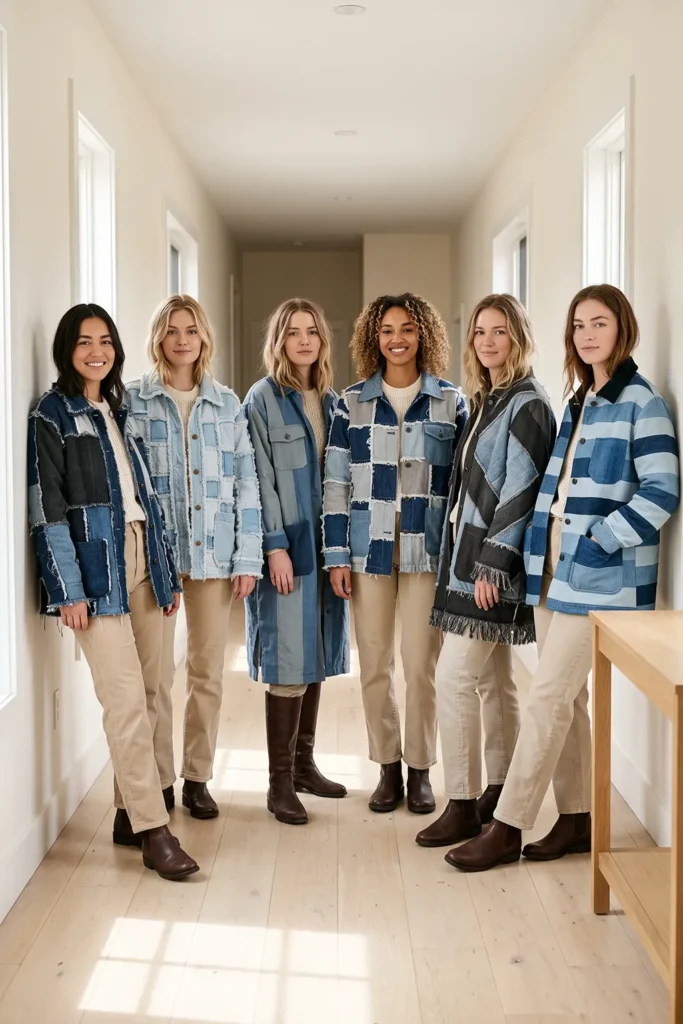
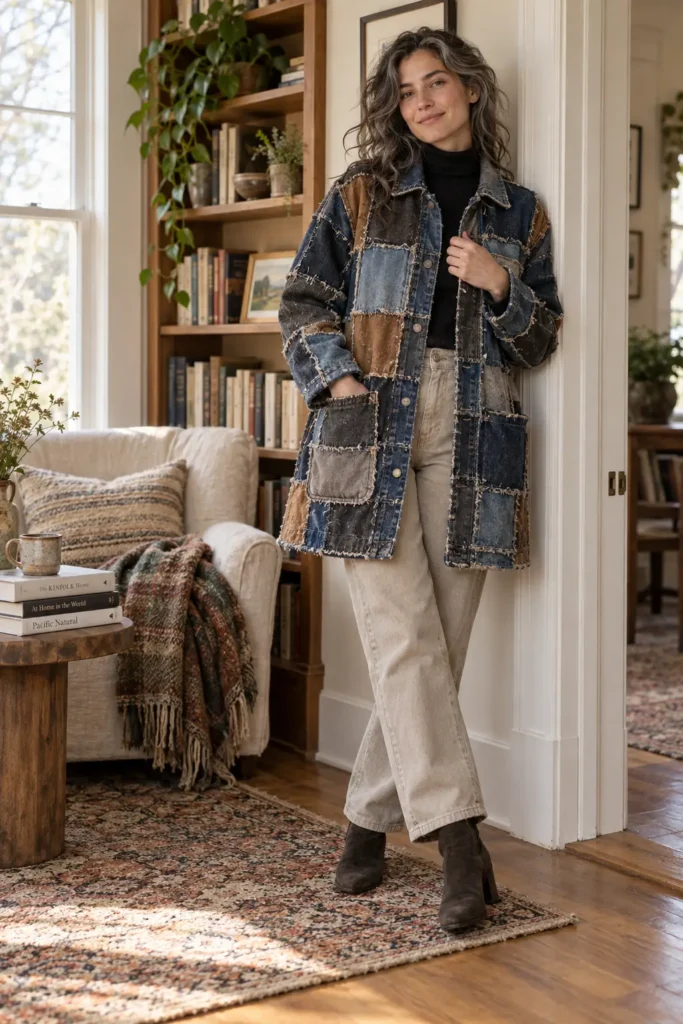
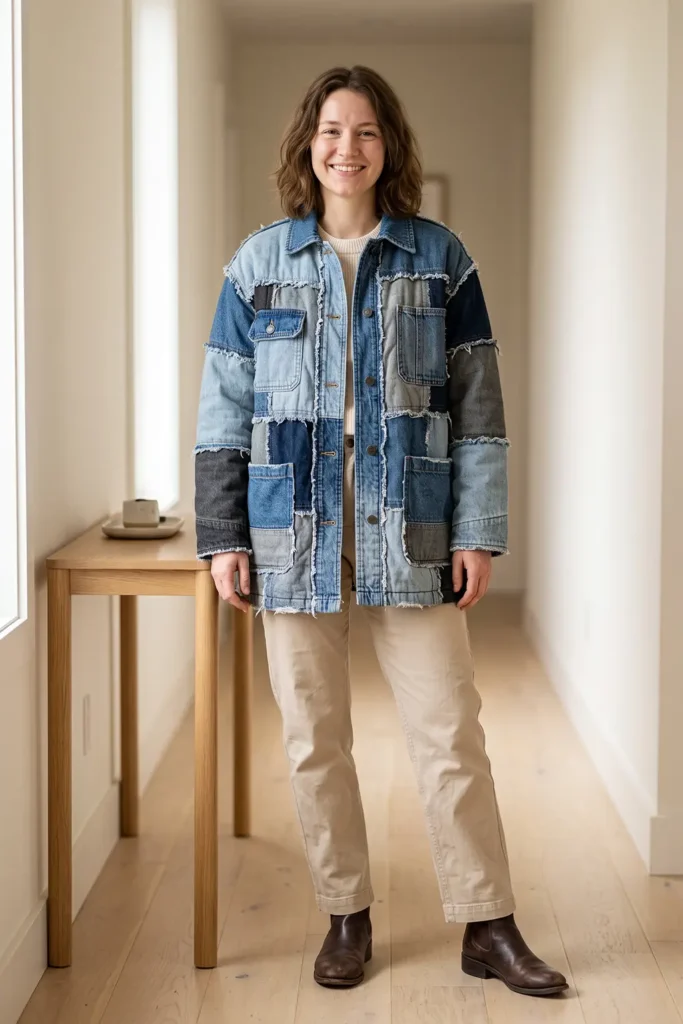
A denim rag quilt chore coat combines practical workwear proportions with the unmistakable texture of exposed rag-quilt construction. The silhouette should be straightforward and functional rather than fitted: hip-length to upper-thigh, with comfortable ease through the shoulders, full-length sleeves, a simple collar, button-front closure, and large patch pockets that are clearly designed to be used. Mixed denim washes—light blue, medium indigo, deep navy, faded grey, and charcoal—give the patchwork enough contrast to remain readable without losing the rugged workwear character.
The rag-quilt identity comes from exposed seam allowances, clipped and softened frayed edges, visible rectangular patchwork sections, and slightly dimensional quilting. Unlike a conventional denim chore coat, the seams should become part of the surface design. Mixed-width panels and irregular workwear blocks are especially effective here because they echo the practical, pieced-together feel of utility clothing while keeping the garment visually distinct from more regular square-block rag quilt jackets.
Building a Workwear Palette with Mixed Denim
A single denim wash can make the patchwork disappear, so use at least three distinct values. Medium blue works well as the dominant tone, with pale stonewash pieces to brighten the surface and deep indigo or charcoal panels adding structure.
Small accents of faded tan, cream twill, or muted olive can be introduced through pocket facings or isolated patches if desired, but denim should remain the dominant material. Avoid placing every dark panel on one side of the coat; repeat the darker values across the body and sleeves so the garment feels balanced from front to back.
Design Inspirations – Digitally Modified Images. Texture and color may vary from the actual product.
Utility Pockets as Part of the Patchwork
The pockets should look integrated into the chore-coat design, not added afterward. Large lower patch pockets, a chest pocket, or asymmetrical utility pockets can interrupt the patchwork and make the garment feel more authentic.
Pocket edges and corners can also add bulk, so avoid stacking several heavy denim seam allowances in the same area. Using medium-weight denim or chambray for selected pocket sections can reduce stiffness while keeping the workwear look intact.
Keeping the Rag-Quilt Texture Wearable
Selected seam allowances can face outward, then be clipped and softened through washing so the frayed edges clearly outline the patchwork. The texture should look plush and deliberate, not shredded or damaged.
Because chore coats need to bend comfortably at the elbows and shoulders, thick batting is usually unnecessary. Thin flannel, low-loft cotton, or another lightweight middle layer can add softness without making the coat rigid.
Common Mistakes with Denim Chore Coats
One common mistake is making the garment too boxy and generic. The coat should still read as workwear, with practical pockets, a recognizable collar, and a useful front closure, rather than a simple quilted rectangle with sleeves.
Another problem is excessive seam bulk. Heavy denim already adds thickness, so distribute multiple patch intersections, pocket layers, and exposed seam allowances carefully.
Helpful Note: Map the pocket positions before finalizing the patchwork layout. Moving a bulky patch intersection a few inches away from a pocket corner can make the finished coat much easier to sew and more comfortable to wear.
Other Design Inspirations – Digitally Modified Images. Texture and color may vary from the actual product.
6. Two-Tone Checkerboard Rag Quilt Vest in Contemporary Colors
Design Inspirations – Digitally Modified Images. Texture and color may vary from the actual product.
Other Design Inspirations – Digitally Modified Images. Texture and color may vary from the actual product.
7. Vintage Floral Patchwork Rag Quilt Duster Coats with a Bohemian Vibe
Design Inspirations – Digitally Modified Images. Texture and color may vary from the actual product.
Other Design Inspirations – Digitally Modified Images. Texture and color may vary from the actual product.
8. Ultra-Scrappy Crumb Rag Quilt Vest with Colorful Fabric Remnants
Design Inspirations – Digitally Modified Images. Texture and color may vary from the actual product.
Other Design Inspirations – Digitally Modified Images. Texture and color may vary from the actual product.
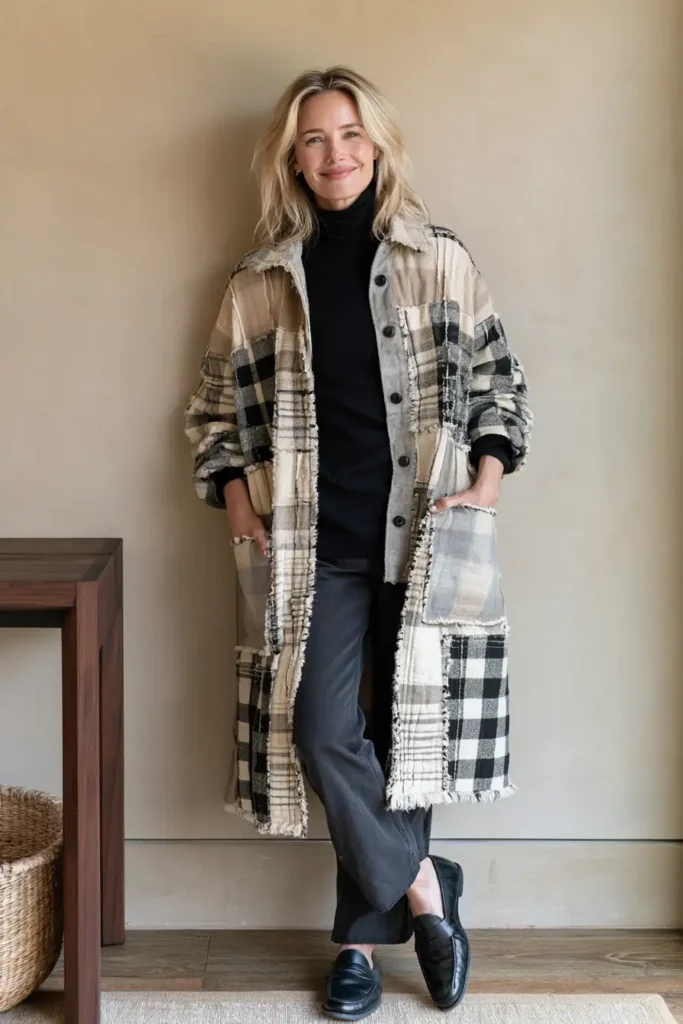
9. Black-and-White Rag Quilt Jacket with Graphic Monochrome Patchwork
Design Inspirations – Digitally Modified Images. Texture and color may vary from the actual product.
Other Design Inspirations – Digitally Modified Images. Texture and color may vary from the actual product.
10. Modern Geometric Print Rag Quilt Vests with Bold Color-Blocking
Design Inspirations – Digitally Modified Images. Texture and color may vary from the actual product.
Other Design Inspirations – Digitally Modified Images. Texture and color may vary from the actual product.
11. Kimono-Style Rag Quilt Jacket with Wide Sleeves and Eclectic Patchwork Prints
Design Inspirations – Digitally Modified Images. Texture and color may vary from the actual product.
Other Design Inspirations – Digitally Modified Images. Texture and color may vary from the actual product.
12. Longline Rag Quilt Duster Coat with Large-Scale Modern Prints
Design Inspirations – Digitally Modified Images. Texture and color may vary from the actual product.
Other Design Inspirations – Digitally Modified Images. Texture and color may vary from the actual product.
13. Checkered Floral Rag Quilt Jacket with Vintage Blooms, Gingham Blocks, and Soft Frayed Seams
Design Inspirations – Digitally Modified Images. Texture and color may vary from the actual product.
Other Design Inspirations – Digitally Modified Images. Texture and color may vary from the actual product.
Conclusion
The twelve designs in this article demonstrate how much range a single construction method can support. From the utilitarian workwear chore coat and the scrappy crumb vest to the kimono-style jacket and the longline floral duster, each Chic Rag Quilt Jacket, Coat and Vest takes the same core technique — layered squares, raw seams, clipped and washed into fringe — and applies it to an entirely different silhouette, fabric palette, and aesthetic intention. What holds them together is the texture: that soft, dense, napped quality at every seam line that gets better with every wash and can’t be achieved any other way.
The most practical starting point is the fabric you already have. Rag construction is genuinely well-suited to materials that aren’t pristine — denim with varied wash histories, flannel with some use in it, cotton shirting that’s been laundered enough to be soft. New fabric works too, especially for the color-blocked and contemporary geometric versions where the print and color do most of the visual work. Choose a silhouette that suits your sewing confidence, keep the fabric weights consistent within each piece, clip generously, and wash thoroughly. The result will improve with wear in a way that most garments don’t.

