
Floral Quilt Jacket, Coat, and Vest Ideas: Stylish Layering Pieces for Every Season
Floral Quilt Jacket, Coat, and Vest Ideas bring the beauty of botanical fabrics into contemporary handmade fashion. From delicate vintage roses and scattered meadow flowers to oversized watercolor blooms and dramatic dark-background florals, these designs show how floral patterns behave differently when shaped into wearable quilted garments. Some rely on carefully arranged patchwork, while others feature uninterrupted floral prints, dimensional appliqué, or contrasting fabrics. Printed cotton, visible quilting stitches, and distinctive silhouettes give each piece its own character.
Floral Quilt Jacket, Coat, and Vest
This collection of floral quilted outerwear ideas explores designs for different seasons, occasions, and personal styles. Lightweight cropped jackets and reversible linen-backed vests offer fresh approaches to spring layering, while flannel shackets, sculptural cocoon coats, and dramatic longline dusters introduce richer colors and warmer textures. The collection also includes structured floral blazers, belted trench coats, flowing kimono-style jackets, and garments featuring vintage quilt fabrics. Together, these designs demonstrate how traditional botanical prints can be interpreted through modern silhouettes, creative patchwork arrangements, and practical garment details.
See also: Jelly Roll Quilted Jackets and Vests – Farmhouse Quilt Jackets & Vests – Sashiko Quilt Jackets and Vests – Fall Quilted Jacket and Vest – Nakshi Kantha Jackets and Vests
Why Make This Type of Garment?
Floral quilted outerwear lets you turn attractive fabric collections into practical pieces that become part of an everyday wardrobe. Smaller floral remnants can combine into coordinated patchwork, while larger botanical pieces work especially well in long coats and flowing jacket silhouettes. Vintage quilts and reclaimed cotton textiles can also work when their condition allows reuse. Making a garment lets the sewer control print placement, color combinations, proportions, quilting density, and finishing details—choices that can dramatically change how floral fabrics look when worn. For anyone familiar with patchwork and quilting, these projects also offer a chance to apply existing textile skills to garment design while developing the fitting and construction techniques needed for comfortable clothing.
What Makes These Designs Different?
Floral quilted outerwear stands out for how botanical imagery, quilted texture, and garment construction work together. Unlike ordinary floral jackets made from printed fabric, quilted versions add stitching, batting, and layered surfaces that give the fabric more structure and visual depth. Floral decoration can take several forms: individually pieced botanical prints, large-scale wholecloth designs, layered floral appliqué, or carefully preserved motifs from vintage quilts. A hexagon-patchwork vest emphasizes repeated geometric shapes, while a flowing duster allows oversized flowers to remain largely uninterrupted. A tailored blazer uses controlled quilting and structured panels, whereas a kimono-style jacket benefits from relaxed proportions and directional botanical patchwork. These differences make the collection more than a series of similar garments in different floral fabrics.
Tips for Choosing Fabrics
Print scale and fabric weight matter most when choosing materials for floral quilted clothing. Large watercolor blooms and dramatic botanical motifs work well on longline coats, wide sleeves, and broad uninterrupted panels, where the flowers have enough space to remain recognizable. Smaller roses, scattered wildflowers, and delicate botanical prints generally work better for cropped jackets, hexagon patchwork, and compact vest panels.
Quilting cotton provides stability for accurate piecing, while linen-cotton blends, chambray, and lightweight denim add texture and structure. Flannel suits softer autumn layers, and sound vintage quilt fabrics can contribute distinctive aging and character. When pairing florals with denim sleeves, collars, or heavier fabrics, consider how weight differences affect seams and drape. Prewash compatible new fabrics where appropriate, assess reclaimed textiles carefully, and choose batting that provides suitable warmth without making the garment unnecessarily stiff.
Color and Fabric Planning
The floral designs in this collection offer several distinct color directions. Soft blush, pale lavender, faded rose, sage green, and warm cream create romantic spring garments, particularly when paired with delicate vintage-inspired prints. Dark navy, charcoal, burgundy, and forest green provide dramatic backgrounds for oversized botanical motifs, making them effective for statement coats and winter layers. Earthy terracotta, mustard, olive, and muted brown complement autumn florals and plaid flannel, while colorful garden prints create lively hexagon patchwork.
Gingham checks and solid denim can provide structured contrast against more expressive floral fabrics. For each garment, consider how the print scale relates to the silhouette: a large botanical design may need broad uninterrupted panels, while smaller mixed prints can support more intricate piecing. Planning floral placement on the actual garment pattern pieces helps ensure the most attractive motifs remain visible after cutting and construction.
Common Mistakes to Avoid When Sewing
One frequent mistake is choosing floral prints without considering how garment seams will interrupt the design. Large blooms can disappear into pocket openings, sleeve seams, or front closures, while tightly pieced sections may make delicate botanical prints difficult to recognize. Fabric compatibility matters just as much: combining heavy denim with very lightweight cotton without careful planning can create uncomfortable seam bulk, especially around shoulders and armholes. Before reuse, inspect vintage quilt fabrics for weakened stitching, deteriorating cotton, and uneven batting.
Excessively thick batting can distort fitted blazer shapes, while dense quilting may make lightweight vests and flowing kimono jackets too rigid. Floral appliqué needs secure edges and appropriate stitching, especially on garments that will move and be washed regularly. Finally, avoid overloading every garment with competing prints, decorative finishes, and quilting patterns. A clear focal point and a balanced relationship between floral fabric and garment structure usually produce a more coherent result.
Branded and Trademarked Fabrics, Logos, and Graphics
This collection emphasizes generic botanical prints, traditional floral motifs, solid fabrics, and original patchwork arrangements rather than recognizable designer patterns, brand logos, copyrighted characters, or commercial graphics. This lets readers explore similar aesthetics with fabrics they already own or can source independently.
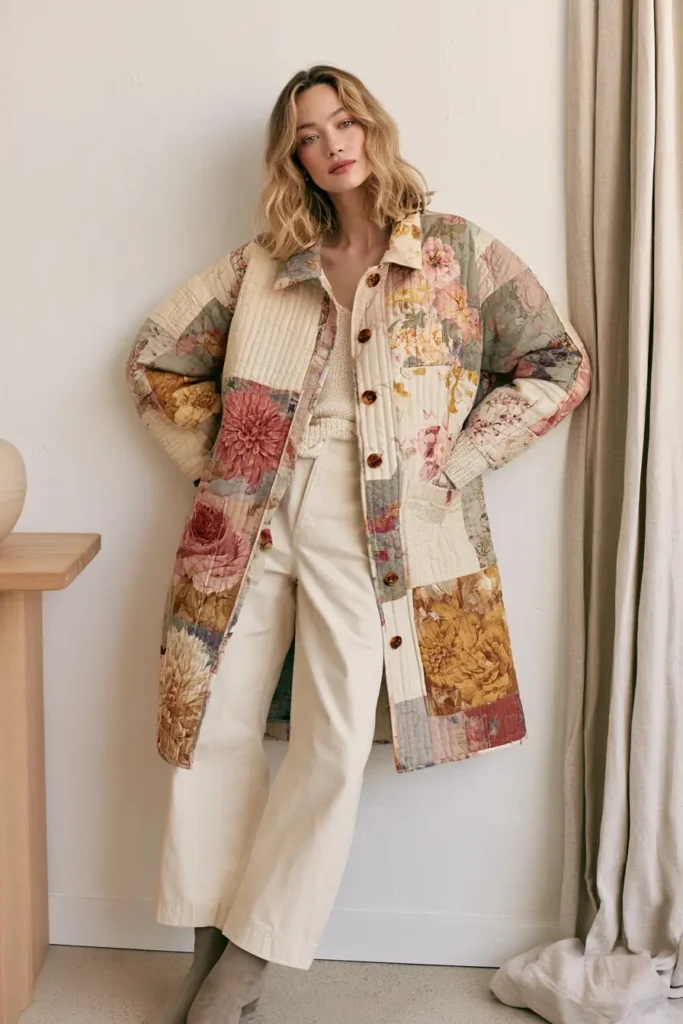
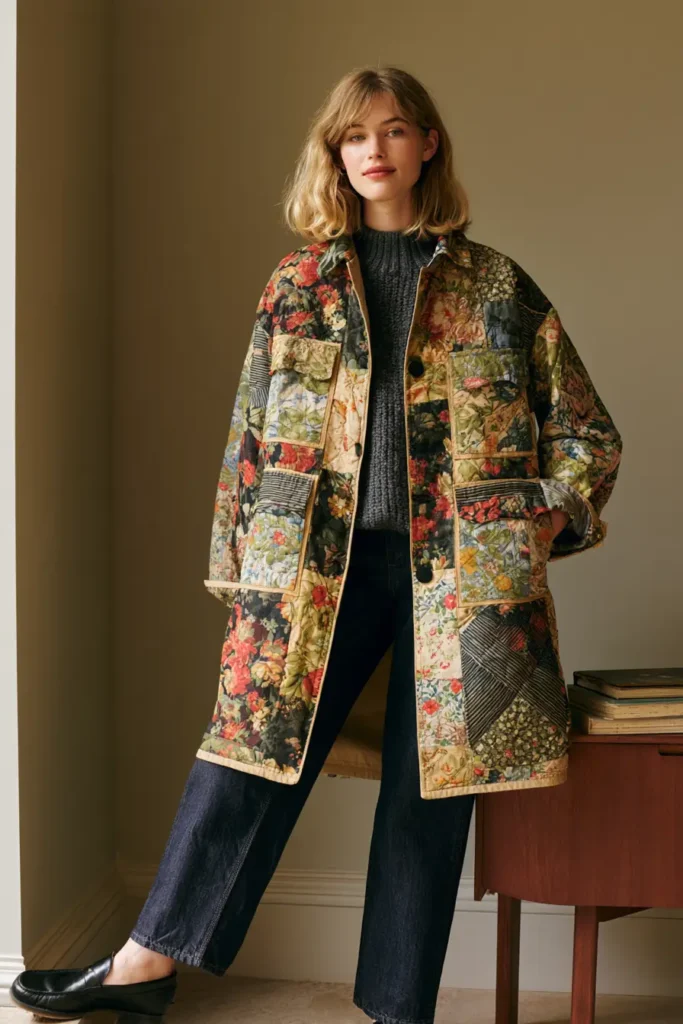
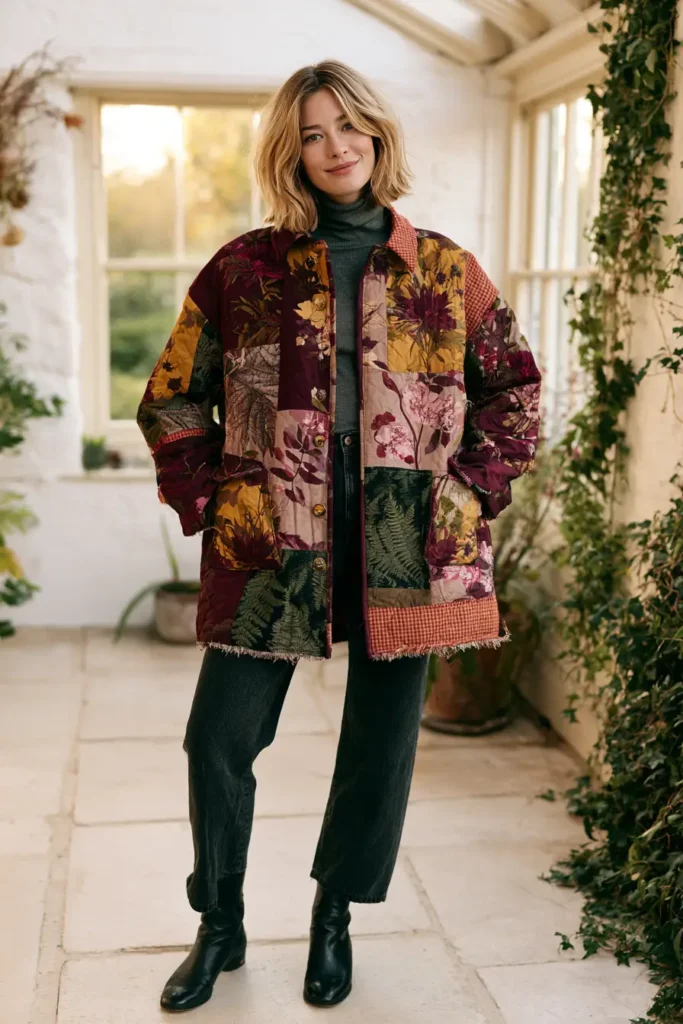
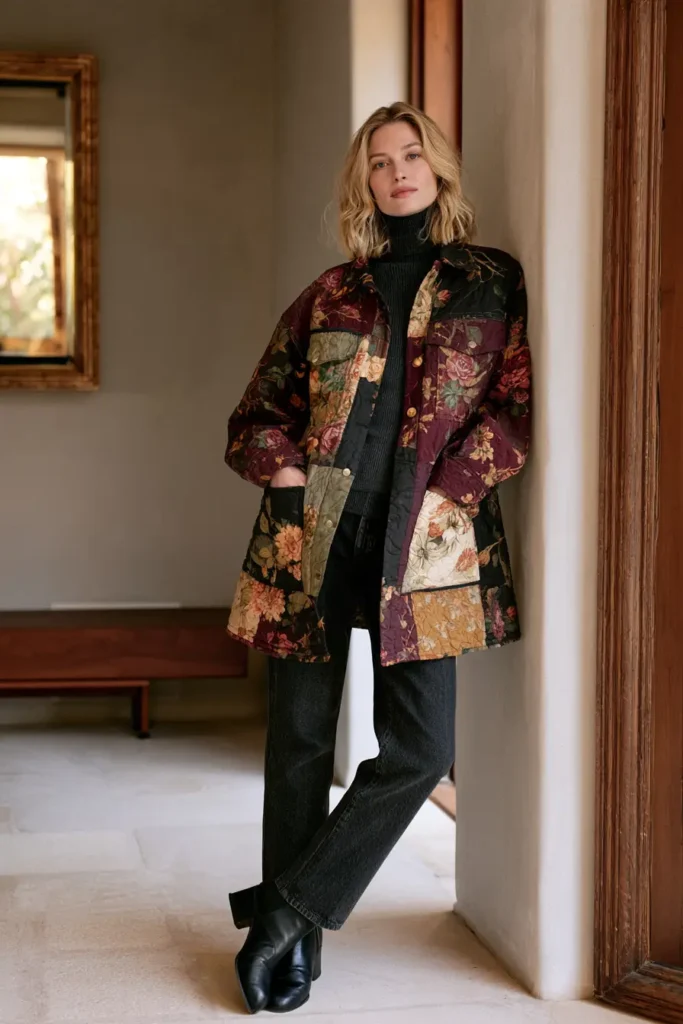
1. Oversized Floral Patchwork Quilt Chore Jacket with Mixed Garden Prints and Utility Pockets
An oversized floral patchwork quilt chore jacket combines the relaxed practicality of traditional workwear with the softness and color of cottage-garden fabrics. Its generous, boxy silhouette, slightly dropped shoulders, roomy sleeves, and hip-length hem make it easy to layer. Instead of using one continuous floral print, the jacket features individually pieced squares and rectangles with garden roses, tiny daisies, climbing vines, and scattered wildflowers. Large utility pockets, a simple pointed collar, and a button-front opening preserve the recognizable character of a chore jacket.
The appeal lies in the contrast between a sturdy workwear shape and expressive floral patchwork. Unlike a tailored floral blazer or a fitted quilted jacket, this design lets the fabric arrangement feel relaxed while keeping its structure. Mixing small botanical prints with larger flowers creates visual movement, while understated quilting stitches unify the separate patches. The result works particularly well as a casual spring or autumn layer.
Design Inspirations – Digitally Modified Images. Texture and color may vary from the actual product.
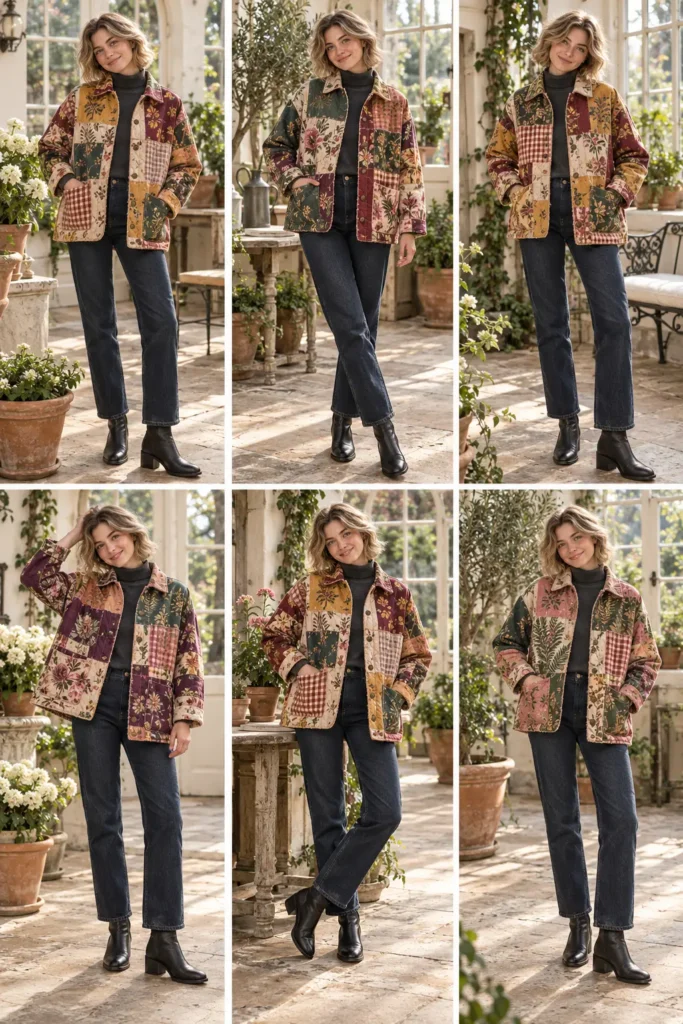
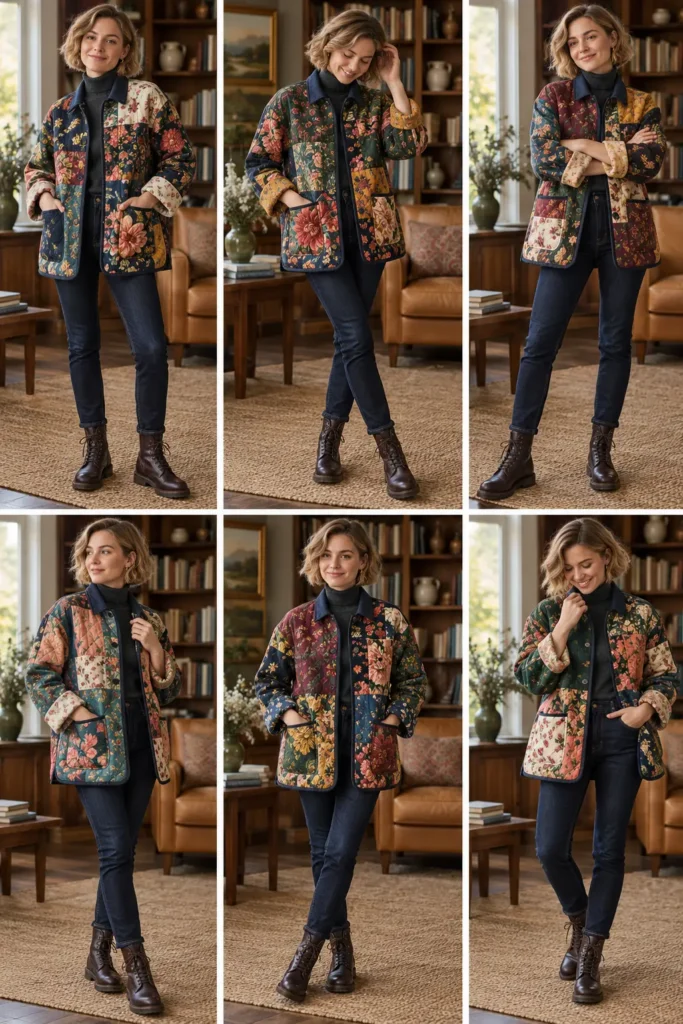
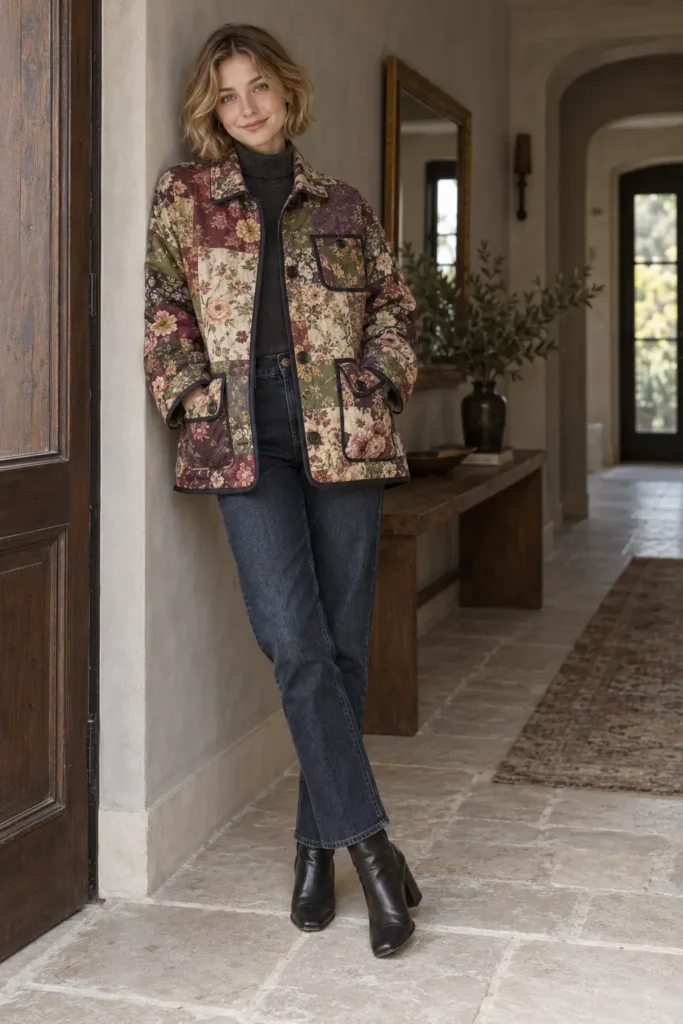
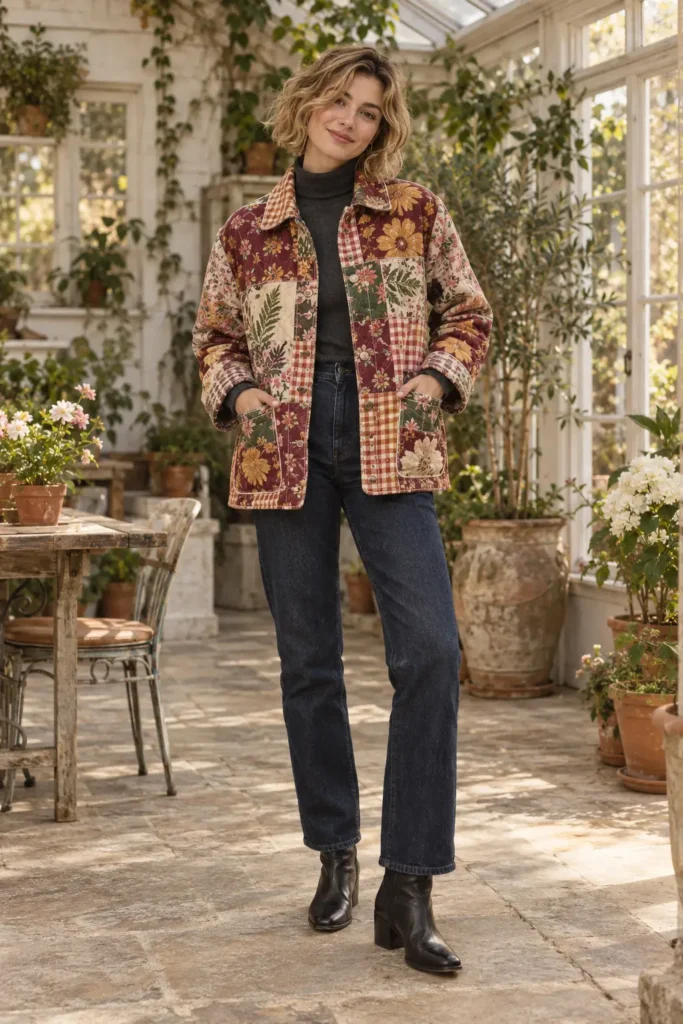
Choosing Garden Prints and Building Color Balance
Quilting cotton is a practical starting point because it is stable, easy to piece, and available in many coordinated botanical designs. Warm ivory, faded sage, dusty rose, and cornflower blue create a soft vintage-garden palette, with olive, coral, and butter-yellow accents adding depth.
Combine small floral prints with medium-scale blossoms and a few larger feature motifs. Avoid using equally busy prints throughout; quieter fabrics provide visual breathing space. Prewash compatible fabrics where appropriate, and keep their weights reasonably consistent to prevent uneven drape.
Patchwork Arrangement and Quilting Texture
A mixture of medium rectangles, smaller squares, and occasional narrow strips gives the jacket an informal, scrappy appearance. Arrange stronger floral prints across the fronts, sleeves, and back rather than concentrating them in one area.
Low-loft batting helps maintain flexibility, while widely spaced straight-line or diagonal quilting adds definition without excessive stiffness. Prepare sufficiently large quilted panels to accommodate quilting take-up, garment cutting, and seam allowances. Dense quilting or bulky patchwork intersections can make the shoulders and armholes uncomfortable.
Utility Pockets and Practical Design Details
Two oversized lower patch pockets and a smaller chest pocket reinforce the chore-jacket identity. Position the pockets so their outlines remain visible against the busy floral surface. Contrasting pocket bindings or carefully selected quieter prints can help.
Choose a simple collar and durable button-front closure to balance the decorative patchwork. Reinforce pocket openings and avoid placing thick patchwork intersections directly beneath heavily stressed seams.
Helpful Note: Before cutting garment pieces from the quilted panels, check the placement of prominent flowers, pocket outlines, and patchwork seams. Small layout adjustments can make a substantial difference to the finished jacket’s appearance.
Other Design Inspirations – Digitally Modified Images. Texture and color may vary from the actual product.
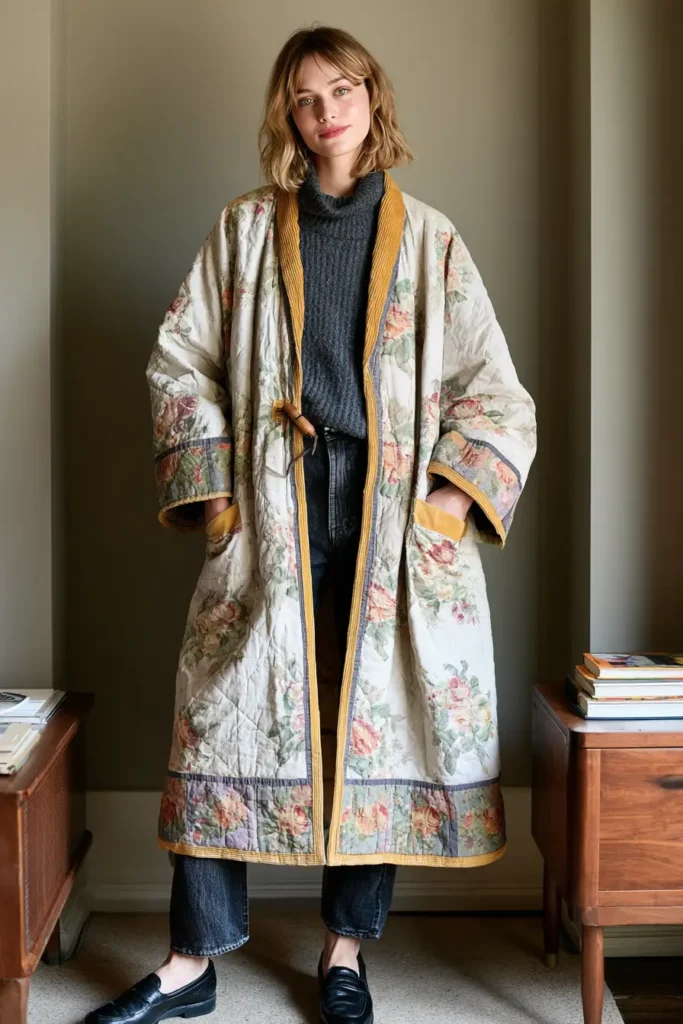
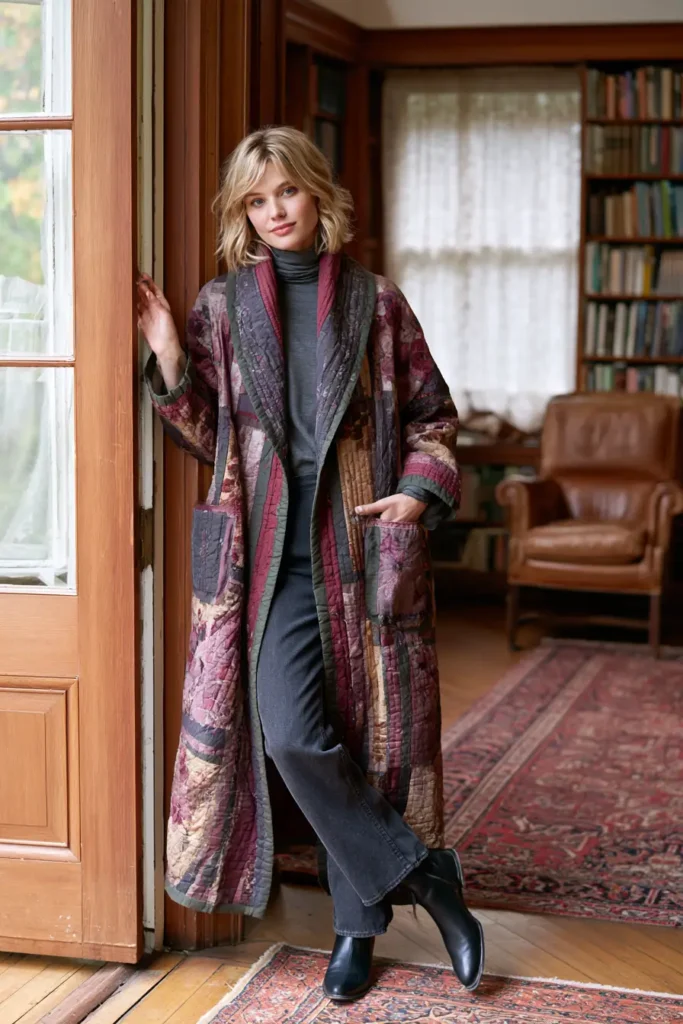
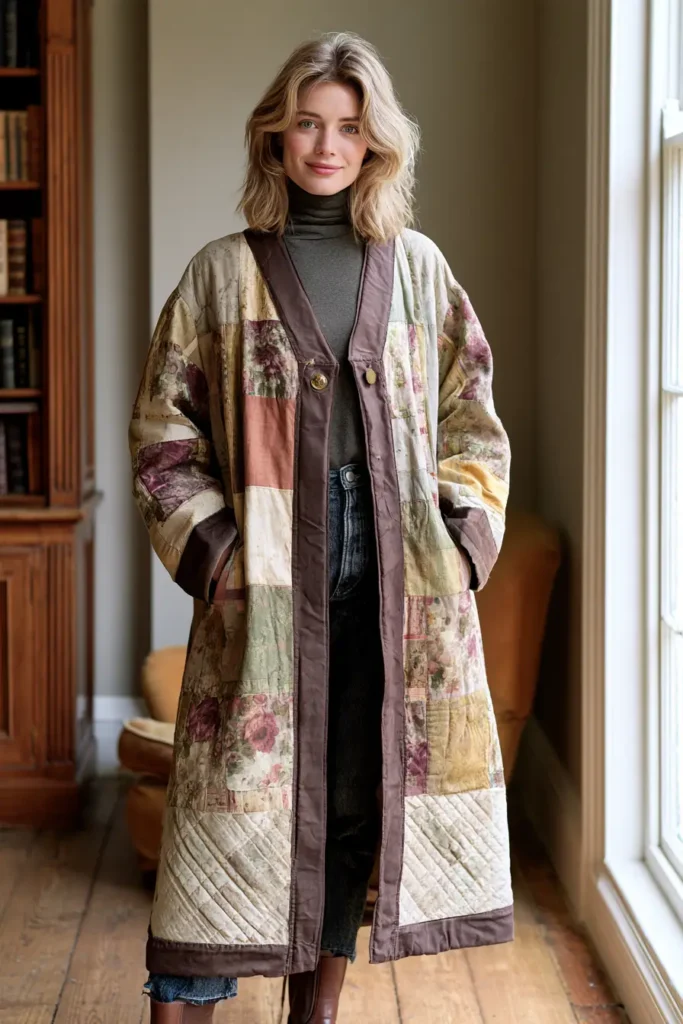
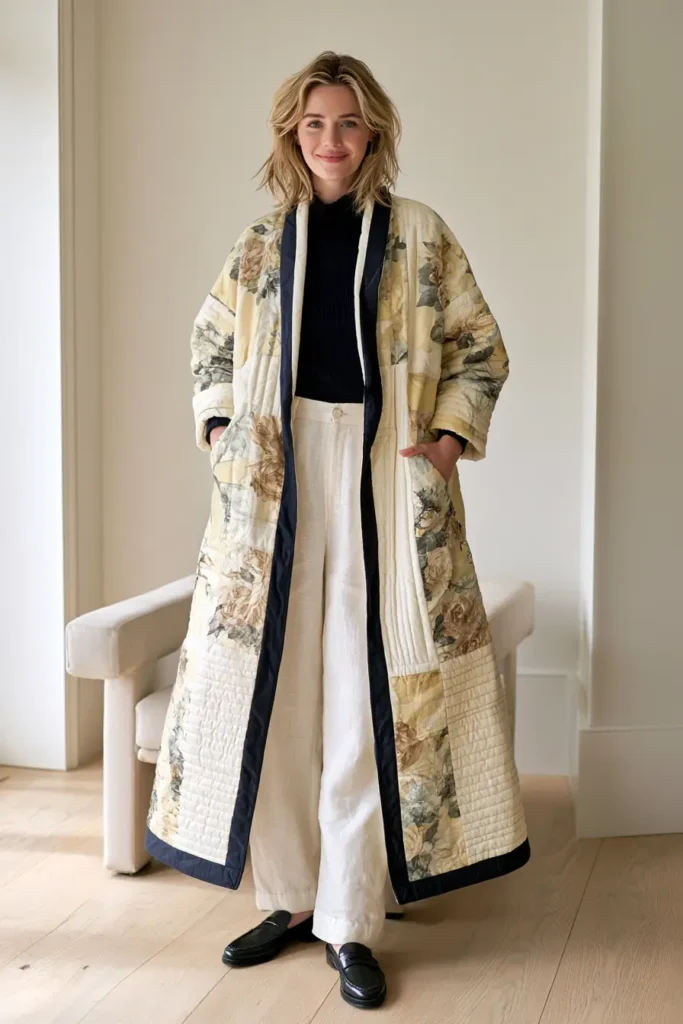
2. Upcycled Vintage Floral Quilt Duster Coat with Faded Rose Prints and Contrast Binding
An upcycled vintage floral quilt duster coat brings the softened beauty of an older quilt into a relaxed, flowing outerwear silhouette. Faded cabbage roses, tiny rosebuds, delicate botanical vines, and gently aged cotton patchwork give the fabric a character that freshly printed florals may not reproduce. The coat’s long, open-front shape, reaching about mid-calf, keeps the original quilt blocks and floral motifs recognizable, while contrasting binding defines the neckline, front opening, sleeves, and hem.
What distinguishes this design from a conventional floral duster is its visibly repurposed quilt construction. Rather than using a single continuous botanical print, the garment celebrates existing patchwork seams, slightly softened quilting stitches, and subtle variations in fabric color. A simple collarless neckline, relaxed shoulders, straight sleeves, and understated closures keep the vintage textile as the focal point. The result feels romantic and comfortably worn-in without sacrificing the practical character of a quilted coat.
Design Inspirations – Digitally Modified Images. Texture and color may vary from the actual product.
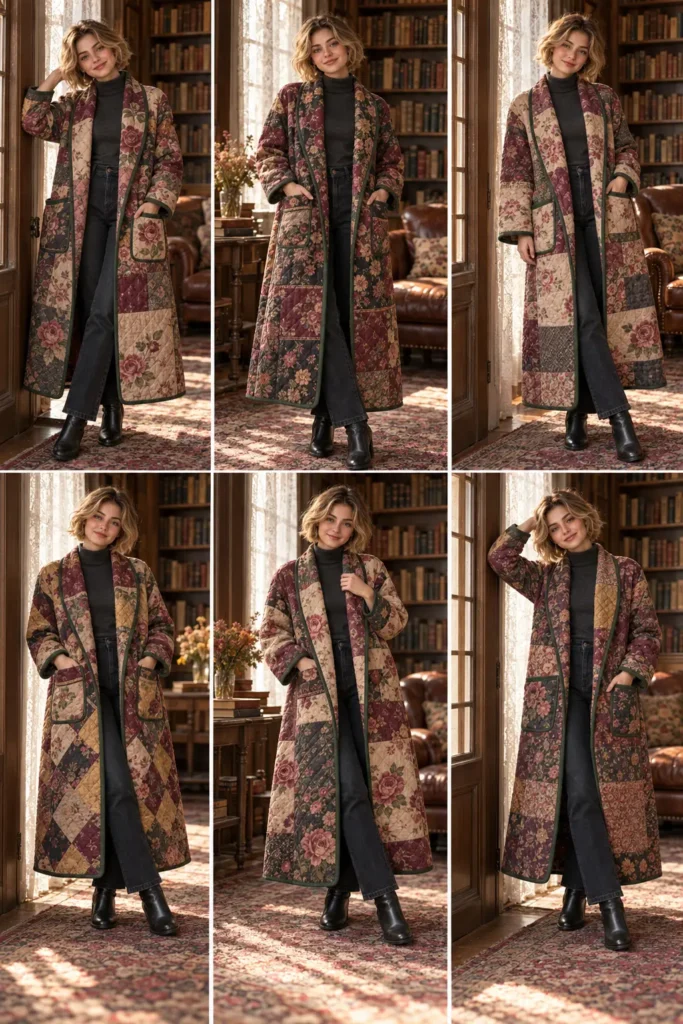
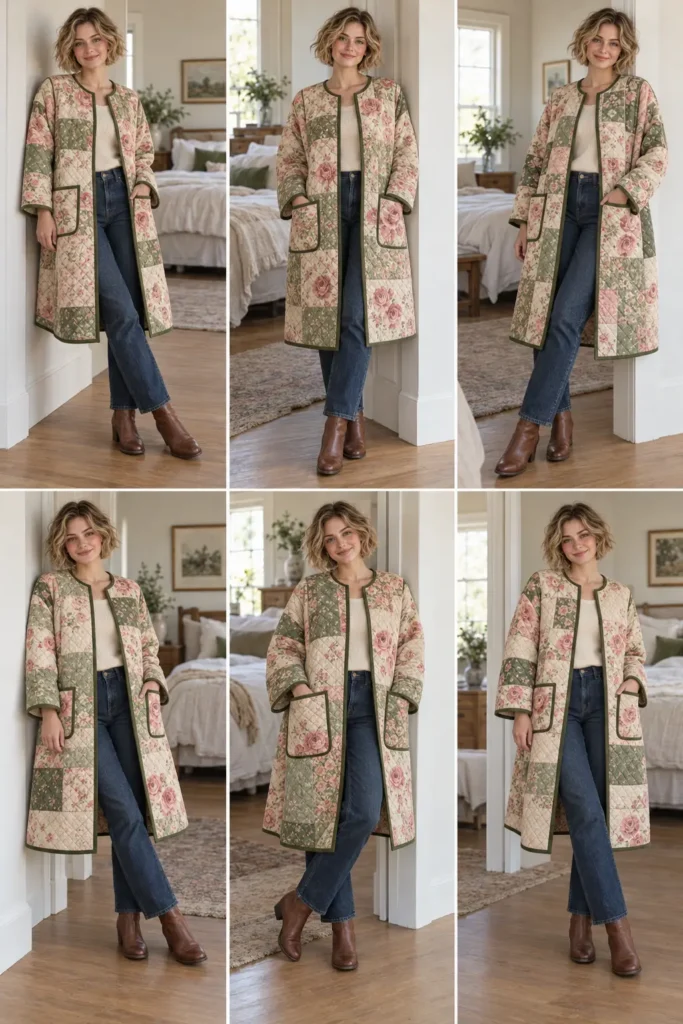
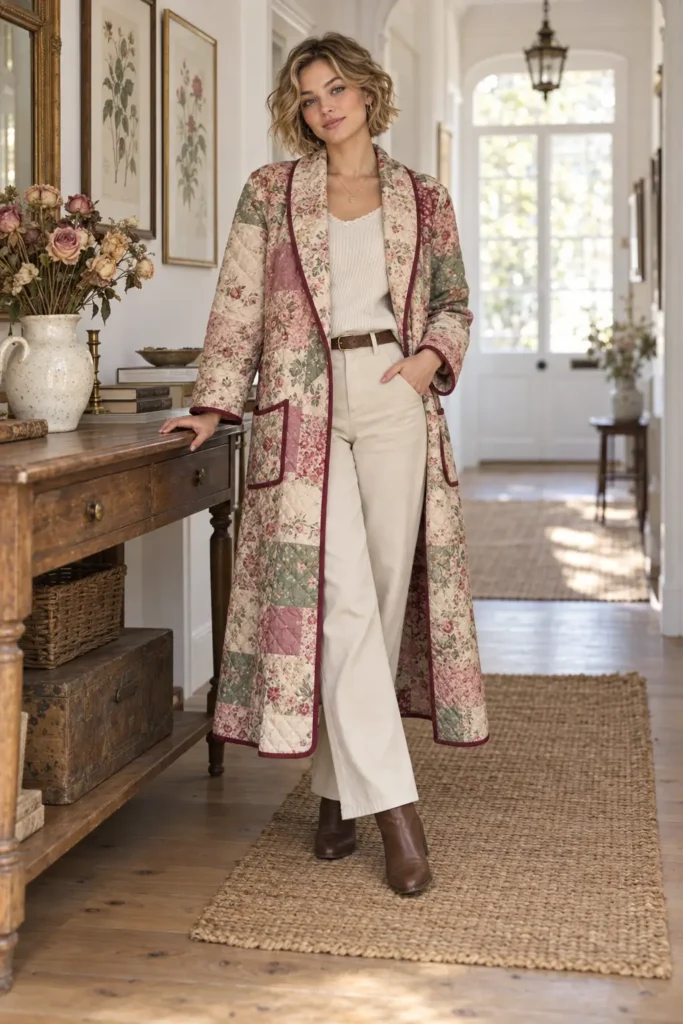
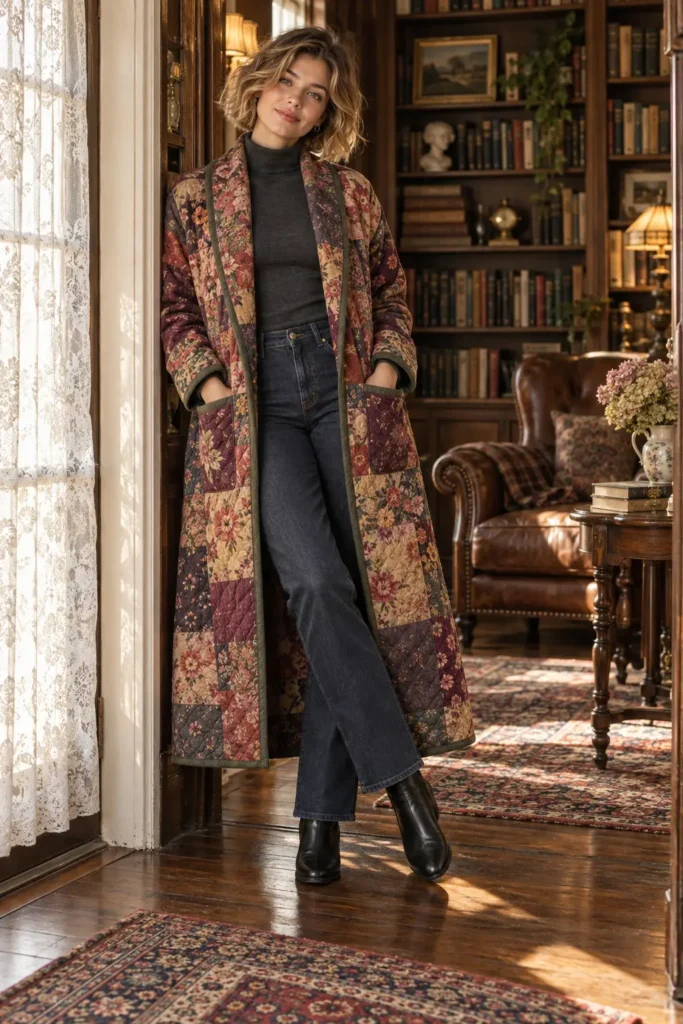
Faded dusty rose, antique ivory, muted sage, washed lavender, and soft cornflower blue create a delicate vintage palette. Alternatively, aged burgundy roses, dusty mauve, tobacco brown, and warm parchment can produce a richer autumnal interpretation.
Contrast binding is particularly important because it visually organizes the varied floral patches. Deep indigo, dark chocolate brown, or muted forest green can outline the silhouette without overwhelming the softer prints. Choose a durable cotton binding that matches the quilt’s weight and stays flexible around curved edges.
Preserving Patchwork and Original Quilting
A structurally sound vintage quilt may already contain the patchwork, batting, backing, and quilting stitches needed for a similar garment. Preserving these layers helps retain its authentic texture without introducing unnecessary additional batting.
Consider positioning larger rose-print blocks across the coat fronts and back, with smaller patchwork sections on the sleeves. Existing quilting, whether diagonal lines, crosshatching, or hand-stitched motifs, adds quiet surface dimension.
When pattern placement allows, avoid cutting prominent flowers through the center. A simple garment pattern with generous ease can also help preserve the original textile without forcing thick patchwork seams into tightly fitted areas.
Working with Reclaimed Quilts and Avoiding Common Mistakes
Before considering them for garment construction, inspect older quilts for weakened cotton, loose stitching, deteriorated batting, and damaged seam intersections. Gentle fading is attractive; structural weakness is not.
A frequent mistake is selecting a quilt that is too heavy or stiff for a flowing duster. Excessive thickness can restrict movement and create bulky shoulder seams. Another concern is placing heavily pieced intersections at armholes, where several fabric layers may become uncomfortable.
Choose a garment pattern suited to prequilted material, account for seam allowances, and consider discreet side-seam pockets rather than large applied pockets that interrupt the vintage floral layout.
Helpful Note: Before cutting a valuable vintage quilt, test the garment pattern using an inexpensive substitute fabric. This lets you check fit and proportions without risking an irreplaceable textile.
Other Design Inspirations – Digitally Modified Images. Texture and color may vary from the actual product.
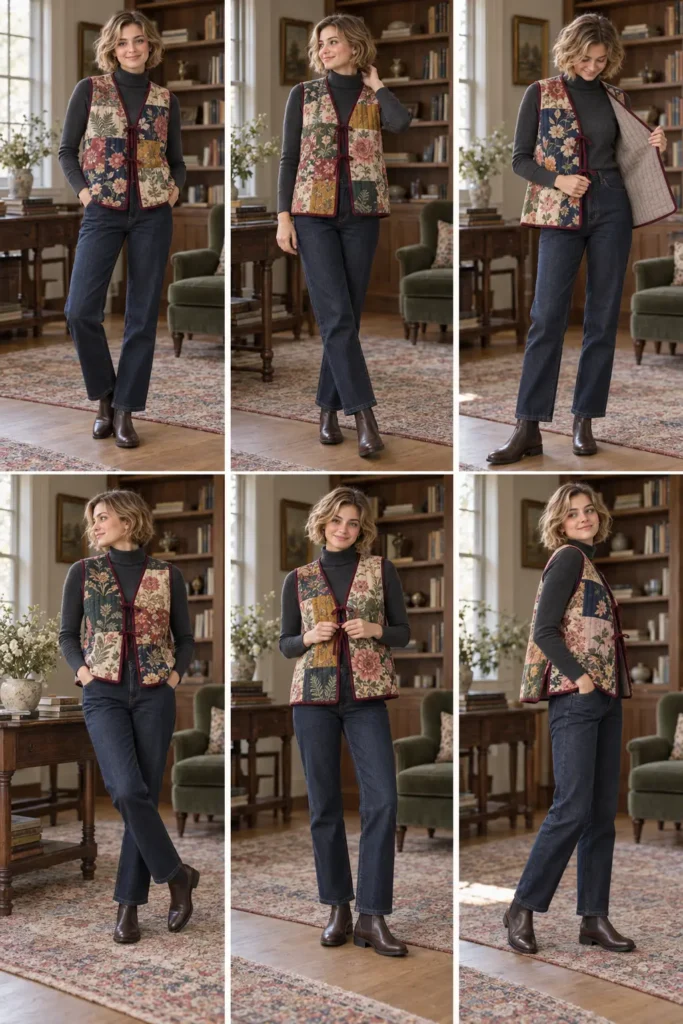
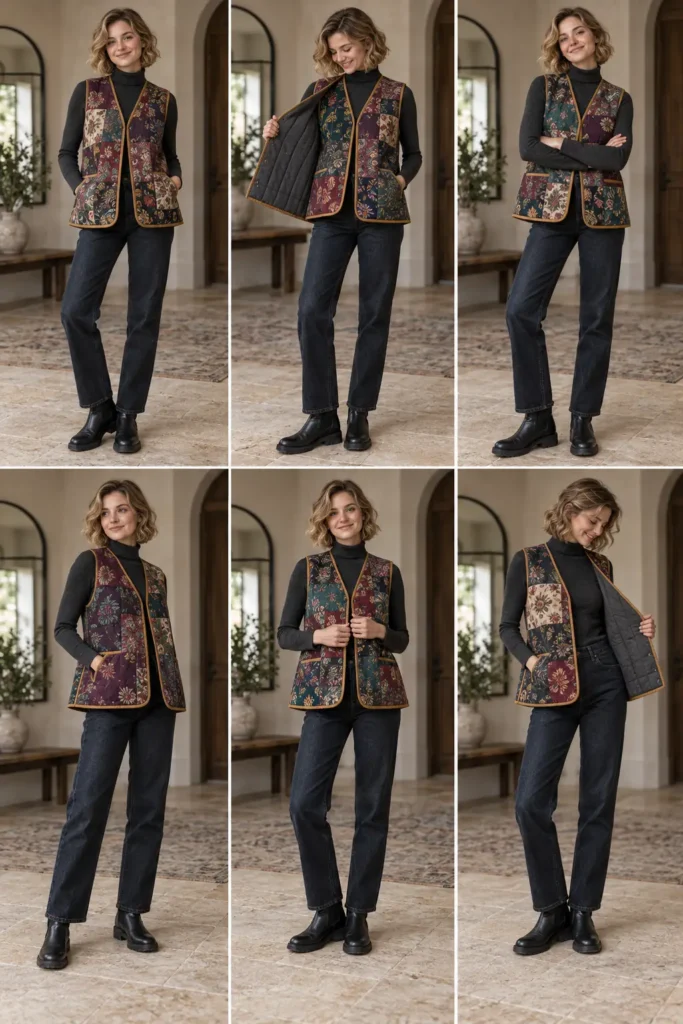
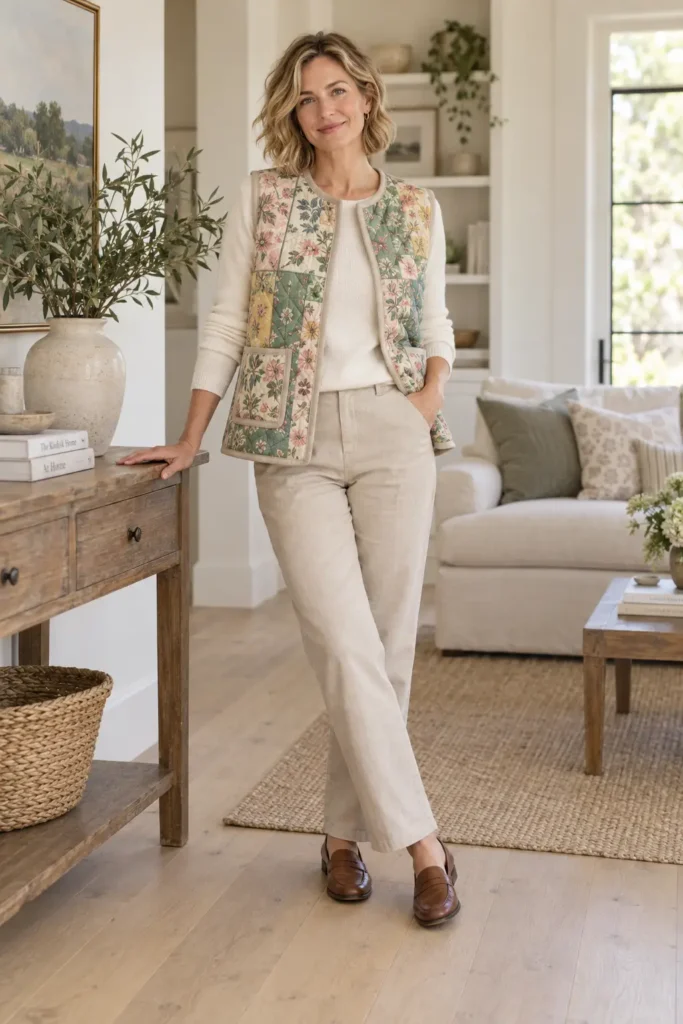
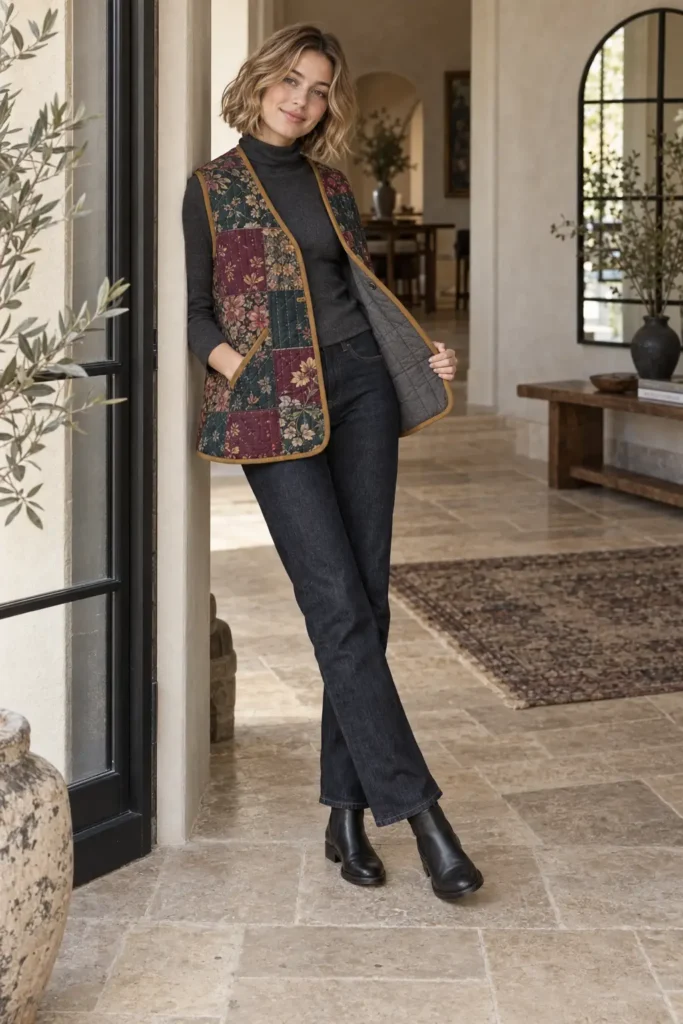
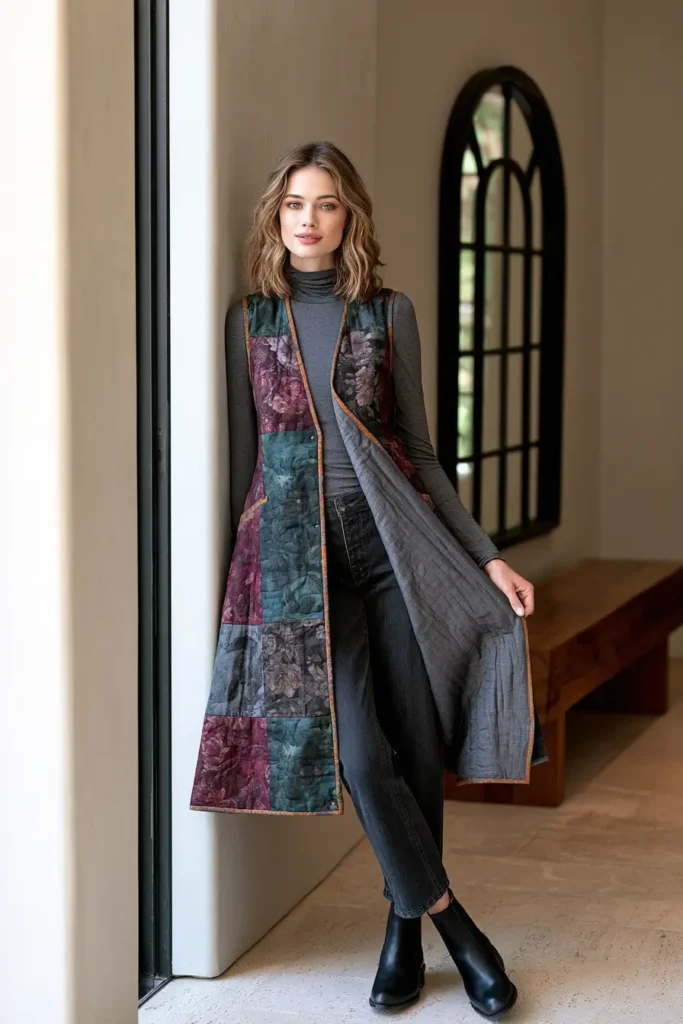
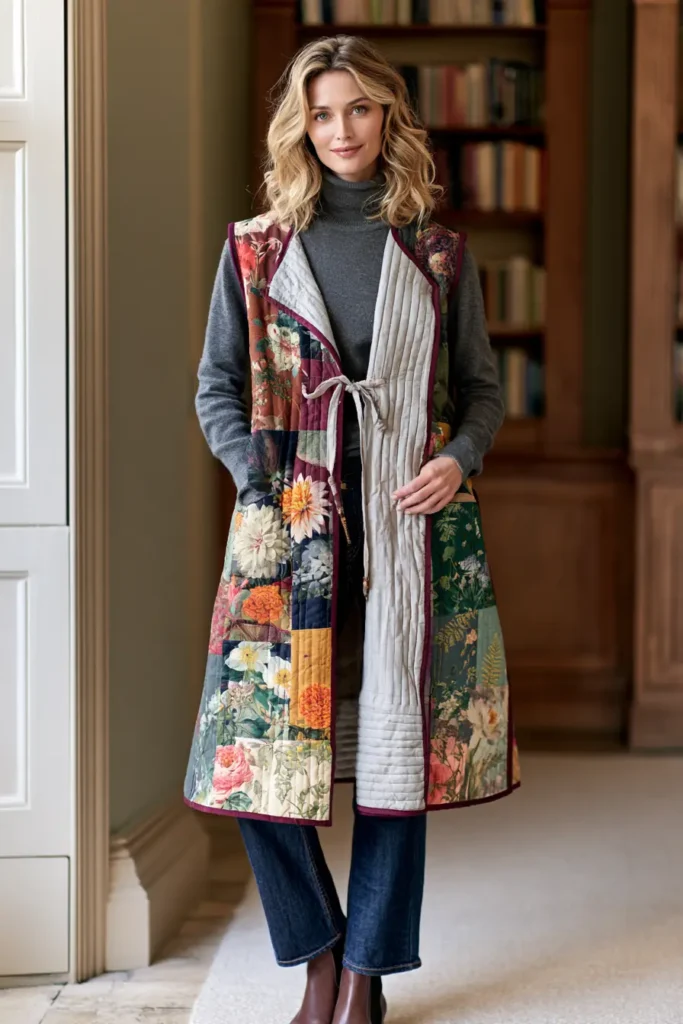
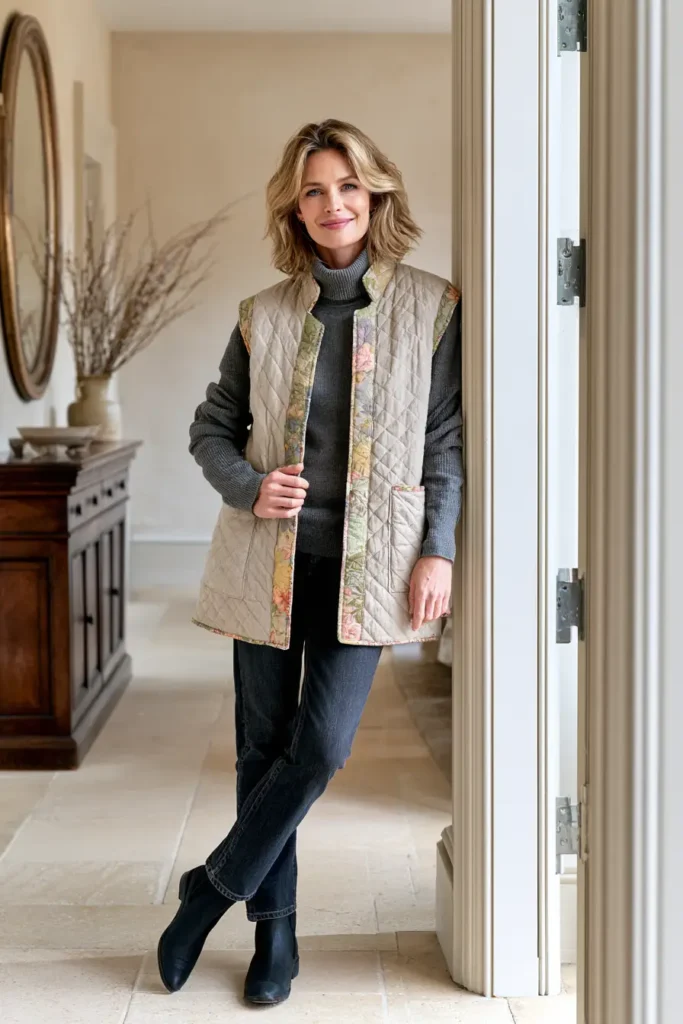
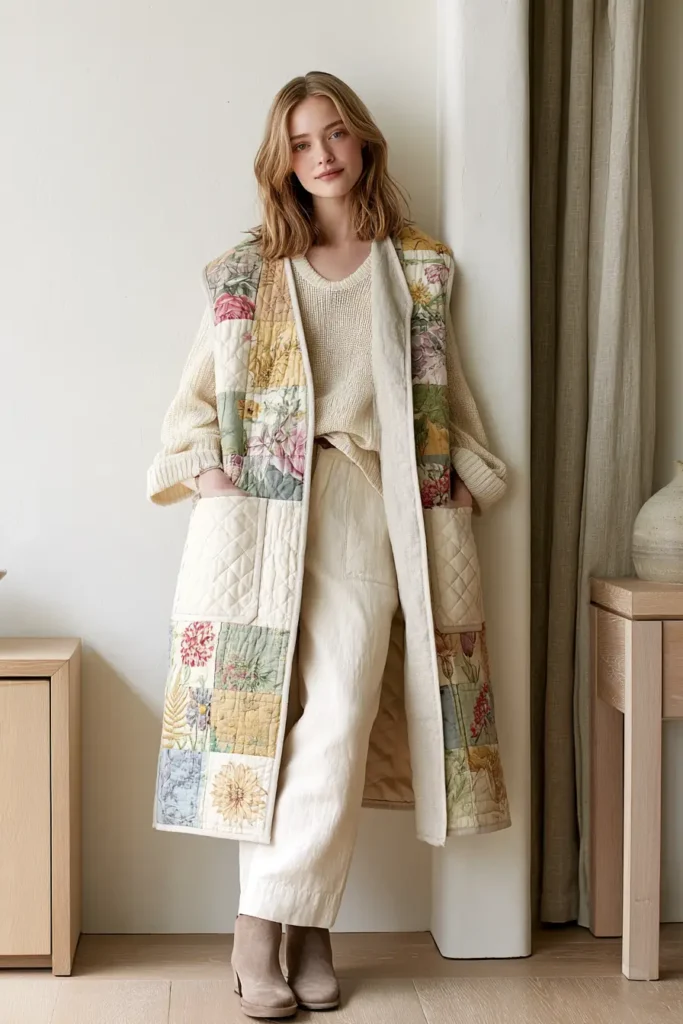
3. Reversible Floral Quilt Vest with Contrasting Botanical Patchwork and Solid Linen Backing
A reversible floral quilt vest pairs expressive botanical patchwork with the understated beauty of natural linen, creating two distinct looks in one layering piece. The floral-facing side features coordinated cotton patches with vintage roses, delicate wildflowers, leafy branches, and scattered garden blossoms. The opposite side features solid linen for a quieter, more contemporary look, letting the vest transition from colorful statement styling to simple everyday layering. A relaxed hip-length silhouette, sleeveless construction, softly shaped V-neckline, and neatly bound edges keep the design comfortable and versatile.
Unlike conventional patchwork vests with permanently hidden backing fabric, this design treats the linen reverse as a fully wearable exterior. The contrast is central to its appeal: richly patterned cotton on one side, natural woven texture on the other. Low-loft batting and carefully planned quilting connect the two surfaces without creating excessive stiffness. The result is a garment that balances decorative quilting with the flexibility needed for comfortable movement.
Design Inspirations – Digitally Modified Images. Texture and color may vary from the actual product.
Choosing Botanical Prints and Contrasting Linen
For the floral side, consider faded sage, dusty rose, muted burgundy, forest green, and antique cream, with subtle ochre or soft teal accents. Combine medium-scale roses with smaller botanical sprigs and occasional quieter patches to keep the arrangement balanced.
Medium-weight quilting cotton works well for the patchwork, while softened, closely woven linen provides an attractive reverse. Oatmeal, charcoal gray, warm stone, and muted olive are particularly effective linen choices. Select fabrics with compatible weights and prewash appropriately to reduce uneven shrinkage.
Patchwork Arrangement and Reversible Quilting
Arrange floral squares and rectangles in a balanced, slightly asymmetrical layout. Use larger botanical prints as focal areas near the front panels, and smaller motifs to add variety without overwhelming the garment.
Fine diagonal quilting or evenly spaced vertical channels can secure the pieced cotton, thin batting, and linen backing. Because stitching appears on both wearable faces, consider thread color and quilting density carefully.
Reversible construction also requires enclosed seams, neatly finished armholes, and binding that looks attractive from either side. Fabric ties or other reversible fasteners can preserve a clean look without exposing unfinished closures.
Maintaining Comfort and Avoiding Common Mistakes
The most important consideration is avoiding unnecessary thickness. Dense quilting, heavy batting, and bulky patchwork at armhole intersections can restrict movement and make the vest uncomfortable.
Avoid excessively loose linen weaves that may distort during quilting. Test fabric combinations and quilting density on a small sample before working on garment panels.
Keep the neckline, binding, and closures relatively simple so the botanical patchwork remains the visual focus.
Helpful Note: Since the linen backing is also an outer surface, plan its quilting pattern and seam finishes as carefully as the floral front. Both sides should look intentionally designed, not merely finished.
Other Design Inspirations – Digitally Modified Images. Texture and color may vary from the actual product.
4. Cropped Pastel Floral Quilted Bomber Jacket with Vintage Rose Prints and Ribbed Edges
Design Inspirations – Digitally Modified Images. Texture and color may vary from the actual product.
Other Design Inspirations – Digitally Modified Images. Texture and color may vary from the actual product.
5. Longline Floral Quilted Duster Coat with Oversized Blooms on a Dark Background
Design Inspirations – Digitally Modified Images. Texture and color may vary from the actual product.
Other Design Inspirations – Digitally Modified Images. Texture and color may vary from the actual product.
6. Belted Wrap-Style Floral Quilted Trench Coat with Oversized Watercolor Blooms and Wide Lapels
Design Inspirations – Digitally Modified Images. Texture and color may vary from the actual product.
Other Design Inspirations – Digitally Modified Images. Texture and color may vary from the actual product.
More to come …
Kimono-Style Floral Quilted Jacket with Wide Draped Sleeves and Vertical Botanical Patchwork
Patchwork Floral Quilted Jacket Mixing Bold Blooms and Gingham Checks
Hexagon Patchwork Floral Quilted Vest with Colorful Garden Prints
Color-Blocked Floral Quilt Jacket with Solid Denim Sleeves and Collar
Hip-Length Floral Quilt Bomber Jacket with Bold Botanical Prints and Contrasting Ribbed Edges in Jewel Tones
Hooded Floral Quilted Cocoon Coat with Winter Blooms and Sculptural Diamond Quilting
Conclusion
Floral quilted jackets, coats, and vests demonstrate how botanical fabrics can move comfortably between romantic, practical, tailored, and statement-making styles. A softly faded vintage quilt can become an expressive longline coat, while contrasting floral and solid fabrics create a versatile reversible vest. Structured tailoring, flowing sleeves, dimensional appliqué, geometric patchwork, and carefully controlled quilting each offer a different way to interpret floral outerwear. These garments share a thoughtful relationship between fabric, texture, silhouette, and visible construction.
When exploring these ideas, begin with the garment shape and the season in which it will be worn. A lightweight spring vest has different requirements from a winter cocoon coat, just as a small botanical print behaves differently from an oversized floral motif. Consider the available fabrics, their weight and condition, the required quilting level, and the colors that suit your wardrobe. With a clear design direction, even a relatively simple floral quilted garment can feel individual, well considered, and enjoyable to wear.

