
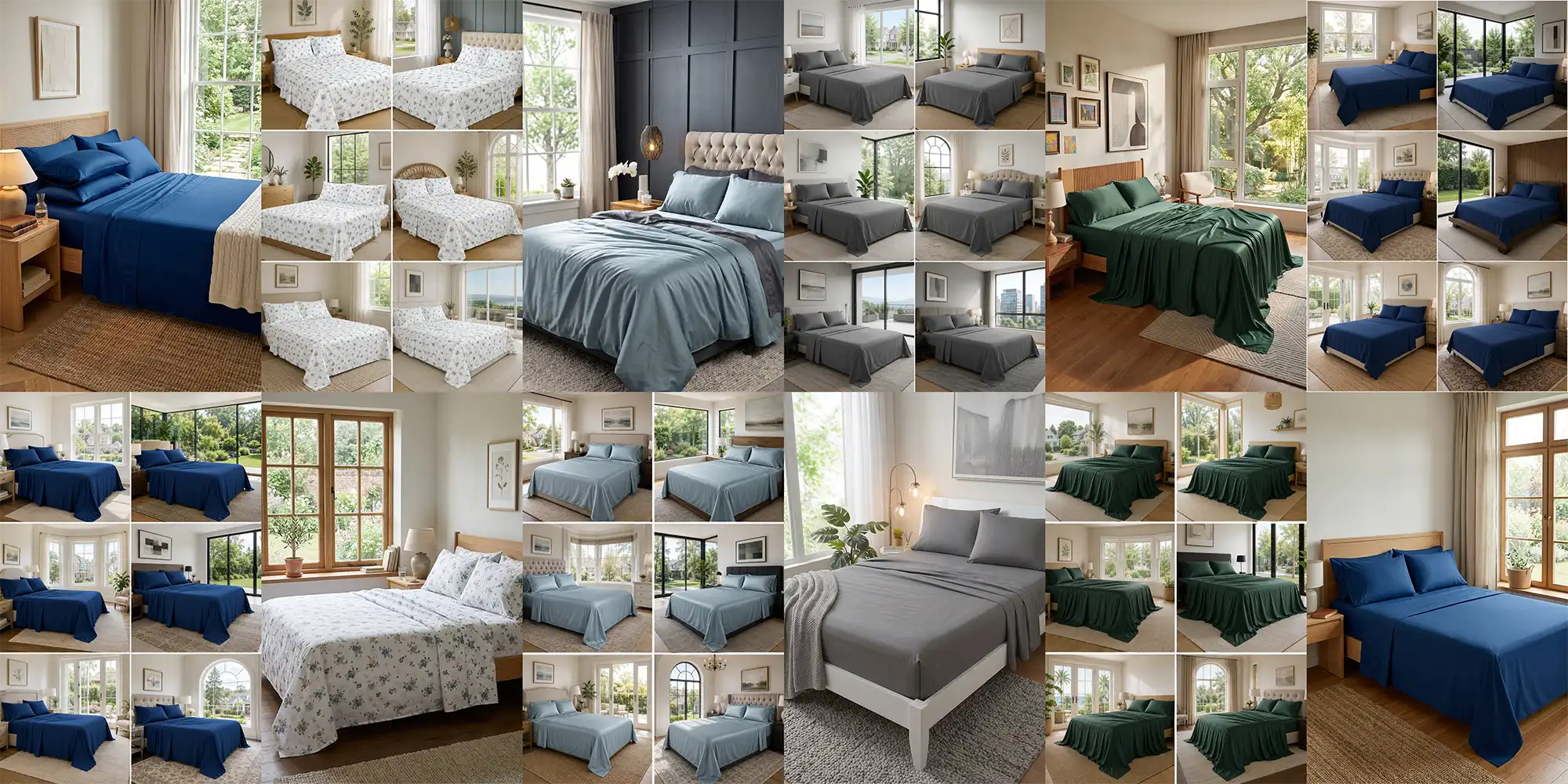
Best Cooling Bed Sheets for Hot Sleepers: Breathable Picks for Sweat-Free Nights
If you sleep hot, you know the loop. You wake up damp, kick the sheet off, cool down too far, pull it back on, and an hour later, you start the whole thing again. It is more than an annoyance. It chops the night into pieces and leaves you tired in the morning.
The catch is that “cooling sheets” do not all cool the same way. Some feel cold the instant your skin touches them. Some breathe, letting body heat escape rather than build up under the covers. Some pull sweat off your skin so you never wake up sticky. A few do a bit of everything.
So the real question is not only “material or weave?” For a hot sleeper, the more useful question is: how do you overheat?
If you wake up damp or clammy, you want a silky, moisture-wicking sheet that moves sweat away from your skin. If you run hot but stay mostly dry, you want a crisp, breathable sheet that lets heat escape and never clings. Those are two different jobs, and they point to two different kinds of sheets.
That is the spine of this guide. For the cooling bed sheets, I split the picks into two groups:
Group 1 — Silky Moisture-Wickers: smooth, drapey, cool-to-the-touch sheets for damp sleepers and those who experience night sweats.
Group 2 — Crisp & Dry Coolers: breathable, non-slippery sheets for hot sleepers who want airflow and a fresher, cotton-like feel.
Neither group is automatically better. The best cooling sheet is the one that matches the way your body overheats.
Our Top Picks at a Glance
Group 1 — Silky Moisture-Wickers
– For sleepers who wake up damp, like a smooth drape, or want a cool-to-the-touch feel
Best Overall Cooling
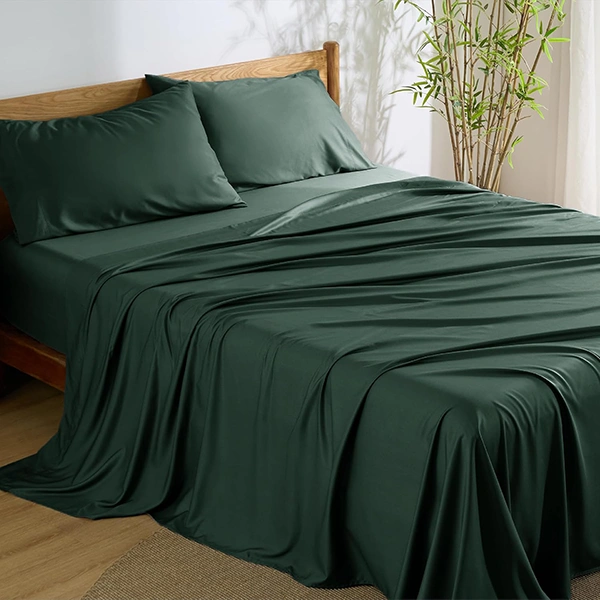
Bedsure Rayon from Bamboo Sheet Set
Buy From Amazon
Silky, soft, and easy to recommend for most hot sleepers who want cool-to-the-touch comfort at a fair price.
Read more below
Best Premium Cooling
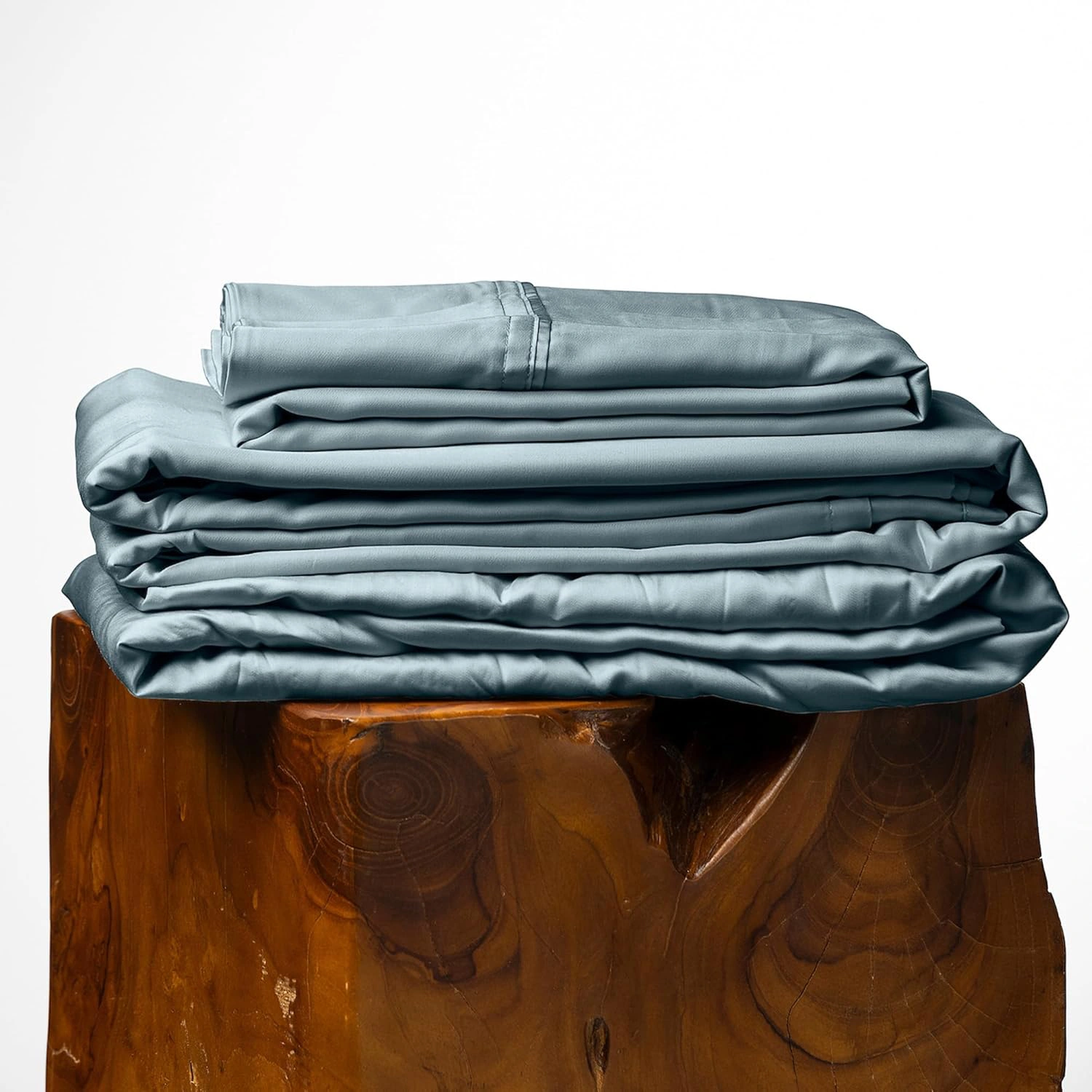
Olive + Crate Eucalyptus Tencel Lyocell Sheet Set
Buy From Amazon
A smoother, more elevated cooling sheet for readers seeking a luxurious drape with moisture-friendly comfort.
Read more below
Best Pure-Bamboo Pick
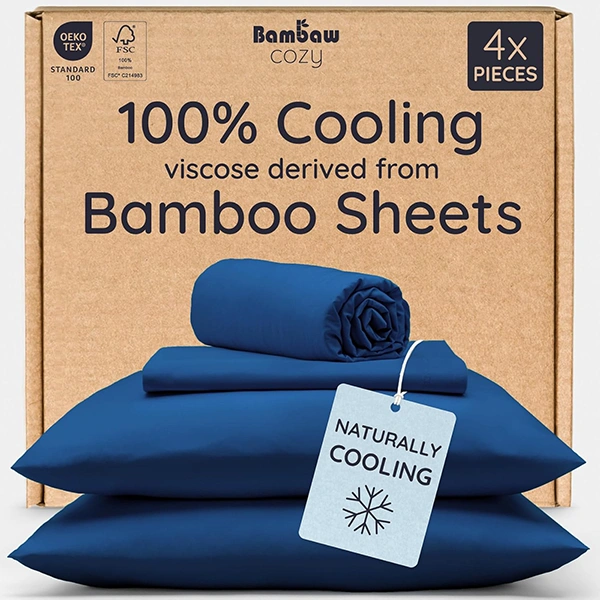
Bambaw 100% Bamboo Viscose Sheet Set
Buy From Amazon
A silky bamboo-viscose option with a soft hand and a secure, strap-cornered fitted sheet.
Read more below
Group 2 — Crisp & Dry Coolers
– For sleepers who run hot but stay mostly dry, dislike slippery sheets, or want a matte, breathable feel
Best Crisp Cotton Cooling
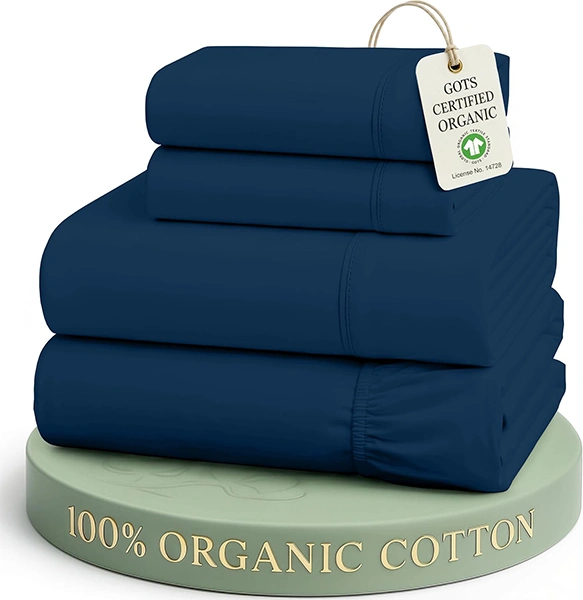
LANE LINEN Organic Cotton Percale Sheet Set
Buy From Amazon
A breathable cotton percale for sleepers who want crisp, non-slippery cooling.
Read more below
Best Soft-Finish Percale
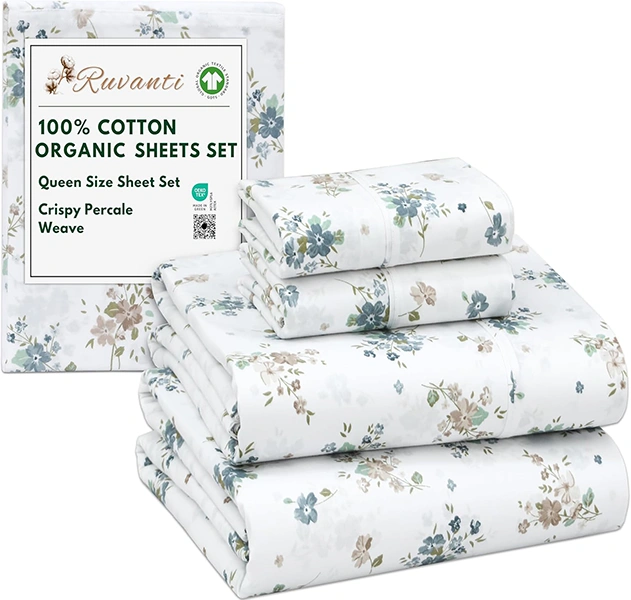
RUVANTI Organic Cotton Percale Sheet Set
Buy From Amazon
A softer-feeling percale for readers who want cotton airflow without a stiff hand.
Read more below
Best for Night Sweats on a Budget
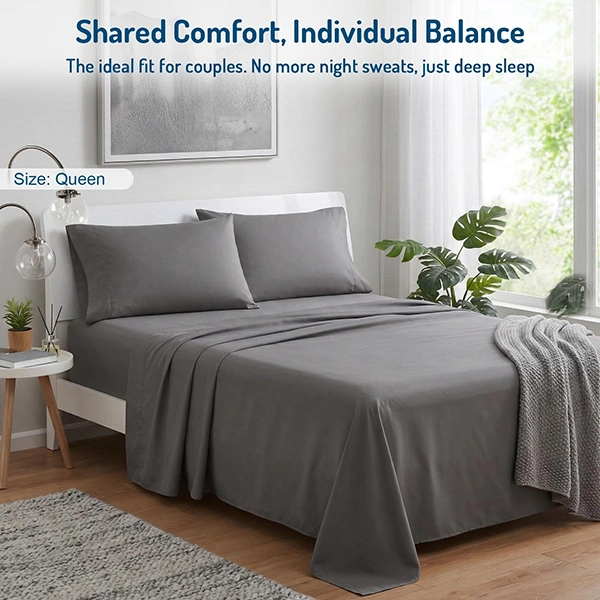
Degrees of Comfort Coolmax Sheet Set
Buy From Amazon
A budget-friendly performance sheet for sleepers who care most about staying dry.
Read more below
Why You Should Trust This Guide
As an interior designer, I read a sheet the way I read any cloth in a room: not just as something that covers a bed, but as something that shapes how the room feels and how the body rests inside it. Drape, surface texture, finish, weight, and the way fabric catches light all matter. A set can look calm and expensive online and still feel sticky, flimsy, or stifling once you actually sleep on it.
There is a deeper textile side here, too. My Comfy Dwell co-founder, Faruque, grew up around the textile handicraft trade in Dhaka, where Nakshi Kantha and Jamdani work teach early, hands-on lessons about how fibers behave, how weave density changes airflow, how finishing changes the hand, and why moisture handling decides real comfort on a warm night. In a trade like that, “cooling” is not a marketing word. You learn that two sheets can both be labeled soft and behave completely differently after a hot night and a few washes.
For this guide, the sheets were judged on fiber content, weave or finish, breathability, moisture handling, weight and drape, fit and pocket depth, care behavior, certifications, review patterns, and price-to-value. The aim was never to crown a single universal “coldest” sheet, because such a sheet does not exist. A sweaty sleeper, a dry-but-hot sleeper, a humid-climate sleeper, and a couple with mismatched temperatures all need different things. So each pick below is matched to the sleeper most likely to benefit from it.
What Actually Makes a Sheet Cool
Fiber is the engine
The fiber sets the cooling ceiling. It decides whether a sheet breathes, absorbs moisture, wicks sweat, dries quickly, or traps heat against the body.
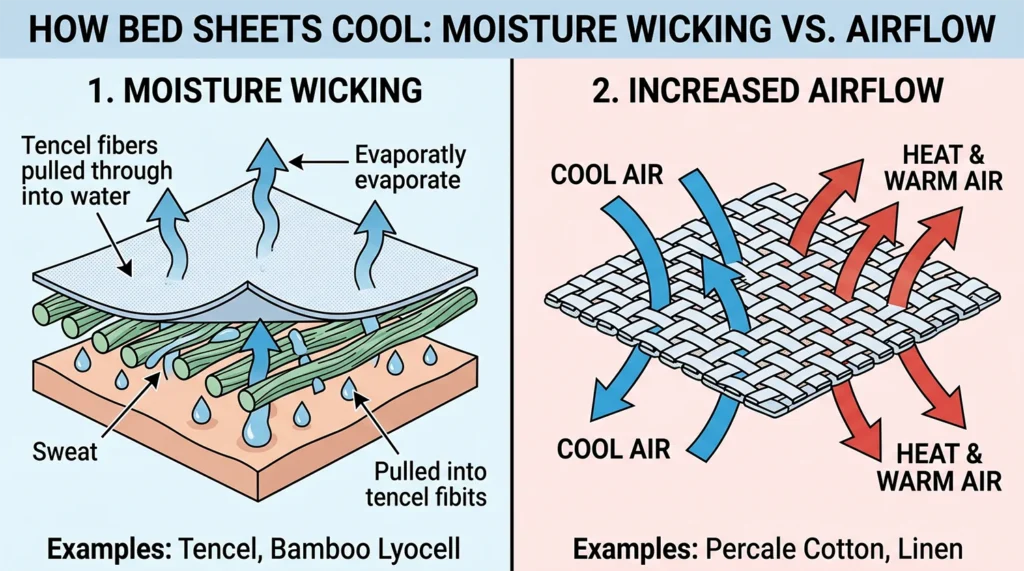
Cotton, especially in a percale weave, cools through breathability: it lets air move and gives the bed a dry, crisp feel. Rayon and viscose derived from bamboo feel silky, drapey, and cool to the touch, which is why sleepers who want smoothness reach for them. Tencel lyocell is another smooth, cellulosic fiber, a little more refined and fluid, and good at handling moisture, which is why it shows up in premium cooling bedding. Coolmax is the outlier: not a natural-fiber story at all, but an engineered performance fabric built to move sweat and dry fast.
The fabrics I treat with caution for hot sleepers are dense microfiber, thick sateen, and heavily brushed finishes. They can feel lovely and soft, but softness is not the same as cooling.
One honest label note: “bamboo sheets” almost always means rayon or viscose derived from bamboo, not raw bamboo fabric. “Eucalyptus sheets” usually mean Tencel lyocell spun from wood pulp. Neither fact makes them worse. It only means you should know what you are actually buying.
Two ways a sheet cools: wicking vs. airflow
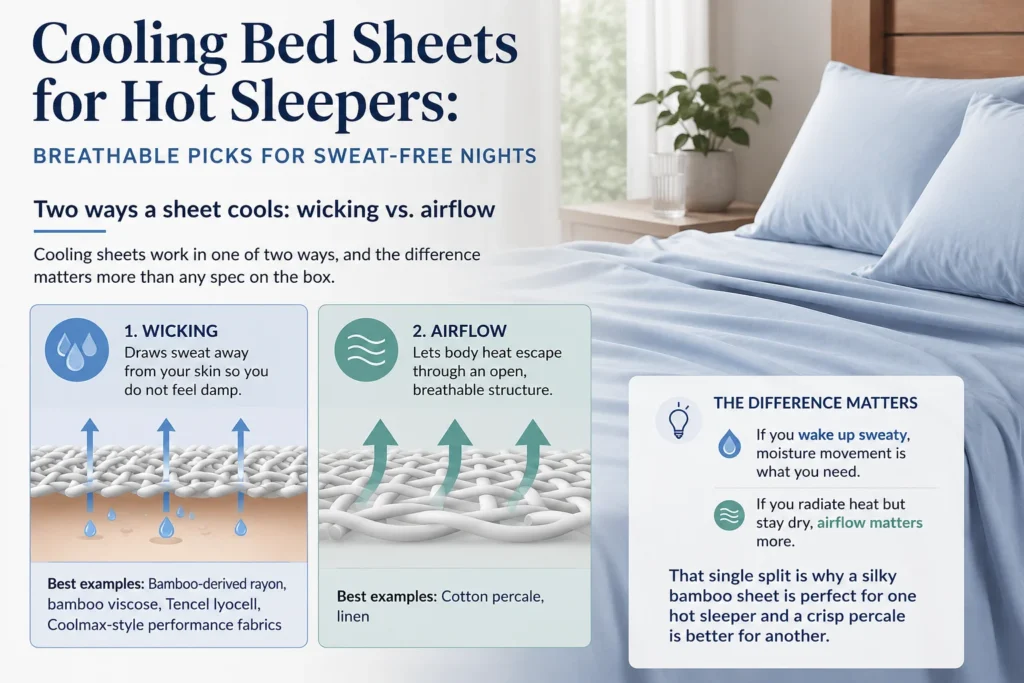
Cooling sheets work in one of two ways, and the difference matters more than any spec on the box.
The first is wicking. Wicking sheets draw sweat away from your skin so you do not feel damp. Bamboo-derived rayon, bamboo viscose, Tencel lyocell, and Coolmax-style performance fabrics all sit here.
The second is airflow. Airflow sheets let body heat escape through an open, breathable structure. Cotton percale and linen are the clearest examples. They may not feel icy on first touch, but they stay drier and fresher throughout the night.
These are not the same thing. If you wake up sweaty, moisture movement is what you need. If you radiate heat but stay dry, airflow matters more. That single split is why a silky bamboo sheet is perfect for one hot sleeper and a crisp percale is better for another.
Weave fine-tunes the feel
Weave does not outrank fiber, but it shapes what your skin notices first.
Percale is crisp, matte, and airy, with that fresh button-down-shirt hand. It is one of the best weaves for hot sleepers who want dry cooling and dislike slippery sheets. Sateen and sateen-style finishes feel smoother and more lustrous, and they drape beautifully, but they usually sleep a touch warmer because the surface is denser and smoother. Bamboo and Tencel sheets read as silky and fluid rather than crisp, whatever weave term the listing uses. And performance fabrics like Coolmax rely on moisture movement rather than on any classic weave, so judge them by dryness, not by how cotton-like they feel.
Cool-to-the-touch vs. cool-all-night
That first chill when you slide into bed is pleasant, but it is not the whole story. A sheet can feel cold for a few minutes and still sleep warm once it absorbs your body heat. Lasting coolness comes from breathability, moisture movement, quick drying, and how the sheet works with your mattress, duvet, and room.
This is where shoppers get burned. They buy a sheet because it feels cool in the hand, then wake up hot because the rest of the bed is still trapping heat. Treat first-touch coolness as a bonus. All-night cooling is the real goal.
The verdict
For cooling, material beats weave, but only slightly. Fiber sets the ceiling, the wicking-versus-airflow mechanism decides how you stay cool, weave fine-tunes the feel, and your own body decides which of those matters most. The biggest lever is not on the label at all. It is the difference between a sleeper who wakes up damp and one who just runs hot.
The One Question That Picks Your Group: Damp, or Just Hot?
Before you compare a single product, answer one question: do you wake up damp, or do you just feel hot?
If you wake up damp, clammy, or sticky, shop Group 1 — Silky Moisture-Wickers. These sheets are smooth, drapey, and designed for moisture movement, which suits those with night sweats and anyone who wants a cooler surface against the skin.
If you run hot but stay mostly dry, shop Group 2 — Crisp & Dry Coolers. These are about airflow, structure, and a dry, non-slippery hand, for people who want the bed to feel fresh and matte rather than silky.
Damp sleepers need wicking. Dry-hot sleepers need airflow. Get that right, and the rest is detail.
Why Cooling Sheets Matter
Overheating turns sleep into an all-night adjustment game: kick off the sheet, pull it back, flip the pillow, slide away from your partner, and wake up less rested than when you lay down. Better sheets will not solve everything, but they change the one fabric your body touches without a break for eight hours.
Cooling sheets help most for hot sleepers, humid climates, memory-foam mattress owners (foam traps heat), menopause and night sweats, couples with mismatched sleep temperatures, summer refreshes, and anyone who wakes up sticky under polyester or dense bedding.
That said, a sheet is one layer. It cannot fully fix a heat-trapping mattress, a plastic-feeling protector, a heavy duvet, or a stuffy room. The best results come when the whole setup cooperates: breathable sheets, a lighter top layer, a pillowcase that does not trap heat, and a room that can move warm air out.
Group 1: Silky Moisture-Wickers
This group is for sleepers who wake up damp, like a smooth sheet, or want that cool glide when they first get into bed. The fabrics are rayon and viscose derived from bamboo, and Tencel lyocell. They feel smooth, drapey, and softer than crisp cotton, and they move softly over the skin while pulling moisture away. They are not for someone who wants a dry, structured, button-down feel.
A quick reminder on labels: “bamboo” here means rayon or viscose derived from bamboo, and “eucalyptus” means Tencel lyocell. Both cool well; the language just matters.
Bedsure Rayon from Bamboo – Best Overall Cooling
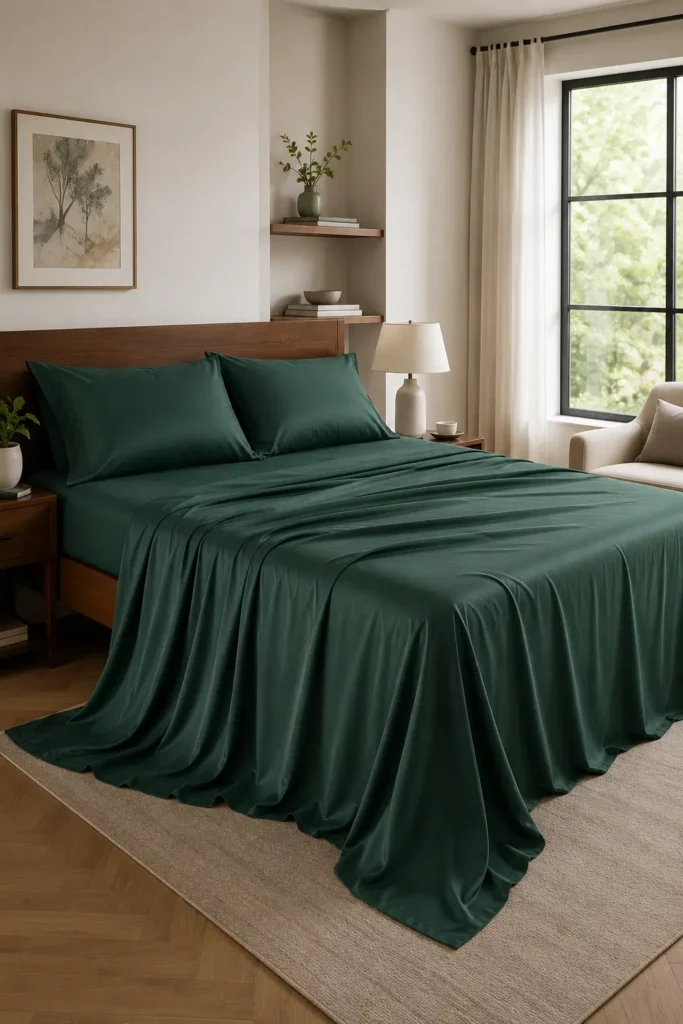
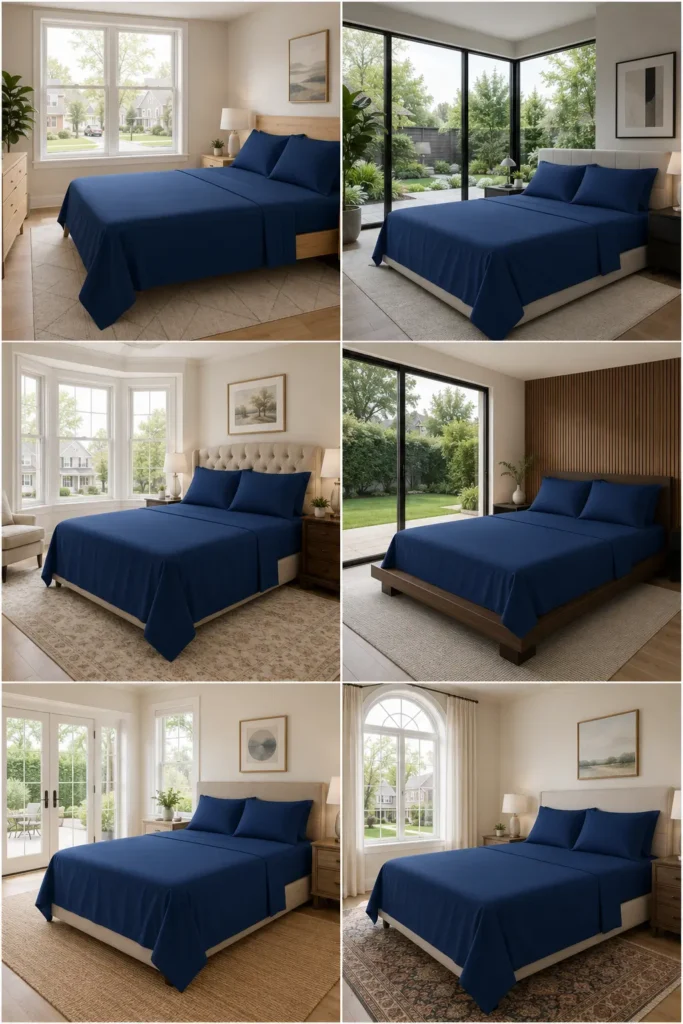
Bedsure’s rayon-from-bamboo set is the sheet most people picture when they search for “cooling sheets”: smooth, fluid, soft, and cool the moment you touch it, at a price that won’t break the bank. If you are stepping up from basic microfiber or a heavy cotton set, this is the easiest, lowest-risk first move.
Best for
Hot sleepers who want silky softness, a cool-to-the-touch feel, and a practical price. A strong default for anyone who wakes up warm or slightly damp and likes a smooth, drapey bed over a crisp one.
Why selected
Rayon derived from bamboo wicks moisture and feels cool on contact, and Bedsure delivers that experience with the broadest appeal of any sheet in this group. It carries OEKO-TEX certification, a deep, consistent review history, and a 16-inch deep pocket that fits most mattresses. It does not have the crisp snap of cotton, and that is the point: it feels gentle and fluid against the skin.
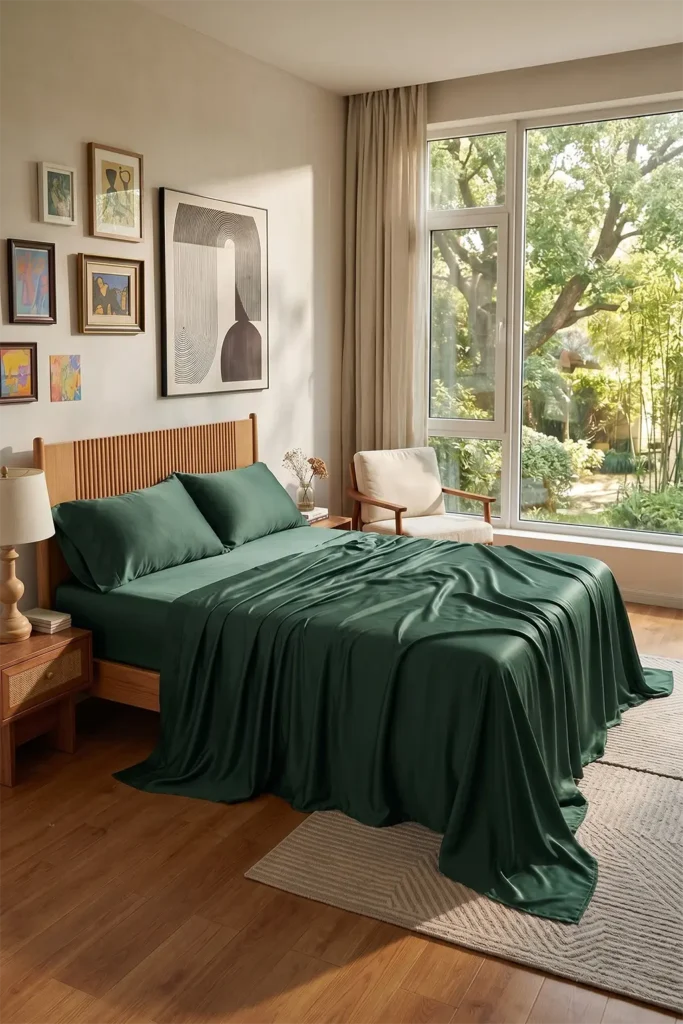
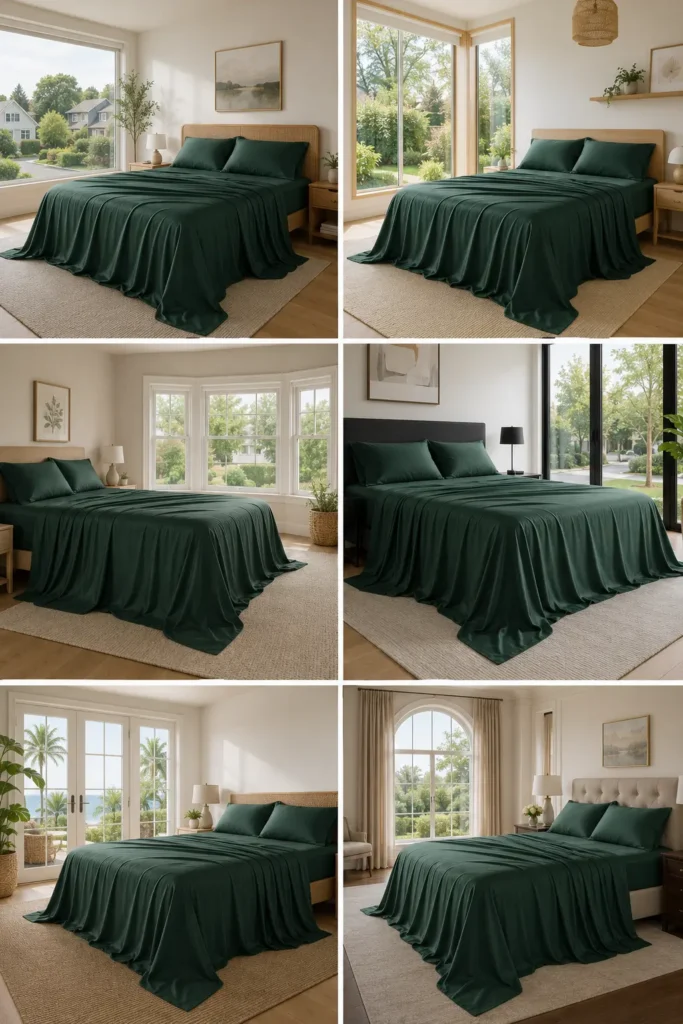
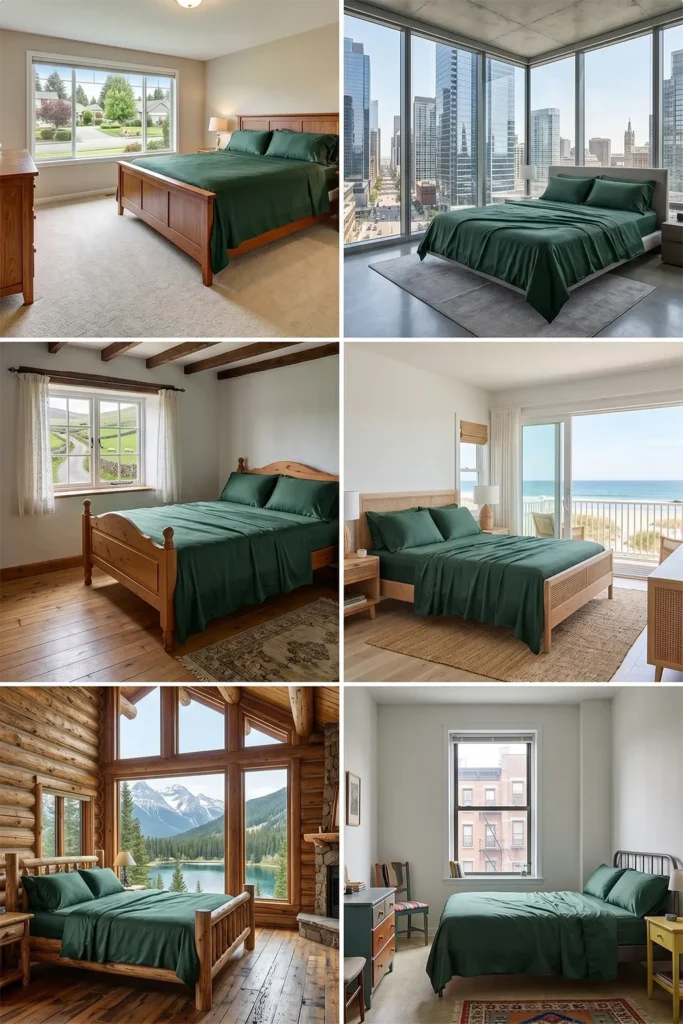
Digitally Modified Images.
Texture and color may vary from the actual product.
What makes it different
It is the practical silky-cooling pick. Olive + Crate is the premium step up, and Bambaw is the more specific pure-bamboo option, but Bedsure is the one I would hand to most hot sleepers first. It gives you the silky drape and cool-touch feel without a boutique price or a fussy reputation.
- Silky, smooth feel that suits hot sleepers who dislike crisp cotton
- Cool to the touch the moment you get into bed
- Strong everyday value for a cooling sheet
- Drapes softly over the body instead of sitting stiff
- A clear step up from dense basic microfiber for warm sleepers
- OEKO-TEX certified, with a deep, consistent review history
- 16-inch deep pockets fit most mattresses
- Not crisp, matte, or structured like cotton percale
- Can feel too slippery for sleepers who like a tightly tucked bed
- Rayon from bamboo needs gentler washing and low dryer heat
- Not raw bamboo fabric, despite the common shorthand
- First-touch coolness is not the same as guaranteed all-night cooling
Bottom line
Choose Bedsure if you want the safest silky-cooling pick: soft, smooth, cool to the touch, and practical for most hot sleepers who wake up warm or a little damp.
Olive + Crate Eucalyptus Tencel Lyocell – Best Premium Cooling
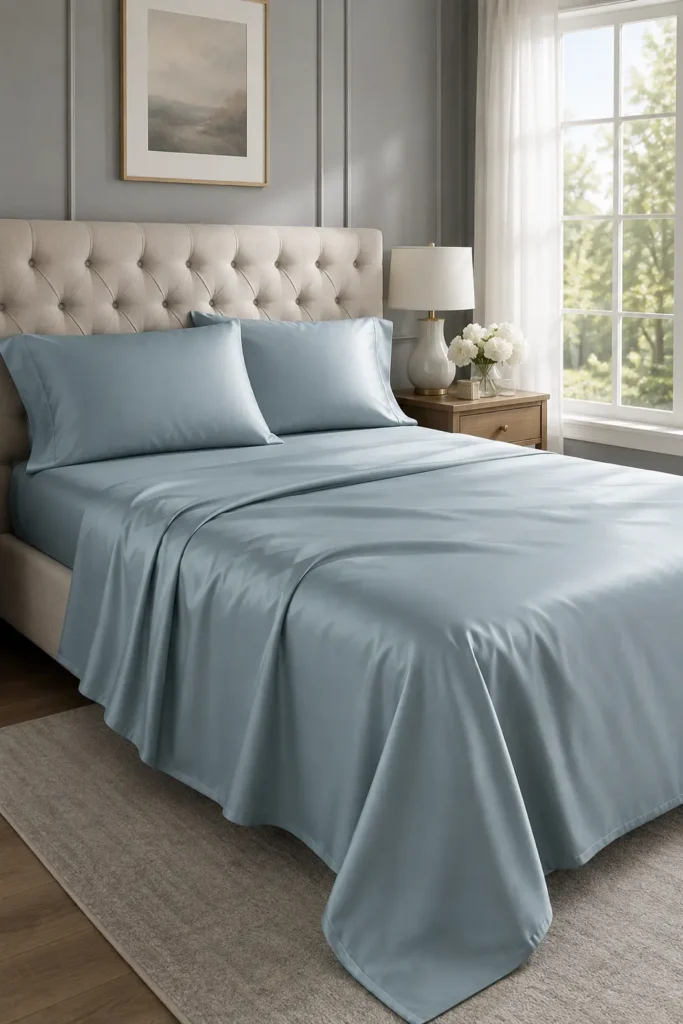
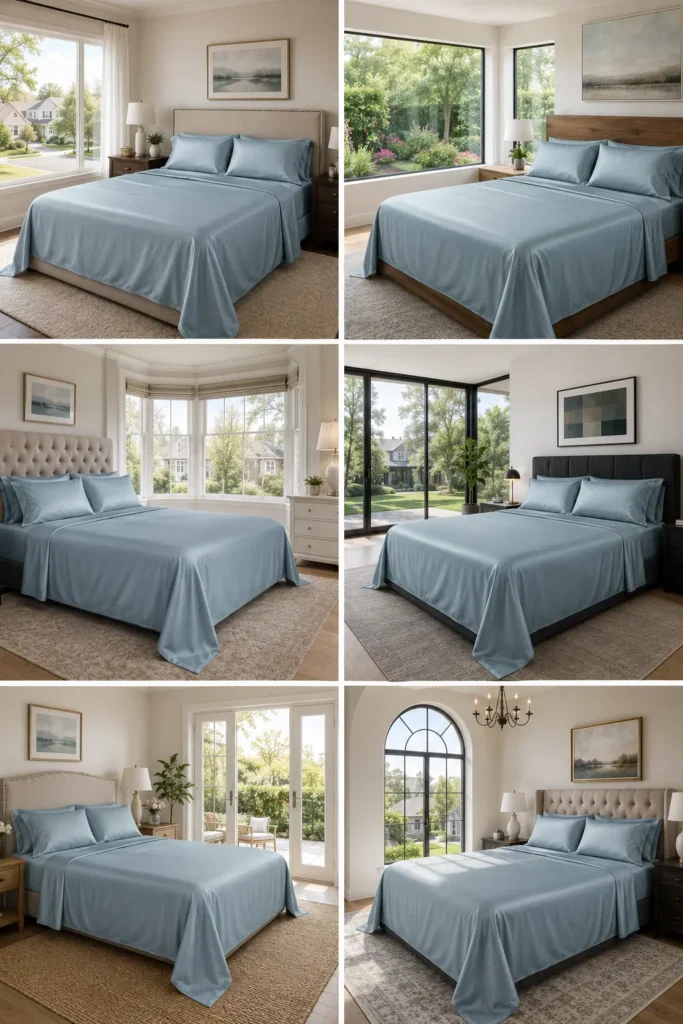
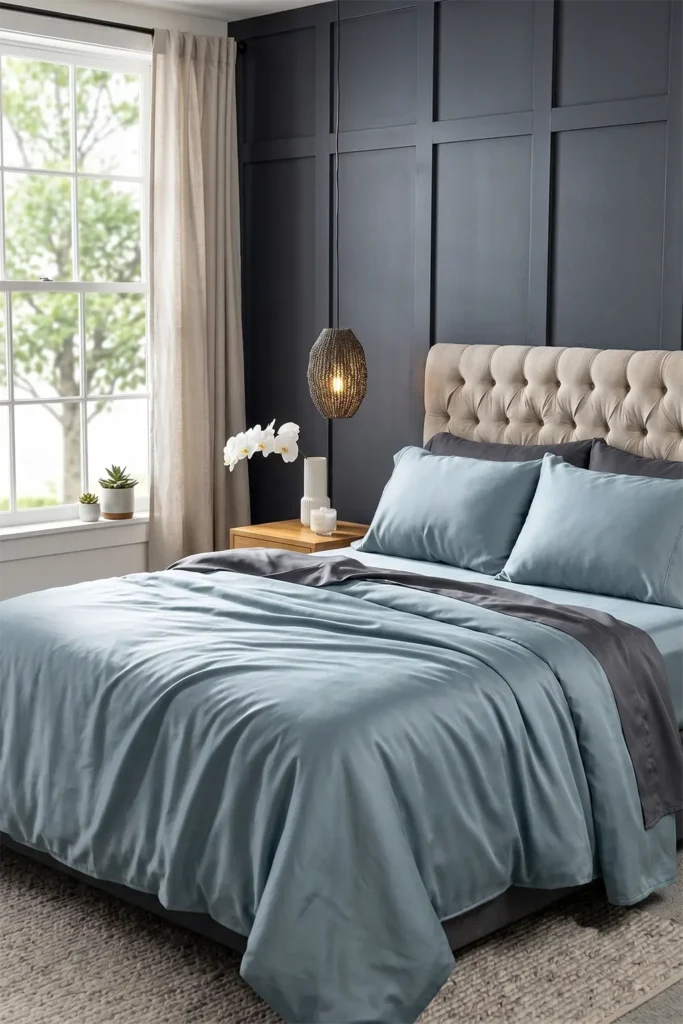
Olive + Crate’s Tencel lyocell set is the upgrade in this group. Lyocell spun from eucalyptus pulp has a smoother, more refined hand than budget bamboo rayon, with a fluid drape and excellent moisture handling. It is the sheet for a primary bedroom where you want cooling comfort that also feels like quiet luxury.
Best for
Readers who want a premium cooling sheet with a smoother, more elevated feel. Ideal for a main bedroom, a gift-worthy upgrade, or anyone who wants cooling with a refined finish.
Digitally Modified Images.
Texture and color may vary from the actual product.

Why selected
Tencel lyocell handles moisture beautifully, feels polished against the skin, and gives this group a genuinely different material rather than a third bamboo sheet. Olive + Crate pairs that fiber with hypoallergenic, OEKO-TEX-certified construction and deep pockets, so the premium feel is backed by real substance, not just a higher price.
What makes it different
This is the most refined sheet in Group 1. It keeps the silky, cool personality while enhancing the hand and drape. It is not the pick for someone who wants a dry, matte, non-slippery bed, but for a sleeper who wants soft cooling with a luxury finish, it is the clear choice.
- Premium, silky hand for hot sleepers who want a smoother surface
- Tencel lyocell handles moisture exceptionally well
- Soft, fluid drape that feels elevated in a primary bedroom
- Hypoallergenic and gentle on sensitive skin
- OEKO-TEX certified, with deep pockets for thicker mattresses
- More gift-worthy than basic budget cooling sets
- A real step up from bamboo-derived rayon options
- The highest price in the silky group
- Not crisp or structured like percale
- Can feel too slick for committed cotton lovers
- Needs careful washing to protect the smooth hand
- Not the pick if your only goal is the lowest price
Bottom line
Choose Olive + Crate when a smooth, luxury feel matters as much as staying cool. It is the premium silky-cooling experience in this lineup.
Bambaw 100% Bamboo Viscose – Best Pure-Bamboo Pick
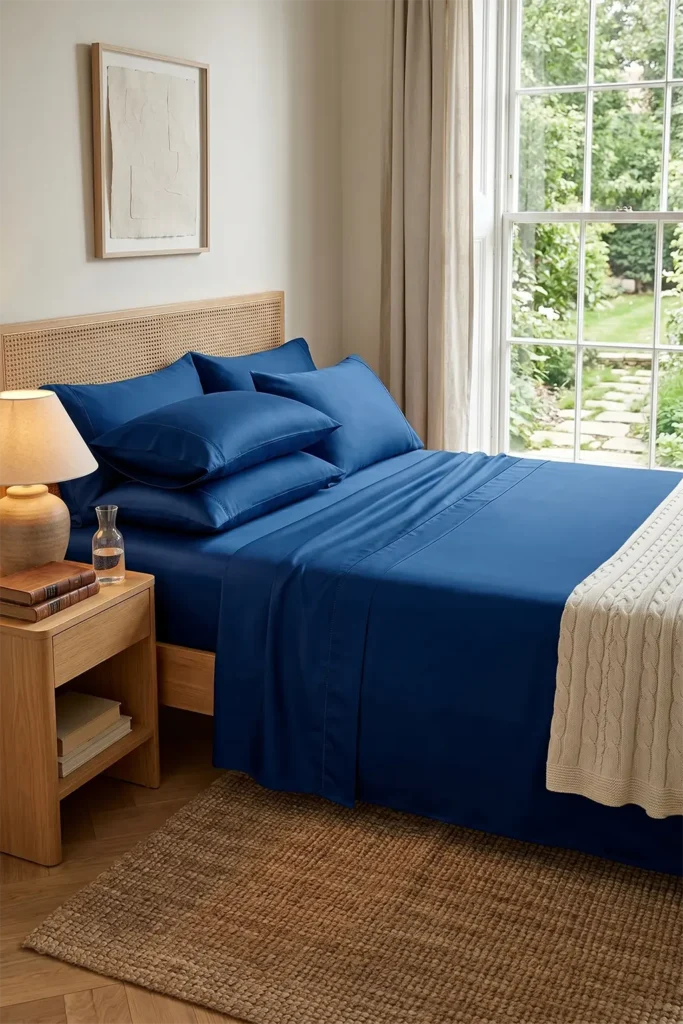
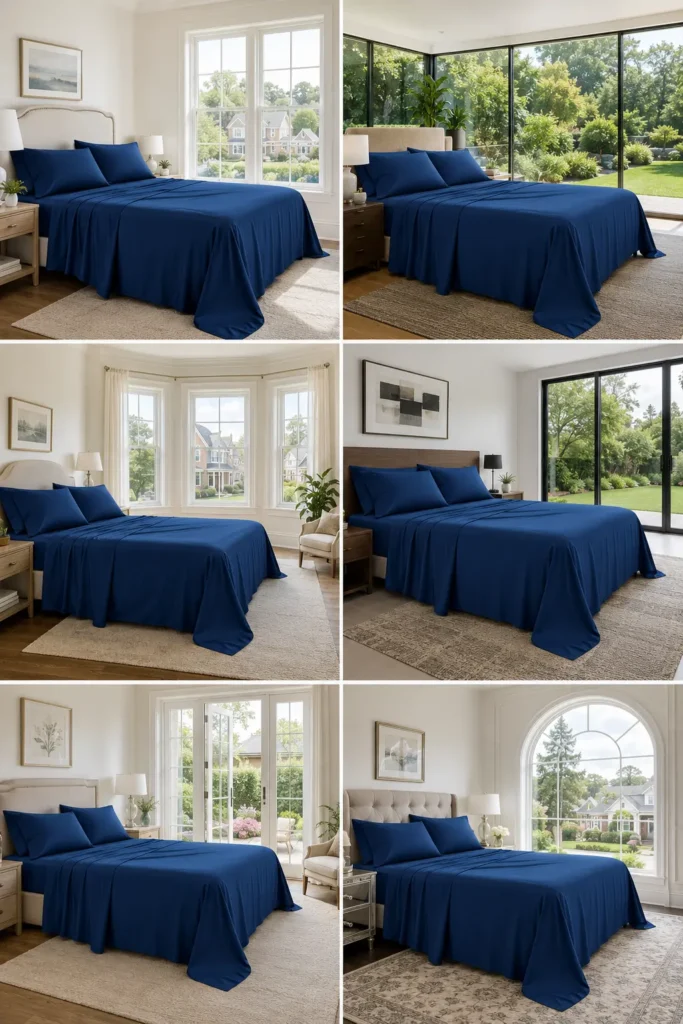
Bambaw is for the shopper who specifically wants a pure bamboo-viscose sheet: that smooth, cool, almost liquid feel, with a fitted sheet built to stay put. It carries FSC and OEKO-TEX signals and finishes the fitted corners with elastic straps, so it grips thick mattresses without riding up.
Best for
Sleepers who want a bamboo-viscose sheet with a soft, drapey feel and a secure fit on a thicker or adjustable bed.
Digitally Modified Images.
Texture and color may vary from the actual product.
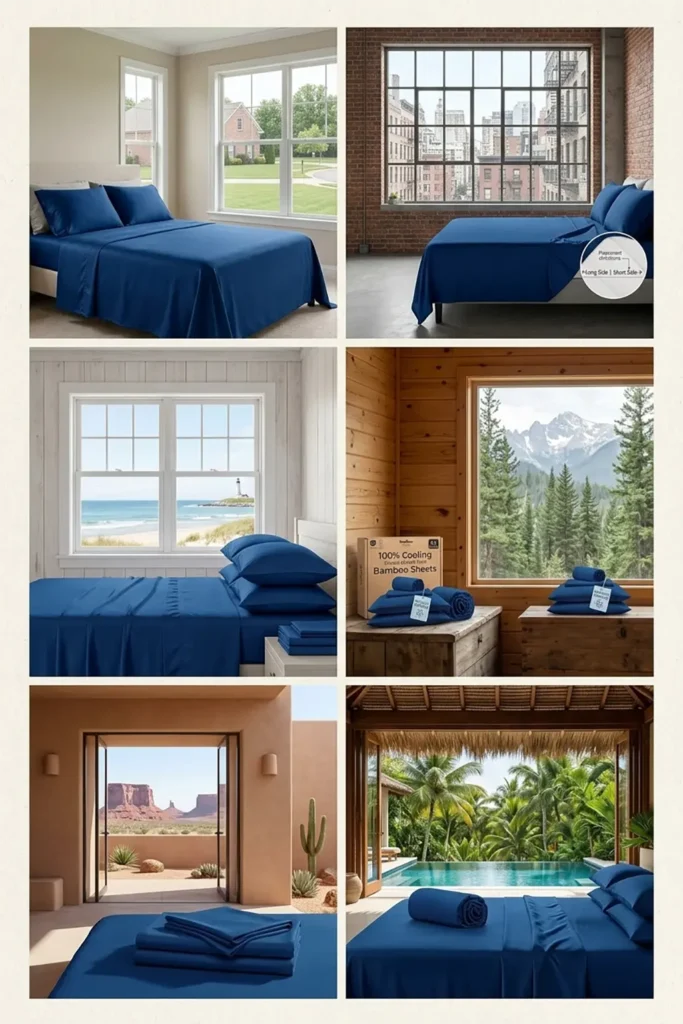
Why selected
It is 100% viscose derived from bamboo with no blend, which gives it the clean, cool, silky character that bamboo fans are after. The FSC and OEKO-TEX claims support the sourcing, and the corner straps and deep pocket answer a real complaint about silky sheets: that they slip. For anyone who loves the bamboo feel but hates a fitted sheet that pops off, this is the practical answer.
What makes it different
Its role is silky bamboo comfort plus a more secure fit. It shares the smooth, cool, drapey family feel of the others, but the strap-cornered fitted sheet sets it apart on thick mattresses, toppers, and adjustable bases. It is not as crisp as cotton or as performance-driven as Coolmax; it is for the sleeper who wants smoothness first and a sheet that stays where it is placed.
- Soft, silky 100% bamboo-viscose feel
- Cool-to-the-touch surface for warm sleepers
- Drapes smoothly rather than sitting stiff
- Corner straps and deep pockets keep it secure on thick beds
- FSC and OEKO-TEX signals support the sourcing
- Gentle on sensitive skin
- A good pure-bamboo alternative if Bedsure is unavailable
- Overlaps with Bedsure in overall feel and use
- Not a crisp or airy percale-style sheet
- Viscose is more care-sensitive than cotton
- Can feel slippery if you like tightly tucked bedding
- It is viscose derived from bamboo, not raw bamboo fiber
Bottom line
Choose Bambaw if you love the bamboo-viscose feel and want a soft, cool sheet with a fitted corner that genuinely stays put.
Group 2: Crisp & Dry Coolers
This group is for sleepers who run hot but do not want a silky sheet. The two cotton percales cool through breathability: crisp, matte, non-slippery, and fresh rather than fluid. The Coolmax set is the deliberate outlier, a synthetic performance sheet whose job is dry, moisture-wicking comfort on a budget, especially for night sweats. It earns its place because some sleepers need sweat management more than a natural-fiber feel.
LANE LINEN Organic Cotton Percale – Best Crisp Cotton Cooling
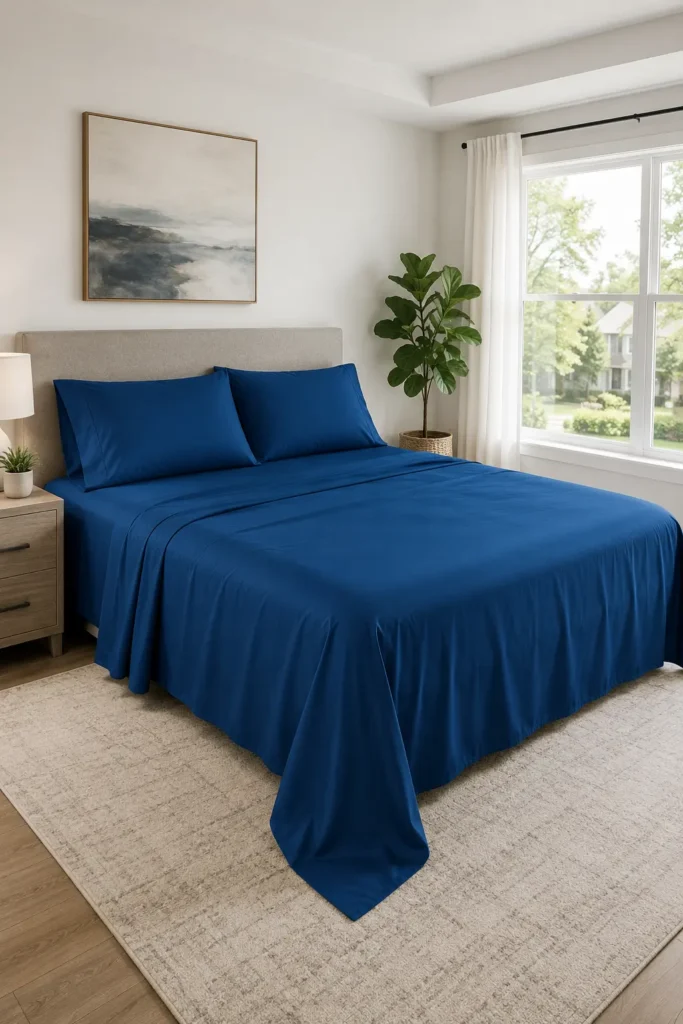
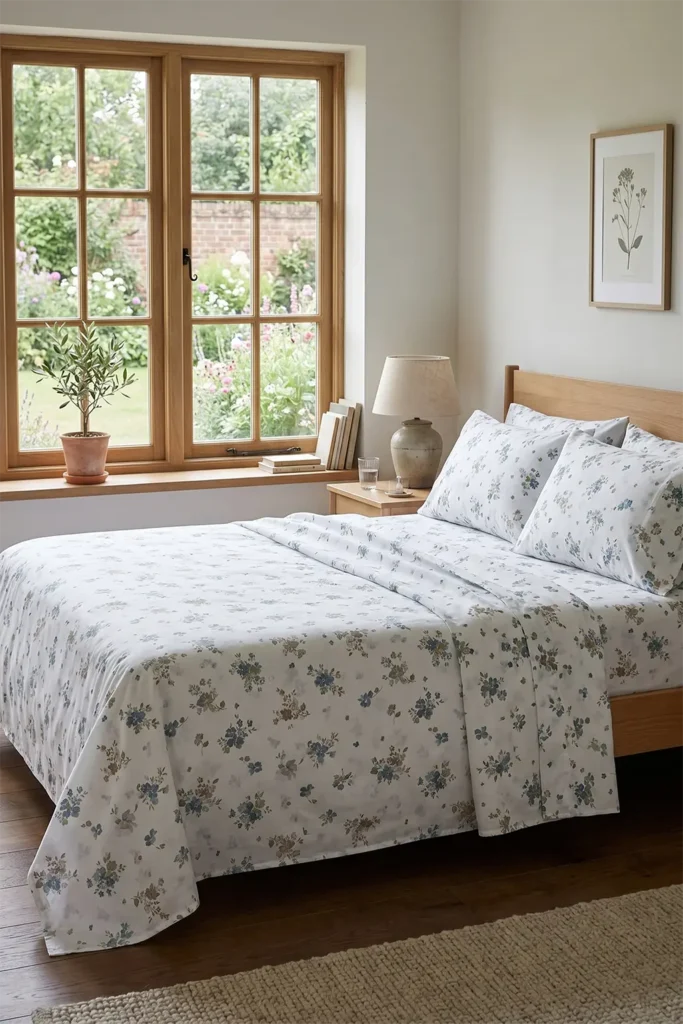
LANE LINEN’s organic cotton percale is the crisp anchor of this group. Where the silky sheets cool by feeling cold on contact, percale cools by breathing: the tight, one-over-one-under weave leaves micro-gaps for body heat to escape, so the bed feels airy and dry instead of clingy. If your idea of a cool bed is a fresh, lightly pressed shirt, this is the feel.
Best for
Hot sleepers who want breathable cotton, a crisp hand, and a non-slippery surface. A strong year-round choice, and especially good in humid bedrooms where a dry feel beats first-touch chill.
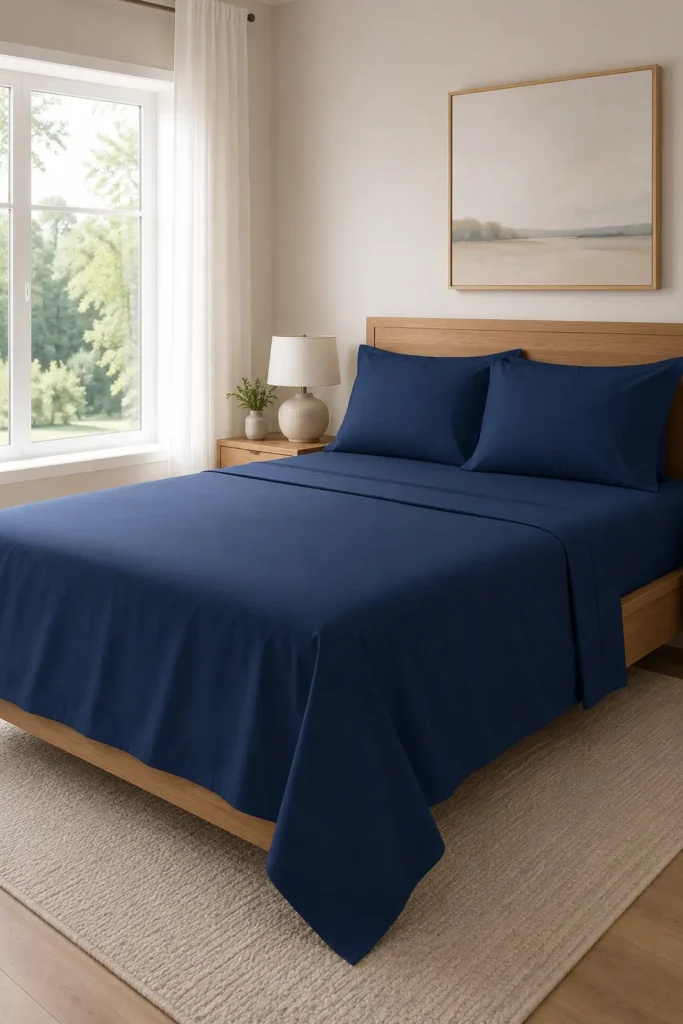
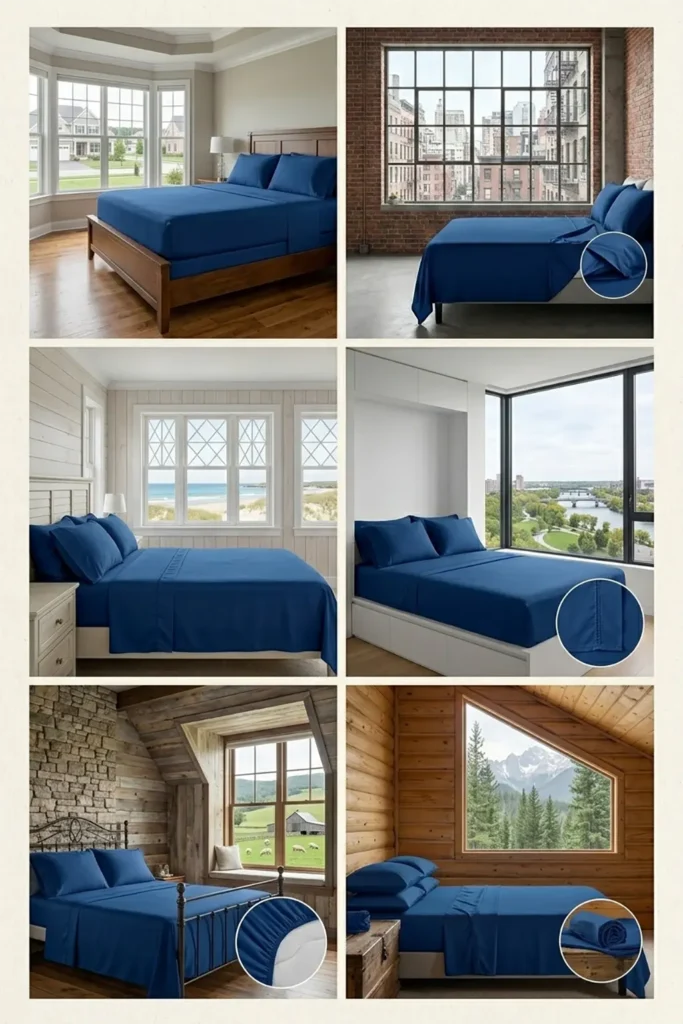
Digitally Modified Images.
Texture and color may vary from the actual product.
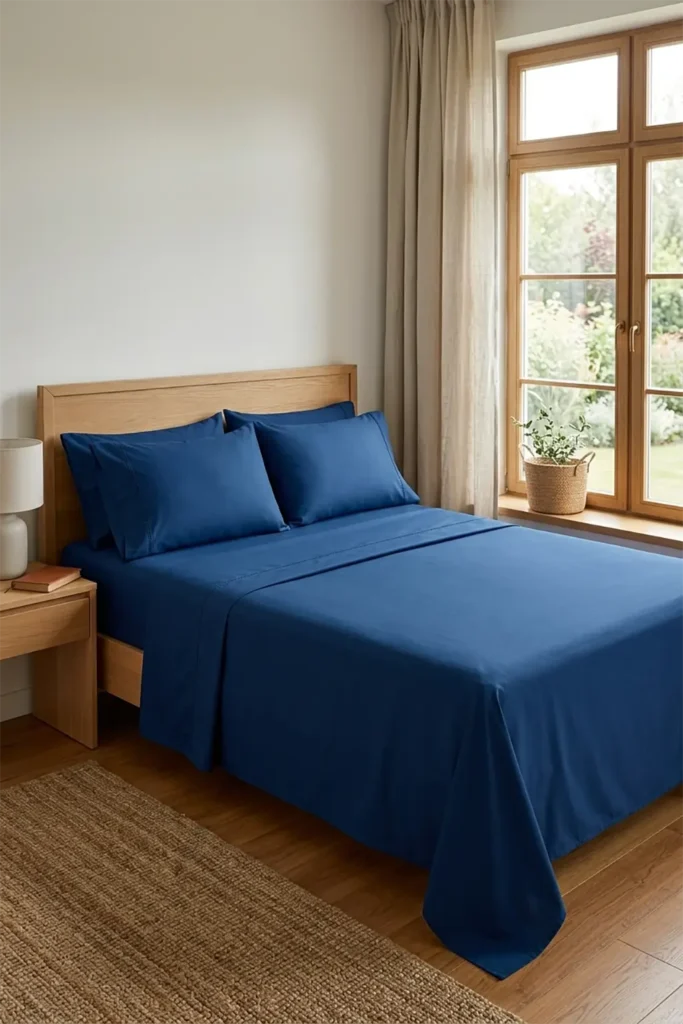
Why selected
It is 100% GOTS-grade organic cotton in a genuine percale weave, woven at a light, breathable weight rather than a heavy, heat-trapping one, and mercerized for a smoother finish. OEKO-TEX certification and a deep review back it up. This is the sheet for the sleeper who does not want a drape at all, who wants the bed to stay fresh, dry, and matte under the body.
What makes it different
It is the true cotton percale in the lineup, and it cools in a completely different way from the silky group: airflow instead of slick contact. It runs lighter and breathes better than dense sateen, and it sidesteps the slippery feel some sleepers can’t stand. In a humid climate, that dry hand matters more than any cool-to-the-touch claim.
- Crisp, breathable, genuinely cotton feel
- Percale weave keeps the sleep surface airy and dry
- Non-slippery, for people who dislike silky sheets
- Light, breathable weight rather than heat-trapping density
- GOTS-grade organic cotton, OEKO-TEX certified
- Natural-fiber alternative to bamboo-derived and synthetic sheets
- Works well in warm, humid bedrooms and year-round
- Wrinkles more than bamboo-derived, Tencel, or microfiber sheets
- Not silky-soft straight out of the package
- Needs a few washes to fully relax and soften
- The crisp texture is not for everyone
- Less cool on first contact than the silky moisture-wickers
Bottom line
Choose LANE LINEN if you want the best crisp, cooling cotton: breathable, dry, natural, and non-slippery, with airflow that suits humid rooms.
RUVANTI Organic Cotton Percale – Best Soft-Finish Percale
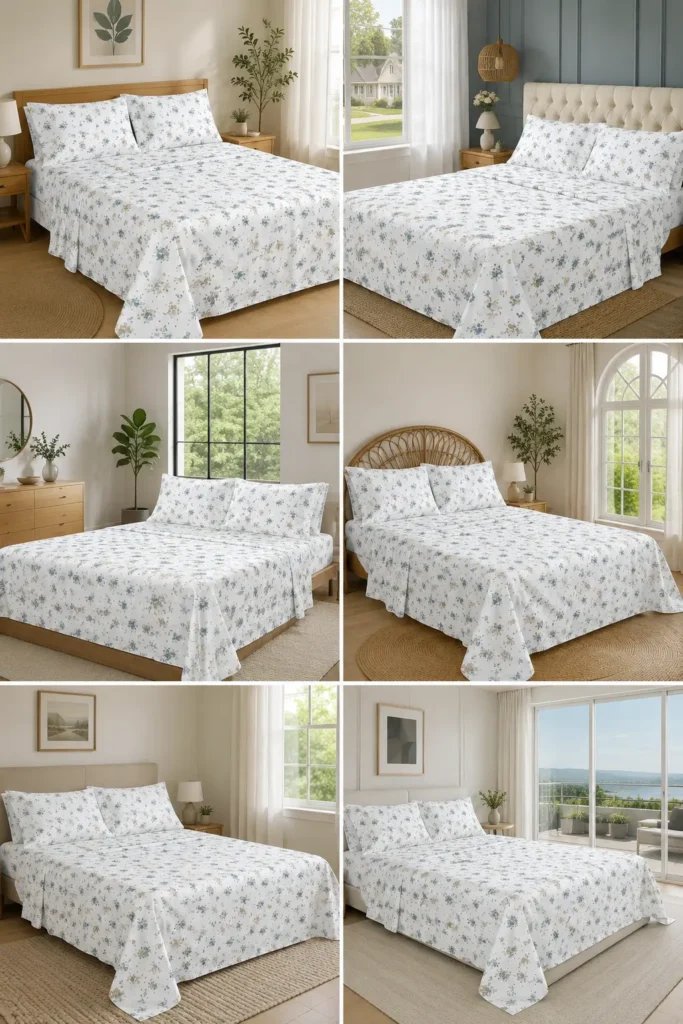
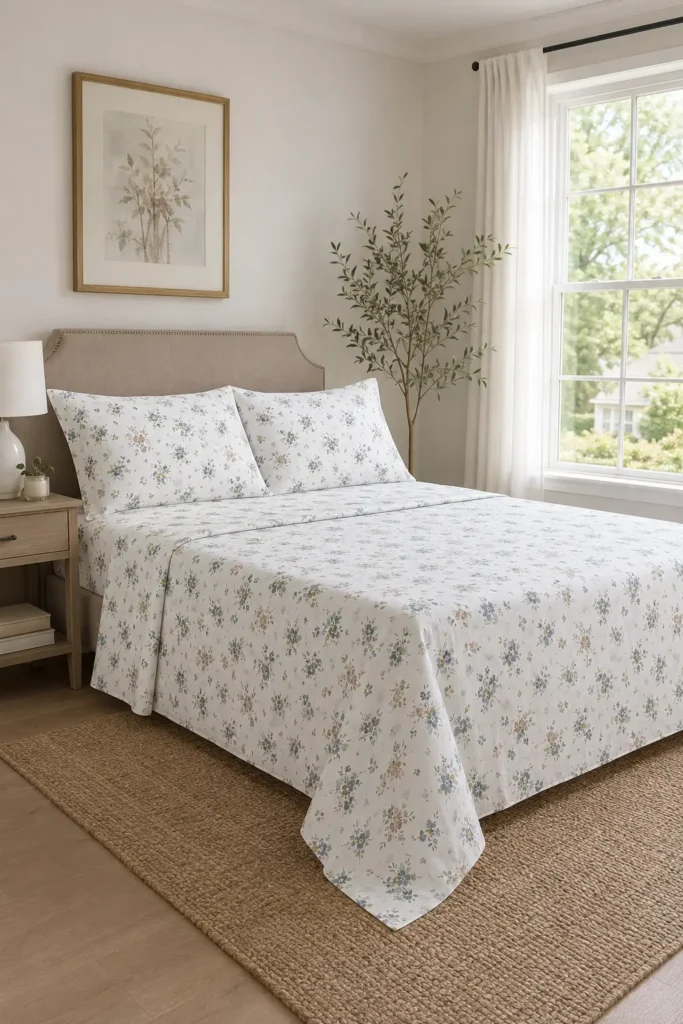
RUVANTI’s organic cotton percale keeps the breathable, non-slippery cotton story but softens the edges. A light peach finish gives it a friendlier hand out of the package, making it an easier on-ramp for sleepers who like the idea of percale but worry it will feel too stiff.
Best for
Readers who want the airflow of cotton percale with a slightly softer finish. A good middle ground for people who like cotton but do not want a sheet that feels sharp or stiff.
Digitally Modified Images.
Texture and color may vary from the actual product.

Why selected
It is GOTS-certified organic cotton in a percale weave with a brushed, peach-finished surface, so you get percale’s airflow with a gentler first feel. It holds up to regular washing, comes with deep pockets, and gives the crisp group a softer personality without crossing over into slippery, silky territory.
What makes it different
It is the most approachable percale. It still breathes and stays dry like LANE LINEN, but it feels friendlier on night one, which suits percale newcomers. It is also a sensible alternative if LANE LINEN is out of stock or you prefer a different color.
- Breathable cotton percale construction
- Softer, peach-finished hand than many crisp percales
- Non-slippery, good for sleepers who dislike silky sheets
- GOTS-certified organic cotton
- More forgiving first feel for percale newcomers
- Deep pockets and durable everyday construction
- A natural alternate to LANE LINEN
- Still wrinkles like cotton
- Less silky than bamboo-derived rayon or Tencel
- Less cool on first contact than the silky group
- Overlaps with LANE LINEN in role and feel
- Not built for heavy sweat-wicking like a performance fabric
Bottom line
Choose RUVANTI if you want breathable cotton percale with a softer, more relaxed feel than a sharply crisp sheet.
Degrees of Comfort Coolmax – Best for Night Sweats on a Budget
The Degrees of Comfort set is the one engineered pick here, and I am keeping the framing honest: it is a synthetic performance sheet, not a natural-fiber one. Its Coolmax fibers are shaped to spread sweat across the fabric and dry it fast, which is exactly what a damp sleeper on a budget needs, even if it does not breathe like cotton.
Best for
Night-sweat sleepers who want moisture-wicking performance at a low price, and anyone who cares more about waking up dry than about owning a natural-fiber sheet.
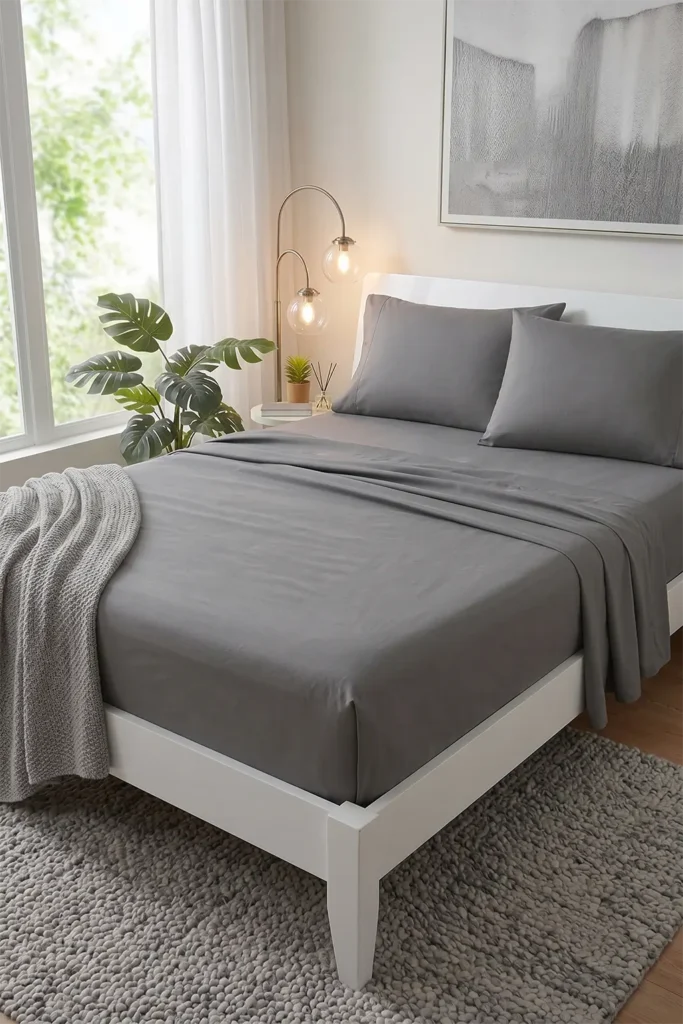
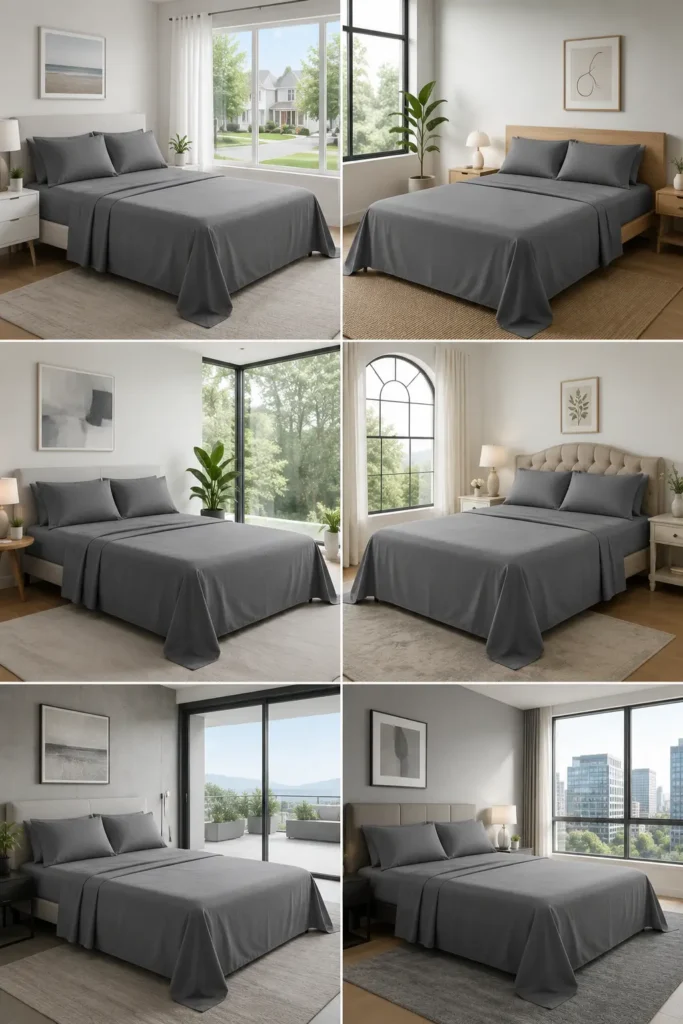
Digitally Modified Images.
Texture and color may vary from the actual product.
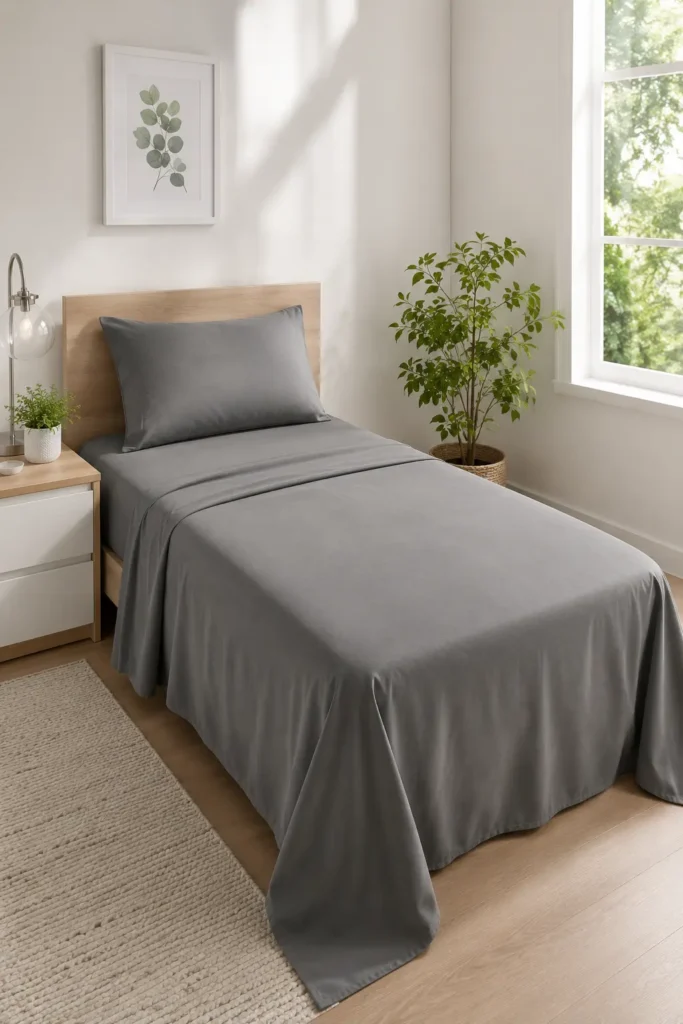
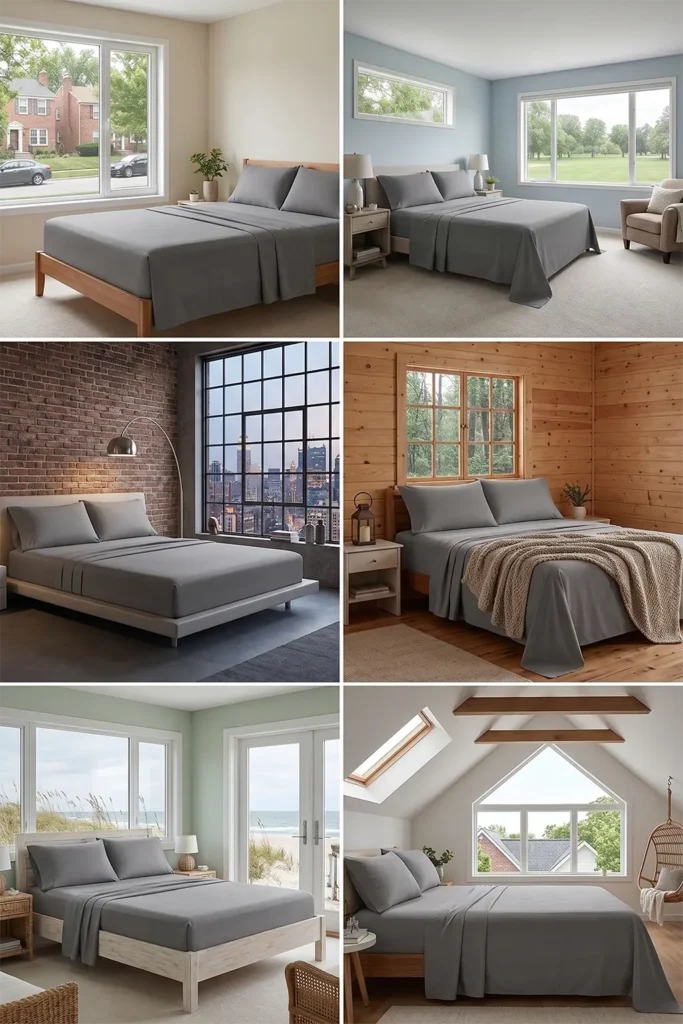
Why selected
Coolmax is built around sweat movement and quick drying rather than airflow or silky softness, which makes it the most direct answer to heavy night sweats in this guide. It is OEKO-TEX certified, easy to care for, and priced well below premium Tencel or bamboo. For a reader who wakes up damp and wants a cheaper fix than lyocell, it does the one job that matters.
What makes it different
It is the practical, performance-focused outlier. It is not trying to be organic cotton, linen, or luxury lyocell; it is a synthetic sheet for sweat management, and that honesty is the point. It is not the most natural or the most breathable pick. It is the budget night-sweat pick.
- Coolmax fibers actively wick and spread sweat to dry faster
- One of the most direct answers to heavy night sweats here
- Budget-friendly next to premium Tencel or bamboo
- Lower-maintenance than delicate cooling fibers
- Soft hand without the crispness of cotton percale
- OEKO-TEX certified with a secure, deep-pocket fit
- Adds a true performance option to the lineup
- Synthetic performance fabric, not natural breathability
- Does not feel as airy as cotton percale or linen
- Less premium in look and hand than Tencel or bamboo
- Not for shoppers avoiding polyester or synthetic blends
- Needs low dryer heat to protect the finish and reduce wear
Bottom line
Choose Degrees of Comfort Coolmax for budget-friendly, sweat-wicking performance. It is the practical pick for night sweats, not the natural-fiber luxury one.
Why Two Groups
Cooling sheets cool and feel in two different ways, so ranking them as if there were a single universal winner would only mislead you.
Group 1 cools through a silky, moisture-friendly surface: smooth, drapey, and best for sleepers who wake up damp or want cool-to-the-touch comfort.
Group 2 cools through airflow or performance wicking: crisper, matte, and drier, for sleepers who want a fresh, non-slippery bed.
The field of options also pushed this split. Most of the strongest cooling sheets cluster around bamboo-derived rayon, bamboo viscose, and Tencel lyocell, so rather than review three near-identical silky sets, the lineup keeps the three most distinct wickers and balances them with two cotton percales and one performance pick. Linen and silk are not missing because they are weak; they serve more specific cases, which is why they sit in the alternatives below.
Side-by-Side Comparison
| Pick | Group | Material | Weave / Finish | Feel | Cooling Style | Best For | Price Tier | Main Caution |
|---|---|---|---|---|---|---|---|---|
| Bedsure Rayon from Bamboo | Silky Moisture-Wickers | Rayon derived from bamboo | Smooth woven finish | Silky, soft, drapey | Wicking / cool-to-touch | Most hot sleepers who want softness | $$ | Not crisp; can feel slippery |
| Olive + Crate Eucalyptus Tencel Lyocell | Silky Moisture-Wickers | Tencel lyocell | Smooth lyocell finish | Silky, premium, fluid | Wicking / moisture-friendly | Luxury cooling | $$$ | Higher price |
| Bambaw 100% Bamboo Viscose | Silky Moisture-Wickers | Viscose derived from bamboo | Smooth woven finish | Soft, drapey, silky | Wicking / cool-to-touch | Secure-fit bamboo shoppers | $$ | Care-sensitive |
| LANE LINEN Organic Cotton Percale | Crisp & Dry Coolers | Organic cotton | Percale | Crisp, matte, breathable | Airflow | Crisp cotton lovers, humid rooms | $$ | Wrinkles |
| RUVANTI Organic Cotton Percale | Crisp & Dry Coolers | Organic cotton | Percale (peach finish) | Crisp but softer | Airflow | Softer percale feel | $$ | Overlaps with LANE LINEN |
| Degrees of Comfort Coolmax | Crisp & Dry Coolers | Coolmax performance fabric | Moisture-wicking finish | Soft, dry, practical | Wicking / quick-dry | Night sweats on a budget | $ | Synthetic, not natural |
Awards at a Glance
- Best Overall Cooling — Bedsure Rayon from Bamboo
- Best Premium Cooling — Olive + Crate Eucalyptus Tencel Lyocell
- Best Pure-Bamboo Pick — Bambaw 100% Bamboo Viscose
- Best Crisp Cotton Cooling — LANE LINEN Organic Cotton Percale
- Best Soft-Finish Percale — RUVANTI Organic Cotton Percale
- Best for Night Sweats on a Budget — Degrees of Comfort Coolmax
How to Choose Between the Two Groups
Start with how you overheat, then pick within the group. If you wake up damp or love a silky bed, go to Group 1: Bedsure is the safe default, Olive + Crate is the premium upgrade, and Bambaw is the secure-fit bamboo option. If you run hot but stay dry, or you can’t stand slippery sheets, go to Group 2: LANE LINEN is the crisp cotton pick, RUVANTI is the softer percale, and Coolmax is the budget night-sweat answer.
A few specifics worth keeping in mind: in a humid climate, lean toward percale, where a dry hand beats first-touch chill. For heavy night sweats with money to spend, the Tencel set wicks beautifully; on a budget, Coolmax does the same job for less. And if a partner steals the covers, a strap-cornered fitted sheet like Bambaw’s, or a grippier percale, will fight the slide better than a loose silky set.
Do Cooling Sheets Work in Winter?
Yes, because good cooling is thermoregulation, not refrigeration. A cooling sheet should not feel like ice all night. It should keep you from overheating when the rest of the bed gets warm, and in winter, the rest of the bed gets very warm: heavier duvets, heated rooms, flannel pajamas, and memory-foam mattresses all trap heat.
The trick is layering. Put a cooling base layer next to your skin, then add a warm layer over it. Cotton percale, Tencel, or bamboo-derived sheets underneath, with a blanket, quilt, or duvet on top, let you stay warm without waking up clammy. Cold sleepers may find cooling sheets too light in deep winter, but for hot sleepers, mismatched couples, and anyone who overheats under a heavy comforter, they make winter sleep steadier.
When to Look Elsewhere
These six cover a wide range, but a few sleepers are better served outside the lineup.
For humid or tropical climates, look at French flax linen. Linen has the best airflow of any natural fiber, with a textured, dry, relaxed hand rather than a silky one. If I were adding a seventh pick, Linen would be first in line.
For skin and hair, plus a cool touch, look at mulberry silk. It is smooth, gentle, and temperature-regulating for some sleepers, but it is expensive, delicate, and high-maintenance next to cotton or bamboo.
For a genuine ice-cold first touch, look at an engineered Qmax cold-tech sheet. Qmax measures cool-to-the-touch contact, and some specialty sheets are built around that instant chill. Just remember the cold fades as the fabric warms to your body, so verify a strong cooling claim rather than trusting the word alone.
What Else Affects How Cool a Sheet Sleeps
A few details beyond fiber and weave quietly shape the result. Weight and GSM: lighter sheets usually sleep cooler, so for a hot sleeper, a light fabric often beats a thick, “premium” one. Finish: smooth finishes feel cooler on first touch, brushed finishes feel cozy but hold warmth, and crisp finishes feel drier and airier.
Pocket depth and secure corners: a loose-fitted sheet bunches and creates hot spots, so deep pockets, strong elastic, and corner straps matter more than people expect on thick mattresses, toppers, and adjustable beds. Certifications: OEKO-TEX signals textile safety, GOTS confirms organic cotton, and FSC supports wood- or bamboo-derived sourcing when it is clearly verified. And care, which is the big one, gets its own section below.
Care and Maintenance
Cooling sheets sit against your skin every night, so a little care protects the very thing that makes them cool.
Wash in cold water when you can; it protects the fibers, limits shrinkage, and preserves the hand. Use a gentle cycle for bamboo-derived rayon, bamboo viscose, and Tencel lyocell, which feel beautiful but are not as carefree as basic polyester. Avoid high dryer heat across the board, since it damages delicate cooling fibers and encourages pilling in synthetics; tumble low or line-dry. Skip heavy fabric softener, which coats fibers and dulls moisture-wicking properties, and it matters most for bamboo, Tencel, and performance fabrics. Pull cotton percale out of the dryer promptly and smooth it onto the bed to limit wrinkles. And if you can, rotate two or three sets so each one rests between washes and lasts longer.
Frequently Asked Questions
Is the material or weave more important for cooling?
Material, because it decides breathability, moisture handling, and heat retention. Weave comes next, since it sets airflow and surface feel. For hot sleepers, cotton percale, linen, bamboo-derived rayon or viscose, Tencel lyocell, and performance fabrics are better starting points than dense microfiber or thick sateen.
Do I want wicking or breathable sheets?
Ask whether you wake up damp or just hot. Damp means you want moisture-wicking fabric, such as bamboo-derived rayon, bamboo viscose, Tencel lyocell, or a Coolmax-style fabric. Hot-but-dry means you want breathable fabrics with good airflow, like cotton percale or linen.
Are “bamboo” sheets actually made of bamboo, and are they cooling?
Most soft “bamboo” sheets are not raw bamboo; they are rayon or viscose derived from bamboo. They can still feel smooth, cool to the touch, and moisture-friendly, so they cool well if you like a silky, drapey bed. If you want crisp airflow instead, cotton percale or linen is the better route.
Percale vs. sateen: which is better for hot sleepers?
Percale, usually. Its crisp, matte, one-over-one-under weave breathes better and feels drier. Sateen is smoother and more lustrous, but sleeps a little warmer because the surface is denser. Sateen is not wrong for a hot sleeper, but percale is the safer cooling weave.
Do cooling sheets work in winter?
Yes, especially for hot sleepers. They do not make you cold; they keep you from overheating under a heavy duvet or in a heated room. Use a cooling sheet as the base layer and add warmth on top with a blanket or duvet.
What is best for heavy night sweats?
Prioritize moisture management: Tencel lyocell, bamboo-derived rayon or viscose, linen, and Coolmax-style performance fabrics. On a budget, the Degrees of Comfort Coolmax set is the most direct sweat-wicker here; for a premium feel, the Olive + Crate Tencel set is the upgrade.
Is microfiber bad for hot sleepers, and how is Coolmax different?
Basic microfiber usually traps heat, so it is not a first choice for hot sleepers; soft is not the same as breathable. Coolmax is still synthetic, but it is engineered to move and evaporate sweat, so its purpose is sweat management rather than plush softness.
Does the cool-to-the-touch feeling last all night?
No. That instant chill fades as the fabric warms to body temperature. All-night cooling depends on breathability, moisture-wicking, quick drying, sheet weight, room airflow, and the rest of your bedding.
Final Recommendation
The best cooling sheet depends on how your body overheats. If you wake up damp, start with Group 1: Silky Moisture-Wickers — Bedsure as the default, Olive + Crate as the premium upgrade, and Bambaw as the secure-fit bamboo option. If you run hot but stay dry, start with Group 2: Crisp & Dry Coolers — LANE LINEN for crisp cotton, RUVANTI for a softer percale, and Coolmax for budget night-sweat performance. For the edge cases, look to linen in a humid climate and silk for skin-and-hair luxury. The best cooling sheet is not the one with the loudest claim. It is the one that best fits how your body overheats.

