
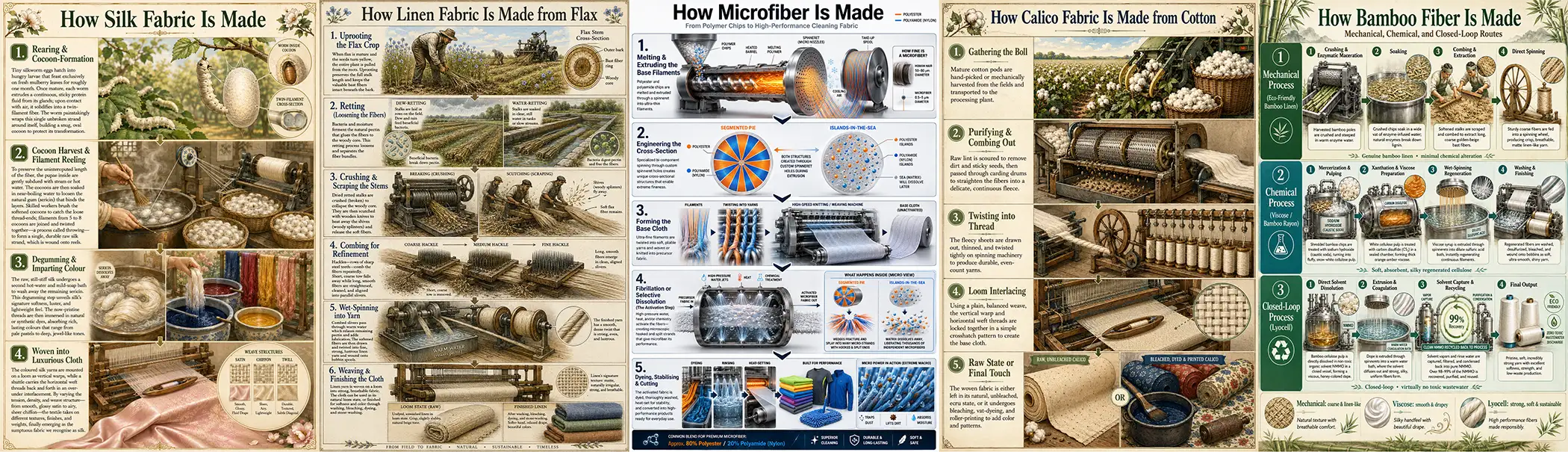
Cotton vs Bamboo vs Linen vs Silk vs Microfiber Sheets: Which Material Is Best for Your Sleep Style?
There is no single “best” sheet material. There is only the right one for the way you sleep.
The sheets that keep a hot sleeper cool can feel too crisp for someone chasing silky softness. The fabric that drapes like a dream may be too fragile for a busy family. And the set that washes and dries without a wrinkle is often the one that traps the most heat. So, before you compare cotton, bamboo, linen, silk, and microfiber, it helps to know what you are asking each fabric to do.
That is how this guide is built. Instead of five mini-encyclopedias stacked on top of each other, I compare all five materials one property at a time — breathability, softness, moisture, friction, durability, wrinkles, allergy comfort, care, and value — and name a clear winner in each. Jump to whatever matters most to you.
One quick note before we start. When I say microfiber, I am almost always talking about very finely woven polyester. Microfiber is the common sheet form of polyester bedding, so if you searched for “polyester sheets,” you are in the right place.
I should also tell you where I am coming from, because it shapes how I read a fabric. I grew up around Dhaka’s handloom culture, where Jamdani and Nakshi Kantha — both rooted in cotton — were not museum pieces but everyday cloth. When you grow up watching weavers work, you learn to judge a textile by touch, drape, weight, airflow, and how it behaves after a dozen washes, not by the number printed on the package. That is the lens I bring to bedding.
If you are brand new to sheet shopping and want the full framework on weaves, finishes, and care, start with my Complete Guide to Choosing Comfortable Bed Sheets: Materials, Weaves, Cooling, Softness & Care. This article is narrower and more head-to-head. Let’s get into it.
Meet the Five Materials: A 30-Second Primer
Cotton
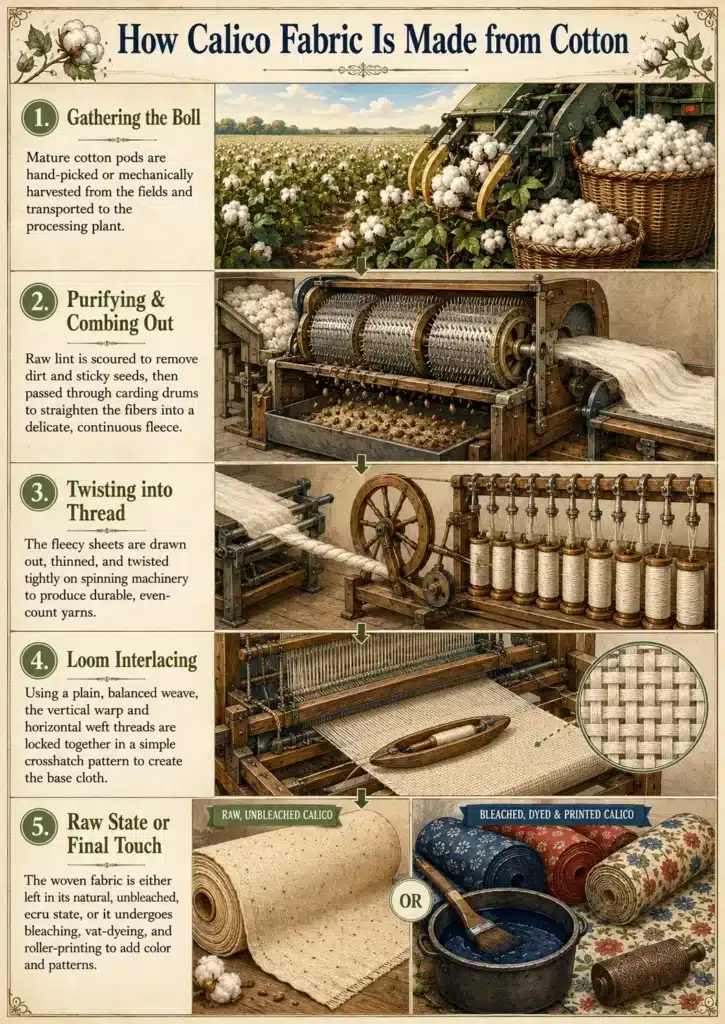
Cotton is the natural, breathable workhorse of bedding, and the most versatile fabric on this list. Its quality hinges on staple length: long-staple cotton (Egyptian, Pima, Supima) spins into smoother, stronger yarns that resist pilling and soften with age, while short-staple cotton feels coarser and wears out sooner. Cotton also shifts dramatically by weave — percale feels crisp and cool, sateen feels smoother and a touch warmer.
Bamboo
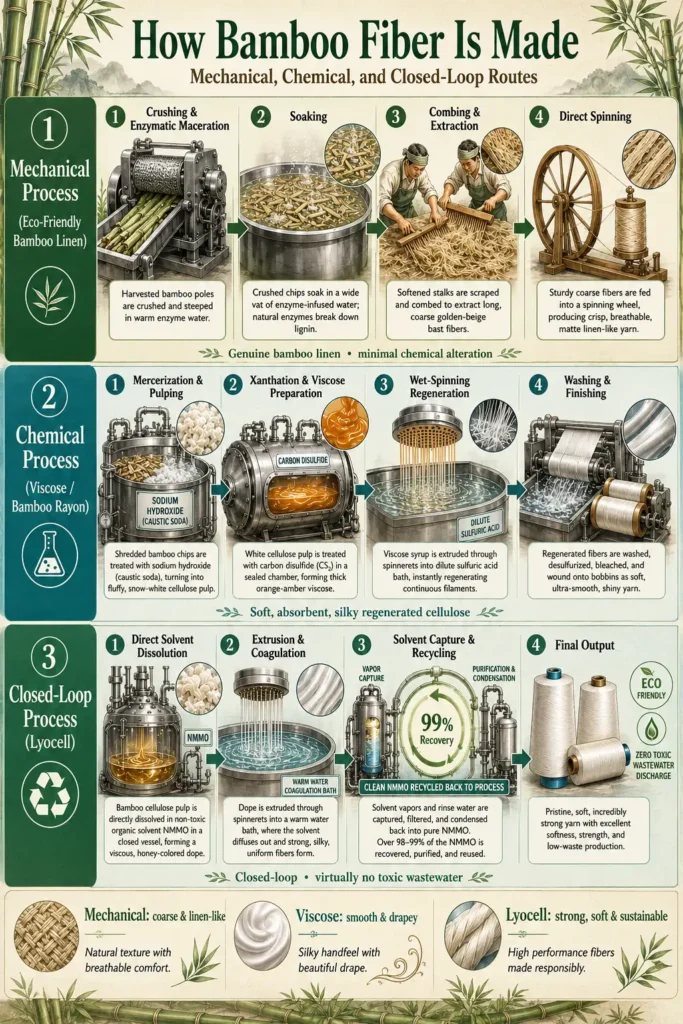
Here is the thing most labels won’t tell you plainly: the bamboo in almost every “bamboo sheet” is not a natural woven fiber the way cotton is. It is a regenerated cellulose fiber — usually bamboo viscose/rayon, sometimes the cleaner bamboo lyocell — made by chemically dissolving bamboo pulp and reforming it into thread. That does not make it bad; good bamboo viscose feels gloriously soft and drapey. It just means you should treat words like “natural bamboo” and “antibacterial bamboo” with caution unless the brand explains its fiber and process.
Linen
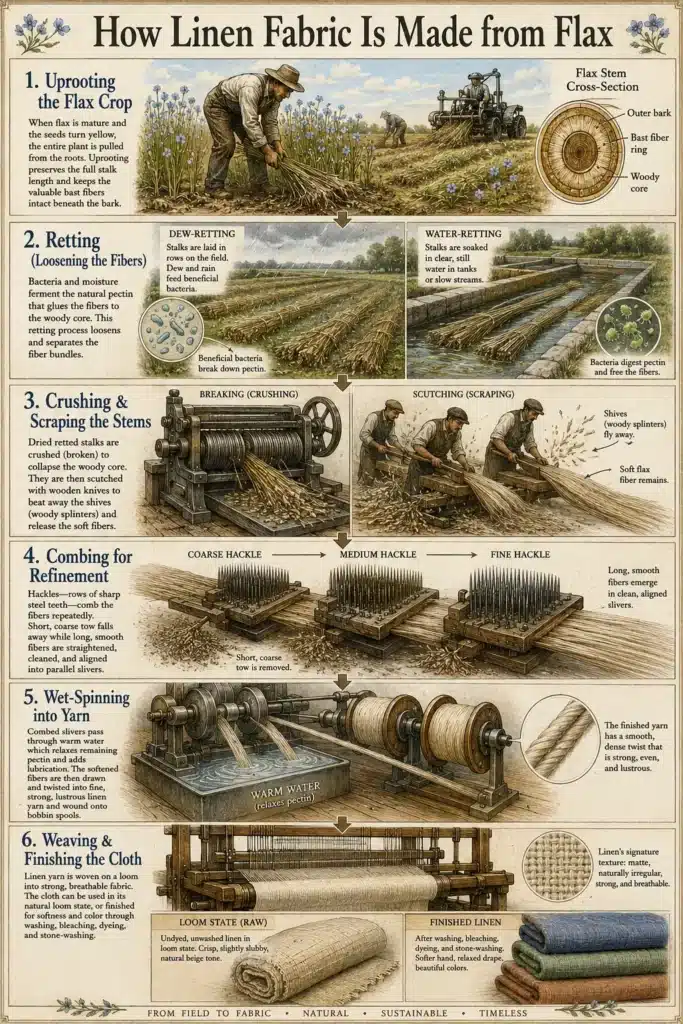
Linen comes from the flax plant, and it is nature’s performance fabric. It is exceptionally breathable, it moves moisture well, and it is durable enough to outlast everything else here. Its hand starts out textured and a little crisp, then softens beautifully with every wash. It wrinkles freely — and for many people, that relaxed, lived-in look is exactly the point.
Silk
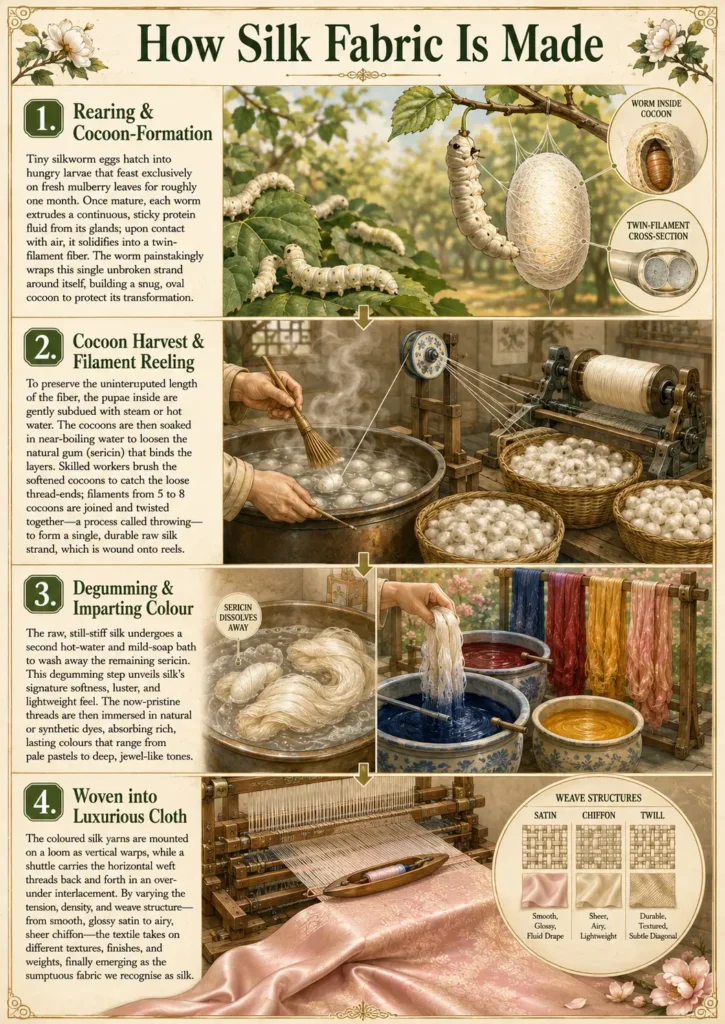
Silk is a natural protein fiber, prized for its smooth, low-friction surface and fluid drape. It is measured not by thread count but by momme — a weight measure in which higher numbers indicate denser, more substantial silk. In bedding, silk’s biggest practical payoff shows up on the pillowcase, where your skin and hair spend the most time.
Microfiber
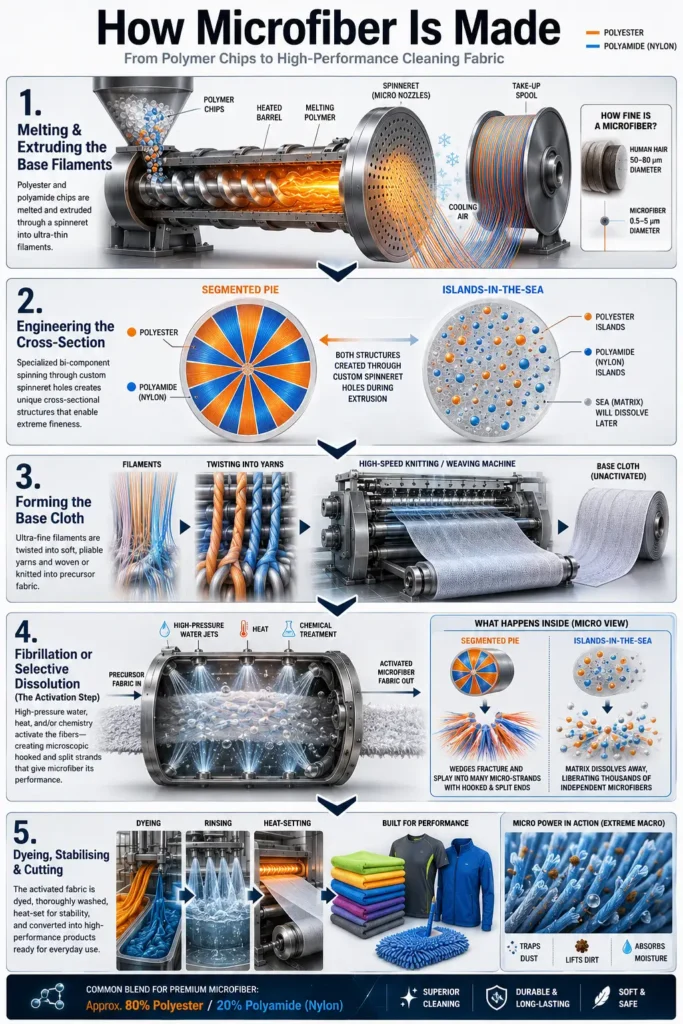
Microfiber is an ultra-fine synthetic fiber, almost always polyester. It is engineered for softness, affordability, and wrinkle resistance, which makes it a favorite for guest rooms, dorms, kids’ beds, and budget sets. It is produced in a factory rather than grown in a field, and that trade-off shows up where it counts most: breathability.
At a Glance: How the Five Compare
| Material | Best for | Feel | Main drawback |
|---|---|---|---|
| Cotton | Year-round value | Crisp or smooth | Quality varies widely |
| Bamboo | Silky softness | Buttery, cool | Usually viscose, not “natural” |
| Linen | Hot sleepers | Airy, textured | Wrinkles; costs more |
| Silk | Skin and hair | Fluid, smooth | Delicate; expensive |
| Microfiber | Budget, easy care | Soft, slick | Traps heat |
Breathability & Temperature Regulation
Winner: Linen
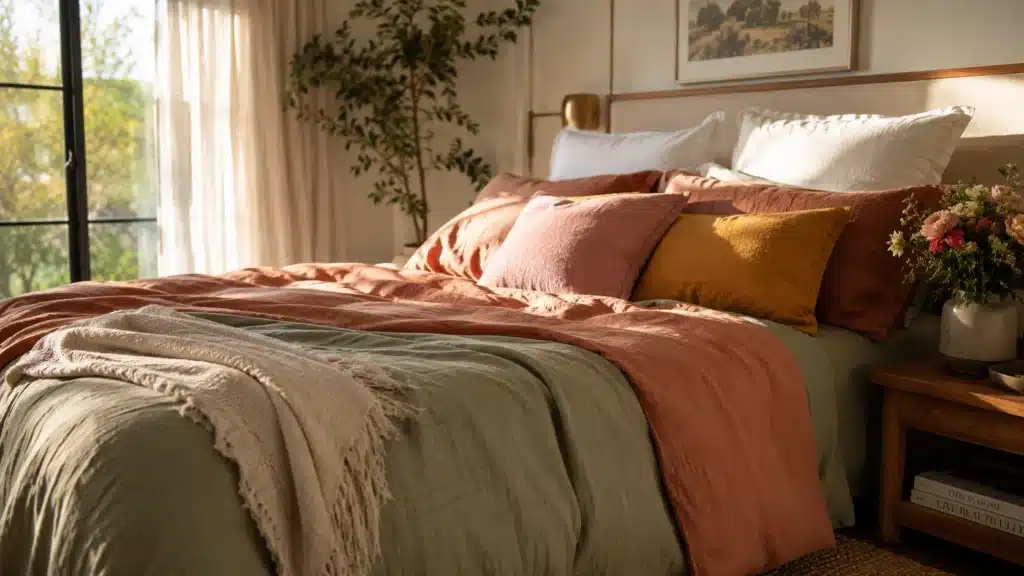
If you sleep hot, the fiber matters more than almost any other choice you make. Linen wins because its loose, airy flax structure lets heat and moisture escape instead of pooling against your body. It feels dry and breezy, and it shines in exactly the warm, humid conditions that make other fabrics feel suffocating.
Cotton is the close runner-up, especially in a percale weave. Percale’s simpler, looser structure breathes far better than dense cotton sateen, which is why it gives that cool, crisp hotel feel. Bamboo lyocell and viscose can also feel cool to the touch, though it depends heavily on weave and weight — a light bamboo lyocell breathes well, while a heavy bamboo sateen-style sheet can feel drapey but warm. Silk insulates without overheating but is not actively cooling, and it can feel warm in high humidity. Microfiber comes last: polyester’s tight synthetic weave holds body heat and lacks the natural airflow of plant fibers.
This is the clearest example of why weave matters as much as fiber — a cotton percale outsleeps a cotton sateen on a hot night, even though both are cotton.
Bottom line: Wake up hot? Start with linen. Want a cooler sheet with a crisper finish? Choose cotton percale. For softness with some cooling, look at bamboo lyocell. More options in my guide to the Best Cooling Bed Sheets for Hot Sleepers.
Softness & Feel
Winner: Bamboo viscose
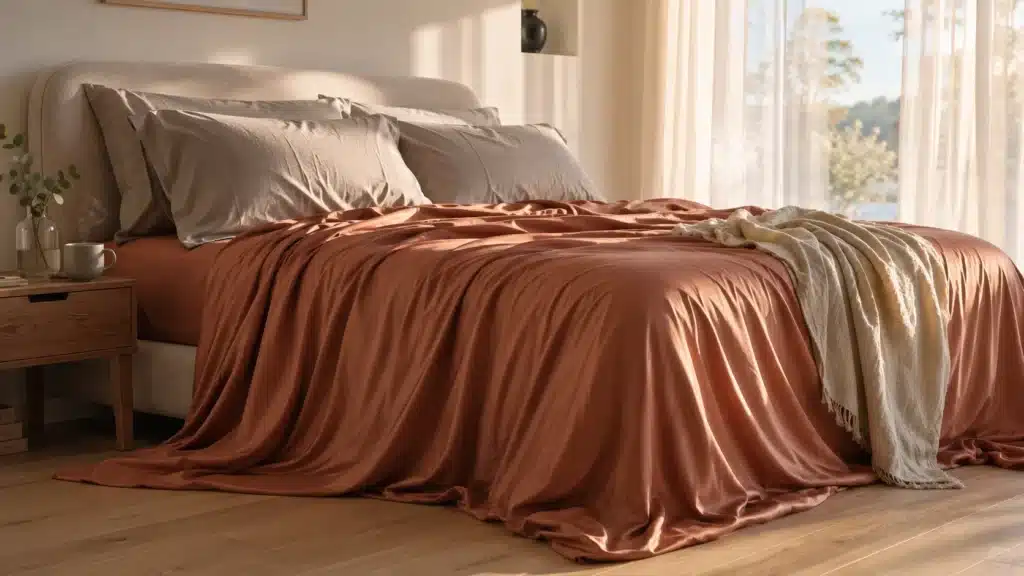
Softness is personal — some people want a buttery glide, others want crisp freshness — but for pure out-of-the-package softness, bamboo viscose usually takes the lead. It has a smooth, fluid, almost liquid feel that reads as “silky” without silk’s price or fragility, and it drapes closely over the body rather than sitting crisp like percale or linen.
Silk is the runner-up, and arguably the most luxurious smoothness of all — it glides rather than drags — but that comes with higher cost and more careful washing, so I treat it as luxury rather than everyday softness. Cotton spans the whole range: long-staple sateen feels smooth and slightly weighty, percale feels cool and crisp, and good cotton keeps softening with use. Microfiber feels smooth and slick when new, though some find it artificially so, and it never develops the lived-in softness of natural fibers. Linen is the least soft at first touch, but high-quality washed linen becomes genuinely comfortable over time.
For feel, GSM (grams per square meter) shapes bamboo and microfiber — higher GSM means a plusher, denser sheet — while momme does the same job for silk.
Bottom line: Want buttery softness straight away? Choose bamboo viscose. For the deepest luxury, silk stands alone; for classic softness with better durability, cotton sateen. See my Best Soft Bed Sheets for Everyday Comfort.
Moisture Handling: Wicking vs. Absorbing vs. Neither
Winner: Linen
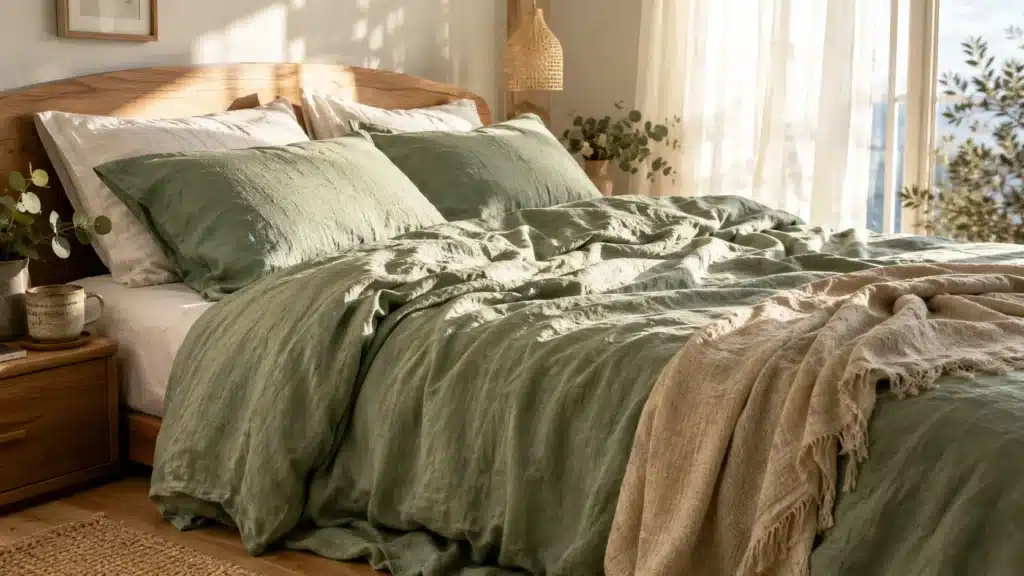
Sweaty nights are not just about heat — they are about how the fabric handles moisture. Three different behaviors get muddled here: wicking moves moisture away from the skin, absorbing soaks it up and holds it, and some fabrics do neither well and just leave you damp.
Linen wins because it wicks and dries fast, so you rarely wake in a clammy bed. Bamboo-derived fabrics also wick well, though they can hold moisture a little longer than linen before releasing it. Cotton is absorbent — it soaks sweat up readily, which is comfortable up to a point, but a dense cotton sheet can feel clammy if you sweat heavily. Silk absorbs moisture as a protein fiber, but it can also saturate and spot, which is part of why it works better as a pillowcase than as a full sweat-management sheet. Microfiber is the weakest: polyester is hydrophobic, so it neither absorbs nor wicks efficiently, and it tends to leave you feeling sticky.
Bottom line: For night sweats or humid climates, linen first, bamboo second. Avoid heavy microfiber.
Skin & Hair Friction
Winner: Silk
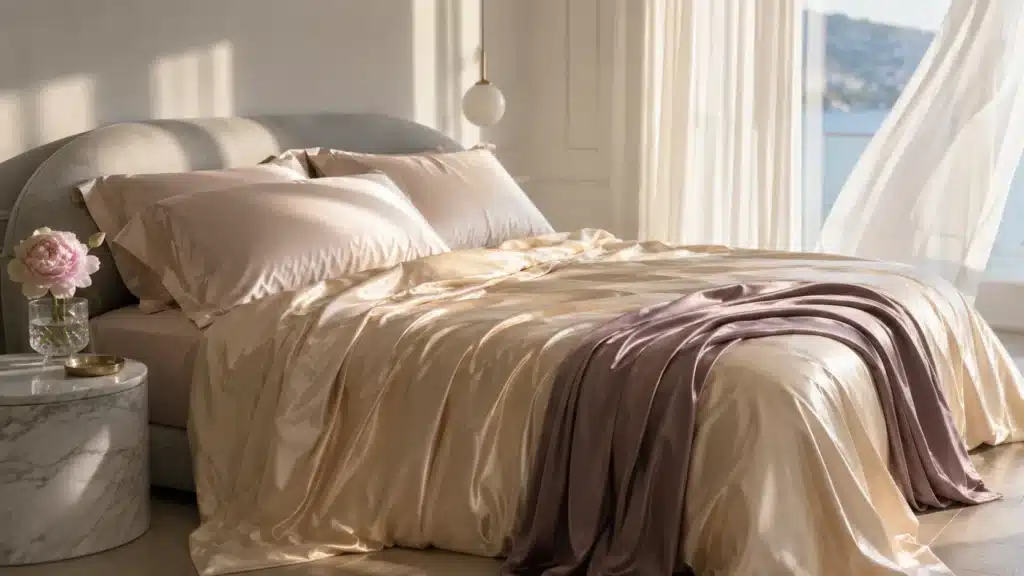
This is the property most people underrate. The friction between your skin, hair, and fabric all night drives sleep creases, frizz, and breakage — and silk has the smoothest, lowest-friction surface of anything here. Its long, fine fibers let hair and skin glide instead of snag, which is why it is the go-to for curly, dry, frizzy, or breakage-prone hair.
But I will be straight with you, because this is where a lot of sites oversell: the friction benefit is overwhelmingly a pillowcase effect, not a full-sheet one. Your hair spends the whole night against the pillow, and very little against the fitted sheet, so a single silk pillowcase delivers most of the payoff for a fraction of the cost of a full silk set.
Bamboo is the runner-up for a smooth, gentle glide, and long-staple cotton sateen is smoother than you would expect. Cotton percale is breathable but not especially friction-reducing, and linen’s texture can bother very sensitive sleepers until it softens. Microfiber feels smooth but can generate static and cling, which is not the same gentle glide as silk or bamboo. And a quick caution: a “polyester satin” pillowcase is a budget friction-reducer, but satin is a weave, not silk — don’t confuse the two.
Bottom line: For hair and skin, start with a silk pillowcase. Want full sheets with a smooth feel? Silk, bamboo, or long-staple cotton sateen. See my Best Silk Bed Sheets and Best Bed Sheets for Sensitive Skin.
Durability & Longevity
Winner: Linen
Linen is the heavyweight champion of lifespan. Flax fibers are notably stronger than cotton and actually gain strength when wet, so a well-made linen set, rotated and laundered gently, can last a decade or more while only getting softer.
Long-staple cotton is the runner-up — easier to care for than linen, widely available, and durable enough that premium percale and sateen both wear well (percale tends to hold up a touch better, while lower-quality sateen can show surface wear). Bamboo has the widest quality range: cheaper viscose can pill and thin within a year or two, while lyocell-process bamboo tends to be tougher. Silk lasts with careful handling, but is the least forgiving — sweat, oils, and rough washing degrade it. Microfiber survives the laundry room fine, but pills, thins, and loses its finish over time; it is hard to destroy, but not built to last.
Bottom line: Want sheets you won’t replace for years? Linen is the strongest investment, with long-staple cotton close behind in durability and easier care.
Wrinkle Resistance
Winner: Microfiber
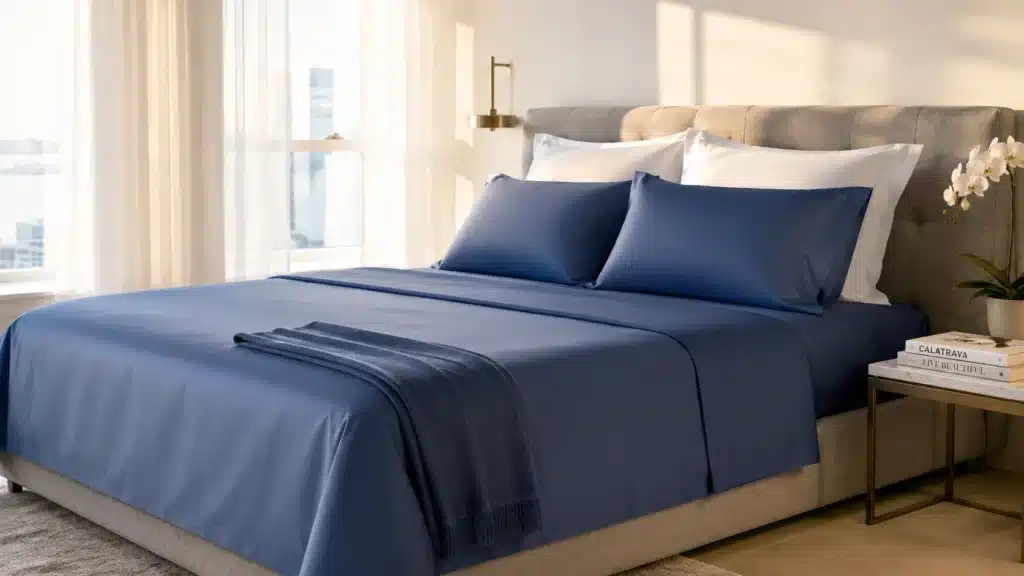
If a pristine, just-pressed bed matters to you, microfiber wins without contest. It comes out of the dryer smooth, needs no ironing, and keeps that neat look with zero effort — ideal for guest rooms, rentals, dorms, and anyone who refuses to own an iron.
Cotton-poly blends also resist creasing well, though they trade away some of the breathability of pure cotton. Cotton sateen looks smoother than percale thanks to its weave, while pure cotton percale wrinkles readily — that crisp hotel look you admire comes from industrial pressing, not from the fabric itself. Linen wrinkles the most, and that rumpled texture is celebrated rather than hidden; if you can’t embrace it, linen isn’t for you. Silk creases too, but irons out on low heat more easily than people assume.
Bottom line: Hate ironing? Microfiber. Want a natural sheet that still looks smooth? Cotton sateen or a cotton-poly blend. See my Best Wrinkle-Resistant Bed Sheets.
Hypoallergenic & Antibacterial: What’s Real?
Winner: Silk
This is where bedding marketing gets loudest, so let me separate what is real from what is sold. Silk earns the top spot because it is naturally smooth, gentle, and genuinely resistant to dust mites, mold, and mildew — a real benefit for allergy-prone sleepers, not just a sticker.
Now the honest part. “Hypoallergenic” is one of the most overused words in bedding, and for allergy comfort, the fabric is only half the story. Washability, a tight weave that blocks dust mites, mattress and pillow encasements, gentle detergent, and regular hot washing usually matter more than the label. Tightly woven, high-quality cotton scores well here precisely because it washes hot and forms a good dust-mite barrier. Linen is naturally resistant to bacteria and fungi and washes easily. Microfiber’s tight weave can trap dust and skin particles, which is not ideal for sensitive sleepers.
And the claim you will see most: “bamboo is naturally antibacterial.” The raw bamboo plant does contain a compound often marketed as “bamboo kun,” but the viscose manufacturing process largely destroys it — the finished bamboo viscose fabric retains little to no meaningful antibacterial property. So treat that claim as a technicality that does not survive the factory floor, not a guaranteed bedding benefit. This is one place I part ways with most of the bedding internet, and I’d rather you spend your money on the right reasons.
Bottom line: For a naturally gentle surface, silk. For everyday allergy control, ignore the “hypoallergenic” sticker and prioritize washability, a tight weave, gentle laundering, and dust-mite covers.
Care & Maintenance
Winner: Microfiber
The best sheets are the ones you will actually keep clean, so ease of care is a real feature, not an afterthought. Microfiber is the simplest: machine wash, machine dry, no special handling, nearly indestructible in the laundry room.
Cotton is the easiest natural option — wash warm, tumble dry, soften with use — though percale will wrinkle and sateen prefers slightly gentler treatment to protect its finish. Linen machine-washes and dries fine, but wrinkles and requires a bit of thoughtful laundering. Bamboo usually asks for a cool wash, mild detergent, and low-heat drying to keep its softness and avoid pilling — not difficult, but less forgiving than cotton. Silk is the demanding one: hand wash or a delicate cycle in a mesh bag with pH-neutral detergent, no wringing, air dry away from direct sun.
Bottom line: For wash-and-forget ease, microfiber. For a breathable, natural sheet that is still low-stress, cotton.
Cost & Long-Term Value
Winner for value: Cotton
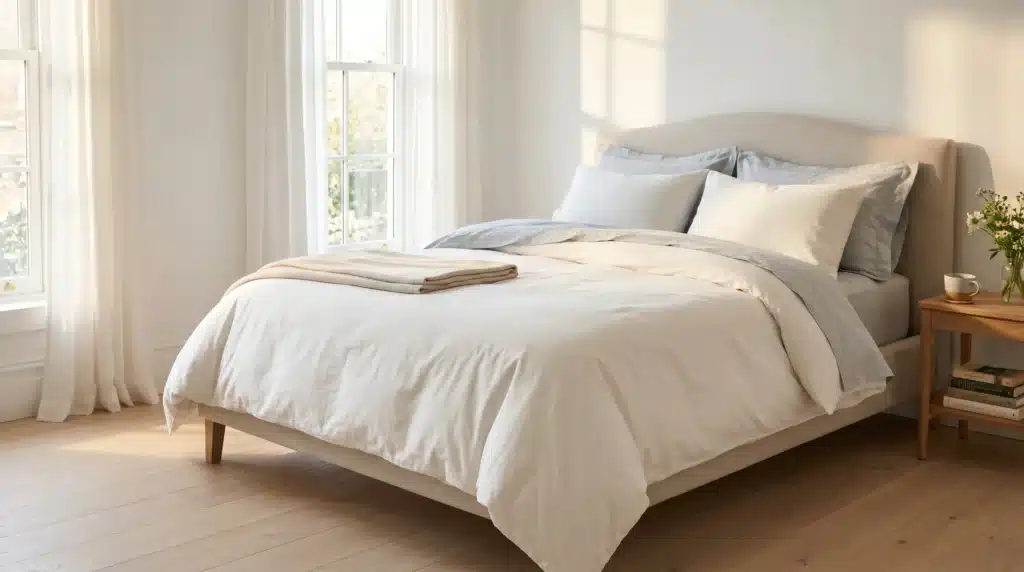
Upfront price doesn’t tell the whole story — value is really cost per year. Cotton wins because it covers the widest range of needs and budgets: affordable everyday sets, premium long-staple options, crisp percale, smooth sateen, cozy flannel, and casual jersey. There is a good cotton sheet at almost every price point.
Microfiber is cheapest upfront and a smart pick for guest rooms, dorms, and temporary bedding, but it degrades faster, so its long-term value is weaker. Linen costs the most upfront yet can be the best value over a decade if you love the texture and care for it. Silk is a true splurge — luxury, not value. Bamboo sits in the middle: lovely when it’s good quality, but pricing and quality vary enough that you should read the fiber details before paying a premium for a vague “bamboo” label.
Bottom line: Cotton for the best balance of price, comfort, and durability. Microfiber for lowest upfront cost, linen for long-term investment, silk for luxury.
A Word on Subtypes & Jargon (So You’re Not Fooled)
Before you shop, these are the terms brands count on you not understanding.
Sateen vs. Satin
Neither is a fiber — both are weaves. Sateen is a weave (usually cotton) with a smooth, lustrous face. Satin is also a weave, often used for polyester or silk with a glossy finish. That is why “cotton sateen sheets” and “silk satin pillowcases” are different things even though both feel smooth, and why the word “satin” alone tells you nothing about what the fabric actually is. Full breakdown in my Percale vs Sateen Sheets guide.
Bamboo Viscose vs. Lyocell vs. Bamboo Linen
Most soft bamboo sheets are made from bamboo viscose/rayon — common, soft, affordable, and made through a chemical-heavy process. Bamboo lyocell uses a cleaner, closed-loop system that recycles its solvents and tends to be more durable. True bamboo linen is mechanically processed and genuinely rare — if a brand doesn’t explicitly say “mechanically processed bamboo linen,” assume it’s viscose or lyocell.
Thread Count
Higher is not better. Many brands inflate the number by counting multi-ply yarns, so a “1000 thread count” sheet can be weaker than an honest one. For long-staple cotton, a real 300–400 in percale or up to around 600 in sateen is the useful range; well past that is usually marketing. And thread count barely applies to linen, silk, bamboo, or microfiber — judge those by fiber, weave, weight, and finish instead. The full story is in The Truth About Thread Count.
Momme
The weight measure for silk. Higher momme means denser, more substantial fabric; 19–25 momme is the sweet spot for durable bedding, while anything under about 16 is too flimsy for sheets. For silk, momme tells you more than thread count ever could.
GSM
Grams per square meter — a weight measure useful for linen, microfiber, and flannel. Higher GSM means a heavier, plusher sheet, though heavier isn’t always better, especially for hot sleepers.
Certifications
OEKO-TEX Standard 100 confirms a textile has been tested for harmful substances — the baseline safety cert worth looking for. GOTS covers organic fiber status and responsible processing, mainly for organic cotton. Certifications don’t guarantee a sheet will feel perfect, but they matter if you care about sensitive skin, chemical finishes, or organic claims.
Quick Winners by Property
The fast recap, by property:
- Coolest: Linen
- Softest: Bamboo viscose
- Best moisture handling: Linen
- Best for skin & hair: Silk
- Most durable: Linen
- Most wrinkle-free: Microfiber
- Best allergy-conscious comfort: Silk (with washing and dust-mite control)
- Easiest care: Microfiber
- Best value: Cotton
- Best luxury splurge: Silk
- Best everyday sheet for most people: Cotton
- Best warm-weather natural sheet: Linen
- Best budget sheet: Microfiber
- Crisp hotel feel: Cotton percale
- Smooth hotel feel: Cotton sateen
So, Which Should You Choose?
Your sleep style points you to the material:
- You sleep hot or sweat at night → linen, or bamboo lyocell for a silkier drape. Avoid microfiber and heavy sateen. Start with the Best Cooling Bed Sheets for Hot Sleepers.
- You want silky softness above all → bamboo viscose for everyday buttery softness, silk for true luxury. See Best Soft Bed Sheets for Everyday Comfort and Best Silk Bed Sheets.
- You have sensitive skin or hair concerns → a silk pillowcase makes the biggest difference, with long-staple cotton or smooth bamboo as solid full-sheet choices. Read Best Bed Sheets for Sensitive Skin.
- You hate ironing → microfiber, or a quality cotton-poly blend. See Best Wrinkle-Resistant Bed Sheets.
- You want sheets that last a decade → linen or long-staple cotton. They are built for it. Start with Best Cotton Bed Sheets.
At the end of the day, the best sheet is not the one with the highest thread count or the biggest price tag. It is the one that fits how you actually sleep. That is something I learned from cloth long before I learned it from bedding labels — the right fabric proves itself at night, after washing, and in the way it feels against your skin, season after season.
Read the Full Buying Guides
Use these deeper guides once you know the direction you want to go:
- Best Cotton Bed Sheets: Breathable, Durable Picks for Year-Round Comfort — for everyday comfort, value, and classic feel
- Best Bamboo Bed Sheets: Silky, Cooling Picks for Soft, Breathable Sleep — for buttery softness and smooth drape
- Best Linen Bed Sheets: Airy, Relaxed Picks for Warm-Weather Comfort — for hot sleepers, humid rooms, and longevity
- Best Silk Bed Sheets: Smooth, Luxurious Picks for Skin and Hair — for low-friction luxury
- Best Microfiber Bed Sheets: Budget-Friendly Picks for Easy-Care Bedding — for affordability and low maintenance
- Best Cooling Bed Sheets for Hot Sleepers: Breathable Picks for Sweat-Free Nights — for overheating and night sweats
- Best Soft Bed Sheets for Everyday Comfort: Silky, Cozy Picks You’ll Love Sleeping In — for softness-first shoppers
- Best Wrinkle-Resistant Bed Sheets: Easy-Care Picks That Look Neat Without Ironing — for smooth-looking beds with less effort
- Best Bed Sheets for Sensitive Skin: Smooth, Gentle Fabrics for Comfortable Sleep — for gentle-feeling bedding
- Best Hotel-Style Bed Sheets: Crisp, Luxurious Picks for a Five-Star Bed at Home — for crisp, polished comfort
- Percale vs Sateen Sheets: Which Weave Feels Cooler, Softer, and More Comfortable? — for choosing the right cotton weave
- The Truth About Thread Count: How to Choose Bed Sheets That Actually Feel Better — for seeing past inflated numbers
FAQ
Are bamboo sheets better than cotton sheets?
Bamboo sheets are usually softer and silkier than cotton, especially when made from bamboo viscose or lyocell. Cotton is usually the better all-around choice for durability, breathability, easy care, and long-term value. Choose bamboo for buttery softness; choose cotton for a dependable everyday sheet with more weave options.
Which is cooler, bamboo or cotton?
It depends on type and weave. Bamboo lyocell often feels cooler to the touch than cotton sateen, but a crisp cotton percale can sleep cooler than bamboo viscose. The coolest material overall, though, is neither — it’s linen.
Are linen sheets better than cotton for hot sleepers?
For very hot sleepers, usually yes — linen feels airier, drier, and more breathable in warm or humid rooms. Cotton percale is still an excellent cooling choice if you prefer a smoother, crisper sheet. Choose linen for maximum airflow, percale for a cooler hotel feel.
Are silk sheets worth it?
Silk sheets are worth it if you want a luxurious, smooth, low-friction surface and are willing to pay more and wash gently. They are not the best pick for easy care, low cost, or rugged everyday use. For most people, a silk pillowcase delivers the biggest skin and hair benefit without the cost of a full set.
Are microfiber sheets bad?
No. They are soft, affordable, wrinkle-resistant, and easy to care for. The trade-off is that microfiber sleeps warmer and breathes less than cotton, linen, or bamboo, so hot sleepers should generally look elsewhere. They are best for budget shoppers, guest rooms, dorms, and low-maintenance bedding.
What thread count should I look for in cotton sheets?
For long-staple cotton percale, roughly 200–400 is ideal; for sateen, 300–600 gives a nice drape. Anything advertised well above that is usually a marketing claim built on multi-ply yarn counting rather than a better sheet.
Which sheet material is best overall?
Cotton, for most people, balances comfort, breathability, durability, price, and care better than anything else. The others win for specific needs: linen for heat, bamboo for softness, silk for luxury and friction reduction, and microfiber for easy care.