
Artful Heritage: 20 Timeless Nakshi Kantha Design Ideas for an Elegant and Comfortable Home
Nakshi Kantha Design Ideas represent a centuries-old Bengali art form that transforms humble materials into extraordinary textile masterpieces. Originating in the Bengal region—notably Bangladesh and the Indian states of West Bengal, Tripura, and parts of Assam—nakshi kantha is a type of embroidered quilt traditionally made from layered old sarees, lungis, and dhotis.
The name derives from the Bengali word “naksha,” meaning “artistic patterns,” and the running stitch, called the “kantha stitch,” is the primary technique. What makes nakshi kantha fundamentally different from other quilting traditions is its deeply personal and narrative nature: these were not mere household items but intimate expressions of rural women’s creativity, stitched during leisure hours and often taking months or even years to complete. Each piece tells stories through its motifs—drawn from daily life, religious beliefs, and the natural world—making every kantha a unique, handcrafted chronicle of Bengali culture and heritage.
Nakshi Kantha Design Ideas
Contents
- 1 Nakshi Kantha Design Ideas
- 2 1. Cozy Running Stitch Nakshi Kantha Quilts Depicting Charming Rural Life Scenes
- 3 2. Elegant Sujni Kantha Bed Covers Woven with Meaningful Religious Symbols
- 4 3. Luxurious Lohori Kantha Bed Sheets Inspired by the Lush Forests of Bengal
- 5 4. Timeless Lik or Anarasi Stitch Nakshi Kantha Bed Sheets Featuring Floral Garden Tales
- 6 5. Soft Pastel Cross-Stitch Nakshi Kantha Quilts Celebrating Agricultural Heritage
- 7 6. Sophisticated Cross-Stitch Nakshi Kantha Bed Runners Featuring Wildflower Motifs
- 8 7. Artistic Running Stitch Nakshi Kantha Pillow Covers Showcasing Village Festival Scenes
- 9 8. Vintage Heritage Lik or Anarasi Stitch Bedspreads Inspired by Agricultural Life
- 10 9. Heavyweight Sujni Kantha Quilts Featuring Bengal Forest and River Motifs
- 11 10. Beautiful Lotus Motif Nakshi Kantha Throw Blankets with Lohori Wave Stitches
- 12 11. Decorative Running Stitch Nakshi Kantha Euro Shams for a Polished Bed Look
- 13 12. Stylish Running Stitch Nakshi Kantha Sofa Covers Telling Stories of Everyday Rural Life
- 14 13. Elegant Cross-Stitch Nakshi Kantha Table Runners Featuring Wild Forests of Bengal Motifs
- 15 14. Artful Sujni Kantha Couch Covers Celebrating the Harvest and Farming Traditions
- 16 15. Decorative Running Stitch Nakshi Kantha Cushion Covers Inspired by Bengal Flower Markets
- 17 16. Traditional Lohori Kantha Sofa Throws Inspired by Golden Paddy Fields and Rivers
- 18 17. Colorful Lik or Anarasi Stitch Nakshi Kantha Floor Pillows Depicting Rural Village Scenes
- 19 18. Rustic Lohori Kantha Placemats and Coasters Showcase Agricultural Scenes
- 20 19. Layered Sujni Kantha Table Toppers Woven with Meaningful Religious Symbols
- 21 20. Hand-Stitched Cross-Stitch Nakshi Kantha Armchair Throws with Blooming Lotus Motifs
- 22 Conclusion
The rich diversity of nakshi kantha is reflected in its various stitch types and regional variations, each with distinct characteristics. The Running stitch kanthas form the foundation, subdivided into figured (nakshi) and patterned (par tola) varieties. Lohori kantha, popular in Rajshahi, takes its name from the Sanskrit and Persian words for “wave,” featuring flowing, wave-like patterns in straight, triangular, or diamond formations. Lik or anarasi (pineapple) kantha, found in Malda, Chapainawabganj, and Jessore, encompasses variations like lik tan, lik tile, and lik jhumka.
The Cross-stitch or carpet kantha was introduced during British rule, while the Sujni kantha, unique to Rajshahi, showcases undulating floral and vine designs. These techniques, combined with motifs deeply influenced by religion and folk belief—from Hindu lotus and solar symbols to Islamic crescent moons and mosque imagery—create an artistic language that speaks to Bengal’s cultural synthesis and to the women who preserved these traditions across generations.
This collection of twenty nakshi kantha ideas brings this extraordinary heritage into contemporary homes, offering elegant and comfortable textiles that carry centuries of storytelling. From Cozy Running Stitch Quilts Depicting Charming Rural Life Scenes to Luxurious Lohori Kantha Bed Sheets Inspired by the Lush Forests of Bengal, each piece embodies the spirit of its makers.
The designs span every room and purpose: Elegant Sujni Kantha Bed Covers with religious symbols for sacred sleep spaces, Artistic Running Stitch Pillow Covers showcasing village festival scenes for living rooms, and Colorful Lik or Anarasi Stitch Floor Pillows depicting rural life for casual seating. Whether through the Beautiful Lotus Motif Throw Blankets, which symbolize cosmic harmony, or the Rustic Lohori Kantha Placemats, which celebrate agricultural heritage, these nakshi kantha creations transform functional textiles into vessels of cultural memory, bringing the soul of rural Bengal into modern, elegant homes.
1. Cozy Running Stitch Nakshi Kantha Quilts Depicting Charming Rural Life Scenes
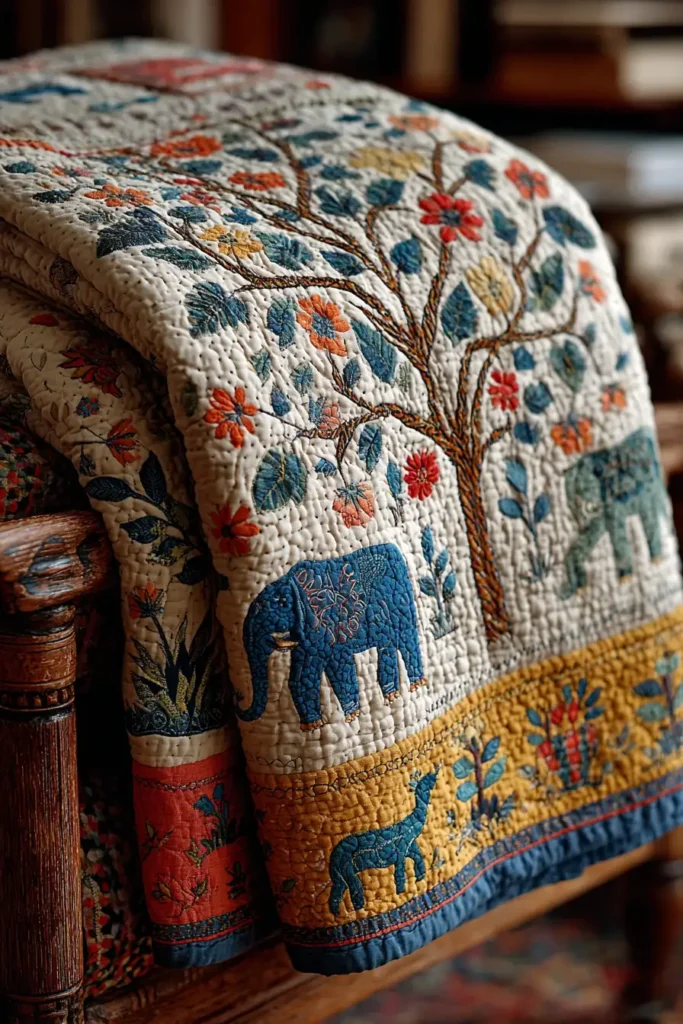
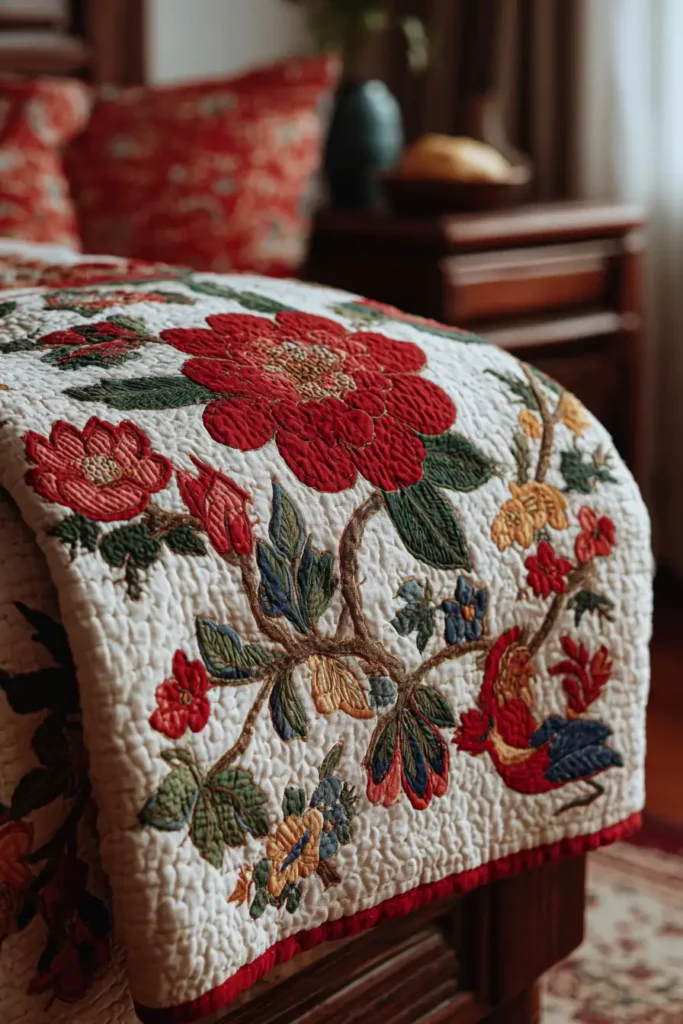
“The Sonar Bangla” Scenic Nakshi Kantha Throw
To bring a Nakshi Kantha into your home is to drape your living space in a profound, hand-stitched narrative. Unlike structured, pieced geometric quilts, the beauty of Nakshi Kantha lies in its fluid, freehand embroidery and the incredibly soft, rippled texture created by thousands of simple running stitches.
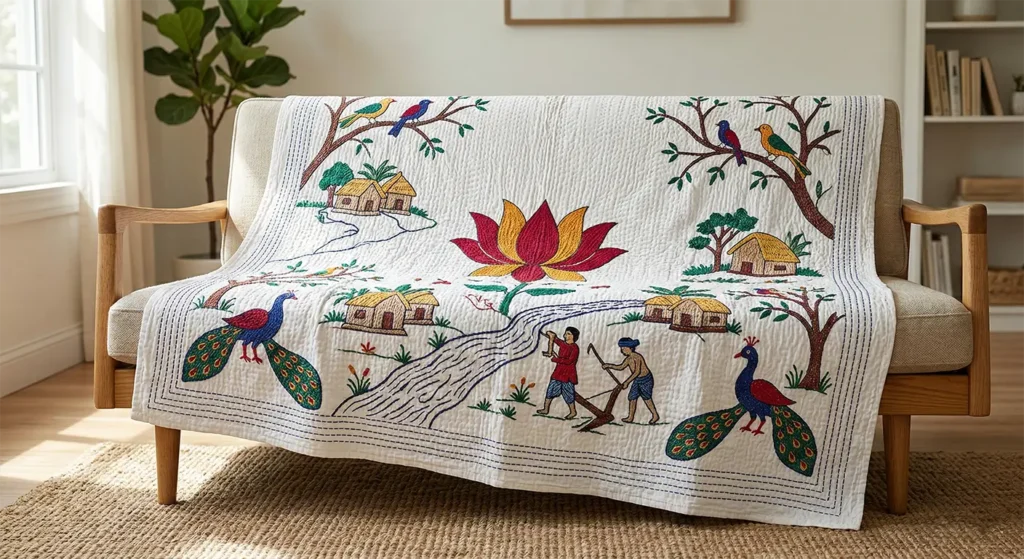
“The Sonar Bangla” (Golden Bengal) honors this centuries-old tradition by depicting charming, idyllic scenes of rural life—thatched huts, winding rivers, lotus flowers, and local birds—embroidered in rich Indigo, Crimson, and Marigold threads across a canvas of Pristine White or Unbleached Muslin. By utilizing layers of incredibly soft, lightweight cotton rather than thick batting, this throw provides unparalleled, breathable comfort, perfect for elegant summer layering or wrapping up on a breezy evening.
Finished Dimensions: Generous Sofa Throw or Summer Bed Layer, 50″ x 60″.
Materials Needed:
- The “Canvas” (Outer Layers): 3.5 yards of high-quality, ultra-soft White Cotton Voile or fine Muslin.
- The “Core” (Inner Layer): 1.75 yards of soft, pre-washed White Cotton Flannel or a repurposed, incredibly soft vintage cotton sheet.
- Why: Traditional Kantha does not use puffy polyester or wool batting. Instead, it relies on stacking 3 to 6 layers of old, ultra-soft saris. To recreate this exquisite, fluid drape while maintaining modern elegance, a core layer of soft cotton flannel provides the perfect weight without adding stiff loft.
- The “Story” (Thread): High-quality Pearl Cotton (Size 8) embroidery thread in Indigo Blue, Crimson Red, Marigold Yellow, and Emerald Green.
- Notions: A water-soluble fabric marking pen, a long Sashiko or Kantha embroidery needle, an embroidery hoop (optional, though traditionalists stitch without one), and curved safety pins.
Cultural Backstory: The word “Kantha” essentially translates to “rags” in Sanskrit. In rural Bengal (encompassing modern-day Bangladesh and West Bengal, India), resourcefulness birthed an art form. Women would salvage old, threadbare saris and dhotis—fabrics made incredibly soft from years of washing. They layered them and stitched them together using a simple running stitch to create warm blankets for the monsoon season. When they added “Naksha” (artistic designs) depicting their daily village lives, hopes, and local flora, it became Nakshi Kantha. Creating this quilt connects you directly to a matrilineal tradition of storytelling, sustainability, and transforming the mundane into breathtaking heirlooms.
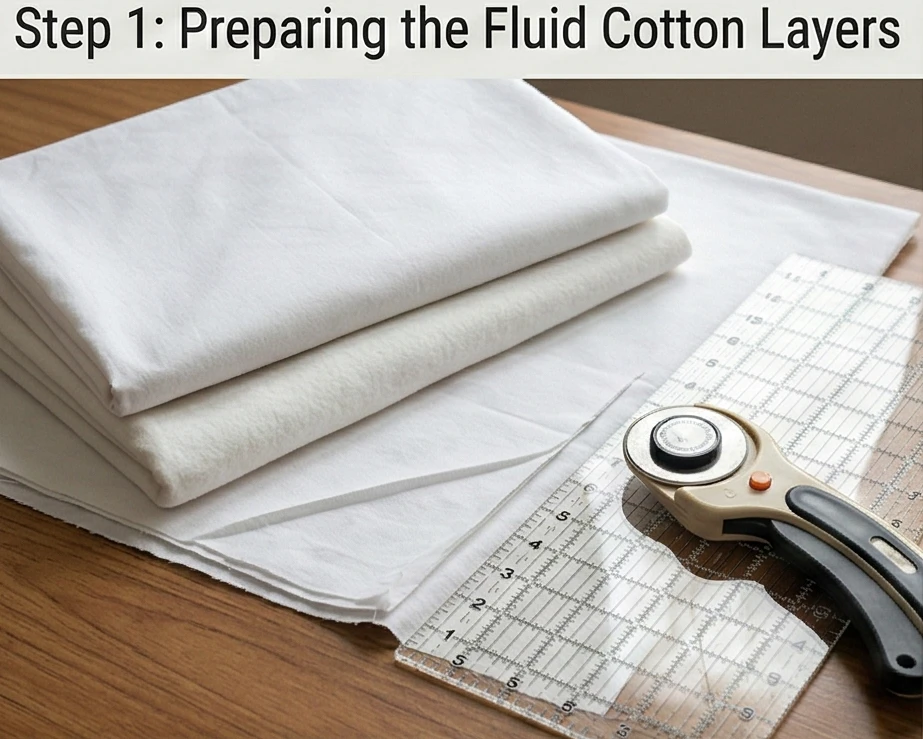
Step 1: Preparing the Fluid Cotton Layers
Creating the soft foundation for your needlework.
- Cut the Canvas: From your White Cotton Voile or Muslin, cut two massive panels measuring exactly 52″ wide by 62″ long (one for the front, one for the back).
- Cut the Core: Cut your inner Flannel layer to the exact same dimension: 52″ x 62″.
- Pre-Wash Everything: Nakshi Kantha relies on the fabric puckering slightly. Pre-washing all three layers ensures they shrink to their final size and become incredibly soft before you begin stitching.
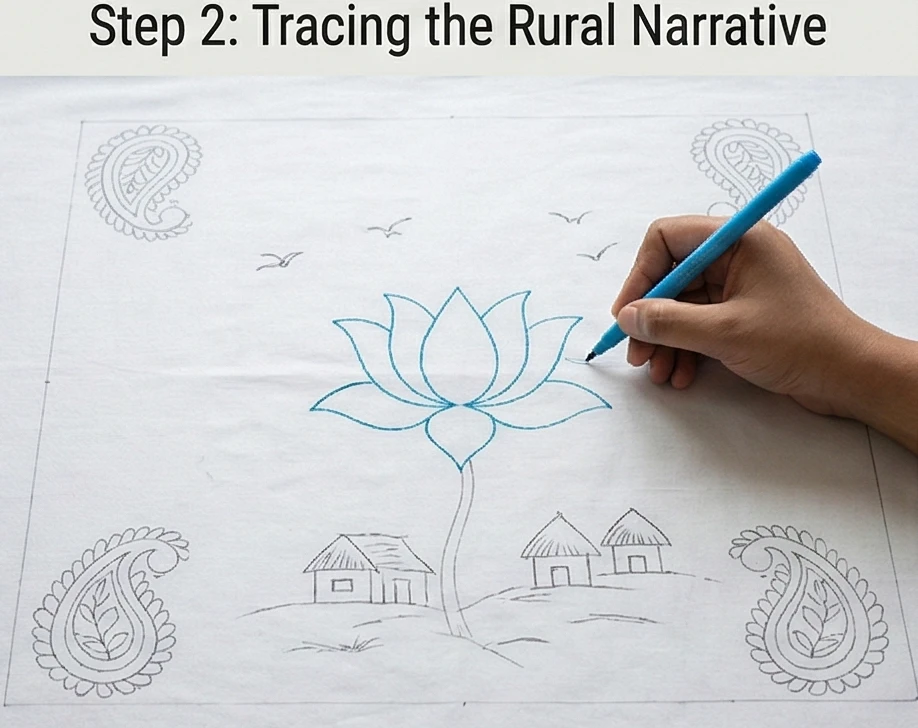
Step 2: Tracing the Rural Narrative (The Naksha)
Designing the charming village motifs.
- The Central Medallion: Lay your top piece of White Voile completely flat. Using your water-soluble pen, draw a large, traditional “Padma” (lotus flower) exactly in the center, measuring roughly 12 inches across.
- The Four Corners: In each of the four corners, draw a classic “Kalka” (paisley motif) or a beautifully stylized peacock facing inward toward the lotus.
- The Rural Canvas: Fill the negative space between the center and the corners with charming rural scenes. Sketch small thatched-roof huts, a winding river, a farmer with a plow, or local birds sitting on stylized tree branches. Do not worry about rigid perfection; the charm of Nakshi Kantha lies in its freehand, folk-art fluidity.
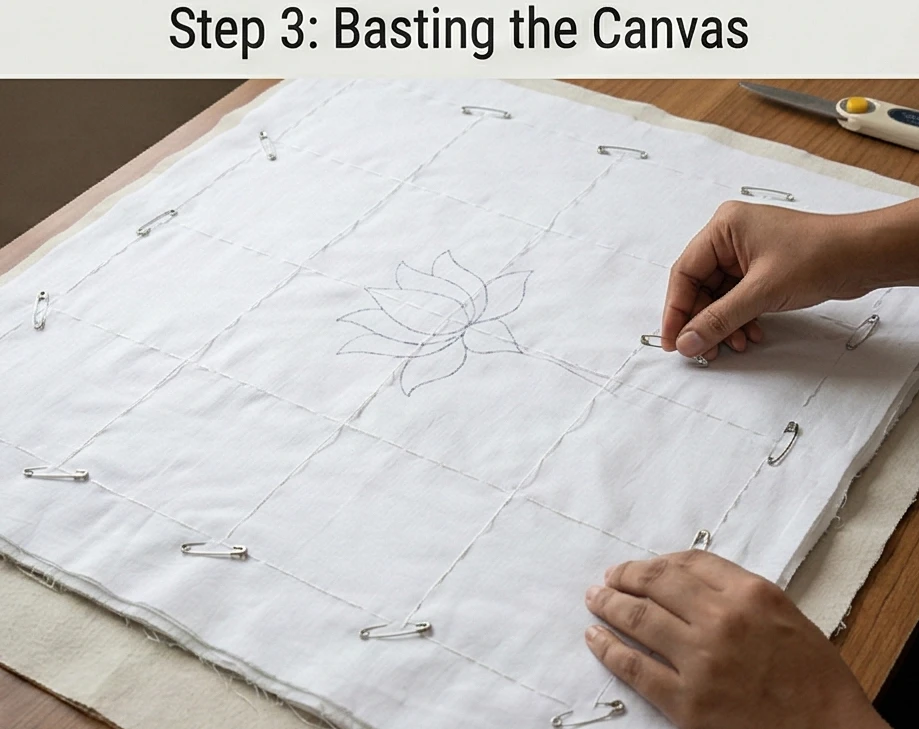
Step 3: Basting the Canvas
Securing the layers to prevent shifting during intensive hand-sewing.
- The Stack: Lay the White Voile backing flat on a table or floor, smoothing out all wrinkles. Place the Flannel core on top, followed by the marked White Voile front panel.
- Heavy Basting: Because you will be manipulating this fabric by hand for hours, standard pinning is insufficient. Use curved safety pins every 4 inches, or better yet, use a needle and white thread to baste large, 6-inch grid lines across the entire 52″ x 62″ quilt.
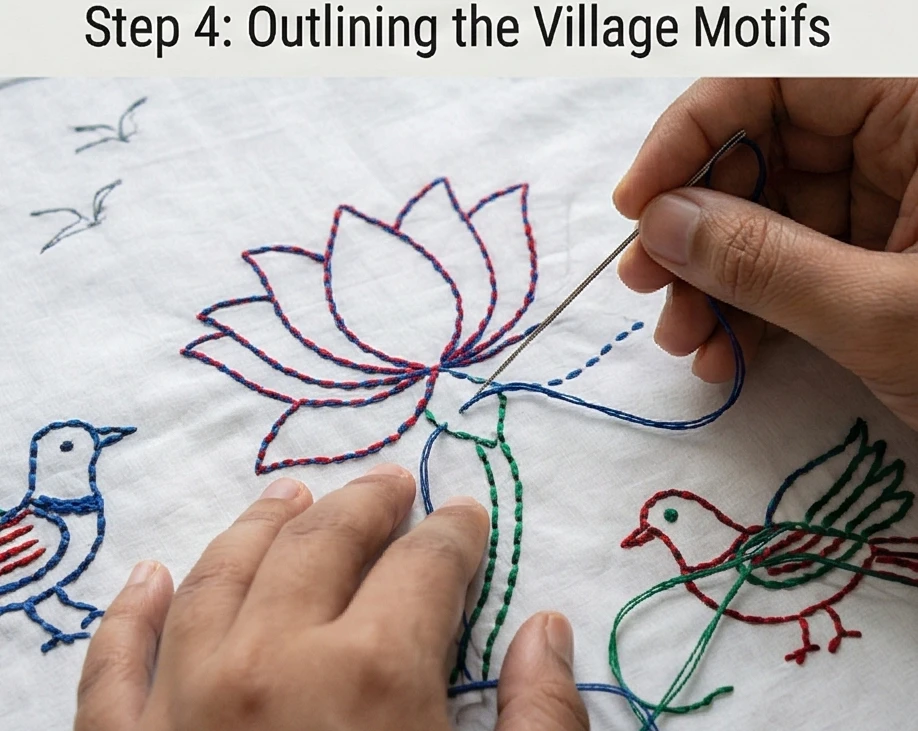
Step 4: Outlining the Village Motifs
Bringing the story to life with color.
- The Outline Stitch: Thread your Kantha needle with the colored Pearl Cotton. Begin outlining your drawn motifs using a simple, continuous running stitch (stitching up and down through all three layers).
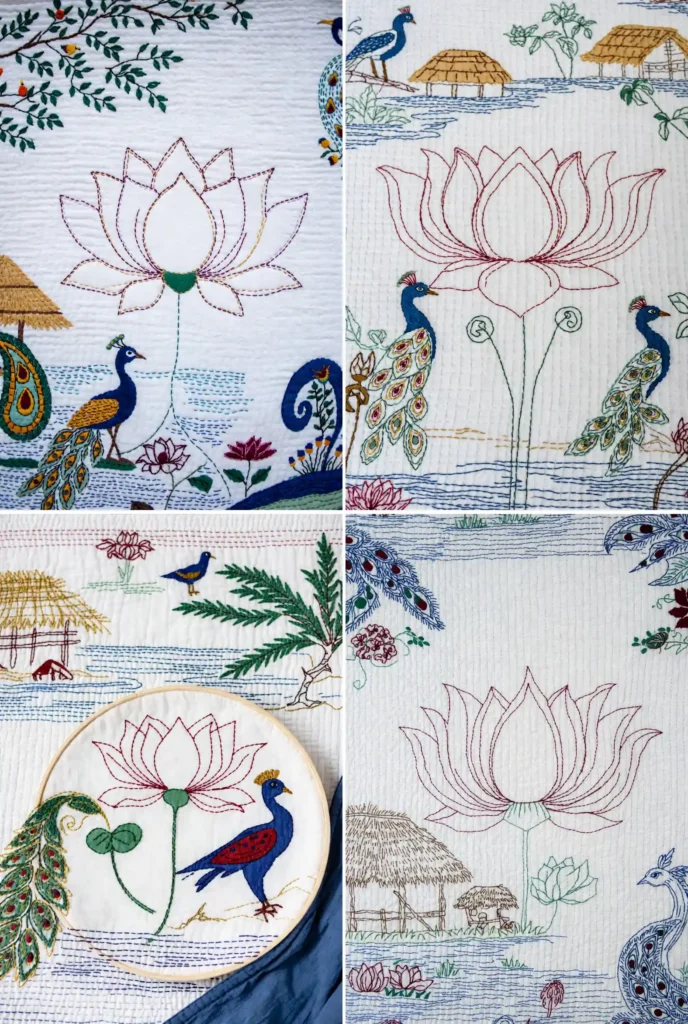
- Color Placement: Use Indigo for the winding rivers and outlines of the huts, Crimson for the lotus petals and birds, and Emerald for the foliage. Ensure your stitches are relatively small and even, but embrace the organic, handmade look.
- No Knots on the Back: Traditionally, knots are hidden. Bury your starting and stopping knots carefully between the layers of the fabric so the back of the quilt remains as elegant and neat as the front.
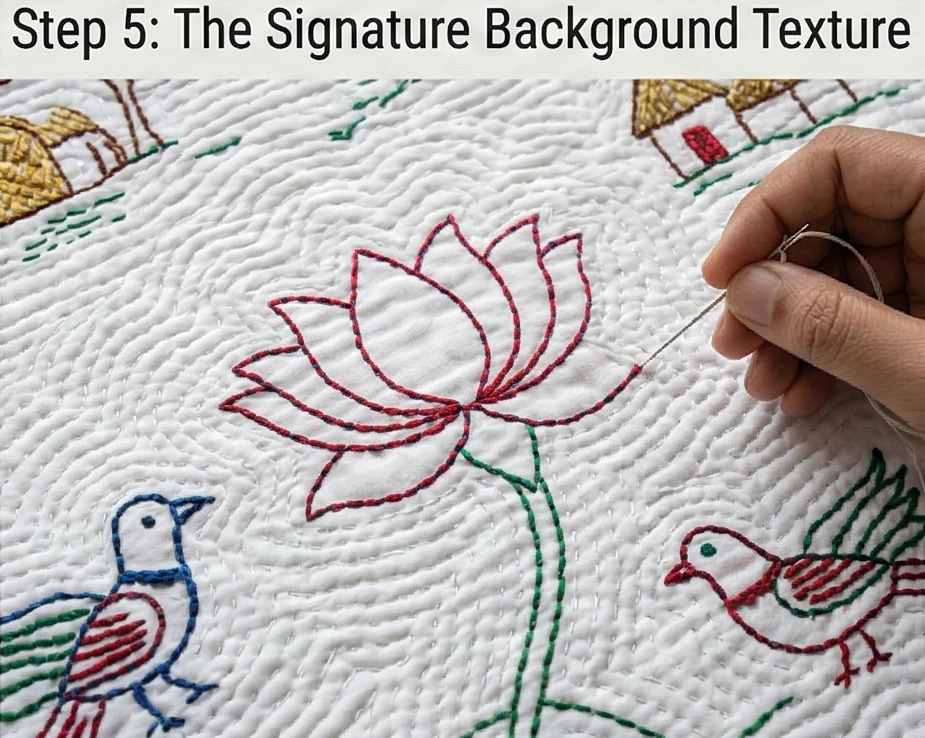
Step 5: The Signature Background Texture
Creating the iconic Nakshi Kantha “ripple.”
- The Echo Stitching: Once all the motifs are outlined in color, thread your needle with white thread (matching the background fabric).
- Filling the Negative Space: Stitch closely spaced, parallel lines of running stitches across the entire background. These lines should echo the shapes of your motifs (e.g., stitching concentric circles around the lotus, and wavy lines mirroring the river).
- The Spacing: Space these parallel rows about 1/8 to 1/4 inch apart.
- Why: This dense, parallel stitching is the soul of Nakshi Kantha. It binds the layers together tightly, causing the unstitched motifs to puff up slightly, creating an incredibly soft, deeply textured, crinkled surface that drapes like liquid cotton.
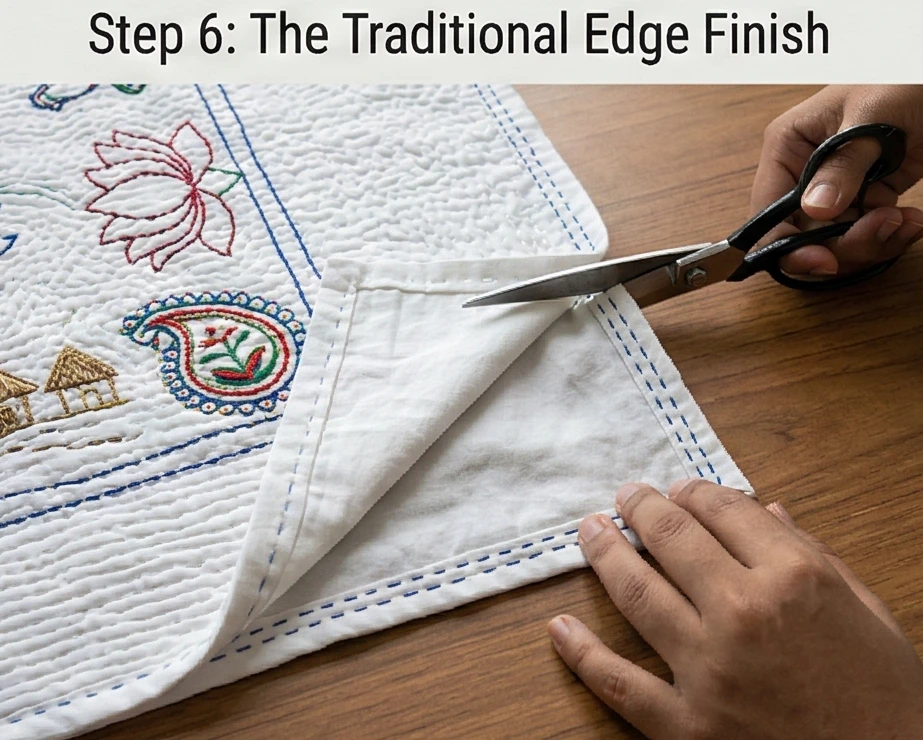
Step 6: The Traditional Edge Finish
Securing the perimeter elegantly.
- Trim the Excess: Once the entire piece is heavily quilted, trim the edges perfectly straight to square the throw to its final 50″ x 60″ dimensions.
- The Folded Edge: Traditional Kantha rarely uses an applied binding strip. Instead, fold the raw edges of the top and bottom fabrics inward by 1/2 inch so they meet, encasing the flannel core. Pin heavily.
- The Border Stitch: Using your colored Pearl Cotton (e.g., Indigo), sew three or four parallel rows of running stitches closely together around the entire perimeter to permanently seal the edge and frame the rural tapestry.
Usability Note: The magic of a true Nakshi Kantha is that it becomes softer and more beautifully crinkled with every wash. Because the Pearl Cotton threads are colorfast, you can machine wash this throw on a cold, delicate cycle. Tumble dry on low or line dry in the breeze. The dense background stitching ensures the internal flannel core will never shift or bunch.
2. Elegant Sujni Kantha Bed Covers Woven with Meaningful Religious Symbols
“The Sacred Lotus” Sujni Kantha Master Bed Cover
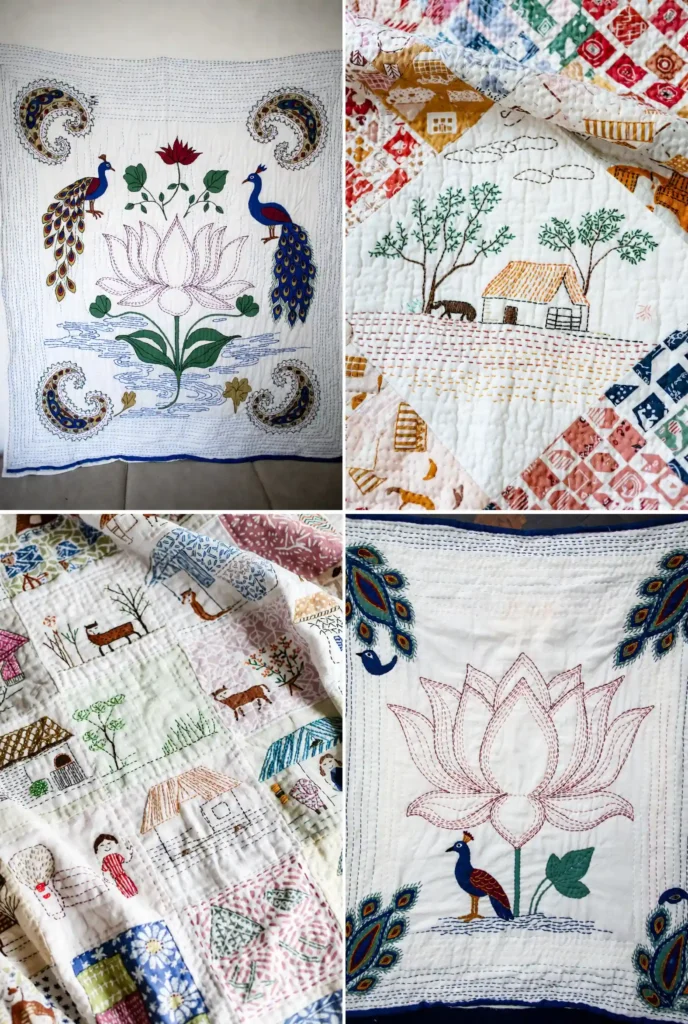
The master bedroom is the ultimate sanctuary for rest and reflection, demanding textiles that provide both physical comfort and profound spiritual grounding. In the rich tapestry of Bengali embroidery, the Sujni Kantha is distinct. Originally crafted as ceremonial spreads for seating honored guests or blessing newlyweds, Sujni quilts are characterized by their large scale, intricate borders, and the prominent display of auspicious and religious symbols. “The Sacred Lotus” translates this majestic tradition into a breathtaking, breathable master bed cover. Executed on a pristine expanse of Unbleached Muslin with striking motifs embroidered in Deep Indigo, Crimson, and Marigold, this coverlet wraps you in a lightweight, rippling texture of handmade artistry and timeless blessings.
Finished Dimensions: Elegant Queen/King Master Bed Coverlet, 90″ x 100″ (Providing a luxurious drape over the edges of a modern mattress).
Materials Needed:
- The “Canvas” (Outer Layers): 6 yards of 90-inch wide, high-quality Unbleached Muslin or fine Cotton Percale.
- The “Core” (Inner Layer): 3 yards of 90-inch wide, ultra-soft White Cotton Flannel or repurposed, well-washed flat sheets.
- Why: To drape elegantly over a large bed, a Kantha must remain fluid. Using thin, pre-washed cotton layers instead of thick polyester batting ensures the massive 90×100-inch textile remains lightweight, exceptionally breathable, and easy to fold.
- The “Thread of Life” (Embroidery): High-quality Size 8 Pearl Cotton thread in Deep Indigo, Crimson Red, and Marigold. Plus, several spools of standard Cream cotton thread for the background texturing.
- Notions: A large, water-soluble fabric marking pen, specialized long Kantha or Sashiko needles, and hundreds of curved safety pins for basting.
Cultural Backstory: The term “Sujni” shares linguistic roots with words implying ease, facilitation, and birth. While everyday Kantha was meant for personal warmth, Sujni Kantha was often a communal, ceremonial endeavor in the Bengal delta. The symbols woven into them transcend simple decoration. The central ‘Padma’ (hundred-petaled lotus) represents the universe, divine purity, and creation across Hindu, Buddhist, and Islamic regional motifs. Additional symbols—like the ‘Matsya’ (fish) for prosperity, the ‘Kalka’ (paisley/mango) for fertility, or the crescent moon and stars for divine guidance—turn the bed cover into a physical manifestation of prayers and blessings for the home.
Step 1: Preparing the Massive Canvas
Creating the foundation for a masterpiece.
- Cut the Expanse: From your 90-inch wide Unbleached Muslin, cut two massive panels measuring exactly 92″ x 102″ (one for the top, one for the backing).
- Cut the Core: Cut your inner Flannel layer to the same 92″ x 102″ dimension.
- The Crucial Pre-Wash: You must wash and tumble dry all three layers before doing any work. This shrinks the fibers and softens the muslin, ensuring your meticulous hand-stitching won’t pucker disastrously during its first laundering.
Step 2: Drafting the Sacred Geometry (The Naksha)
Designing the layout of blessings.
- The Central Mandala: Lay the top muslin layer completely flat on a large floor. Using your water-soluble pen, draw a massive, multi-petaled Lotus (Padma) directly in the center, spanning roughly 24 inches across.
- The Four Corners: In the four corners of the bedspread, draw large, inward-facing Kalkas (paisleys). Within the Kalkas, you can nestle smaller religious motifs like a star, a crescent moon, or a traditional conch shell.
- The Borders: Draw three concentric, undulating borders around the entire perimeter of the quilt. Fill these borders with repeating motifs of vines, blooming flowers, or fish to represent a continuous flow of life and prosperity.
Step 3: Heavy Basting for a Grand Scale
Securing the massive layers for months of stitching.
- The Stack: Lay the backing flat, followed by the flannel core, and finally the marked top layer. Smooth out every single wrinkle from the center outward.
- Grid Basting: Because a master bed cover takes significant time to embroider, standard pinning is not enough. Thread a needle with a contrasting, easily removable thread and stitch a giant 10-inch grid across the entire 90×100-inch quilt. This permanently locks the three layers together so they do not shift as you wrestle the fabric onto your lap.
Step 4: Outlining the Spiritual Motifs
Bringing the design to life with colored thread.
- The Colored Running Stitch: Thread your Kantha needle with the Crimson or Deep Indigo Pearl Cotton. Begin outlining your drawn lotus, kalkas, and borders using a simple, rhythmic running stitch.
- The Technique: Pierce through all three layers with every stitch. Traditional Kantha stitches are small, but they do not need to be machine-perfect. The slight irregularities are what give the textile its deeply human, soulful charm.
- Filling the Shapes: Once the outlines are complete, use the Marigold and Crimson threads to add dense rows of running stitches inside the petals and paisleys, giving them vibrant, solid color blocks.
Step 5: The “Lahar” (Wave) Background Quilting
Creating the signature texture of a true Kantha.
- The White-on-White Thread: Switch to your standard Cream cotton thread. This step transforms the flat fabric into a deeply textured quilt.
- Echoing the Universe: Starting from the central Lotus, stitch continuous, closely spaced parallel lines of running stitches radiating outward. Echo the shapes of the motifs, creating ripples like a stone dropped in a pond.
- The Density: Space these rows exactly 1/4-inch apart across the entire negative space of the bed cover. This incredibly dense background stitching binds the layers firmly together, forcing the unstitched colored motifs to puff up in a beautiful bas-relief texture.
Step 6: The Ceremonial Sujni Edge Finish
Sealing the edges with traditional elegance.
- Trim and Fold: Once the vast expanse is quilted, trim the raw edges perfectly straight, squaring the coverlet to its final 90″ x 100″. Fold the raw edges of the top and bottom muslin inward by 1/2 inch to enclose the flannel core, and pin heavily.
- The Dense Border Stitch: Do not use a separate binding strip. Instead, thread your needle with Deep Indigo. Sew five to seven densely packed, parallel rows of running stitches around the entire perimeter. This historic finishing technique seals the edges permanently and provides a stunning, tailored frame for the bedspread.
Usability Note: A Sujni Kantha is an heirloom, yet it is designed to be used. The dense background stitching ensures the internal core will never warp. Machine wash this grand bed cover on a cold, delicate cycle. As it tumbles dry on low heat, the thousands of tiny stitches will shrink slightly, resulting in an incredibly soft, crinkled drape that breathes beautifully during warm summer nights and provides comforting weight in the winter.
3. Luxurious Lohori Kantha Bed Sheets Inspired by the Lush Forests of Bengal
4. Timeless Lik or Anarasi Stitch Nakshi Kantha Bed Sheets Featuring Floral Garden Tales
5. Soft Pastel Cross-Stitch Nakshi Kantha Quilts Celebrating Agricultural Heritage
6. Sophisticated Cross-Stitch Nakshi Kantha Bed Runners Featuring Wildflower Motifs
7. Artistic Running Stitch Nakshi Kantha Pillow Covers Showcasing Village Festival Scenes
8. Vintage Heritage Lik or Anarasi Stitch Bedspreads Inspired by Agricultural Life
9. Heavyweight Sujni Kantha Quilts Featuring Bengal Forest and River Motifs
10. Beautiful Lotus Motif Nakshi Kantha Throw Blankets with Lohori Wave Stitches
11. Decorative Running Stitch Nakshi Kantha Euro Shams for a Polished Bed Look
12. Stylish Running Stitch Nakshi Kantha Sofa Covers Telling Stories of Everyday Rural Life
13. Elegant Cross-Stitch Nakshi Kantha Table Runners Featuring Wild Forests of Bengal Motifs
14. Artful Sujni Kantha Couch Covers Celebrating the Harvest and Farming Traditions
15. Decorative Running Stitch Nakshi Kantha Cushion Covers Inspired by Bengal Flower Markets
16. Traditional Lohori Kantha Sofa Throws Inspired by Golden Paddy Fields and Rivers
17. Colorful Lik or Anarasi Stitch Nakshi Kantha Floor Pillows Depicting Rural Village Scenes
18. Rustic Lohori Kantha Placemats and Coasters Showcase Agricultural Scenes
19. Layered Sujni Kantha Table Toppers Woven with Meaningful Religious Symbols
20. Hand-Stitched Cross-Stitch Nakshi Kantha Armchair Throws with Blooming Lotus Motifs
Conclusion
The journey through these twenty nakshi kantha designs reveals far more than beautiful textiles—it uncovers a living tradition where art, heritage, and daily life intertwine. Each piece, whether a Heavyweight Sujni Kantha Quilt featuring Bengal forest and river motifs or a set of Decorative Running Stitch Cushion Covers inspired by flower markets, carries forward the legacy of Bengali women who, for centuries, transformed worn cloth into cherished heirlooms. The motifs they chose—lotus blossoms symbolizing purity and cosmic order, undulating vines representing life’s continuity, crescent moons reflecting Islamic heritage, and village scenes preserving rural memories—create a visual language that speaks across generations, connecting us to the rhythms, beliefs, and creativity of Bengal’s countryside.
Incorporating these nakshi kantha pieces into contemporary homes does more than add elegance and comfort; it weaves stories into the fabric of daily living. A Sophisticated Cross-Stitch Bed Runner with wildflower motifs becomes a conversation starter at family gatherings. A Rustic Lohori Kantha Sofa Throw inspired by golden paddy fields wraps loved ones in warmth while honoring agricultural traditions. These textiles remind us that true luxury lies not in perfection but in the visible traces of human hands—the slight irregularities of hand-stitched running stitches, the personal interpretation of traditional patterns, the careful selection of colors and motifs that reflect individual artistry within a shared cultural framework.
Let this collection inspire you to embrace nakshi kantha not merely as decor but as a meaningful connection to Bangladesh and West Bengal’s intangible cultural heritage. By choosing a Layered Sujni Kantha Table Topper woven with religious symbols for your dining space, or a Vintage Heritage Lik or Anarasi Stitch Bedspread inspired by agricultural life for your guest room, you help preserve and celebrate this remarkable art form. These pieces transform houses into homes filled with stories, where every embroidered lotus, wave, and village scene whispers of the women who stitched their world into cloth—creating beauty, preserving memory, and warming generations with their artful heritage.

